
Keep Your Family Warm and Safe—No Matter What
Along the St. Lawrence in Charlevoix, winters run long and hard, with average lows near -16.7°C some nights colder still. I'll match you with a trusted local dealer who knows the region's wood, the permits, and what actually holds a fire through a Charlevoix night.
Every Project Starts From One of These Five Situations
Wood heat is a tradition here, not a trend.
La Malbaie sits low along the St. Lawrence estuary but the water does little to soften the winter climate zone 7A conditions that settle over Charlevoix from October through April. Average lows near -16.7°C put this stretch of coast in the same cold company as Québec City just upriver, and older homes in Pointe-au-Pic and along the Chemin du Golf rely on wood as much for reliability as for cost, since winter storms off the estuary can knock out power for a day or more at a time.
Sugar maple, yellow birch, American beech, and red oak dominate the woodlots around Charlevoix, and all four are dense hardwoods that hold a coal bed and produce serious heat per cord, which matters when you're feeding a stove through a six-month season. Cutting your own requires a permit through the Ministère des Ressources naturelles et des Forêts, running about $1.85 per cubic metre plus taxes up to a 22.5 m3 household maximum, valid April 1 to March 31 with regional harvest windows that vary. On the installation side, Quebec's larger municipalities, Montréal among them, now require wood-burning appliances to be registered and certified for low particulate emissions, and while La Malbaie sets its own rules through the municipal building department, a good local installer treats CSA B365 compliance and a WETT inspection for insurance as standard steps, not extras.
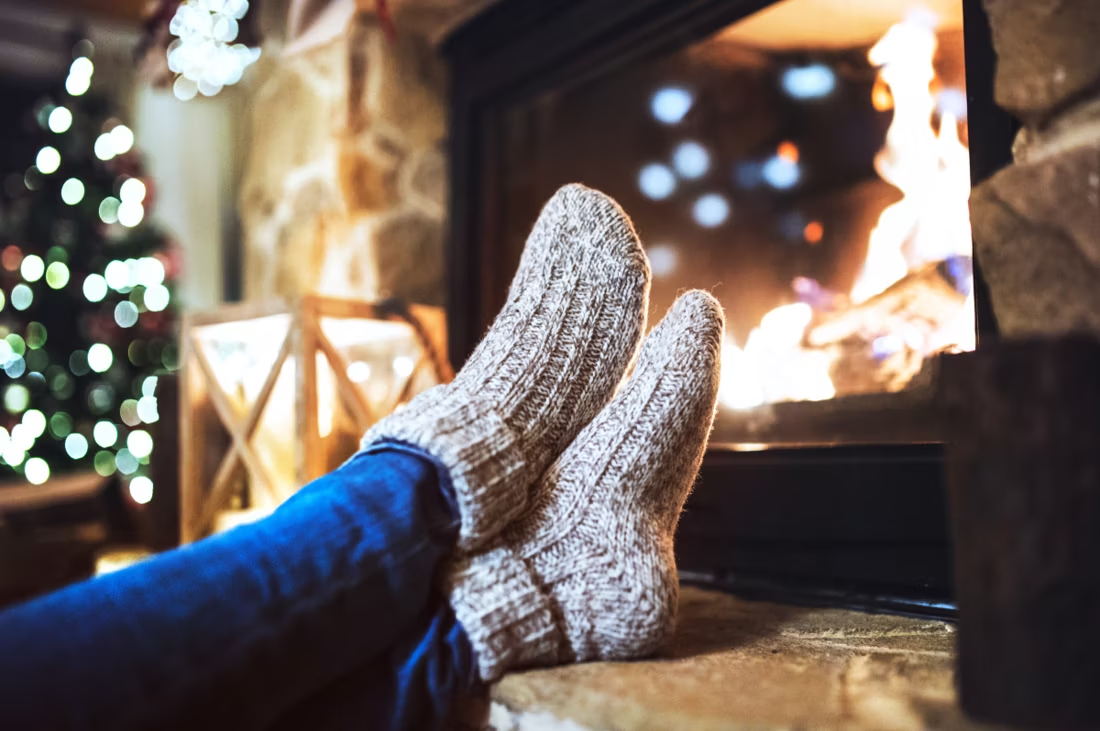
Firewood Cutting Permits Near La Malbaie
Ministère Des Ressources Naturelles Et Des Forêts (Mrnf)
Three steps. No salesperson until you're ready.
Tell us about your project
Your postal code, your situation, and the fuel you're leaning toward—or let the answers point you to one.
See what's actually available
The brands dealers within 100 miles genuinely carry—real options, never a catalog mirage.
Get your dealer & Project Guide
A trusted local dealer, plus the free Project Guide & Parts List that names every component of the job.
Frequently Asked Questions
How much does a wood stove installation cost in La Malbaie?
Most installs run $6,000 to $12,000 CAD. An insert dropping into an existing masonry chimney in one of the older stone-and-clapboard homes near Pointe-au-Pic or downtown La Malbaie tends to land at the lower end. A freestanding stove in a newer build without existing masonry needs a full Class A chimney run through the roof, which pushes the project toward the top of that range once CSA B365-compliant clearances and a WETT inspection for your insurer are factored in.
What size wood stove do I need for a La Malbaie home?
With average winter lows around -16.7°C and stretches that drop well below that, a small stove rated under 1,000 square feet only makes sense as a supplemental unit in a camp or small addition. Most main living areas in La Malbaie do better with a medium to large stove in the 1,500 to 2,500 square foot range, especially older stone homes with less insulation than newer construction along the highway. Dense hardwood like sugar maple or red oak in a properly sized firebox will hold a coal bed through the night without constant reloading.
Do I need a permit to install a wood stove in La Malbaie?
Yes. New installations go through the municipal building department, and the installation itself must meet the CSA B365 code that governs venting, clearances, and hearth protection across Quebec. Most insurers here also require a WETT inspection before they'll cover a wood-burning appliance, so budget for that as part of the project rather than an afterthought. A dealer who regularly works in Charlevoix will already know what the municipal office wants to see on the paperwork.
Where do I get a firewood cutting permit near La Malbaie?
The Ministère des Ressources naturelles et des Forêts issues personal cutting permits for Crown land in the region, priced at roughly $1.85 per cubic metre plus taxes, capped at 22.5 m3 per household per season. The permit season runs April 1 to March 31, though the actual harvest window depends on regional conditions and road access into the Charlevoix backcountry. Sugar maple and yellow birch are the two species most local permit-holders bring home, since both split and season well for a long heating season.
What's the best firewood for a La Malbaie wood stove?
Sugar maple is the local favourite for a reason: it's dense, splits cleanly, and burns hot enough to carry a house through a -16.7°C night without constant tending. Yellow birch and American beech are close seconds, both common in Charlevoix woodlots and well suited to overnight loads. Red oak is available too and burns long once properly seasoned, though it needs a full two years of drying to perform well, longer than the maple and birch most people are used to splitting here.
How often should my chimney be swept in La Malbaie?
An annual sweep before the season starts, ideally in September, is the standard here, same as anywhere with a six-month burning season. Dense hardwoods like sugar maple and beech generally produce less creosote than softwood, but a stove running daily from October through April in a Charlevoix home still builds up buildup worth checking mid-season, particularly if any of your wood was cut and split later than ideal and hasn't fully seasoned.
Wood vs. pellet stove—which makes more sense in La Malbaie?
Wood keeps working when the power goes out, which matters on this stretch of coast where estuary storms regularly knock out lines for a day or more, and cutting your own through an MRNF permit keeps fuel costs low. Pellet stoves burning regional brands like Granules LG, Energex, or Trebio at $400-$575 a ton are cleaner and easier to load, but the auger and blower need electricity, so they go quiet during the same outages a wood stove handles fine. Many Charlevoix households keep a wood stove specifically for that resilience and use pellet or electric heat for everyday convenience.
Why isn't gas a bigger option for fireplaces in La Malbaie?
Natural gas service from Énergir reaches only parts of Quebec, mostly around greater Montréal and a handful of other urban corridors, and it doesn't extend out to La Malbaie. A gas fireplace here almost always means a propane setup with its own tank rather than a line tie-in, which is a different cost conversation entirely. That's part of why wood and Hydro-Québec electric heat, at a residential rate around $0.078 per kWh, do most of the work in this region, with wood carrying the load during outages electric heat can't handle.
Why do I need a WETT inspection for my wood stove in La Malbaie?
Most home insurers in Quebec require a WETT inspection on any wood-burning appliance before they'll write or renew coverage, and La Malbaie is no exception given how common wood heat is in this part of Charlevoix. The inspection confirms the installation meets CSA B365 clearances and venting requirements, whether it's a new stove or one you inherited with an older home near downtown. A local dealer handling your install typically arranges the WETT inspection as part of the project so you're not chasing it down separately before your policy renews.
Why do fireplace quotes vary so much?
Because a fireplace is an iceberg—there's more behind the wall than in front of it. A low quote often covers only the unit; the full scope includes vent pipe, gas line or electrical, framing, and the tile or stone that has to come off and go back on. Make every bidder price the whole job. If a dealer can't speak to the full scope with confidence, that's your signal to keep looking.
Louvered or clean face—which fireplace front is better?
Louvered fronts have grill work above and below the glass for airflow, move heat a little better with a fan, and suit traditional mantels. Clean face designs drop the louvers entirely so finish work runs to the fire's edge—they fit both modern and traditional rooms. When we did our own home we chose clean face: a big viewing area beat a little extra airflow. It depends on your room, not on a rulebook.
Do I have to leave the stove door cracked open to start a fire?
On many stoves, yes—a new fire needs extra air, and cracking the door a couple inches is how most stoves get it. But some modern stoves offer an automatic startup air system: engage it when you light, and timed air jets feed the fire for the first 20 minutes with the door fully shut, then close automatically. It's mechanical—like an egg timer, no electricity—and it means you can load it, light it, and walk away.
Why is my open fireplace making my house colder?
Open fireplaces suck—literally. As the fire burns, it consumes air your furnace already paid to heat and pulls it out through the chimney, so the house is actually colder after the fire goes out than before you lit it. An insert fixes this: it seals the chimney, puts fixed glass across the front, and turns that hole in your house into a real heat source.
Nearby Dealers
Hearth shops serving La Malbaie and the surrounding area. Every listing shows whether it is a WhyFire partner, a dealer we have verified as authorized for the brands we recommend, or a local business carrying hearth products. No manufacturer pays for placement. How we verify dealers →
A. Tremblay Et Frères
Gespro Poêles Et Foyers
Maçonnex (Québec)
Nova Energie Inc
Hubert's Fireplace Consultation + Design
Les Cheminées Gamelin
Chemine, Poeles Et Foyer Quebec
Foyer Québec
Services Propane Inc.
Get your La Malbaie wood heat project mapped out.
Tell me about your home and I'll match you with a trusted local dealer and send a free Project Guide & Parts List, sized for Charlevoix's cold winters, with the vent kit specified and the WETT and CSA B365 requirements accounted for.
Find Your Fireplace →