
Instant heat, powered by Hydro-Québec's low rates.
Contrecoeur sits in climate zone 6A with winter lows averaging -14.3°C. No chimney, no gas line, no permit headaches—just plug it in or wire it to a dedicated circuit. I'll match you with a local dealer who knows what's actually installable in your home.
Every Project Starts From One of These Five Situations
No chimney, no gas line, no wait.
Contrecoeur is a river town in Montérégie, set along the St. Lawrence between Sorel-Tracy and the south shore of Montréal. It sits in climate zone 6A, with an average winter low around -14.3°C and roughly five months where nights regularly drop below freezing—a stretch comparable to what homeowners plan around in Sherbrooke or Québec City. Most Contrecoeur homes run a furnace as primary heat and treat a fireplace as supplemental warmth, ambiance, or backup during a Hydro-Québec outage rather than the main heat source.
What makes electric the easy call here is what it skips. There's no chimney to build and no gas line to run—Énergir's network barely reaches this stretch of Montérégie, so a gas fireplace in Contrecoeur usually means a propane conversion rather than a mains hookup. Wood is genuinely common locally, with sugar maple, yellow birch, American beech, and red oak all cut from area woodlots, but a wood install means a MRNF cutting permit if you're harvesting your own, a CSA B365-compliant chimney, and typically a WETT inspection before an insurer signs off. An electric unit sidesteps all of it: plug it in, or tie it into a dedicated circuit, and you're done. At Hydro-Québec's residential rate of about $0.078 per kWh—among the lowest in the country—running one for supplemental heat costs a fraction of what electric heat runs elsewhere in Canada.
Three steps. No salesperson until you're ready.
Tell us about your project
Your postal code, your situation, and the fuel you're leaning toward—or let the answers point you to one.
See what's actually available
The brands dealers within 100 miles genuinely carry—real options, never a catalog mirage.
Get your dealer & Project Guide
A trusted local dealer, plus the free Project Guide & Parts List that names every component of the job.
Frequently Asked Questions
How much does an electric fireplace installation cost in Contrecoeur?
Most electric fireplace projects here run $500 to $1,600 CAD. A plug-in insert or wall-mount unit using an existing standard outlet sits at the low end—it's close to installing furniture, no electrician required. A built-in linear unit framed into a wall, or a larger insert that needs its own dedicated circuit, pushes toward the top once you factor in an electrician's time. Either way, there's no chimney or vent kit to budget for, which is the main cost gap against a wood or gas project in Contrecoeur.
Do I need a permit to install an electric fireplace in Contrecoeur?
In most cases, no separate building permit is needed for a plug-in electric fireplace—it's treated like any other appliance. If a built-in unit needs a new dedicated circuit, that work should go through a licensed electrician, and larger renovation work like moving a wall or building a mantel surround can trigger a permit through Contrecoeur's municipal building department. Worth a quick call if your project involves wall modification, but it's a far shorter conversation than the CSA B365 sign-off a wood stove install requires.
What will an electric fireplace cost to run on Hydro-Québec?
At Hydro-Québec's residential rate of roughly $0.078 per kWh, a typical 1,500-watt electric fireplace running a few hours each evening costs somewhere around 10 to 15 cents an hour—modest compared to most of Canada, where electricity runs two to three times that rate. Even running one most evenings through Contrecoeur's cold stretch adds only a small amount to a Hydro-Québec bill, which is part of why electric units here are often bought for ambiance and supplemental warmth rather than primary heat.
Should I get an electric fireplace instead of a wood stove in Contrecoeur?
It depends on what you need the fireplace to do. A wood stove burning local sugar maple or yellow birch is the better call if you want real backup heat during a Hydro-Québec outage and don't mind a MRNF cutting permit, seasoned firewood storage, and the WETT inspection most insurers ask for on wood appliances. An electric fireplace won't run without power, but it skips all of that, needs no chimney, and fits into a bedroom, basement, or condo unit where a wood install isn't practical. Plenty of Contrecoeur homeowners end up with both—a wood stove for the living room, electric units for secondary rooms.
Why don't more homes in Contrecoeur use gas fireplaces?
Énergir's natural gas network covers only parts of Montérégie, and Contrecoeur isn't well served by it—a gas fireplace here usually means a propane conversion rather than a mains hookup, with install costs of $6,000-$15,000 reflecting new gas line work and venting. Electric skips that entirely at $500-$1,600 installed. Gas still appeals to homeowners who want a large, realistic-flame focal point and are willing to go propane, but for most Contrecoeur buyers, electric is the more practical fit.
What kind of electric fireplace works best for a Contrecoeur home?
For genuine supplemental warmth during a -14°C stretch, look for a unit rated around 4,000-5,000 BTU (roughly 1,500 watts) rather than one built purely for the flame effect. Linear wall-mount units suit additions, basements, and finished rec rooms that need real secondary heat; smaller freestanding stove-style units work well as a bedroom or sunroom accent. Since these units don't need venting, sizing is mostly about matching wattage to the room rather than worrying about chimney draft or clearances.
Where can I find a dealer for electric fireplaces near Contrecoeur?
Contrecoeur is a small municipality, so most homeowners here work with hearth dealers based in Sorel-Tracy, Varennes, or the wider Montérégie corridor serving the south shore. A local dealer can tell you which electric brands are actually stocked and supported for warranty work in this area, rather than just what shows up in a general online search, which matters if you need a replacement part or a service call down the road.
How much maintenance does an electric fireplace need?
Very little. There's no creosote, no chimney to sweep, and no annual gas line inspection—the main upkeep is dusting the unit, occasionally wiping the front glass, and checking the fan or blower before each heating season. Compare that to a wood stove burning maple or oak, which typically needs a chimney sweep most winters, and it's easy to see why electric units get chosen for low-maintenance secondary heat in Contrecoeur.
Can an electric fireplace actually heat a room through a Contrecoeur winter?
It can handle a single room comfortably. A 1,500-watt unit will noticeably warm a bedroom, den, or small addition, but it isn't sized to replace a furnace through a Montérégie winter that regularly dips to -14°C or colder. Most homeowners here run electric fireplaces as zone heat—taking the edge off one room without running the whole-house system—or purely for ambiance, keeping a furnace or a wood stove as the primary heat source for the coldest stretches.
How much does an electric fireplace cost to run?
With the heater on, a typical unit draws about 1,500 watts—at average electric rates that's roughly 20 cents an hour. Run the flame effect alone and it costs pennies; the flames are LED-driven and use about as much power as a light bulb. There's no pilot light, no fuel delivery, and essentially no maintenance.
What fireplace styles should I know before shopping?
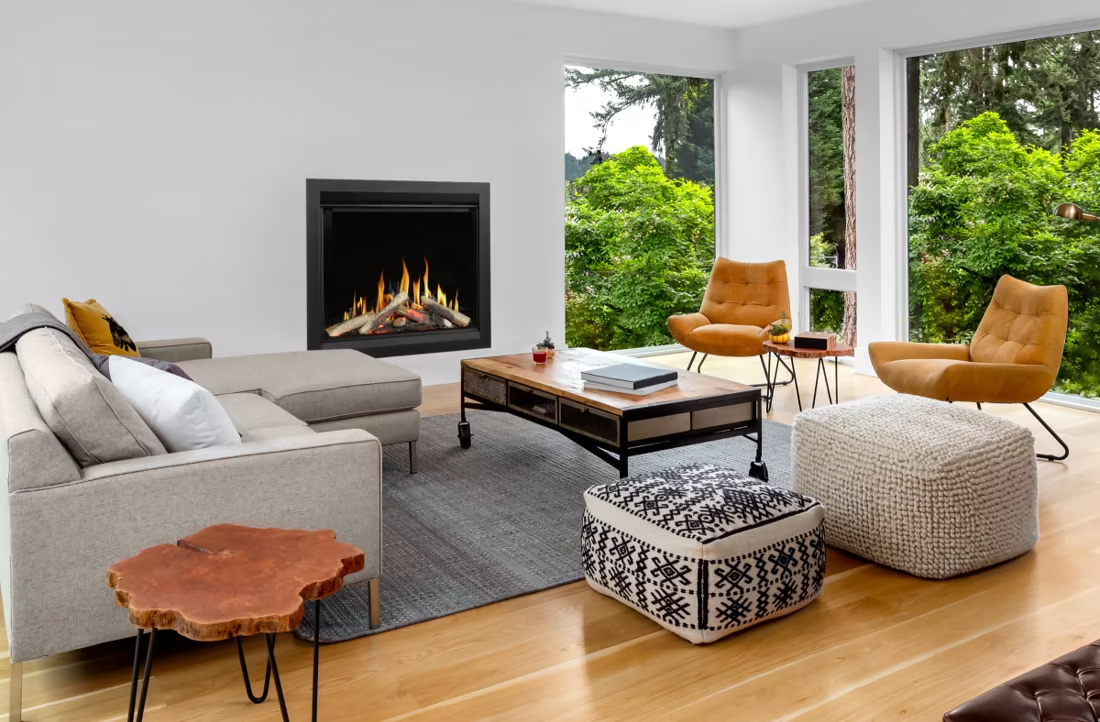
Four cover most of the market: screen-front traditional (mesh front, open feel, fits craftsman homes), traditional door set (the classic look you grew up with), modern linear (wide, low, the statement piece for entertaining), and clean face contemporary (no trim—your tile or stone runs right to the fire's edge). Walk in knowing those four terms and you're ahead of most buyers.
Does an electric fireplace need a vent or chimney?
No—that's its superpower. An electric fireplace needs a wall and an outlet, period. No vent pipe, no gas line, no clearances to design around, which is why it works in bedrooms, offices, apartments, and walls where venting a gas or wood unit would be impractical or impossible. Installation is typically the simplest and least expensive of any fireplace type.
Can I put a TV above my fireplace?
Yes—with an asterisk. Fireplaces are hot and TVs don't like heat. Either put a mantel between them to deflect rising warmth, or choose a fireplace with heat-management technology that creates a cool zone on the wall above—the wall stays around 125 degrees, barely warm, while the room still gets full heat. If you like clean lines and don't want a mantel, heat management is the answer.
Nearby Dealers
Hearth shops serving Contrecoeur and the surrounding area. Every listing shows whether it is a WhyFire partner, a dealer we have verified as authorized for the brands we recommend, or a local business carrying hearth products. No manufacturer pays for placement. How we verify dealers →
Cheminées Sam-Alex Inc.
Suroît Boutique (St-Hyacinthe)
Perfecto Gaz Propane
Poele A Combustion D.m. Enr.
Poêles à Combustion Dm
Arta Boutik
Propane Plus Inc
Noeea Foyers Rive-Nord
Le Ramoneur Du Foyer
Napert Signature
Piscines Jacques-Cartier
Chauffage Gadbois
Electric Service in Contrecoeur
An electric fireplace's heater draws about 1,500 watts—pennies per hour at local rates.
Hydro-Québec
Get your free Project Guide & Parts List for a Contrecoeur electric fireplace.
Tell me a bit about your home and your electrical panel, and I'll match you with a local dealer serving Contrecoeur and the Montérégie region who can confirm what's actually installable—then send you a free Project Guide & Parts List with the right unit and wiring plan for your project.
Find Your Fireplace →