
Instant warmth for Gatineau Hills winters, no chimney required.
Chelsea sits in the Gatineau Hills at 108 metres, where winter lows average -14.4°C and Hydro-Québec's residential rate of $0.078 per kWh makes electric heat one of the cheapest ambiance upgrades in the province. I'll match you with a trusted local dealer who knows what's actually installable in your home.
Every Project Starts From One of These Five Situations
The Hydro-Québec advantage most homeowners overlook.
Chelsea's winters run long and cold—closer to what you'd expect across the river in Ottawa than the mild image people carry of southern Quebec. Average lows near -14.4°C from December through February are routine, and the terrain around Old Chelsea, Farm Point, and Meredith holds cold air in the valleys longer than the flatter ground south of the Ottawa River. That's a climate built for a heat source that runs daily for months, not one that only shows up for New Year's Eve.
What sets electric apart here is Hydro-Québec's residential rate of $0.078 per kWh—among the lowest in the country—which makes running an electric insert or built-in unit for supplemental heat genuinely affordable rather than just convenient. It also sidesteps a real local hassle: wood installs need a municipal building permit, CSA B365-compliant venting, and typically a WETT inspection before an insurer signs off, while natural gas through Énergir only reaches a fraction of the Outaouais and rarely extends out to Chelsea's rural routes. An electric fireplace skips the gas line, the chimney, and most of the permit process—wire a dedicated circuit or plug it in, and it's running the same day.
Three steps. No salesperson until you're ready.
Tell us about your project
Your postal code, your situation, and the fuel you're leaning toward—or let the answers point you to one.
See what's actually available
The brands dealers within 100 miles genuinely carry—real options, never a catalog mirage.
Get your dealer & Project Guide
A trusted local dealer, plus the free Project Guide & Parts List that names every component of the job.
Frequently Asked Questions
How much does an electric fireplace installation cost in Chelsea?
Most electric fireplace projects here run $500 to $1,600 CAD. A freestanding or wall-mounted plug-in unit sits at the low end since it just needs a standard outlet. A built-in unit set into a wall or existing masonry opening—common in the older stone farmhouses around Old Chelsea—costs more because it usually needs a licensed electrician to run a dedicated 240V circuit plus some framing or drywall work around the opening.
What does it actually cost to run an electric fireplace through a Chelsea winter?
Hydro-Québec's residential rate of $0.078 per kWh keeps running costs low. A typical 1,500-watt unit run six hours an evening uses about 9 kWh a day, which works out to roughly $0.70 a day or around $20 a month if you're using it daily through the coldest stretch from December to February. That's a fraction of what the same heat output would cost on propane, which is the fallback fuel for a lot of Chelsea homes outside the limited Énergir service area.
Do I need a permit to install an electric fireplace in Chelsea?
A simple plug-in unit generally doesn't require a permit through Chelsea's municipal building department. A built-in unit wired to a new dedicated circuit does need an electrical permit and sign-off from a licensed electrician, since that's new wiring in the wall regardless of the appliance. Either way, you skip the CSA B365 venting rules and WETT inspection that apply to wood appliances, since there's no combustion or chimney involved.
Electric vs. wood vs. gas—what actually makes sense for a Chelsea home?
Wood is genuinely viable here—sugar maple, yellow birch, American beech, and red oak all grow locally, and MRNF cutting permits run about $1.85 per cubic metre up to 22.5 cubic metres, valid April 1 to March 31. Gas is the outlier: Énergir's network only reaches limited corridors of the Outaouais, and most addresses along Highway 105 and the back roads around Chelsea simply aren't served, so a gas fireplace usually means a propane conversion rather than a mains hookup. Electric works everywhere power lines already run, which makes it the easiest add for a den, sunroom, or bedroom where you want heat and ambiance without a new fuel supply.
Can I put an electric unit in one of Chelsea's older stone farmhouses without a working chimney?
Yes, and it's one of the more common requests from owners of the stone and timber farmhouses around Old Chelsea and Farm Point. Many of these homes have a decorative firebox with no functioning flue, and reopening it for wood or gas would mean real chimney work. An electric insert slides into that same opening, or a wall-mounted unit goes up nearby, without touching the masonry or adding any venting at all.
Will an electric fireplace still work during a power outage?
No—it needs Hydro-Québec power to run, which is worth knowing given the Outaouais region's history with major outages, including the 1998 ice storm that left parts of the region without power for weeks. Because of that, a lot of Chelsea households run electric day-to-day for convenience and low operating cost, then keep a certified wood stove or insert elsewhere in the house as backup heat for extended outages.
What types of electric fireplaces are available—insert, wall-mount, or freestanding?
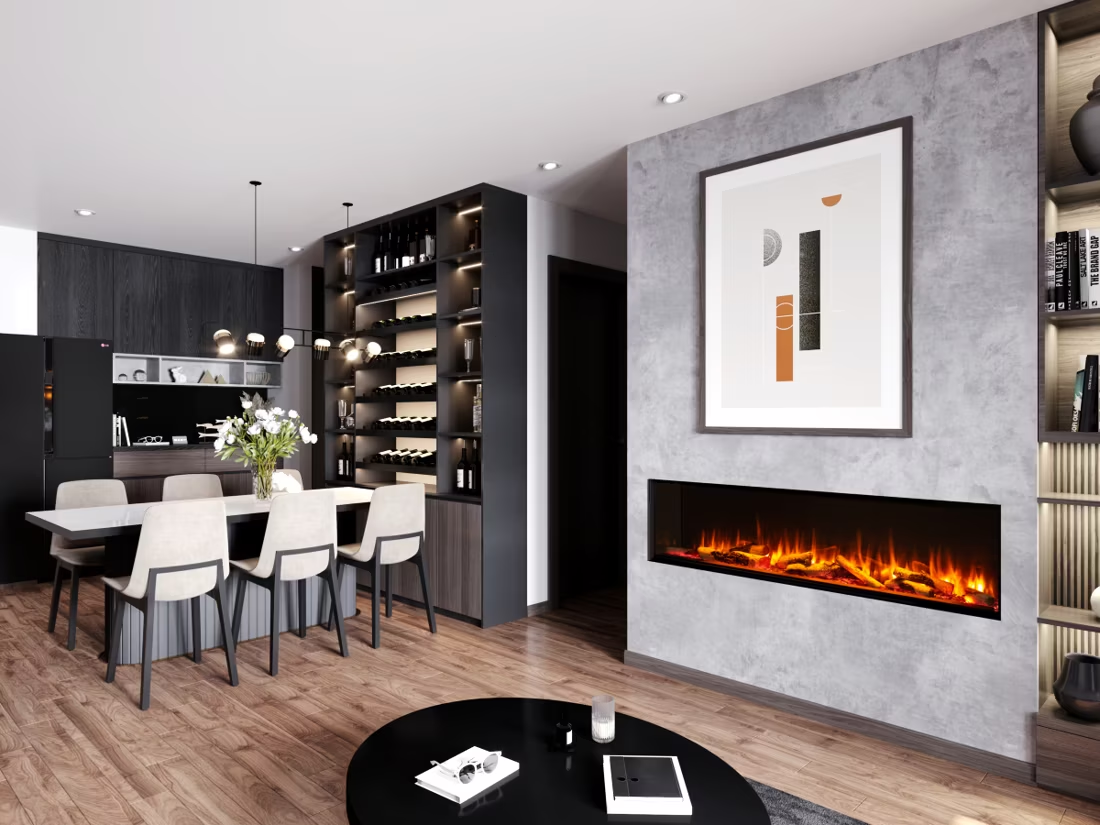
An electric insert fits into an existing masonry firebox or a custom-built surround, which suits Chelsea's older homes with a decorative opening already in place. A wall-mounted unit hangs like a flat-screen and needs only a nearby outlet or a new circuit, popular in newer builds and additions around the village. A freestanding cabinet-style unit needs no wall work at all and can move with you, which some renters and cottage owners on Meech Lake prefer.
How much maintenance does an electric fireplace need?
Very little compared to wood or gas. Dust the vents and wipe the glass a few times a season, and expect to replace an LED module or heater element every several years of regular use. There's no annual chimney sweep, no gas line inspection, and no WETT certification to keep current—one of the practical reasons electric appeals to owners who want ambiance without an ongoing maintenance schedule.
Are there any rebates for electric heating upgrades in Chelsea?
Electric fireplaces themselves aren't usually the target of Hydro-Québec's efficiency programs since they're supplemental rather than a home's primary heat source, but if your project is part of a larger heating upgrade—like a heat pump or better insulation—it's worth checking Hydro-Québec's current residential programs and the province's Rénoclimat offerings before you buy. A local dealer can tell you whether anything applicable is running this season.
How much does an electric fireplace cost to run?
With the heater on, a typical unit draws about 1,500 watts—at average electric rates that's roughly 20 cents an hour. Run the flame effect alone and it costs pennies; the flames are LED-driven and use about as much power as a light bulb. There's no pilot light, no fuel delivery, and essentially no maintenance.
What fireplace styles should I know before shopping?
Four cover most of the market: screen-front traditional (mesh front, open feel, fits craftsman homes), traditional door set (the classic look you grew up with), modern linear (wide, low, the statement piece for entertaining), and clean face contemporary (no trim—your tile or stone runs right to the fire's edge). Walk in knowing those four terms and you're ahead of most buyers.
Can I put a TV above my fireplace?
Yes—with an asterisk. Fireplaces are hot and TVs don't like heat. Either put a mantel between them to deflect rising warmth, or choose a fireplace with heat-management technology that creates a cool zone on the wall above—the wall stays around 125 degrees, barely warm, while the room still gets full heat. If you like clean lines and don't want a mantel, heat management is the answer.
Do electric fireplaces actually produce heat?
Yes—most put out around 4,800–5,000 BTUs from a standard outlet, which comfortably warms a bedroom, office, or den as a comfort-zone heater. What they won't do is carry a whole house the way wood, gas, or pellet can. Think of electric as ambiance-first with honest supplemental heat: flames on with no heat in July, flames plus warmth in January.
Nearby Dealers
Hearth shops serving Chelsea and the surrounding area. Every listing shows whether it is a WhyFire partner, a dealer we have verified as authorized for the brands we recommend, or a local business carrying hearth products. No manufacturer pays for placement. How we verify dealers →
Entreprise Proulx
Advanced Prefabs Hearth Distribution
Schreiter’s Furniture Store
Hubert Heating Limited
Hubert's Fireplaces
Fire It Up Fireplaces
Romantic Fireplaces & Bar B Que
Budget Propane Inc.
Touchette Chauffage & Climatisation
Coop Agrodor
Clement Riopel Gaz Propane
Propane Hilliker
Electric Service in Chelsea
An electric fireplace's heater draws about 1,500 watts—pennies per hour at local rates.
Hydro-Québec
Get your free Project Guide & Parts List for a Chelsea electric fireplace.
Tell me about your home and whether you need a plug-in unit or a wired built-in, and I'll match you with a trusted local dealer and send a free Project Guide & Parts List with the exact parts your project needs.
Find Your Fireplace →