
Keep Your Family Warm and Safe—No Matter What
Ange-Gardien sits in climate zone 6A with winter lows averaging -15.1°C, the kind of Montérégie winter that turns a woodstove from a nice-to-have into a real heat source. I'll match you with a trusted local dealer and send a free Project Guide & Parts List sized for your home.
Every Project Starts From One of These Five Situations
A woodlot region built for a serious heating season.
Ange-Gardien is small and rural, and its winters are not gentle for it. Climate zone 6A and an average winter low of -15.1°C put it in territory closer to Québec City than to Montréal's milder microclimate along the river, with a heating season that stretches from October well into April. Homes here are used to running a primary or serious secondary heat source through months of hard cold, not just a fireplace for ambiance on a Friday night.
The wood supply matches the demand: sugar maple, yellow birch, American beech, and red oak are all common on Montérégie woodlots, and sugar maple in particular is prized locally for its long, hot burn once seasoned. Cutting permits go through the Ministère des Ressources naturelles et des Forêts at roughly $1.85 per cubic metre plus taxes, up to a 22.5 m3 cap, valid April 1 to March 31 with regional harvest windows that vary by lot. Because Ange-Gardien sits close enough to the Montréal region that similar rules get discussed at the municipal level, it's worth knowing that many municipalities near the island now require wood appliances to be registered and certified low-emission, generally capped around 2.5 g/h of fine particles—a routine step a local dealer handles as part of your building permit, not a red flag.
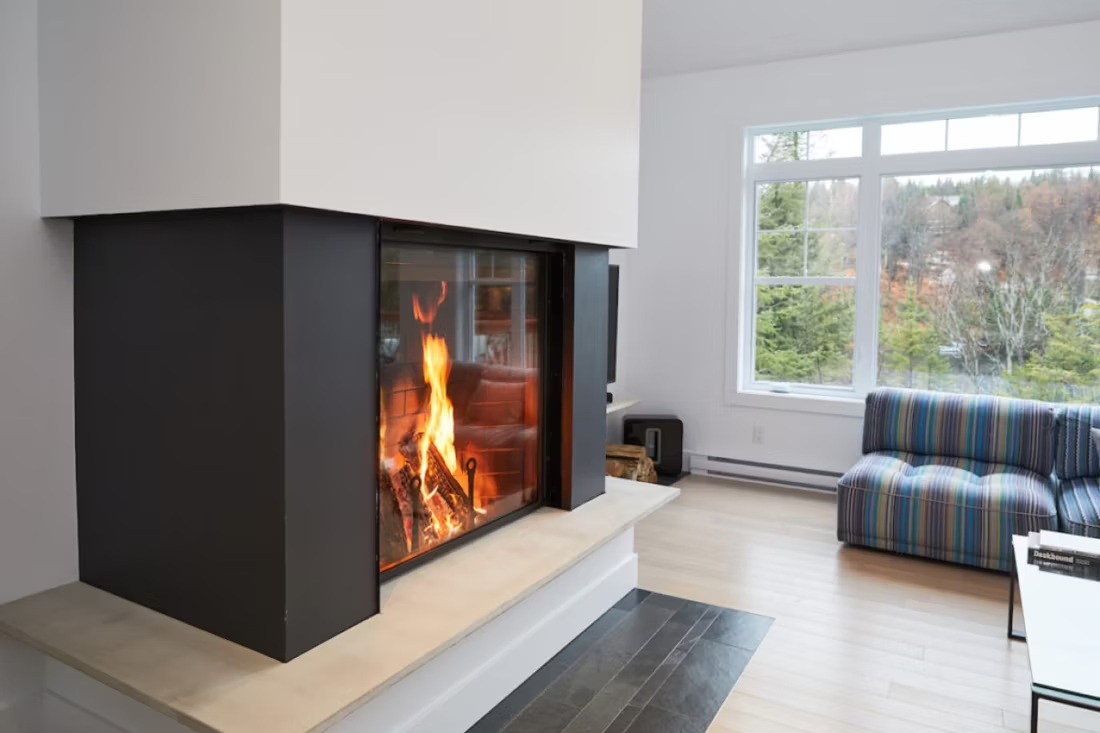
Firewood Cutting Permits Near Ange-Gardien
Ministère Des Ressources Naturelles Et Des Forêts (Mrnf)
Three steps. No salesperson until you're ready.
Tell us about your project
Your postal code, your situation, and the fuel you're leaning toward—or let the answers point you to one.
See what's actually available
The brands dealers within 100 miles genuinely carry—real options, never a catalog mirage.
Get your dealer & Project Guide
A trusted local dealer, plus the free Project Guide & Parts List that names every component of the job.
Frequently Asked Questions
How much does a wood stove installation cost in Ange-Gardien?
Most installs in the area run $6,000 to $12,000 CAD. An insert going into an existing masonry firebox—common in older farmhouses around Ange-Gardien and the surrounding Montérégie villages—sits toward the lower end. A freestanding stove that needs a full new Class A chimney run through the roof, which is typical in newer builds without an existing flue, lands closer to the top. Your municipal building department permit and the CSA B365 installation requirements are usually folded into the installer's quote either way.
What size wood stove do I need for a home in Ange-Gardien?
With winter lows averaging -15.1°C and stretches of colder weather most Januarys, undersizing is the more common misstep than oversizing. A stove rated for under 1,000 square feet suits a small addition or a chalet-style property, but most main houses in and around Ange-Gardien do better with a medium to large stove—roughly 1,500 to 2,500 square feet of rated capacity—so it can hold an overnight burn on sugar maple or red oak without constant reloading. A local dealer will size against your actual ceiling height and insulation, not just square footage.
Do I need a permit to install a wood stove in Ange-Gardien?
Yes. New installations go through the municipal building department, and the install itself needs to meet the CSA B365 installation code. On top of the permit, most insurers in Quebec now ask for a WETT inspection before they'll cover a wood-burning appliance, especially on a resale or a new policy—it's a separate step from the building permit but one your installer will usually arrange at the same time, since it's routine for wood projects across Montérégie.
What's the difference between a wood stove and a wood insert for my house?
A freestanding stove sits on a hearth pad and vents through new Class A pipe, which works well for newer Ange-Gardien homes that don't already have a masonry chimney. An insert slides into an existing masonry firebox and reuses the chimney you've already got, which is the more common route in older farmhouses around the village where open fireplaces were standard decades ago. Inserts also tend to land toward the lower end of the $6,000-$12,000 range since the chimney structure and much of the venting path already exist.
Where do I get a firewood cutting permit near Ange-Gardien?
The Ministère des Ressources naturelles et des Forêts issues cutting permits for public land at about $1.85 per cubic metre plus taxes, capped at 22.5 m3 per permit, valid from April 1 to March 31 with harvest windows that vary by region. Sugar maple is the wood most local burners chase first for its density and long burn time, followed by yellow birch, American beech, and red oak, all of which stand in the mixed hardwood bush typical of this part of Montérégie.
Which local firewood species burns best in a stove?
Sugar maple is the standout—dense, widely available on Montérégie woodlots, and it holds coals well for an overnight reload, which matters when overnight lows sit near -15°C. Yellow birch and American beech burn hot and clean once properly seasoned, typically a full year to eighteen months split and stacked. Red oak burns long and steady but needs the most patience to season—burning it green is one of the more common creosote complaints local sweeps report, so plan ahead if you're cutting your own under an MRNF permit.
How often should my chimney be swept in Ange-Gardien?
An annual sweep and inspection before the season starts, ideally in September or early October ahead of the first hard frost, is the standard here given how many households run wood as a genuine heat source through a long Montérégie winter. If you're burning oak that wasn't fully seasoned or putting four or more cords through the stove in a season, a mid-winter check is worth adding—and since most home insurers want a current WETT inspection on file for a wood appliance anyway, scheduling the sweep and the WETT visit together saves a second call-out.
Are there local rules about which wood stoves I can install?
Ange-Gardien itself is a small rural municipality, but it sits close enough to the Montréal region that its bylaw approach tends to track what nearby municipalities are doing: registered, certified low-emission wood appliances, generally held to a limit around 2.5 g/h of fine particles. In practice this means an EPA/CSA-certified stove or insert, which is what most dealers stock anyway, and it's worth confirming your specific model and paperwork with the municipal building department before you buy rather than after—a five-minute call your installer can usually make for you.
Wood vs. pellet—which makes more sense for an Ange-Gardien home?
Wood has the edge on fuel cost if you're cutting your own under an MRNF permit at roughly $1.85 per cubic metre, and it keeps working without electricity during the ice-storm outages that occasionally hit rural Montérégie. Pellet stoves from regional brands like Granules LG, Energex, or Trebio run cleaner and are easier to load, but pellets run $400-$575 a ton and the stove needs power for the auger and blower, so it won't help during an outage. A fair number of households here keep a wood stove for resilience and consider pellet mainly for the lower day-to-day mess—either way, install costs are close, at $6,000-$12,000 for wood versus $6,000-$10,000 for pellet.
Why do fireplace quotes vary so much?
Because a fireplace is an iceberg—there's more behind the wall than in front of it. A low quote often covers only the unit; the full scope includes vent pipe, gas line or electrical, framing, and the tile or stone that has to come off and go back on. Make every bidder price the whole job. If a dealer can't speak to the full scope with confidence, that's your signal to keep looking.
Louvered or clean face—which fireplace front is better?
Louvered fronts have grill work above and below the glass for airflow, move heat a little better with a fan, and suit traditional mantels. Clean face designs drop the louvers entirely so finish work runs to the fire's edge—they fit both modern and traditional rooms. When we did our own home we chose clean face: a big viewing area beat a little extra airflow. It depends on your room, not on a rulebook.
What do I measure to size a fireplace insert?
Four numbers tell you what fits: the front width, the front height, the back width, and the overall depth of your existing fireplace opening. Grab a tape measure, jot those down, and snap a photo of the wall—those two things do more to move your project forward than anything else you can do today.
What does it take to replace an existing fireplace?
Fireplaces are like icebergs—bigger behind the wall than in front of it. Replacement means removing the surrounding tile or stone (the finish material laps onto the fireplace face), pulling the old unit, setting the new one in the same enclosure, and re-finishing the wall. A hearth professional can determine what's behind your wall without demolition during an in-home preview.
Nearby Dealers
Hearth shops serving Ange-Gardien and the surrounding area. Every listing shows whether it is a WhyFire partner, a dealer we have verified as authorized for the brands we recommend, or a local business carrying hearth products. No manufacturer pays for placement. How we verify dealers →
Gaz Propane Rainville Inc.
Suroît Boutique (Cowansville)
Actions Multi-Flammes Granby
Chauffage Gadbois
Piscines Jacques-Cartier
Perfecto Gaz Propane
Suroît Boutique (St-Hyacinthe)
Napert Signature
Thermopompes N & R Sol
Suroît Boutique (Sainte-Martine)
Foyer-Gaz
Max Oxygene Pur
Get your free Project Guide & Parts List for an Ange-Gardien wood project.
Tell me about your home and I'll match you with a trusted local dealer and send a free Project Guide & Parts List—sized for climate zone 6A winters, with the vent kit, hearth clearances, and WETT-ready paperwork specified.
Find Your Fireplace →