
Find your fireplace across the Kings region of Prince Edward Island.
Wood, propane-fed gas, pellet, and electric fireplace resources for every corner of Kings—from Montague and Three Rivers out to Souris and Murray Harbour. Pick a fuel and find a local dealer who actually works on the Island's red-soil roads and older farmhouses.
Every Project Starts From One of These Five Situations
Long Island winters, an Acadian hardwood forest, and no mains natural gas anywhere on PEI.
Kings sits at the eastern tip of Prince Edward Island, a region of sugar maple, yellow birch, red maple, and white spruce woodlots between Montague, Georgetown, Souris, and the small harbour communities along the Northumberland Strait. Winter lows average around -12.6°C, and the heating season here stretches long the way it does in Fredericton, New Brunswick—five or six months where a home either has a serious primary heat source or it struggles. That's exactly why wood heat has never gone out of style in Kings: sugar maple and yellow birch split and dried over a summer burn long and hot, and a lot of households still cut their own from PEI Forests, Fish and Wildlife-permitted woodlots or buy from a neighbour down the road.
There's a fact that shapes every fuel decision on this Island: PEI has no mains natural gas network. When someone in Kings says they want a "gas fireplace," they mean a propane-fed unit running off a tank or bulk delivery, not a line buried under the street—and that's a completely standard, well-supported option here, just a different install than what you'd find in a city with underground gas mains. Wood and pellet demand stays strong for the same reason; Shaw Resources pellets move steadily through the region each fall. Any wood appliance install typically follows the CSA B365 code, and most insurance providers will ask for a WETT inspection before they'll cover it. Permits run through the municipal building department—Three Rivers for the Montague-Georgetown-Cardigan area, or the Town of Souris further east. This hub rolls up retailers, service techs, and fuel suppliers across all of Kings; pick your fuel below for local dealers, real installed costs, and unit recommendations for your specific town.
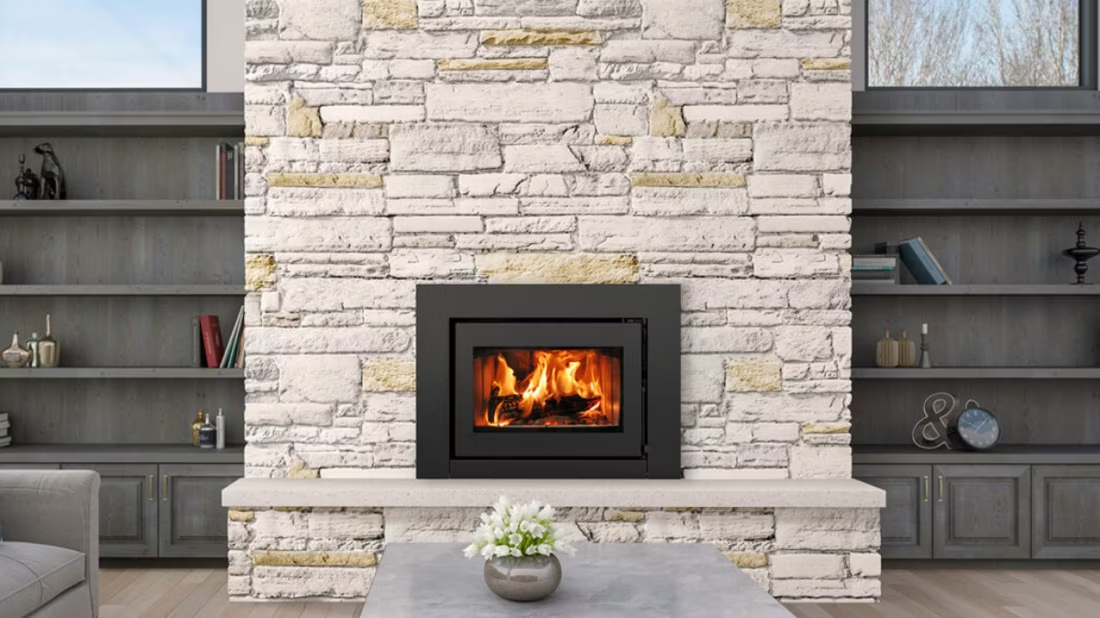
Four fuels. One honest answer for Kings.
Three steps. No salesperson until you're ready.
Tell us about your project
Your postal code, your situation, and the fuel you're leaning toward—or let the answers point you to one.
See what's actually available
The brands dealers within 100 miles genuinely carry—real options, never a catalog mirage.
Get your dealer & Project Guide
A trusted local dealer, plus the free Project Guide & Parts List that names every component of the job.
Frequently Asked Questions
Which fireplace fuel actually makes sense in Kings, PEI?
All four show up here, but the mix looks different than on the mainland because PEI has no mains natural gas. Wood remains the backbone fuel in Kings—sugar maple and yellow birch from local woodlots burn hot and steady through a -12.6°C night, and a lot of households cut under a PEI Forests, Fish and Wildlife permit or buy cordwood from a neighbour. Pellet stoves have a real foothold too, with Shaw Resources supplying the region each fall; they're a good fit for anyone who wants wood-level heat without splitting and stacking. "Gas" in Kings means propane, delivered by tank or bulk truck, and it works well as a clean, thermostat-controlled option—just budget for tank placement and delivery rather than a buried utility line. Electric fireplaces are supplemental almost everywhere here; they're not built to carry a whole Island winter on their own, but they're a solid add for a bedroom or a sunroom in a home already heated by wood or propane.
Do I need a permit or inspection to install a wood stove in Kings?
Yes, and insurance is usually the part homeowners underestimate. Installations follow the CSA B365 code, and most insurance providers on the Island will require a WETT inspection before they'll cover a wood-burning appliance—new or existing. Building permits run through your municipal building department: Three Rivers if you're in the Montague, Georgetown, or Cardigan area, or the Town of Souris further east. Propane fireplace installs need a licensed gas fitter and their own permit, since you're setting a regulator and running gas line even without a mains connection. Most local dealers handle this paperwork as part of the project rather than leaving it to the homeowner.
There's no mains gas line here—so how does a gas fireplace actually work in Kings?
It runs on propane instead of piped natural gas, which is normal across all of Prince Edward Island, not just Kings. A licensed gas fitter sets a propane tank—usually a 420 lb (100 gallon) or larger cylinder—outside your home, runs a supply line to the fireplace, and you get the same push-button convenience and thermostat control as a mains-gas unit anywhere else in the country. The main planning differences are tank placement (setback rules apply) and arranging regular propane delivery, which most rural Kings households already do for their furnace or water heater. It's a well-supported, mainstream option here—just framed around propane logistics rather than a utility hookup.
Where does firewood come from in Kings, and is it good burning wood?
Kings sits in Acadian forest country, and the sugar maple, yellow birch, and red maple that dominate local woodlots are excellent, dense burning wood once seasoned a full summer—white spruce is common too but burns faster and is better suited to shoulder-season fires than the coldest nights. A good share of households cut their own from private woodlots or a permitted parcel through PEI Forests, Fish and Wildlife, and local firewood dealers sell seasoned cords by the fall for anyone who doesn't. If you're buying, ask specifically for maple or birch and confirm it's been split and covered since spring—unseasoned wood is the single biggest cause of chimney creosote buildup and failed WETT inspections.
What does a fireplace installation typically cost in Kings?
Costs shift with fuel and how much venting or gas-line work is involved. Wood stove or insert installs, including a WETT-compliant chimney and CSA B365 clearances, typically run $4,000-$8,500 CAD. Propane fireplaces or inserts run roughly $4,500-$9,000 CAD depending on tank setup and whether you're placing a new bulk tank or using an existing one. Pellet stove or insert installs generally land at $4,000-$7,000 CAD. Electric fireplaces are the low end—$300-$2,500 CAD for the unit, plus $400-$1,000 CAD in labour for anything beyond a simple plug-in placement. The region and fuel pages above break these down further with local retailer pricing.
When's the right time to book service before winter hits Kings?
Late summer through early September, before the first real cold snap pushes everyone's schedule at once. A WETT inspection and chimney sweep take on more urgency here than in a drier climate—the Island's marine humidity, combined with a wood-burning appliance running hard for five or six months, means creosote and moisture issues show up faster than homeowners expect. Propane techs get busy the same way doing pre-season safety checks, and pellet stove owners should plan an annual cleaning around the same window so the exhaust venting is clear before the season's first real cold arrives off the Northumberland Strait.
How many BTUs do I need in a fireplace?
Wrong question—and the industry's favorite way to confuse you. More BTUs isn't better if the fireplace cooks you out of the room you spent thousands to enjoy. Think in terms you can verify: how many square feet the unit heats, whether it's primary or backup heat, and whether you want it running overnight. Those three answers size a fireplace correctly every time.
Will we actually use a fireplace once we have one?
In my own home, the room with the fireplace has never been the same—it became the social hub. Game nights, holidays, date nights after the kids are down: the fire is where the house gathers. There's a reason people in this industry joke that we're really in the romance and entertainment business. You won't wonder whether you'll use it; you'll wonder how the room worked before.
Does a fireplace add value to my home?
On average, a fireplace adds back to the home about the same amount you spent installing it. Add the monthly savings from heating the rooms you actually use instead of the whole house—often hundreds of dollars a year—and the value case is strong before you even count what a fire does for how your family uses the room.
Can I install a fireplace myself?
If you're putting a fire in your house on purpose, it's best to work with an expert. Unless you're genuinely experienced in framing, gas line, vent pipe, and the national code on clearances to combustibles, have a professional do it—and ideally the same company that sells you the fireplace, so warranty, service, and liability all live under one roof.
Stove and Fireplace Dealers in Kings
Listings include WhyFire partner dealers, dealers we have verified as authorized for the brands we recommend, and established local businesses that carry hearth products. Every listing shows which one it is. The ones marked Preferred run on WhyFire's software, so they can show you real pricing and book your appointment right here. No manufacturer pays for placement. How we verify dealers →
Find a trusted local dealer in Kings.
Pick your fuel below and we'll put together a free Project Guide & Parts List—the right unit, the vent kit or propane setup it needs, and the local dealer we recommend for your project.
Find Your Fireplace →