
Keep Your Family Warm and Safe—No Matter What
In a region where natural gas and PPL Electric power most homes, wood stoves are a smaller category—but a good one for older rowhomes with existing chimneys and homeowners who want backup heat when ice storms roll through the Susquehanna Valley.
Every Project Starts From One of These Five Situations
Gas and electric dominate the Harrisburg market—wood plays a smaller role.
Harrisburg sits low in the Susquehanna River valley at just 333 feet of elevation, in climate zone 5A with about 5,614 heating degree days and an average winter low near 22°F. That's a real winter—colder than Richmond or Nashville—but nowhere near the extremes of places like Buffalo or Minneapolis where wood heat is a survival staple. Combined with widely available natural gas service across the city and surrounding Dauphin County boroughs, plus PPL Electric Utilities Corp keeping residential electric rates around 12.3 cents per kWh, most Harrisburg-area homes lean on gas furnaces, heat pumps, or electric resistance heat rather than cordwood.
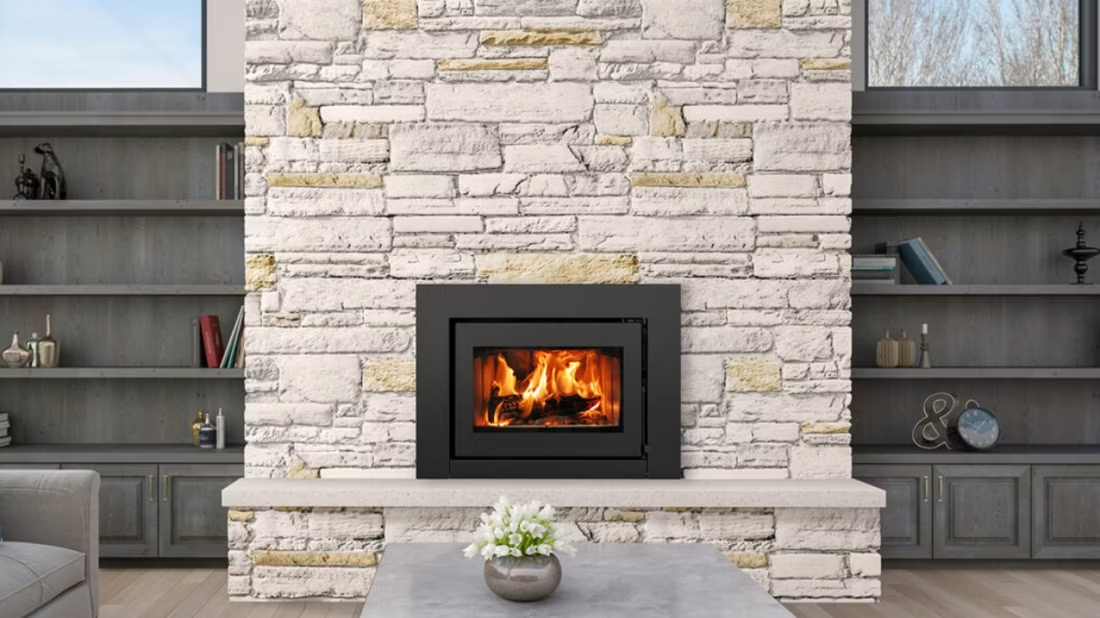
That doesn't mean wood heat is absent—it means it's a deliberate choice rather than the default. Older Harrisburg neighborhoods like Midtown, Bellevue Park, and Allison Hill are full of rowhomes and twins built with masonry fireplaces, many of which sit unused or underused and are good candidates for a wood-burning insert. Farther out in Dauphin County, homeowners with acreage and access to central Pennsylvania hardwoods—oak, hickory, maple, and cherry are all common locally—sometimes install a freestanding stove for supplemental heat or storm-outage backup. It's a smaller slice of the market than gas or electric, but for the right home, it's still a sound one.
Three steps. No salesperson until you're ready.
Tell us about your project
Your zip code, your situation, and the fuel you're leaning toward—or let the answers point you to one.
See what's actually available
The brands dealers within 100 miles genuinely carry—real options, never a catalog mirage.
Get your dealer & Project Guide
A trusted local dealer, plus the free Project Guide & Parts List that names every component of the job.
Frequently Asked Questions
Is a wood stove a practical option for a home in Harrisburg?
For some homes, yes—but it's worth being honest that wood isn't the mainstream choice here the way it is in more rural, forest-adjacent parts of Pennsylvania. Natural gas service reaches most of the city and inner suburbs, and PPL Electric Utilities Corp keeps electric heat reasonably affordable, so the majority of Harrisburg homeowners heat with one of those two. Where wood still makes sense: older rowhomes and twins in neighborhoods like Midtown or Bellevue Park with existing masonry chimneys, and outlying Dauphin County properties where storm-related power outages make a wood stove a genuine backup heat source rather than just ambiance.
How much does it cost to install a wood stove in the Harrisburg area?
Because wood is a less common request here than gas or electric, pricing varies more by dealer than in regions with a bigger installed base—but most Harrisburg-area wood stove or insert projects fall somewhere between $3,500 and $8,000, including the unit, hearth pad, and venting. Retrofitting a wood insert into an existing masonry chimney (common in older rowhomes) tends to sit toward the lower end since the chimney already exists. A freestanding stove in a home with no existing chimney—needing new Class A pipe run through a roof or wall—runs higher. A local dealer will give you a firm number after seeing the space.
Do I need a permit to install a wood stove in Harrisburg?
Almost certainly, but which office you deal with depends on where in Dauphin County you live. Harrisburg city proper, Susquehanna Township, Swatara Township, and Lower Paxton Township each maintain their own building and code enforcement offices, and each can have slightly different requirements for hearth clearances, chimney liners, and inspections. There's no single county-wide hearth ordinance, so the first call worth making is to your specific municipality's code office—most local wood stove installers handle this coordination as part of the job.
What kind of firewood is available in the Harrisburg area?
Central Pennsylvania's hardwood forests supply oak, hickory, maple, and cherry to most local firewood dealers and tree services—all good burning wood with solid BTU output when properly seasoned. Oak and hickory in particular are popular for overnight burns because they're dense and burn slower than softer species. Most sellers in the region price by the cord, and it's worth asking whether the wood has been seasoned at least six months, since green firewood is a common complaint with less established sellers.
Can I put a wood insert into my rowhome's existing fireplace?
Often, yes, and it's one of the more common wood projects in the Harrisburg area. Neighborhoods like Midtown, Allison Hill, and parts of Uptown are full of older brick rowhomes and twins built with masonry fireplaces that were designed for coal or wood in the first place. A properly sized insert with a stainless steel liner run up the existing flue can turn a drafty, inefficient open fireplace into a real heat source—without the structural work a freestanding stove in a new location would require. The main variables are the chimney's condition and whether the flue size matches what the insert manufacturer specifies.
Is Harrisburg's climate cold enough to justify a wood stove?
It's a real winter, but not an extreme one. Harrisburg sees roughly 5,614 heating degree days a year with average lows around 22°F—colder than the Mid-Atlantic coast, but well short of the 8,000+ HDD you'd see in a place like Minneapolis or Duluth where wood heat is often load-bearing for the whole winter. For most Harrisburg homes, wood works best as supplemental heat for a favorite room or as backup during the ice storms that periodically knock out power in the Susquehanna Valley, rather than as a primary heat source replacing the furnace.
Are there air quality restrictions on wood burning in Harrisburg?
No—Dauphin County doesn't currently have the kind of winter inversion or non-attainment air quality issues that trigger burn bans or curtailment periods in some Western cities. That said, an EPA-certified stove or insert is still the right call, both for efficiency (you'll use less wood per BTU) and for neighbor courtesy in denser rowhome blocks where houses sit close together and a smoky older stove can be noticeable next door.
Where can I buy firewood in the Harrisburg area?
Local tree services and firewood dealers throughout Dauphin County sell seasoned oak, hickory, maple, and cherry by the cord, with prices generally running in line with regional Mid-Atlantic averages. Because Harrisburg isn't near large tracts of national forest land, there's no public-land cutting-permit program the way there is in more forested parts of the state—most homeowners here buy firewood rather than cut their own, so it's worth asking sellers how long the wood has been seasoned before you commit to a delivery.
Wood vs. gas vs. electric—which makes sense for a Harrisburg home?
For most Harrisburg homes, gas or electric will be the practical primary heat source—natural gas service covers much of the city and inner suburbs, and PPL Electric Utilities Corp's residential rates make electric heat pumps a viable option too. Wood earns its place as a secondary system: it keeps a home warm during power outages (a real consideration in Susquehanna Valley ice storms), it can dramatically improve an old rowhome fireplace that's currently just decorative, and it appeals to homeowners who want a non-electric heat source in reserve. Very few Harrisburg households heat exclusively with wood, but plenty use it well alongside gas or electric.
Why won't my new wood stove get going like my old one?
New wood stoves are 70%+ efficient, so far less heat goes up the flue—which also means less draft to get a fire established. The rule: build a genuinely hot fire for about 45 minutes before you choke it down. Skip that and you get smoke in the room, creosote in the chimney, and a fire that never takes off. Most performance complaints trace straight back to this.
Why is my open fireplace making my house colder?
Open fireplaces suck—literally. As the fire burns, it consumes air your furnace already paid to heat and pulls it out through the chimney, so the house is actually colder after the fire goes out than before you lit it. An insert fixes this: it seals the chimney, puts fixed glass across the front, and turns that hole in your house into a real heat source.
How much should I budget for a fireplace?
For an average home—covering the fireplace, the vent pipe, and basic installation—a budget between $3,900 and $5,500 gives you a lot of options across wood, gas, and pellet. By the time you add finish work, gas line, and electrical, the average complete installation lands between $5,000 and $12,000 all-in. In a remodel or new build, a good rule is to put about 2.5% of the total project cost toward the fireplace.
Can a fireplace actually lower my heating bill?
Yes—by creating a comfort zone. A furnace heats every square foot of the house just to warm the one room you're in; a gas fireplace on low burns roughly a sixth of the gas a typical furnace does. Set the furnace around 55–60 degrees as a baseline, then heat the rooms your family actually uses. Families who heat this way commonly save $20–$60 a month.
Nearby Dealers
Hearth shops serving Harrisburg and the surrounding area. Every listing shows whether it is a WhyFire partner, a dealer we have verified as authorized for the brands we recommend, or a local business carrying hearth products. No manufacturer pays for placement. How we verify dealers →
Aes Hearth & Patio - Camp Hill
Aes Hearthplace, Inc.
Todays Home And Leisure
North Forge Home Heating
Hoffman's Outdoor Power & Repair
Firestarters Custom Fireplace & Stove
Country Comfort Inc.
Se Outdoor & Design
Find your wood stove or insert in Harrisburg.
Tell us about your home—rowhome fireplace, freestanding stove, backup heat for storm season—and we'll match you with a trusted local Harrisburg-area dealer and a free Project Guide & Parts List for your specific project.
Find Your Fireplace →