
Find the Right Hearth for Your Franklin County Home.
Wood, gas, pellet, and electric fireplace resources for every town in Franklin County—from Chambersburg and Waynesboro to Greencastle, Shippensburg, and Mercersburg. Find the right unit and connect with a trusted local hearth retailer.
Every Project Starts From One of These Five Situations
Cumberland Valley heating, from Chambersburg to the Blue Ridge foothills.
Franklin County sits in the Cumberland Valley, boxed in by South Mountain to the east and the Tuscarora ridges to the west, with the county seat of Chambersburg anchoring a landscape of farmland, small boroughs, and wooded ridgelines. At 5,302 heating degree days and a winter low average of 23°F, it's a real four-season heating climate—colder than most of Virginia, milder than Buffalo, NY, but with plenty of nights that call for a fire. Farm woodlots and the region's hardwood mix of oak, hickory, maple, and cherry have supplied wood heat here for generations, and Franklin County isn't a non-attainment area, so wood and pellet appliances don't face the seasonal burn curtailments common out West.
What you'll find on this hub: hearth retailers, service technicians, and fuel suppliers serving every community in the county—from Chambersburg and Waynesboro down to Greencastle and Mercersburg near the Maryland line, and out to Shippensburg, Mont Alto, and Fayetteville. Pick your fuel below to drill into local dealers, installation costs, recommended units, and permit specifics for your municipality. Whether you're heating a farmhouse near St. Thomas or a borough rowhome in Chambersburg, this is the starting point.
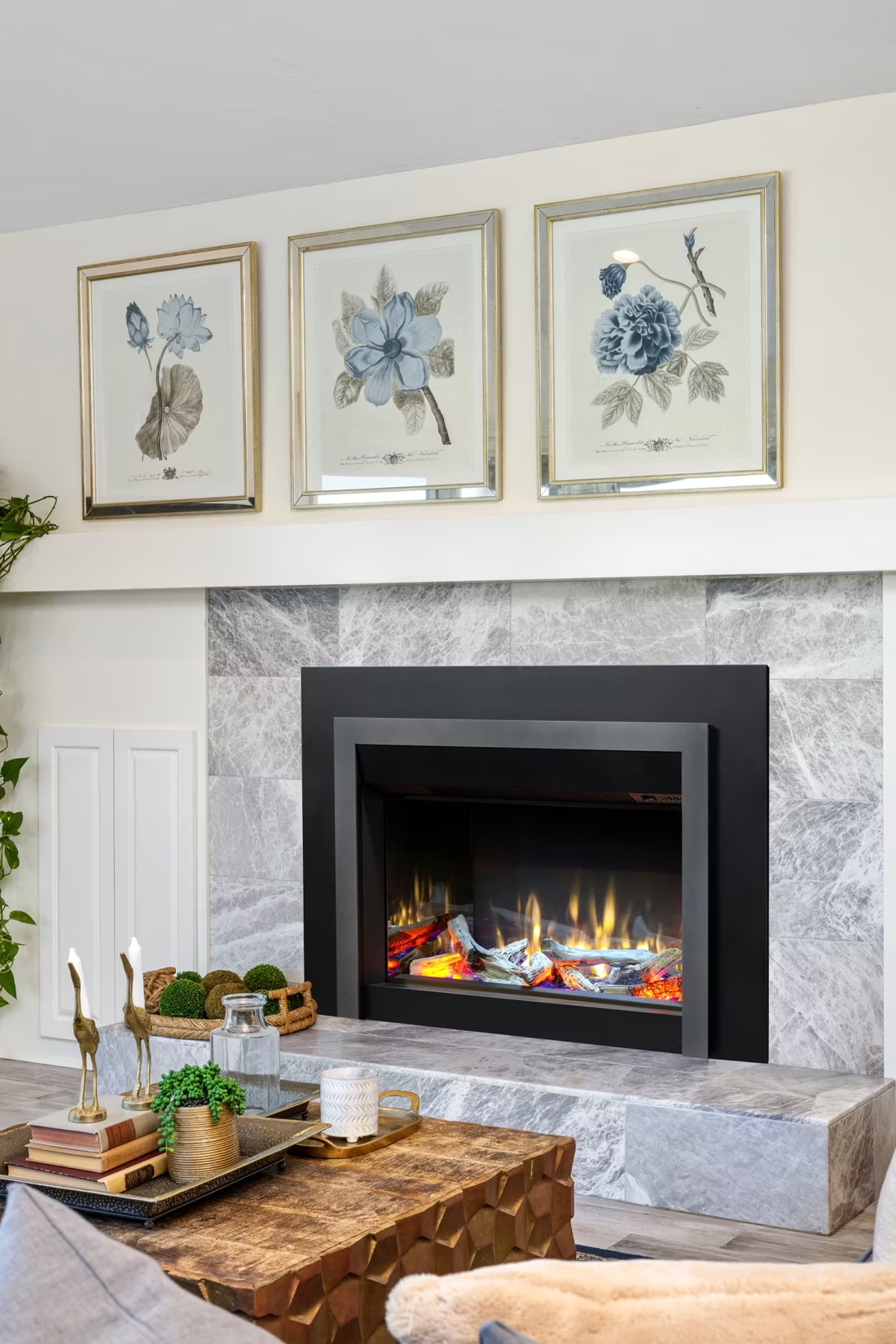
Four fuels. One honest answer for Franklin County.
Three steps. No salesperson until you're ready.
Tell us about your project
Your zip code, your situation, and the fuel you're leaning toward—or let the answers point you to one.
See what's actually available
The brands dealers within 100 miles genuinely carry—real options, never a catalog mirage.
Get your dealer & Project Guide
A trusted local dealer, plus the free Project Guide & Parts List that names every component of the job.
Frequently Asked Questions
Which fuel works best in Franklin County?
It depends on your home and priorities. Wood is a strong fit given the county's farm woodlots and the local mix of oak, hickory, maple, and cherry—dense hardwoods that burn long and hot, which matters when overnight lows dip into the teens. Gas is the convenience choice in and around Chambersburg and Waynesboro where natural gas service reaches—instant heat with no wood handling. Propane fills the same role farther out in the townships. Pellet is a solid middle ground, especially with regional brands like Energex, Hamer Pellet Fuel, and Greene Team readily stocked at farm and hearth stores—you get wood-style ambiance without splitting and stacking. Electric works well as supplemental heat for bedrooms or finished basements, and Chambersburg's municipally owned electric utility keeps rates there somewhat more predictable than in areas served by the larger investor-owned utilities. Most Franklin County homes end up pairing a primary wood or pellet unit with gas or electric in secondary rooms.
Do I need a permit to install a fireplace in Franklin County?
In most cases, yes. Franklin County follows the Pennsylvania Uniform Construction Code, and new wood stoves, wood inserts, gas fireplaces, gas inserts, gas stoves, and pellet stoves typically require a building permit. Because the county is made up of boroughs and townships rather than one central permitting office, where you apply depends on your address—Chambersburg Borough, Waynesboro Borough, and Greencastle Borough each run their own codes departments, while unincorporated townships like Guilford, Antrim, and Letterkenny handle permits through their township offices or a shared county-contracted code administrator. Gas installations also need a separate gas line permit pulled by a licensed contractor. Wood and pellet appliances sold and installed today meet current EPA emissions standards as a matter of course. Most local retailers manage the permitting on your behalf, so you're not left tracking down the right office yourself.
Are there air quality restrictions on wood burning in Franklin County?
No—Franklin County is not a designated non-attainment area, and there are no mandatory or voluntary burn curtailment days like you'd find in a basin or valley prone to winter inversions. That's a meaningful difference from parts of the West and Pacific Northwest. That said, choosing an EPA-certified wood or pellet appliance still matters here: it burns the local oak and hickory more completely, produces less visible smoke for neighbors in tighter borough lots like Chambersburg or Waynesboro, and uses less wood per BTU of heat. If you're replacing an older pre-1988 stove, swapping to a current catalytic or non-catalytic unit is one of the biggest efficiency upgrades available, even without a regulatory mandate pushing you to do it.
Can one local hearth retailer handle all four fuel types?
Several Franklin County retailers carry at least three of the four fuel types, and a few carry all four—wood, gas, pellet, and electric—which is useful if you're still deciding what fits your home. Dealers concentrated in and around Chambersburg tend to have the broadest showrooms, with working displays of catalytic wood stoves alongside gas inserts and pellet units side by side. Smaller shops in Waynesboro and Shippensburg often specialize more narrowly—heavy on wood and pellet, lighter on electric. A handful of businesses in the county function purely as fuel suppliers—selling seasoned firewood, bagged pellets, or propane—rather than as retailers who sell and install appliances. If you want to compare fuels in person before committing, the multi-fuel dealers are worth the drive.
How does service work in the rural parts of Franklin County?
Most chimney sweeps, gas techs, and pellet service technicians are based near Chambersburg or Waynesboro and travel out to the more rural stretches—St. Thomas and the Path Valley communities to the west, Fannett Township, and the farmland around Mercersburg near the Maryland line. Expect a modest travel fee for calls well outside the boroughs, and expect fall booking windows (September–October) to fill up fast, since that's when everyone realizes they need a sweep before the first cold snap. If you're in one of the outlying townships, scheduling your annual wood chimney sweep or gas inspection early—rather than waiting for the first freeze—makes it much easier to get a technician out before the season is in full swing.
What's the typical cost range for fireplace installation across all fuel types in Franklin County?
Ranges vary by fuel and by how much existing infrastructure you already have. Wood stove or insert installation: roughly $3,800–$8,000 for a typical install, more if new chimney or hearth pad work is needed. Gas fireplace, insert, or stove: roughly $4,000–$9,500, with cost driven mainly by whether a gas line already reaches the install location—conversions in existing gas-served Chambersburg or Waynesboro homes run toward the lower end. Pellet stove or insert: roughly $4,000–$6,500 for a typical install. Electric fireplace: $200–$2,800 for the unit itself, plus $300–$1,000 in labor for anything beyond a simple plug-and-play placement, which covers most wall-mount and insert installs. For details specific to your fuel, see the county + fuel pages above.
How much should I budget for a fireplace?
For an average home—covering the fireplace, the vent pipe, and basic installation—a budget between $3,900 and $5,500 gives you a lot of options across wood, gas, and pellet. By the time you add finish work, gas line, and electrical, the average complete installation lands between $5,000 and $12,000 all-in. In a remodel or new build, a good rule is to put about 2.5% of the total project cost toward the fireplace.
Does a fireplace add value to my home?
On average, a fireplace adds back to the home about the same amount you spent installing it. Add the monthly savings from heating the rooms you actually use instead of the whole house—often hundreds of dollars a year—and the value case is strong before you even count what a fire does for how your family uses the room.
What are the biggest mistakes people make buying a fireplace?
Five come up constantly: budgeting for the unit but not the full job (vent, gas line, electrical, finish work); drowning in options instead of starting from style and fuel; buying without an in-home preview; handing installation to a handyman instead of a pro; and giving up out of sheer indecision. Every one is avoidable with a clear plan—step one, step two, step three.
What is an in-home preview and do I need one?
It's a visit where a hearth professional measures your space, confirms the model you picked actually works in your home, and walks the specs—framing, gas line, venting, finish work—before anything is ordered. Some details you just can't know until you see the house. Never make a down payment without one; it's the single most-skipped step that burns buyers.
Stove and Fireplace Dealers in Franklin County
Listings include WhyFire partner dealers, dealers we have verified as authorized for the brands we recommend, and established local businesses that carry hearth products. Every listing shows which one it is. The ones marked Preferred run on WhyFire's software, so they can show you real pricing and book your appointment right here. No manufacturer pays for placement. How we verify dealers →
L.t. Rush Stone Inc
Bunting’s Fireplace & Stove
Aes Hearth & Patio - Chambersburg
Aes Hearthplace, Inc.
Mace Energy Supply Inc.
McLaughlin Home Heating
H & D Service & Stove Inc
Blaine Window Hardware, Inc.
Monocacy Chimney Care
Get matched with a Franklin County hearth pro.
Pick your fuel below, and I'll match you with a trusted local dealer and send over a free Project Guide & Parts List—a plan for your project with the exact parts, including the vent kit, and the local pro who can install it right.
Find Your Fireplace →