
Heat that holds up in Wheeler County's canyon winters.
Wood, gas, pellet, and electric fireplace resources for Fossil, Mitchell, Spray, and the ranches and canyon homesteads between them. Connect with a trusted local hearth retailer who actually covers this stretch of eastern Oregon.
Every Project Starts From One of These Five Situations
Sparse population, serious cold—heating in Wheeler County, Oregon.
Wheeler County is one of Oregon's least populated counties—under 900 people spread across roughly 1,700 square miles of the John Day River canyon country. Homes here sit far apart, often at the end of long gravel driveways, in a climate zone 5B landscape similar in severity to what you'd find around Bismarck ND. Ponderosa pine, lodgepole pine, and juniper are the wood species locals cut and burn, often from their own land or nearby BLM and Forest Service ground. With so few households, this isn't a county with big-box hearth stores on every corner—it's a county where the nearest qualified installer might be an hour's drive away, and getting the right person matters more than usual.
This hub rolls up hearth retailers, service technicians, and fuel suppliers covering Wheeler County—Fossil, Mitchell, Spray, and the unincorporated ranch country in between. Pick a fuel below to see local dealer coverage, typical installed costs, and what actually works for a canyon-country home versus a valley-floor property. Given the low population, don't expect a long list of dealers headquartered in-county—expect a shorter list of retailers based in nearby larger towns who make regular service runs out here.
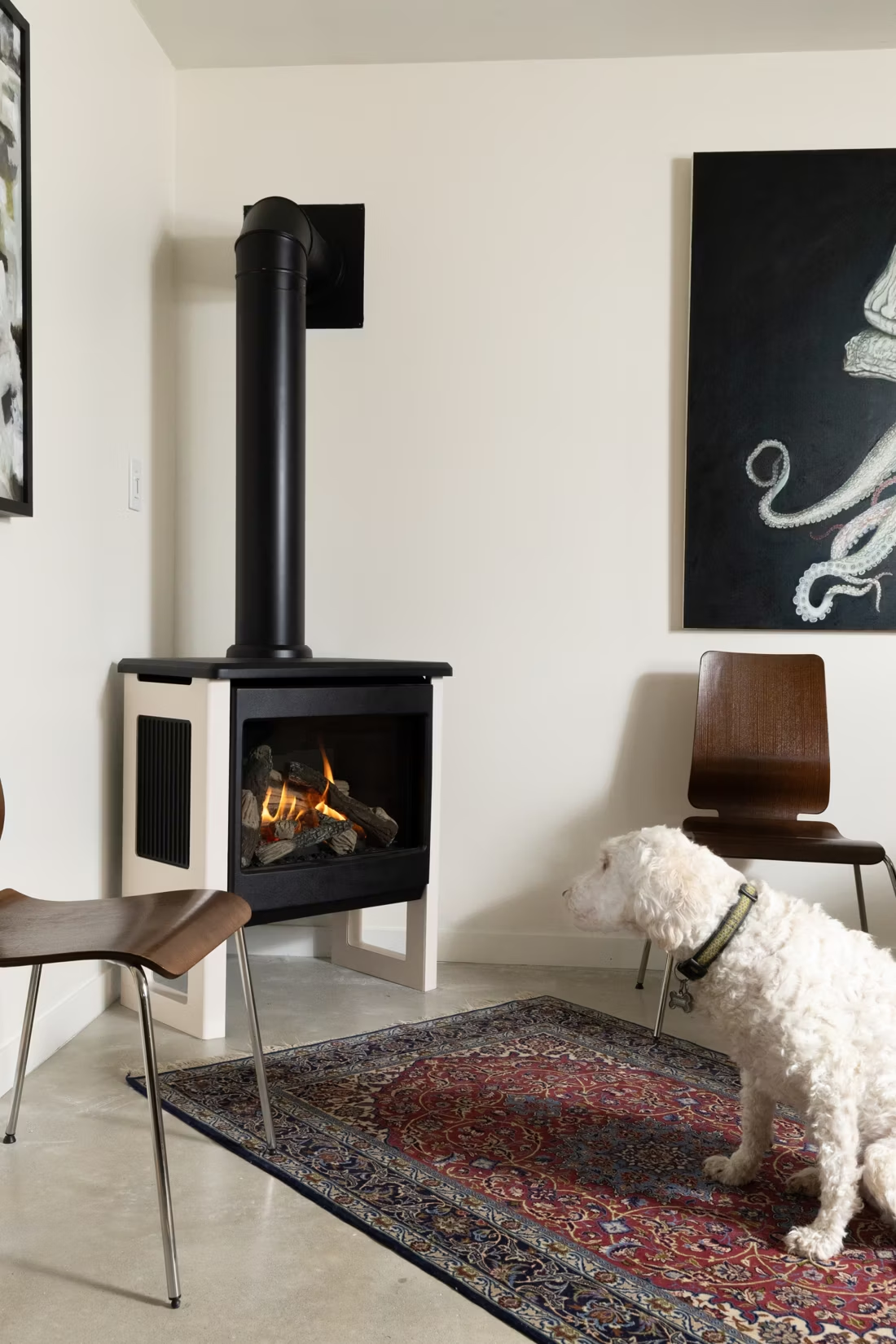
Four fuels. One honest answer for Wheeler County.
Three steps. No salesperson until you're ready.
Tell us about your project
Your zip code, your situation, and the fuel you're leaning toward—or let the answers point you to one.
See what's actually available
The brands dealers within 100 miles genuinely carry—real options, never a catalog mirage.
Get your dealer & Project Guide
A trusted local dealer, plus the free Project Guide & Parts List that names every component of the job.
Frequently Asked Questions
Which fireplace fuel makes sense for a Wheeler County home?
It depends heavily on where your property sits and how far you are from a propane truck route or gas line. Wood remains the practical default across most of Wheeler County—ponderosa pine, lodgepole pine, and juniper are what people already have on their land, and a good catalytic or non-cat stove will carry a canyon-bottom home through a hard cold snap without relying on the grid. Gas here almost always means propane rather than piped natural gas, since there's no municipal gas utility serving Fossil, Mitchell, or Spray—propane fireplaces and inserts are common for people who want push-button heat without hauling wood. Pellet stoves work well if you can keep a supply on hand; Bear Mountain and Lignetics pellets are both regionally available, though you'll want to buy ahead given how few retail outlets exist this far out. Electric is mostly a supplemental choice—good for a spare bedroom or a low-maintenance ambiance unit, but not something to lean on as your only heat source when winter storms can knock out power for a stretch.
Do I need a building permit to install a wood stove or fireplace in Wheeler County?
Generally yes. New wood stoves, inserts, gas appliances, and pellet stoves installed in Wheeler County typically require a building permit, and any new wood-burning appliance needs to meet current EPA emissions standards. Because Wheeler County has such a small population base, permitting and inspection often run through a regional building official rather than a large dedicated county department, so timelines can run a bit longer than in a metro county—it pays to ask your installer early about lead time. Propane line work should be handled by a licensed gas-fitter, separate from the appliance permit itself. Most hearth retailers who regularly work this territory already know the local permitting process and will handle the paperwork as part of the installation.
Are there wildfire smoke concerns that affect wood burning in Wheeler County?
Yes, though it's a seasonal issue rather than a year-round restriction. Wheeler County sits in dry, forested canyon terrain that's exposed to regional wildfire smoke during summer and early fall—smoke from fires burning anywhere in the John Day basin or further afield can settle into the canyons for days at a time. That's a warm-weather air quality concern rather than a winter wood-burning curtailment like you'd see in a more urban Oregon county. For heating season itself, a properly sized, EPA-certified stove burning seasoned ponderosa pine, lodgepole, or juniper burns cleanly enough that day-to-day wood heat isn't the primary local air quality issue—wildfire smoke is.
Will I have trouble finding a hearth retailer who covers Wheeler County?
You won't find a dealer with a showroom in Fossil or Mitchell—with fewer than 900 residents county-wide, there isn't enough population to support one. What you will find are retailers based in larger nearby towns who run regular service routes through Wheeler County, often covering wood, gas (propane), and pellet, with electric as a lighter-stocked fourth option. Because service calls mean real drive time, it's worth booking maintenance and installation appointments in the same trip window if you can, and asking upfront whether a retailer's coverage area actually reaches your specific property—Fossil, Mitchell, and Spray aren't always covered by the same dealer.
How does annual chimney or appliance service work out here given how remote it is?
Service technicians covering Wheeler County are almost always based elsewhere and build the county into a broader eastern Oregon route, so expect to schedule ahead rather than get a same-week appointment, especially during the August–October pre-season rush when everyone's getting their wood stove swept before the first cold snap. Travel fees for rural calls are common and can run higher than in a denser county given the distances involved. If you're on a wood stove, an annual sweep before the season starts is worth the wait; if you're on propane, a working carbon monoxide detector and a stocked propane tank matter as much as the service appointment itself, since a mid-winter breakdown could mean a multi-day wait for a technician to make the drive.
What should I budget for a fireplace installation across the different fuel types in Wheeler County?
Costs run in line with rural eastern Oregon generally, sometimes with a modest travel surcharge factored in by the installer. Wood stove or insert installation typically runs $4,500–$9,500, higher if new chimney work is needed for a canyon-bottom home without existing venting. Propane fireplace, insert, or stove installation typically runs $4,500–$11,000 depending on whether a new propane line and tank setup is needed versus tying into an existing system. Pellet stove or insert installation typically runs $4,500–$7,500. Electric fireplace costs are the most predictable: $200–$3,000 for the unit itself, plus $400–$1,200 in labor for anything beyond a simple plug-in install. Given the distances involved, ask any Wheeler County quote whether travel time is baked into the number or billed separately.
Can I install a fireplace myself?
If you're putting a fire in your house on purpose, it's best to work with an expert. Unless you're genuinely experienced in framing, gas line, vent pipe, and the national code on clearances to combustibles, have a professional do it—and ideally the same company that sells you the fireplace, so warranty, service, and liability all live under one roof.
How much should I budget for a fireplace?
For an average home—covering the fireplace, the vent pipe, and basic installation—a budget between $3,900 and $5,500 gives you a lot of options across wood, gas, and pellet. By the time you add finish work, gas line, and electrical, the average complete installation lands between $5,000 and $12,000 all-in. In a remodel or new build, a good rule is to put about 2.5% of the total project cost toward the fireplace.
Does a fireplace add value to my home?
On average, a fireplace adds back to the home about the same amount you spent installing it. Add the monthly savings from heating the rooms you actually use instead of the whole house—often hundreds of dollars a year—and the value case is strong before you even count what a fire does for how your family uses the room.
What is an in-home preview and do I need one?
It's a visit where a hearth professional measures your space, confirms the model you picked actually works in your home, and walks the specs—framing, gas line, venting, finish work—before anything is ordered. Some details you just can't know until you see the house. Never make a down payment without one; it's the single most-skipped step that burns buyers.
Stove and Fireplace Dealers in Wheeler County
Listings include WhyFire partner dealers, dealers we have verified as authorized for the brands we recommend, and established local businesses that carry hearth products. Every listing shows which one it is. The ones marked Preferred run on WhyFire's software, so they can show you real pricing and book your appointment right here. No manufacturer pays for placement. How we verify dealers →
Get matched with a local dealer serving Wheeler County.
Tell us your fuel and location and we'll put together your free Project Guide & Parts List—the exact parts, including the vent kit, and the local dealer we recommend for your Wheeler County project.
Find Your Fireplace →