
Efficient Pellet Heat for Portland's Mild, Wet Winters.
Clean-burning, thermostat-controlled heat for the Willamette Valley's damp winters and smoky late summers. Find the right pellet stove or insert, and connect with a trusted local dealer.
Every Project Starts From One of These Five Situations
A clean-burning fit for a smoke-conscious city.
Portland's heating season is comparatively mild—about 4,167 heating degree days a year, with average winter lows hovering around 37°F, a fraction of what a colder inland city like Bismarck, ND or Duluth, MN sees each winter. But at 162 feet in the Willamette Valley, the cold here is damp, penetrating, and near-constant from November through March, and rolling windstorms off the Coast Range regularly knock out power across Multnomah County for a day or more at a stretch.
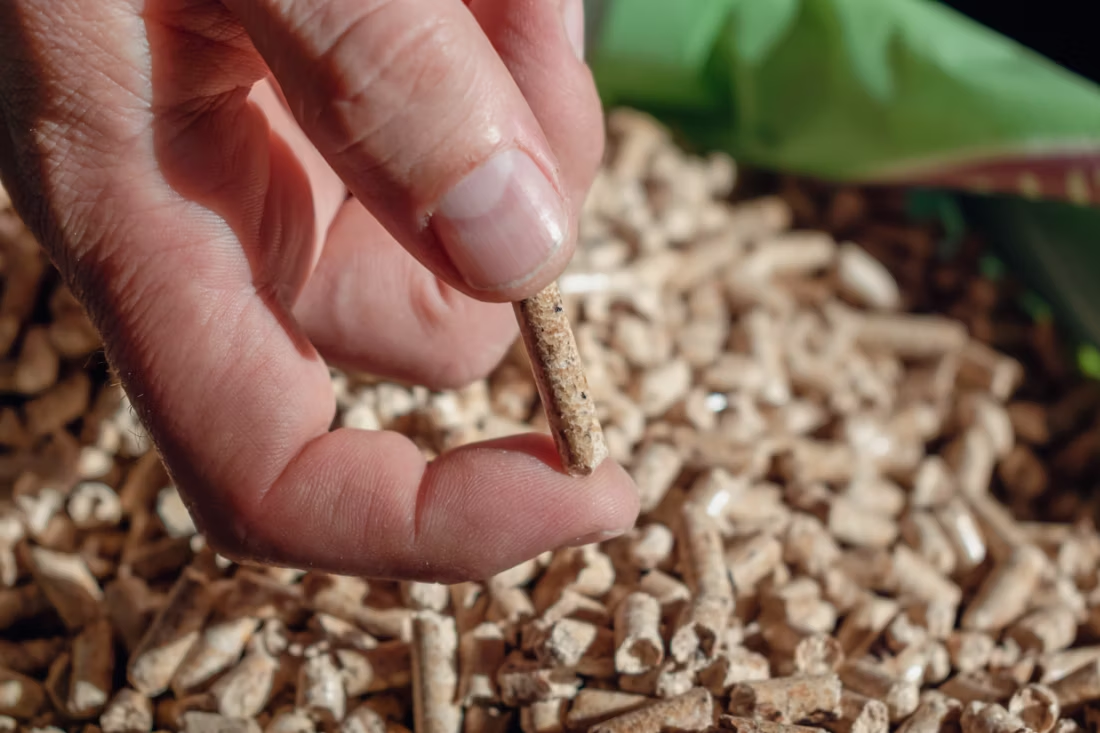
Pellet stoves fit that climate well. They burn compressed wood fuel from regional producers like Bear Mountain, Lignetics, and Pacific Pellet at a consistent, thermostatically controlled rate, which means fewer temperature swings than a wood stove and far less particulate output than an open fire—a real advantage in a city that regularly deals with wildfire smoke drifting in from Cascade fires each August and September. The tradeoff is that pellet stoves need electricity to run the auger and blower, so it's worth thinking through your household's backup power situation with Portland General Electric rates (currently around 18.19 cents per kWh) in mind.
Three steps. No salesperson until you're ready.
Tell us about your project
Your zip code, your situation, and the fuel you're leaning toward—or let the answers point you to one.
See what's actually available
The brands dealers within 100 miles genuinely carry—real options, never a catalog mirage.
Get your dealer & Project Guide
A trusted local dealer, plus the free Project Guide & Parts List that names every component of the job.
Frequently Asked Questions
How much does a pellet stove installation cost in Portland?
A freestanding pellet stove installation in the Portland area typically runs $3,500 to $7,000, depending on the unit and whether new venting needs to be run through an exterior wall. A pellet insert installed into an existing masonry fireplace, using the chimney chase for a smaller vent liner, usually falls in a similar $4,000 to $7,500 range. Older Portland housing stock—craftsman bungalows, 1920s bungalows in Southeast and North Portland—sometimes adds cost if the existing hearth or chimney needs modification to meet clearance requirements. A local dealer can give you a firm number after seeing your fireplace or install location.
What size pellet stove do I need for my Portland home?
Because Portland's heating demand is moderate compared to colder climates, many homes here do fine with a small to mid-size pellet stove (rated for 1,000 to 1,800 square feet) used as the primary heat source in a main living area, or as supplemental heat alongside a gas furnace. Larger, open-concept homes or those with vaulted ceilings—common in newer construction in outer Southeast and the West Hills—may need a stove rated closer to 2,000+ square feet. A local retailer will size the unit based on your square footage, ceiling height, and insulation rather than a generic chart, since an oversized stove will short-cycle and an undersized one won't keep up on the coldest, wettest nights.
Where can I buy pellet fuel in Portland, and what does it cost?
Wood pellets are widely available in the Portland area through hardware stores, farm supply retailers, and hearth dealers, with regional brands like Bear Mountain (produced in Oregon), Lignetics, and Pacific Pellet commonly stocked. Expect to pay roughly $280 to $380 per ton, sold either by the ton (a pallet of 40-pound bags) or individually by the bag. Buying a season's supply—typically 2 to 3 tons for a home using a pellet stove as primary heat—in late summer before demand picks up can save some money compared to buying bag by bag mid-winter.
Do I need a permit to install a pellet stove in Portland?
Yes—new pellet stove and insert installations require a permit through the Portland Bureau of Development Services (or the applicable county building department if you're outside city limits in Multnomah County), covering the appliance installation, hearth pad, and venting. Most local hearth dealers handle the permit application as part of the installation. One piece of good news specific to pellet stoves: Oregon DEQ's winter wood smoke curtailment program, which can restrict burning during air quality advisories, generally exempts pellet stoves entirely—so you can keep running yours during a Yellow or Red curtailment day when wood stove use is restricted.
Will my pellet stove work during a power outage?
Not without backup power. Pellet stoves rely on an electric auger to feed fuel and a blower to distribute heat and exhaust combustion gases, so a standard unit shuts down the moment the power does. That matters in Portland, where winter windstorms off the Coast Range and ice events have caused multi-day Portland General Electric outages in recent years. If backup heat during outages is a priority, a small battery backup or portable generator sized for a pellet stove's modest draw (typically 100-500 watts) can keep it running, or you may want to pair a pellet stove with a wood-burning unit elsewhere in the home for true grid-independent heat.
What's the difference between a pellet stove and a pellet insert?
A pellet stove is a freestanding appliance that sits on a hearth pad and vents through a wall or existing chimney chase—it can go almost anywhere in a room with the right clearances. A pellet insert is built to slide into an existing masonry fireplace opening, converting an old wood-burning fireplace into an efficient, thermostatically controlled heat source while keeping the original fireplace's footprint. For Portland's many homes with older masonry fireplaces that currently just look nice but heat poorly, an insert is often the more practical upgrade. Homes without an existing fireplace, or new construction, are usually better suited to a freestanding stove.
How much maintenance does a pellet stove need?
Pellet stoves need more routine attention than a gas unit but less than a wood stove. Plan on emptying the ash pan and cleaning the burn pot roughly every few days to weekly with regular use, and a full internal cleaning—including the exhaust fan, heat exchanger tubes, and venting—once a season, ideally before Portland's burning season ramps up in October. Most owners handle the routine cleaning themselves; a professional service visit once a year, similar to an annual furnace tune-up, catches wear on the auger motor, igniter, and gaskets before it becomes a mid-winter breakdown.
Pellet vs. wood—which is right for my Portland home?
Wood stoves work without electricity, appeal to homeowners who want a real, hands-on fire, and pair with inexpensive Forest Service cutting permits ($5 to $20 per cord) through nearby Mt. Hood or Gifford Pinchot National Forest during the May-to-October season, where douglas fir, ponderosa pine, and lodgepole pine are common. Pellet stoves offer more consistent, hands-off heat, produce far less particulate pollution—a real plus given Portland's late-summer wildfire smoke—and are exempt from Oregon DEQ wood smoke curtailment restrictions. The tradeoff is that pellet stoves need power to run. For a low-maintenance primary or supplemental heat source in a smoke-conscious city, pellet often wins; for backup heat that works no matter what the grid is doing, wood has the edge.
Are pellet stoves a good option during Portland's wildfire smoke season?
Yes. Portland's summers and early falls occasionally bring heavy wildfire smoke drifting in from fires in the Cascades and further south, which triggers regional air quality advisories from the Oregon DEQ and Multnomah County health officials. Because pellet stoves burn compressed, uniform fuel in a controlled combustion chamber, they produce a fraction of the particulate emissions of an open wood fire, and they're generally exempt from the curtailment restrictions that apply to wood stoves during poor air quality days. For households that want reliable indoor heat without adding to local air quality concerns, pellet is one of the cleanest-burning solid fuel options available.
Why is a fireplace insert so efficient?
An insert does two things: it seals the chimney completely, so you stop losing air you already paid to heat, and it radiates warmth into the room through the firebox and glass. Most add a heat-exchange fan that pulls cool room air underneath, wraps it around the hot firebox, and pushes it back out warm. Your home is more efficient before you've even lit the first fire.
How often does a pellet stove need cleaning?
A clean pellet stove is a happy pellet stove. Plan on cleaning the burn pot about once a week when you're burning regularly—ash and clinkers gum up the air holes just like a pellet barbecue. Most pellet stove problems trace back to skipped cleaning that nobody explained up front. Some designs make it easy with a trapdoor burn pot: pull a lever and the gunk drops into the ash pan.
Can a fireplace actually lower my heating bill?
Yes—by creating a comfort zone. A furnace heats every square foot of the house just to warm the one room you're in; a gas fireplace on low burns roughly a sixth of the gas a typical furnace does. Set the furnace around 55–60 degrees as a baseline, then heat the rooms your family actually uses. Families who heat this way commonly save $20–$60 a month.
Can I install a fireplace myself?
If you're putting a fire in your house on purpose, it's best to work with an expert. Unless you're genuinely experienced in framing, gas line, vent pipe, and the national code on clearances to combustibles, have a professional do it—and ideally the same company that sells you the fireplace, so warranty, service, and liability all live under one roof.
Nearby Dealers
Hearth shops serving Portland and the surrounding area. Every listing shows whether it is a WhyFire partner, a dealer we have verified as authorized for the brands we recommend, or a local business carrying hearth products. No manufacturer pays for placement. How we verify dealers →
Nw Natural Appliance Center
Bridgetown Chimney & Masonry
Buck's Stove Palace
Lisac’s Spark & Splash
Addco Electric Fireplaces
Emerald Outdoor Living-Portland
Rich's Stoves & Spa
The Stove Shop
HomeTown Hearth & Grill
Fireside Home Solutions
Performance Building Products
Western Outdoor Wholesale
Haven Spa Pool & Hearth
Tri-Tech Heating
Creative Fire
Ez Propane
New Flame Hearth & Grill
Richs For The Home
Coastal - Gresham
Haven Spa Pool & Hearth
Coastal - Oregon City
Classic Pool And Spa
Pellet Brands Stocked Around Portland
Manufacturers will point you to the nearest stocking dealer.
Find your pellet fireplace in Portland.
Tell us a bit about your home and we'll put together a free Project Guide & Parts List—the right pellet stove or insert, the vent kit you'll need, and a trusted local Portland dealer to install it.
Find Your Fireplace →