
Clean-burning heat that skips the curtailment days.
Pellet stoves run exempt from Klamath Basin's winter Yellow Curtailment Periods and burn cleaner during the inversion months. Find the right unit and connect with a trusted local dealer.
Every Project Starts From One of These Five Situations
An answer to the basin's winter air problem.
Klamath Falls sits in a basin ringed by mountains, and that geography traps cold air and wood smoke during winter temperature inversions—bad enough that the area is designated a non-attainment zone for air quality. On Yellow Curtailment days, uncertified wood stoves are asked to stay cold. Pellet stoves are exempt from all curtailment periods, which makes them one of the few heat sources in Klamath County that can run every single day of a hard winter without triggering an air quality violation.
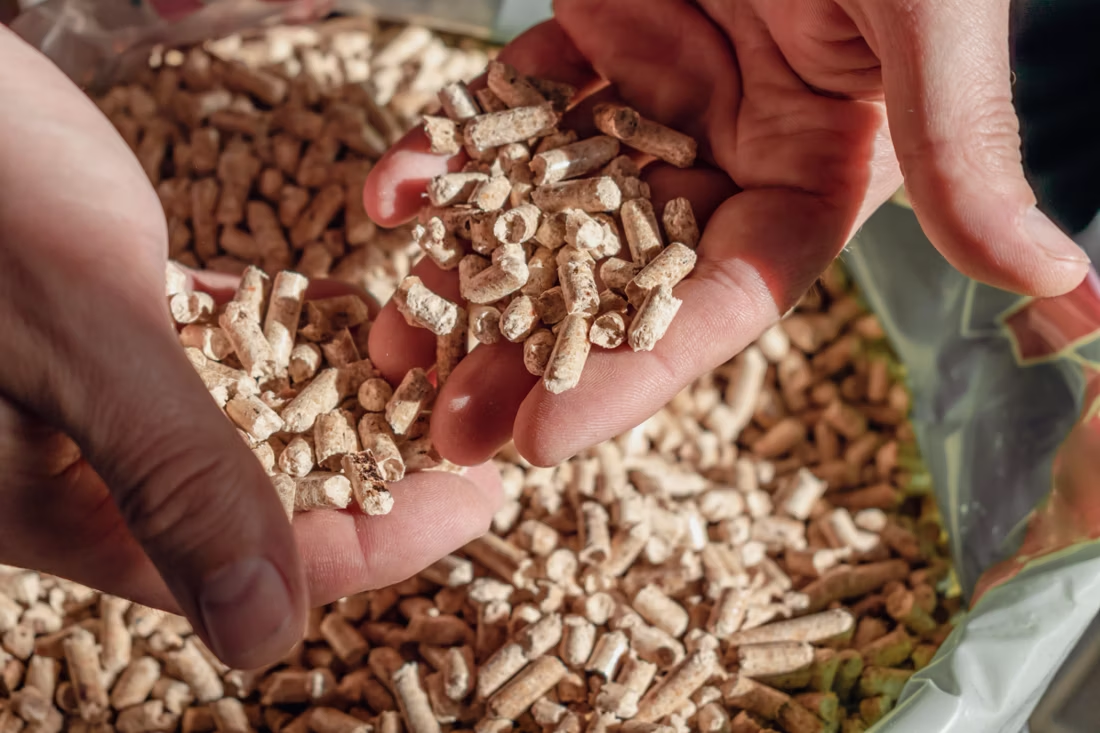
With winter lows averaging 21°F across the basin—colder at elevation near Chemult and Crater Lake—pellet appliances deliver steady, thermostat-controlled heat without the smoke output of an open wood fire. Regional brands like Bear Mountain, Lignetics, and Pacific Pellet are sold through hearth shops and farm stores throughout the county, and fuel typically runs $300 to $425 per ton—a stable, storable alternative to firewood for homeowners who want the efficiency of biomass heat without adding to inversion-day smoke.
Three steps. No salesperson until you're ready.
Tell us about your project
Your zip code, your situation, and the fuel you're leaning toward—or let the answers point you to one.
See what's actually available
The brands dealers within 100 miles genuinely carry—real options, never a catalog mirage.
Get your dealer & Project Guide
A trusted local dealer, plus the free Project Guide & Parts List that names every component of the job.
Frequently Asked Questions
How much does a pellet stove installation cost in Klamath County?
A typical pellet stove or insert installation in Klamath County runs between $4,500 and $7,500, depending on the unit, whether it's a freestanding stove or an insert into an existing masonry fireplace, and the venting path required. Pellet stoves vent through a smaller-diameter pipe than wood stoves, often through an existing wall or chimney chase, which can keep costs toward the lower end compared to a full wood-stove chimney installation. Homes needing new electrical work for the auger and blower circuit, or longer horizontal vent runs, will land toward the higher end. Local installers can give a firm number after seeing your fireplace or install location.
Are pellet stoves exempt from Klamath's winter burning restrictions?
Yes, and it's one of the strongest local arguments for pellet heat. Klamath Falls sits in a designated non-attainment area, and the basin issues Yellow Curtailment advisories during winter inversions when wood smoke accumulates against the surrounding mountains. EPA/DEQ-certified wood stoves are allowed to burn during Yellow periods, but pellet stoves are exempt from all curtailment restrictions entirely—meaning a pellet appliance is never told to go cold, even on the worst inversion days of the season.
What size pellet stove do I need for my home?
Sizing depends on square footage, insulation, and ceiling height, similar to wood stove sizing. Small pellet stoves (up to 1,000 sq ft) suit a single room or a supplemental setup; medium units (1,000–2,000 sq ft) cover most main living areas in basin homes; larger units handle 2,000+ sq ft when used as primary heat. Homes at higher elevation along the Highway 97 corridor—Chemult, Gilchrist, Crescent—or near Crater Lake typically need to size up relative to a basin home of the same square footage, since outdoor design temperatures run colder. A local retailer will size the appliance to your home during an in-home consultation, factoring in Klamath's colder shoulder seasons on either end of a long heating year.
Do I need a permit to install a pellet stove in Klamath County?
Yes—new pellet stove installations require a building permit through the Klamath County Building Dept, or through the city if the home is within Klamath Falls city limits. Most local installers handle the permit paperwork as part of the install. Because pellet stoves are exempt from curtailment periods and generally burn cleaner than wood, they're viewed favorably under Oregon Heat Smart, and homeowners replacing an old uncertified wood stove with a pellet unit may qualify for Oregon DEQ Heat Smart rebate programs—worth asking your installer about before you finalize a purchase.
Do pellet stoves work during a power outage?
This is the one real tradeoff against wood heat in Klamath County: pellet stoves require electricity to run the auger, igniter, and combustion blower, so a standard unit goes cold in a power outage. That matters in a county where rural areas and higher-elevation communities like Bly and Sprague River can see multi-day outages during winter storms. Some homeowners pair a pellet stove with a small battery backup or generator sized for the stove's low wattage draw (most units pull under 100-400 watts), which keeps the appliance running through an outage. If backup heat without any power dependency is the priority, a wood stove is the better complement—many Klamath County homes run pellet as primary heat and keep a wood stove for outages.
Where can I buy pellet fuel in Klamath County?
Pellets from regional brands like Bear Mountain, Lignetics, and Pacific Pellet are sold through local hearth retailers and farm supply stores throughout the county, typically running $300 to $425 per ton. A ton lasts roughly 1.5 to 2 heating months for an average home used as primary heat, less if used as supplemental heat only. Buying in bulk before the season (ideally by early fall) locks in pricing before winter demand pushes costs up, and gives you time to arrange dry, off-ground storage—critical in a basin climate where the wrong storage conditions can cause pellets to swell and jam an auger.
How often does a pellet stove need to be cleaned and serviced?
Pellet stoves need more frequent attention than wood stoves, but the work is lighter. Plan on emptying the ash pan every few days during heavy winter use, cleaning the burn pot weekly to keep the fire burning cleanly, and having a full professional service—including the auger, hopper, blower, and venting—once a year, ideally before the season starts in late summer or early fall. Klamath County's long heating season, running from late September into May, means heavier-than-average pellet consumption for homes using the stove as a primary heat source, which pushes maintenance toward the more frequent end of the range.
What's the difference between a pellet stove and a pellet insert?
A pellet stove is a freestanding unit that sits on a hearth pad and vents through a small-diameter pipe, either through a wall or an existing chimney chase—it can go almost anywhere with proper clearances. A pellet insert is built to slide into an existing masonry fireplace opening, using a liner run through the existing chimney for venting. For Klamath County homes with an old open wood fireplace that isn't getting much use, an insert converts that fireplace into an efficient, thermostat-controlled heat source without altering the room's layout. Homes without an existing fireplace are usually better suited to a freestanding stove.
Pellet vs. wood—which is right for my Klamath County home?
Wood stoves work without electricity, which matters for outage-prone rural areas and higher elevations, and pair with inexpensive self-cut firewood available through Forest Service permits from the Fremont-Winema National Forest. Pellet stoves offer thermostat-controlled, consistent heat, less ash and mess, and—critically for basin homes—exemption from Yellow Curtailment restrictions during winter inversion advisories that can sideline uncertified wood stoves. For homes in or near Klamath Falls where inversion-day air quality rules are a real consideration, pellet often wins. For rural or high-elevation homes where power outages are common and self-cut wood is cheap and available, wood holds its ground. A number of Klamath County homeowners run both: pellet for daily convenience and clean-air compliance, wood as an off-grid backup.
Why is my open fireplace making my house colder?
Open fireplaces suck—literally. As the fire burns, it consumes air your furnace already paid to heat and pulls it out through the chimney, so the house is actually colder after the fire goes out than before you lit it. An insert fixes this: it seals the chimney, puts fixed glass across the front, and turns that hole in your house into a real heat source.
Are pellet stoves loud?
They make some noise—there are two fans running plus an auger motor that turns as it feeds pellets. But there's a real range: premium models are engineered quiet, and the best offer a whisper-quiet mode you can comfortably watch TV next to. If noise matters in your room, ask to hear a stove running before you buy—it's a five-minute test that saves years of annoyance.
Can I install a fireplace myself?
If you're putting a fire in your house on purpose, it's best to work with an expert. Unless you're genuinely experienced in framing, gas line, vent pipe, and the national code on clearances to combustibles, have a professional do it—and ideally the same company that sells you the fireplace, so warranty, service, and liability all live under one roof.
What is an in-home preview and do I need one?
It's a visit where a hearth professional measures your space, confirms the model you picked actually works in your home, and walks the specs—framing, gas line, venting, finish work—before anything is ordered. Some details you just can't know until you see the house. Never make a down payment without one; it's the single most-skipped step that burns buyers.
Stove and Fireplace Dealers in Klamath County
Listings include WhyFire partner dealers, dealers we have verified as authorized for the brands we recommend, and established local businesses that carry hearth products. Every listing shows which one it is. The ones marked Preferred run on WhyFire's software, so they can show you real pricing and book your appointment right here. No manufacturer pays for placement. How we verify dealers →
Coastal - Klamath Falls
Ashes Away Chimney Services
Pellet Brands Stocked Around Klamath County
Typical price runs $300-$425 per ton—buy early-season for the best rates. Manufacturers will point you to the nearest stocking dealer.
Get matched with a Klamath County pellet stove dealer.
Tell us about your home and heating goals, and we'll match you with a trusted local dealer plus a free Project Guide & Parts List—sized venting, the right pellet unit, and a plan built for Klamath County's basin climate.
Find Your Fireplace →