
Instant warmth for eastern Ontario winters, no chimney required.
From condos in downtown Cornwall to cottages along the St. Lawrence, electric fireplaces deliver real supplemental heat and instant ambiance without a flue, a gas line, or a WETT inspection. We'll help you find a trusted local dealer who can tell you exactly what fits your space and your electrical panel, then send a free plan to go with it.
Every Project Starts From One of These Five Situations
A hardwood heating region where electric fills the gaps.
Stormont, Dundas and Glengarry stretches along the St. Lawrence River from Cornwall east toward the Quebec border and north through Winchester, Morrisburg, and Alexandria. Winters here average around -12.6°C at the coldest, with roughly five months of solidly sub-freezing weather that feels a lot like nearby Ottawa's. The region sits on some of the densest hardwood ground in eastern Ontario, with sugar maple, red oak, white ash, and yellow birch feeding a long-standing wood-burning tradition in rural properties and older farmhouses. Wood and gas appliances carry the real heating load in most of those homes, with wood installs running $6,000-$12,000 CAD and gas installs $6,000-$15,000 once venting and gas line work are factored in.
Electric fireplaces solve a different problem. A downtown Cornwall condo, a secondary suite over a garage, a basement without a chimney, or a seasonal cottage along the river doesn't need combustion heat, and often can't accommodate one. Electric units plug into a standard outlet or a dedicated 240V circuit, need no CSA B365 installation code, no WETT inspection for insurance, and typically install for $500-$1,600 CAD. That's a fraction of the cost and complexity of a wood or gas project, which is why electric has become the practical choice for supplemental heat and ambiance in the parts of the region where a chimney simply isn't in the plan.
Three steps. No salesperson until you're ready.
Tell us about your project
Your postal code, your situation, and the fuel you're leaning toward—or let the answers point you to one.
See what's actually available
The brands dealers within 100 miles genuinely carry—real options, never a catalog mirage.
Get your dealer & Project Guide
A trusted local dealer, plus the free Project Guide & Parts List that names every component of the job.
Frequently Asked Questions
How much does an electric fireplace installation cost in Stormont, Dundas and Glengarry?
Most installations run $500 to $1,600 CAD. A plug-in freestanding unit or a wall-mounted electric fireplace on an existing 120V circuit sits at the low end. A built-in electric insert that needs a new dedicated 240V circuit run from the panel, or custom surround and trim work, lands toward the top. Either way, it's a fraction of the $6,000-$12,000 a wood stove install or $6,000-$15,000 a gas fireplace install typically runs in this region, since there's no venting, no gas line, and no masonry work involved.
Do I need a permit for an electric fireplace?
Usually not a building permit, since there's no chimney, gas line, or structural opening involved. If your installer is running a new dedicated circuit for a larger built-in unit, that electrical work needs to meet the Ontario Electrical Safety Code and may require a permit through your municipal building department, whether that's Cornwall, South Stormont, North Dundas, or one of the other municipalities in the region. What you won't need is a WETT inspection or CSA B365 compliance, both of which apply to wood-burning appliances, not electric ones, which is one reason insurance is often simpler with an electric install.
Can an electric fireplace heat my home through a Stormont, Dundas and Glengarry winter?
Not as a primary heat source. With winter lows averaging -12.6°C and roughly five months of consistently cold nights that mirror what Ottawa sees just up the road, most electric fireplaces are built to supplement a room, not replace a furnace. They typically top out around 5,000 to 9,000 BTU, enough to take the chill off a living room or finish a basement, but not enough to carry a farmhouse through a January cold snap. Homes here that need serious primary heat generally lean on wood, gas, or a heat pump, with electric fireplaces layered in for the rooms that need a boost or for pure ambiance.
Where do electric fireplaces make the most sense in this region?
Condos and apartments in downtown Cornwall where a masonry chimney was never built, secondary suites and garage conversions, finished basements, and seasonal cottages along the St. Lawrence near Ingleside and Long Sault are the classic fits. Any of those spaces can add real supplemental heat and a fireplace look without cutting a flue through a roof or running a gas line, which matters for rentals and older buildings where that kind of work isn't practical or allowed.
What will an electric fireplace cost to run?
Most units draw around 1,500 watts on the heat setting, which works out to roughly 15 to 20 cents an hour depending on your rate, whether you're on Hydro One or served by Cornwall Electric within city limits. Left on ambiance-only mode with the heater off, the draw drops to just a few watts for the flame effect. Compared to running a wood stove through a cord of maple or a gas fireplace's pilot and burner, electric is the cheapest fuel to operate, even if it's not doing the heavy lifting on the coldest nights.
What's the difference between an electric fireplace and an electric insert?
A freestanding electric fireplace is a self-contained cabinet unit you can place against nearly any wall and plug in. An electric insert is built to drop into an existing masonry firebox or a factory-built wood fireplace opening, which is a common upgrade for older Cornwall and Morrisburg homes that inherited a wood fireplace they no longer want to feed. Both types skip venting entirely, so the insert route mainly changes the finished look, not the installation complexity.
Will my electric fireplace still work during a power outage?
No, and that's the trade-off worth knowing in a region where ice storms and wind events along the St. Lawrence corridor can knock out power for a day or more. A wood stove burning local maple or oak keeps working with no electricity at all, which is why many rural households in the region keep a wood appliance as backup even if electric or gas handles daily heat. If outage resilience matters for your household, ask your dealer about pairing an electric fireplace in the main living space with a wood or propane backup elsewhere in the home.
How much maintenance does an electric fireplace need?
Very little. There's no chimney to sweep and no annual WETT inspection required, since there's no combustion involved. Most upkeep is wiping the glass front, occasionally vacuuming the intake vents to keep the blower running efficiently, and replacing the LED light strip after several years of daily use, which is a straightforward part swap rather than a service call. That low-maintenance profile is a big part of why electric appeals to rental properties and cottages that sit empty for stretches of the year.
Electric or gas—which should I choose for a room here?
Natural gas is available through most of the region's towns, so a gas fireplace is a real option almost everywhere, and it puts out genuine heat you can rely on through an eastern Ontario winter. Electric skips the gas line and venting entirely, installs for a fraction of the cost at $500-$1,600 versus $6,000-$15,000 CAD for gas, and works anywhere you have an outlet, but it's built for ambiance and supplemental warmth, not for carrying a room through the coldest stretch of January. If the space already has gas service and you want real primary heat, gas is usually the better fit; if you want a fast, low-cost upgrade to a room that doesn't need extra heat, electric wins.
How much does an electric fireplace cost to run?
With the heater on, a typical unit draws about 1,500 watts—at average electric rates that's roughly 20 cents an hour. Run the flame effect alone and it costs pennies; the flames are LED-driven and use about as much power as a light bulb. There's no pilot light, no fuel delivery, and essentially no maintenance.
What fireplace styles should I know before shopping?
Four cover most of the market: screen-front traditional (mesh front, open feel, fits craftsman homes), traditional door set (the classic look you grew up with), modern linear (wide, low, the statement piece for entertaining), and clean face contemporary (no trim—your tile or stone runs right to the fire's edge). Walk in knowing those four terms and you're ahead of most buyers.
Does an electric fireplace need a vent or chimney?
No—that's its superpower. An electric fireplace needs a wall and an outlet, period. No vent pipe, no gas line, no clearances to design around, which is why it works in bedrooms, offices, apartments, and walls where venting a gas or wood unit would be impractical or impossible. Installation is typically the simplest and least expensive of any fireplace type.
Can I put a TV above my fireplace?
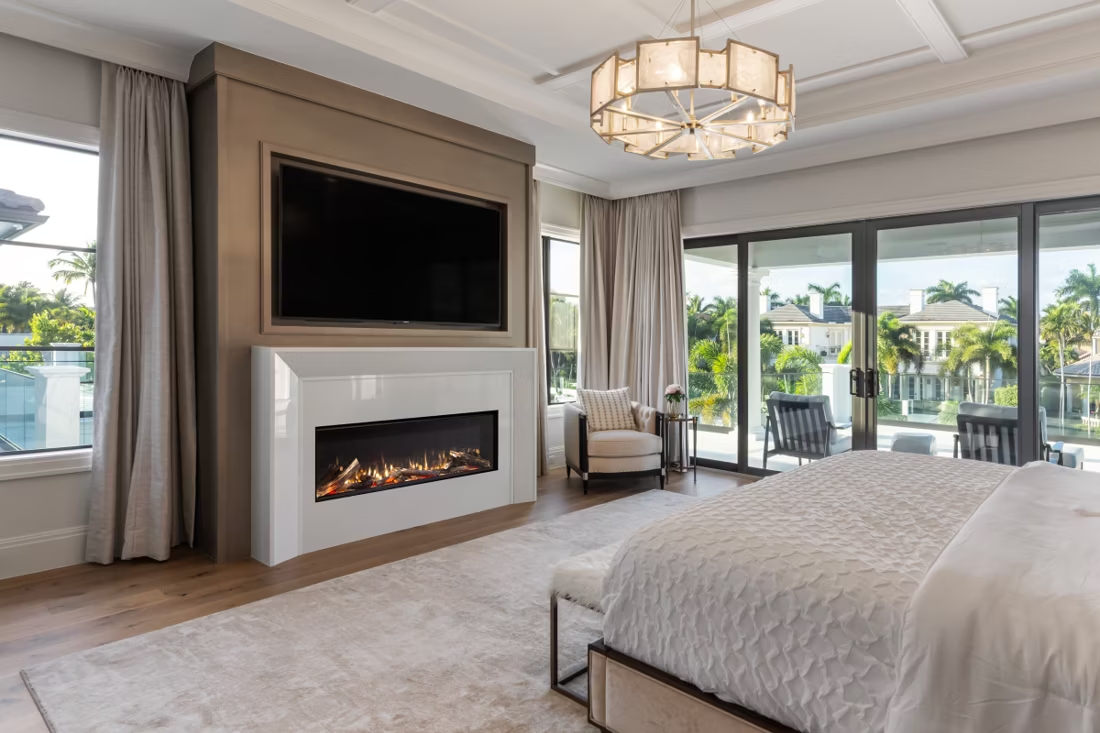
Yes—with an asterisk. Fireplaces are hot and TVs don't like heat. Either put a mantel between them to deflect rising warmth, or choose a fireplace with heat-management technology that creates a cool zone on the wall above—the wall stays around 125 degrees, barely warm, while the room still gets full heat. If you like clean lines and don't want a mantel, heat management is the answer.
Stove and Fireplace Dealers in United Counties of Stormont, Dundas and Glengarry
Listings include WhyFire partner dealers, dealers we have verified as authorized for the brands we recommend, and established local businesses that carry hearth products. Every listing shows which one it is. The ones marked Preferred run on WhyFire's software, so they can show you real pricing and book your appointment right here. No manufacturer pays for placement. How we verify dealers →
We’ve paused dealer listings for this connection today. Enter your zip or postal code above to find dealers near you, or come back tomorrow.
Electric Service in United Counties of Stormont, Dundas and Glengarry
An electric fireplace's heater draws about 1,500 watts—pennies per hour at local rates.
Hydro One
Toronto Hydro
Alectra Utilities
Get your free Project Guide & Parts List for an electric fireplace in Stormont, Dundas and Glengarry.
Tell us about your space, whether it's a Cornwall condo, a cottage near Long Sault, or a farmhouse living room, and we'll help you find a trusted local dealer and send a free Project Guide & Parts List: the exact unit, any electrical work needed, and the dealer who can help with your project.
Find Your Fireplace →