
Find your fireplace across Leeds and Grenville.
Wood, gas, pellet, and electric options for the whole region—from Brockville's riverside streets along the St. Lawrence to the inland townships around Athens and Westport. Pick a fuel and find a local dealer who actually works in your area.
Every Project Starts From One of These Five Situations
Eastern Ontario hardwood country, moderate-cold winters, and a region built for wood heat.
Leeds and Grenville stretches along the St. Lawrence River from Brockville and Prescott through Gananoque and the Thousand Islands, inland to Athens, Merrickville, and Westport. Winter lows average around -12°C, a milder cold than Ottawa just up Highway 416, but still enough for a genuine wood-heating season that runs from October through April. The dense hardwood stands across the region—sugar maple, red oak, white ash, and yellow birch—are exactly the species that make a modern EPA/CSA-certified wood stove worth the investment: split and seasoned properly, they burn hot and slow, and a catalytic stove loaded with maple or oak will hold a fire through the night without much trouble.
That same hardwood supply shapes how appliances get approved here: some municipalities in the region require certified low-emission appliances in new construction, and any wood stove or insert has to meet the CSA B365 installation code regardless of where you live. Insurers here commonly ask for a WETT inspection before they'll add coverage for a wood-burning appliance, which your installer typically arranges as part of the job. Natural gas service reaches most of the built-up towns—Brockville, Prescott, Gananoque—through Enbridge Gas, so gas fireplaces are a straightforward option there, while homes further into the townships often run on propane or wood instead. Pellet stoves have a foothold too, with Lacwood and Energex both distributed regionally, and wood cutting permits on Crown land go through the Ontario Ministry of Natural Resources. This hub rolls up hearth retailers, service technicians, and fuel suppliers across the whole region. Pick your fuel below for local dealers, install costs, and recommendations specific to your town.
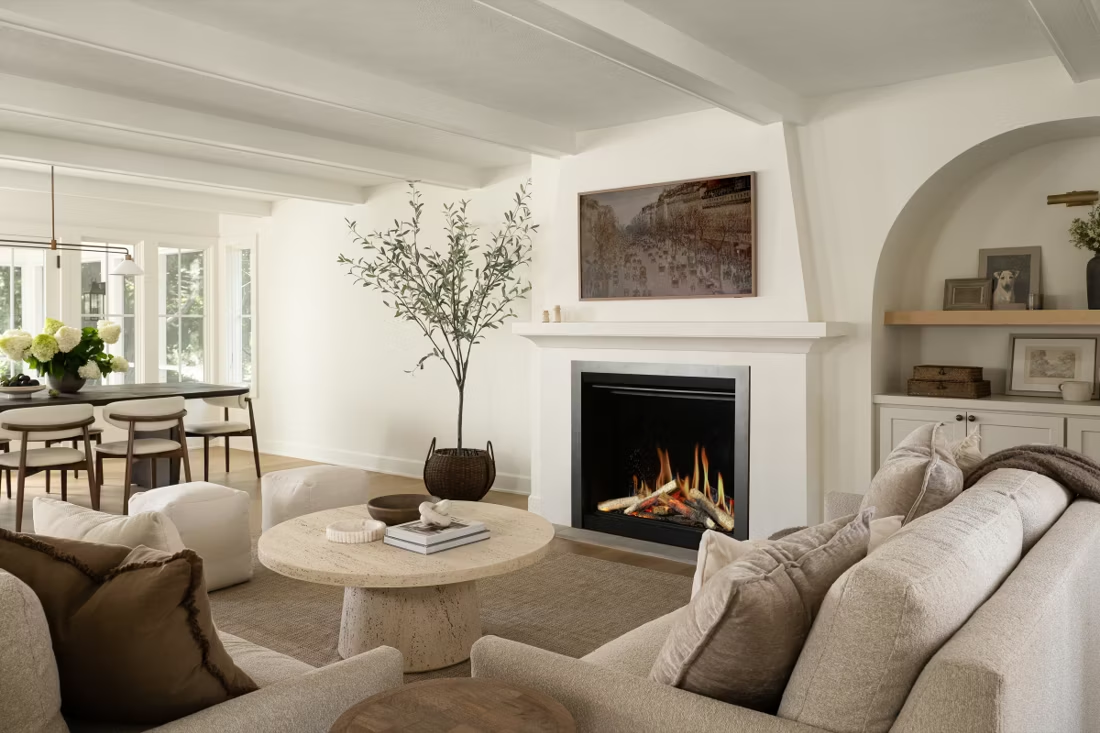
Four fuels. One honest answer for United Counties of Leeds and Grenville.
Wood
81 models available near United Counties of Leeds and Grenville.
Find your wood stove →Gas
365 models available near United Counties of Leeds and Grenville.
Find your gas fireplace →Pellet
See what's available near United Counties of Leeds and Grenville.
Find your pellet stove →Electric
11 models available near United Counties of Leeds and Grenville.
Find your electric fireplace →Three steps. No salesperson until you're ready.
Tell us about your project
Your postal code, your situation, and the fuel you're leaning toward—or let the answers point you to one.
See what's actually available
The brands dealers within 100 miles genuinely carry—real options, never a catalog mirage.
Get your dealer & Project Guide
A trusted local dealer, plus the free Project Guide & Parts List that names every component of the job.
Frequently Asked Questions
Which fireplace fuel makes the most sense in Leeds and Grenville?
All four fuels work well here, and the right pick depends more on your town than anything else. In Brockville, Prescott, and Gananoque, Enbridge Gas service makes gas fireplaces and inserts a genuinely convenient option. Out in the townships around Athens, Merrickville, and Westport, wood remains the practical backbone—sugar maple and red oak are the dominant local species, and a well-loaded catalytic stove will carry a home through a -12°C night without difficulty. Pellet stoves, supplied regionally by Lacwood and Energex, are a solid middle ground for homeowners who want wood-like heat without the splitting and stacking. Electric fireplaces are common as a supplemental unit in bedrooms, basements, and additions, but with a real winter heating season here, they're rarely a home's only source of heat.
Do I need a WETT inspection or a building permit for a wood stove here?
Almost always, yes. New wood stove and insert installations go through the municipal building department for your township or town—Brockville, Prescott, and Elizabethtown-Kitley each handle their own permits—and every installation has to meet the CSA B365 installation code. On top of the building permit, most home insurers in the region ask for a WETT inspection before they'll add coverage for a wood-burning appliance, which is a separate step from the permit itself. Reputable local dealers build both into the project timeline, so you're not chasing paperwork or a WETT-certified inspector on your own after the stove is already in place.
Why do sugar maple and red oak matter for choosing a wood stove?
The hardwood stands across Leeds and Grenville—sugar maple, red oak, white ash, and yellow birch—burn hotter and longer per cord than softwood, which changes what stove is worth buying. A catalytic stove sized for dense hardwood can hold a fire 12 to 20 hours on a properly seasoned load, which matters through a winter with several months of nights near -12°C. It also means firebox size and air control matter more here than in a softwood market—an oversized stove loaded with dry oak will run you out of the house, while an undersized one won't hold overnight. A local dealer who knows the regional wood supply will size the unit to what you're actually going to burn, not a national average.
Are there certification requirements for a fireplace in new construction?
Yes, in some municipalities across the region. Because the area has such a dense hardwood supply and correspondingly high wood-burning rates, several local building departments now require newly installed wood-burning appliances in new construction to be certified low-emission units rather than older, uncertified designs. In practice this means any modern EPA/CSA-certified wood stove or insert—which is what nearly every retailer in the region sells today—meets the requirement without issue. It's worth confirming with your specific municipal building department before you finalize a unit, since requirements can vary slightly from one township to the next.
How does installation and service work if I'm outside Brockville or Prescott?
Most hearth retailers and service technicians in the region are based around Brockville and Prescott but travel regularly to Gananoque, Athens, Merrickville, Westport, and the surrounding rural roads. Expect a modest travel fee for the farthest calls, and expect the fall booking window to fill up quickly—scheduling your chimney sweep, WETT inspection, or gas appliance check in late summer, before the first cold snap, keeps you ahead of the rush. For rural properties on well and septic with longer driveways, it's worth confirming access details with your installer ahead of time so a winter service call isn't held up by an unplowed lane.
What does a fireplace installation typically cost in Leeds and Grenville?
Costs depend on the fuel and how much venting or gas-line work the job needs. Wood stove and insert installations, including a WETT inspection, typically run $4,000-$8,500 CAD, with new full chimney construction pushing higher. Gas fireplaces and inserts generally run $4,500-$10,000 depending on whether Enbridge Gas already reaches the house or a new line needs to be run. Pellet stove installs tend to land around $4,000-$7,000. Electric fireplaces are the most affordable entry point—often $500-$3,000 for the unit plus a few hundred more in labour for anything beyond a simple plug-in placement. The region and fuel pages above break these down further with local retailer pricing.
How many BTUs do I need in a fireplace?
Wrong question—and the industry's favorite way to confuse you. More BTUs isn't better if the fireplace cooks you out of the room you spent thousands to enjoy. Think in terms you can verify: how many square feet the unit heats, whether it's primary or backup heat, and whether you want it running overnight. Those three answers size a fireplace correctly every time.
Will we actually use a fireplace once we have one?
In my own home, the room with the fireplace has never been the same—it became the social hub. Game nights, holidays, date nights after the kids are down: the fire is where the house gathers. There's a reason people in this industry joke that we're really in the romance and entertainment business. You won't wonder whether you'll use it; you'll wonder how the room worked before.
I know I want a fireplace—where do I actually start?
Do two things today: snap a photo of the wall or fireplace you want to transform, and take a tape measure to the space—width, height, depth. Those two artifacts answer most of a hearth professional's first questions. Then settle fuel (wood, gas, pellet, or electric) and set a realistic budget: $3,900–$5,500 covers fireplace, vent, and basic install for most homes.
How much should I budget for a fireplace?
For an average home—covering the fireplace, the vent pipe, and basic installation—a budget between $3,900 and $5,500 gives you a lot of options across wood, gas, and pellet. By the time you add finish work, gas line, and electrical, the average complete installation lands between $5,000 and $12,000 all-in. In a remodel or new build, a good rule is to put about 2.5% of the total project cost toward the fireplace.
Stove and Fireplace Dealers in United Counties of Leeds and Grenville
Listings include WhyFire partner dealers, dealers we have verified as authorized for the brands we recommend, and established local businesses that carry hearth products. Every listing shows which one it is. The ones marked Preferred run on WhyFire's software, so they can show you real pricing and book your appointment right here. No manufacturer pays for placement. How we verify dealers →
Ford Electric
Factory Fireplace Outlet
Find a local Leeds and Grenville dealer.
Pick your fuel below and we'll put together a free Project Guide & Parts List—the right unit, the vent kit it needs, and the local dealer we recommend for your project.
Find Your Fireplace →