
The one fireplace fuel almost every Toronto condo board allows.
No chimney, no gas line, no combustion air to worry about—just plug in and go. Across Liberty Village towers, North York high-rises, and the Beaches' century semis alike, we'll help you find a trusted local dealer who can size the right unit for your space and send a free Project Guide & Parts List.
Every Project Starts From One of These Five Situations
Built for towers, century semis, and everything between.
The Toronto region packs condo towers, postwar bungalows, and Victorian and Edwardian semis onto some of the densest residential blocks in Canada. Winters here sit in climate zone 5A, with average lows around -9.4°C—cold enough for a five-month heating season, but nowhere near the deep-freeze stretches that Winnipeg or Sudbury see most winters. That milder profile matters for fuel choice: homeowners don't need a wood stove running flat-out for months to stay warm, which opens the door to electric units built for zone heat and ambiance rather than whole-home output.
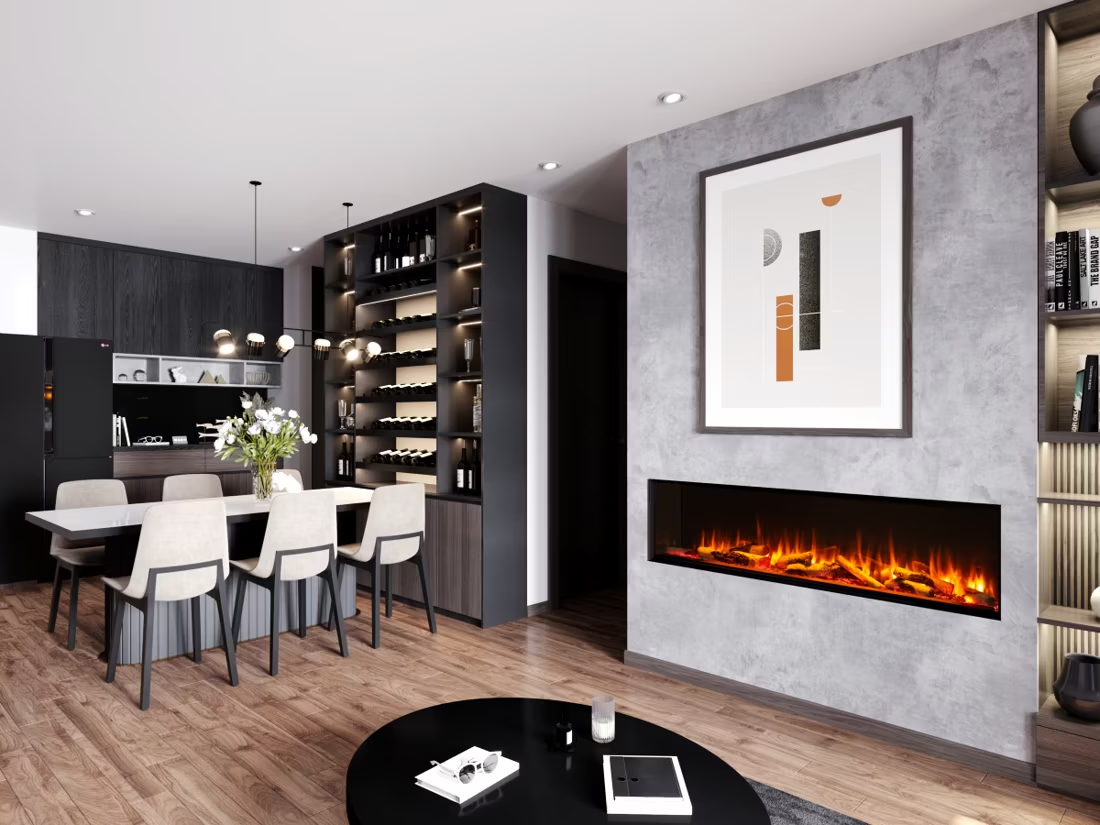
The bigger driver, though, is the building stock itself. Most Toronto condo boards and the Ontario Fire Code restrict venting solid-fuel or gas appliances through shared walls and floors, which rules wood and often gas out of a huge share of units in Liberty Village, North York, and the King West corridor. Electric fireplaces need no chimney, no gas line, and no combustion air supply, so they're frequently the only fireplace option a condo board will sign off on. In older Cabbagetown and Riverdale semis with real masonry, homeowners often add an electric insert into an existing firebox rather than open a wall for new gas line or a WETT-inspected wood setup, and two Ontario manufacturers, Dimplex (headquartered in Mississauga) and Napoleon (based in Barrie), supply a large share of what local dealers install.
Three steps. No salesperson until you're ready.
Tell us about your project
Your postal code, your situation, and the fuel you're leaning toward—or let the answers point you to one.
See what's actually available
The brands dealers within 100 miles genuinely carry—real options, never a catalog mirage.
Get your dealer & Project Guide
A trusted local dealer, plus the free Project Guide & Parts List that names every component of the job.
Frequently Asked Questions
How much does an electric fireplace installation cost in the Toronto region?
Most electric fireplace projects here run $500-$1,600 CAD, well below the $6,000-$15,000 typical for a new gas installation. A simple plug-in insert or wall-mount unit sits at the low end. Built-in units that need a dedicated 120-volt or 240-volt circuit run by a licensed electrician, or custom millwork around a linear unit in a condo living room, land toward the top of that range. Because there's no venting or gas line to run, labour costs stay modest even in tight downtown units.
Do I need a permit to install an electric fireplace in my Toronto home or condo?
Usually not for the unit itself, since there's no combustion involved, so the building permit and WETT inspection rules that apply to wood and gas appliances don't apply here. If you're adding a dedicated electrical circuit for a built-in unit, that work needs to be done by a licensed electrician and may require an Electrical Safety Authority inspection, which most local dealers coordinate as part of the installation. Condo owners should still check with their building's property management, since some towers require notice or a minor alteration form even for a straightforward plug-in unit.
Can I install an electric fireplace in a Toronto condo?
In most buildings, yes, and it's often the only fireplace fuel a condo board will approve. Toronto's high-rise stock is built around shared venting and fire-rated walls, and most condo declarations flatly prohibit new gas lines or solid-fuel appliances in individual units. Electric fireplaces sidestep that problem entirely, with no venting, no gas line, and no change to the building's fire separation. Dealers who work regularly in Liberty Village, CityPlace, and North York towers can point you to models sized for a standard condo living room and, if needed, help you fill out your board's alteration paperwork.
Electric vs. gas—which makes more sense for a house in the Toronto region?
With natural gas service available through Enbridge Gas across most of the region, gas is a real option for houses and remains the choice for homeowners who want a fireplace to contribute meaningfully to room heat, typically $6,000-$15,000 CAD installed. Electric units cost far less to install ($500-$1,600) and run on a standard outlet or simple new circuit, but they're built for ambiance and zone heat, not for offsetting your furnace. For a semi in Leslieville or the Junction with an existing gas line already near the family room, gas is often worth the extra cost; for a rental, a condo, or a room where running new gas line isn't practical, electric is the better fit.
Why would I choose electric over a wood-burning fireplace here?
Central and eastern Ontario has a strong hardwood supply, with sugar maple, red oak, white ash, and yellow birch all common regional firewood, and a wood installation typically runs $6,000-$12,000 CAD plus a WETT inspection for insurance and CSA B365 compliance. That works well for a detached house with a chimney and somewhere to store cordwood. It's a much harder fit for the condo towers and tight semis that make up so much of the Toronto region, where there's no chimney, no wood storage, and often no permission from the building. Electric skips all of that, with no permit hassle, no WETT inspection, and no smoke to manage on a shared property line.
Will an electric fireplace actually heat my room?
Most electric fireplaces put out roughly 4,600-5,000 BTU (about 1,500 watts) on the heat setting, enough to take the edge off a bedroom, condo living room, or finished basement rec room, especially paired with the Toronto region's forced-air furnaces handling the rest of the house. They're not sized to replace your primary heat source through a full winter with lows near -9.4°C, but as supplemental or shoulder-season heat, an October evening or a cool April night before the furnace kicks back on, they do real work while looking like a fire.
How much maintenance does an electric fireplace need?
Very little compared to wood or gas. There's no chimney to sweep, no WETT inspection to schedule, and no annual gas line check. Maintenance is mostly dusting the unit, occasionally replacing an LED flame bulb or ember bed, and checking that the fan and heating element are clear of dust, something most homeowners handle themselves without calling a technician.
What electric fireplace brands do local dealers in the Toronto region carry?
Two of the biggest names in the category are made right in Ontario: Dimplex, headquartered in Mississauga, and Napoleon, based in Barrie, both of which supply a large share of the linear, insert, and mantel-style units installed across the region. Local dealers typically stock several tiers from each, from basic plug-in inserts for a condo firebox to larger built-in linear units for a new-construction feature wall, and can walk you through flame realism, heat output, and trim options in person.
What size electric fireplace do I need?
Sizing comes down to the wall and the room, not the climate the way it does with wood or gas. A 30-40 inch linear unit suits most condo living rooms in towers around King West or North York, while a 50-60 inch unit fits better as a focal point in a detached house's great room. Recessed or built-in units need a stud bay or custom surround with clearance for the fan and wiring, so it's worth having a local dealer measure the space before you buy, especially in a condo where the wall may be shared or load-bearing.
How much does an electric fireplace cost to run?
With the heater on, a typical unit draws about 1,500 watts—at average electric rates that's roughly 20 cents an hour. Run the flame effect alone and it costs pennies; the flames are LED-driven and use about as much power as a light bulb. There's no pilot light, no fuel delivery, and essentially no maintenance.
What fireplace styles should I know before shopping?
Four cover most of the market: screen-front traditional (mesh front, open feel, fits craftsman homes), traditional door set (the classic look you grew up with), modern linear (wide, low, the statement piece for entertaining), and clean face contemporary (no trim—your tile or stone runs right to the fire's edge). Walk in knowing those four terms and you're ahead of most buyers.
Do electric fireplaces actually produce heat?
Yes—most put out around 4,800–5,000 BTUs from a standard outlet, which comfortably warms a bedroom, office, or den as a comfort-zone heater. What they won't do is carry a whole house the way wood, gas, or pellet can. Think of electric as ambiance-first with honest supplemental heat: flames on with no heat in July, flames plus warmth in January.
Does an electric fireplace need a vent or chimney?
No—that's its superpower. An electric fireplace needs a wall and an outlet, period. No vent pipe, no gas line, no clearances to design around, which is why it works in bedrooms, offices, apartments, and walls where venting a gas or wood unit would be impractical or impossible. Installation is typically the simplest and least expensive of any fireplace type.
Stove and Fireplace Dealers in Toronto county
Listings include WhyFire partner dealers, dealers we have verified as authorized for the brands we recommend, and established local businesses that carry hearth products. Every listing shows which one it is. The ones marked Preferred run on WhyFire's software, so they can show you real pricing and book your appointment right here. No manufacturer pays for placement. How we verify dealers →
Classic Fireplace And Bbq Store
Maple Stone
National Fireplaces And Facing Inc
Target Wholesale & Distributors
The Electric Fireplace Shop
Woodbridge Fireplaces Inc.
Crystal Fireplaces Inc.
The Fireside Group, Inc.
Toronto Comfort Zone
Maple Air
Costelloe & Company
The Fireplace Specialist
Air Makers Inc.
Stylish Fireplaces & Interiors
Stylish Fireplaces By Huntington Lodge
InsideOut Home & Patio
Electric Service in Toronto county
An electric fireplace's heater draws about 1,500 watts—pennies per hour at local rates.
Hydro One
Toronto Hydro
Alectra Utilities
Get your free Project Guide & Parts List for an electric fireplace in the Toronto region.
Tell us about your condo, semi, or house and we'll help you find a trusted local dealer and send a free Project Guide & Parts List—the exact unit, mounting hardware, and electrical requirements for your project, plus condo paperwork tips if you need them.
Find Your Fireplace →