
Ambiance and heat, no chimney required in St. Jacobs.
With winter lows averaging -10.3°C and a village full of stone mills and century farmhouses, St. Jacobs homeowners are turning to electric units that need no venting and no core drilling. We'll help you find a trusted local dealer and a free plan for your project.
Every Project Starts From One of These Five Situations
A village of heritage buildings, not open-flame retrofits.
St. Jacobs sits at 344 metres in the Regional Municipality of Waterloo, in climate zone 6A, with winters that push averages down to -10.3°C and keep nights below freezing for a good four months of the year—a real but manageable winter, milder than what Sudbury or Thunder Bay deal with, closer in character to a typical Ottawa cold snap. Enbridge Gas mains run through the village and Hydro One, Alectra Utilities, and Toronto Hydro territory cover electric service across the surrounding area, so most homes here already have a choice between fuels for supplemental heat rather than relying on one option out of necessity.
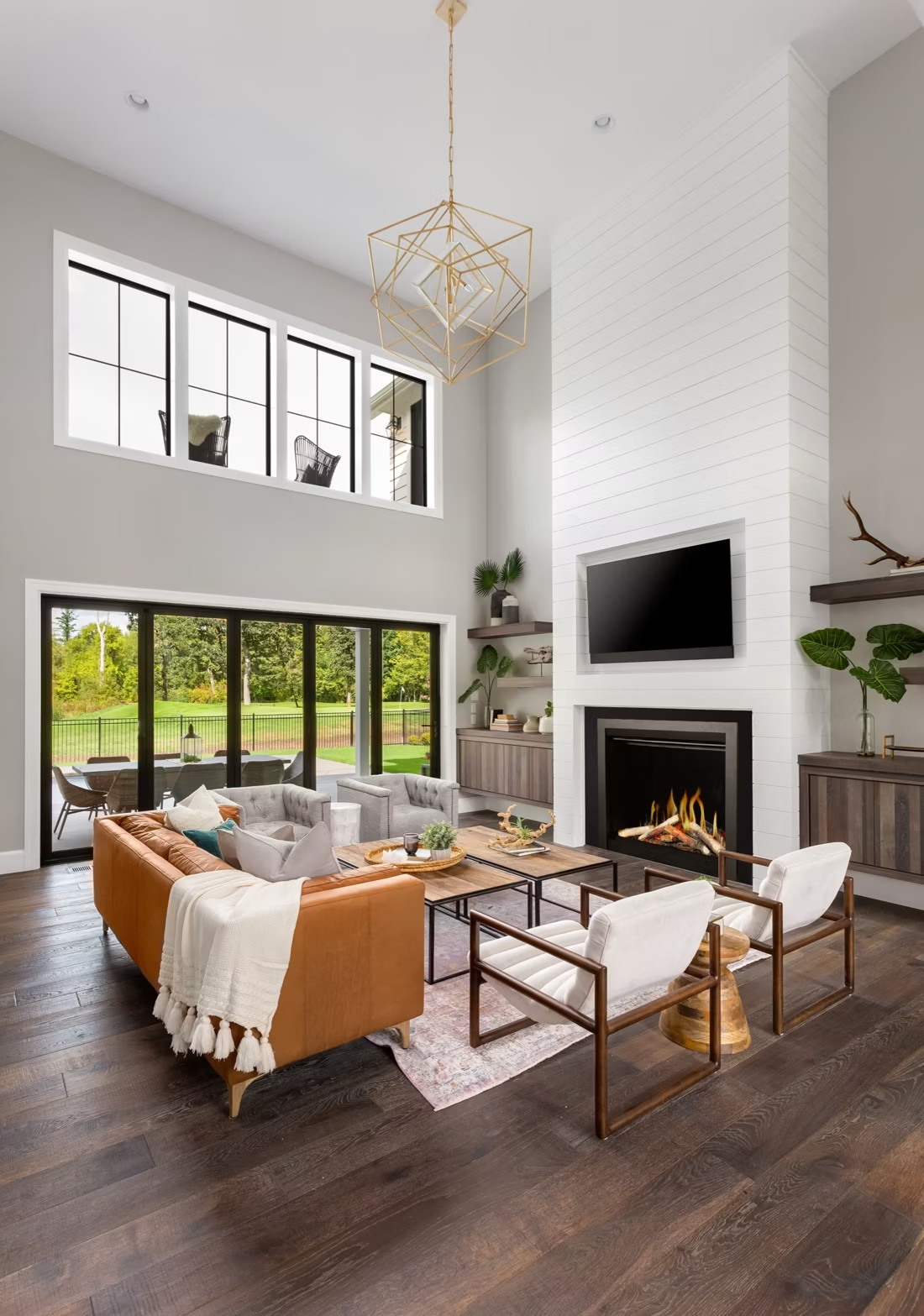
What makes electric a strong fit specifically in St. Jacobs is the building stock: stone mills, 19th-century farmhouses, and restored storefronts along the historic downtown that homeowners and business owners are often reluctant to core-drill for a chimney or trench for a new gas line. An electric insert or wall-mounted unit needs neither—no CSA B365 wood installation code to satisfy, no WETT inspection for insurance, no venting through a heritage stone wall. It's also the practical pick for basement suites, additions, and rental units where a landlord wants the visual warmth of a fireplace without an open flame to insure against.
Three steps. No salesperson until you're ready.
Tell us about your project
Your postal code, your situation, and the fuel you're leaning toward—or let the answers point you to one.
See what's actually available
The brands dealers within 100 miles genuinely carry—real options, never a catalog mirage.
Get your dealer & Project Guide
A trusted local dealer, plus the free Project Guide & Parts List that names every component of the job.
Frequently Asked Questions
How much does an electric fireplace installation cost in St. Jacobs?
Most electric fireplace projects here run $500 to $1,600 CAD. A plug-in insert or freestanding unit that runs off an existing 120V outlet sits at the low end and can go in without an electrician. A built-in linear unit or one requiring a dedicated 240V circuit—common when a homeowner wants a larger unit in a new addition or a converted heritage fireplace opening—pushes toward the top of that range once you factor in the electrical work.
Do I need a permit for an electric fireplace in St. Jacobs?
Usually not the same building permit a wood or gas install requires through the municipal building department. But if your unit needs a new dedicated circuit, that wiring work needs to meet Electrical Safety Authority requirements and typically gets inspected as part of the job. For heritage-designated buildings in the village core, it's still worth a quick check with the municipal building department before altering an existing fireplace opening, even for a low-impact electric insert.
Will an electric fireplace actually heat my home through a St. Jacobs winter?
Treat it as zone heat, not a furnace replacement. Most electric fireplaces put out around 5,000 BTU equivalent from a 1500-watt heater—enough to comfortably warm a living room or converted sunroom, but not enough to carry a whole house once temperatures average -10.3°C overnight. Homes here typically lean on a gas furnace fed by Enbridge Gas or a heat pump for primary heat, with the electric fireplace adding warmth and ambiance to the room you're actually sitting in.
What does an electric fireplace cost to run in St. Jacobs?
At the regional residential rate of roughly 12.8 cents per kWh, a typical 1500-watt unit run five hours a night through a cold stretch costs about a dollar a day, or somewhere around $25 to $30 a month of steady evening use. That's before accounting for time-of-use pricing through Hydro One or Alectra Utilities, which can shift costs depending on when you run it—worth asking your dealer or utility about if you plan to use the fireplace daily through the winter.
Electric fireplace vs. insert vs. wall-mount—what's the difference for my house?
A freestanding electric stove sits anywhere with an outlet, a good option for a farmhouse den or a rental unit. An electric insert slides into an existing masonry firebox, which is common in St. Jacobs' older stone and brick homes where a wood fireplace is being decommissioned for insurance or maintenance reasons but the owner wants to keep the opening functional. A wall-mounted linear unit suits newer additions and renovations where there's no existing firebox to work with at all.
Electric vs. gas vs. wood—what makes sense for a home in St. Jacobs?
Wood still has a strong following here given the dense sugar maple, red oak, white ash, and yellow birch supply across this part of Ontario, though it comes with a WETT inspection for insurance and the CSA B365 code to satisfy. Gas through Enbridge is the common choice for primary heat and instant-on convenience. Electric wins where venting or a chimney simply isn't practical—heritage buildings, condos, basement suites, or anyone who wants fireplace ambiance without touching the structure or dealing with combustion appliances at all.
Are electric fireplaces a good fit for heritage buildings in St. Jacobs' historic downtown?
Yes, and it's one of the more common reasons homeowners and shop owners in the village core choose electric. There's no venting to run through a stone or timber-frame wall, no chimney to core-drill, and no CSA B365 wood installation code or WETT inspection to arrange. If the building carries a heritage designation, an electric insert or wall-mounted unit is also easy to reverse later, which matters when permanent alterations aren't an option.
What electric fireplace brands do local dealers in this area carry?
Dimplex, headquartered in Pickering, and Napoleon, built in Barrie, are both Ontario companies and turn up frequently through dealers serving Waterloo Region and St. Jacobs—a practical advantage for parts availability and warranty support. A local dealer can walk you through current lineups from both, along with what fits a heritage firebox opening versus a new-construction wall-mount.
What size electric fireplace do I need for a St. Jacobs home?
For a typical living room or converted sunroom in the 200 to 400 square foot range, a standard 1500-watt insert or wall-mount is usually enough to notice a real difference on a cold evening. Larger open-concept additions, which are common in renovated century farmhouses around the village, may need two zones or a larger linear unit rather than expecting one fireplace to do all the work. A local dealer will size it against your room's insulation and ceiling height rather than square footage alone.
How much does an electric fireplace cost to run?
With the heater on, a typical unit draws about 1,500 watts—at average electric rates that's roughly 20 cents an hour. Run the flame effect alone and it costs pennies; the flames are LED-driven and use about as much power as a light bulb. There's no pilot light, no fuel delivery, and essentially no maintenance.
What fireplace styles should I know before shopping?
Four cover most of the market: screen-front traditional (mesh front, open feel, fits craftsman homes), traditional door set (the classic look you grew up with), modern linear (wide, low, the statement piece for entertaining), and clean face contemporary (no trim—your tile or stone runs right to the fire's edge). Walk in knowing those four terms and you're ahead of most buyers.
Can I put a TV above my fireplace?
Yes—with an asterisk. Fireplaces are hot and TVs don't like heat. Either put a mantel between them to deflect rising warmth, or choose a fireplace with heat-management technology that creates a cool zone on the wall above—the wall stays around 125 degrees, barely warm, while the room still gets full heat. If you like clean lines and don't want a mantel, heat management is the answer.
Do electric fireplaces actually produce heat?
Yes—most put out around 4,800–5,000 BTUs from a standard outlet, which comfortably warms a bedroom, office, or den as a comfort-zone heater. What they won't do is carry a whole house the way wood, gas, or pellet can. Think of electric as ambiance-first with honest supplemental heat: flames on with no heat in July, flames plus warmth in January.
Nearby Dealers
Hearth shops serving St. Jacobs and the surrounding area. Every listing shows whether it is a WhyFire partner, a dealer we have verified as authorized for the brands we recommend, or a local business carrying hearth products. No manufacturer pays for placement. How we verify dealers →
We’ve paused dealer listings for this connection today. Enter your zip or postal code above to find dealers near you, or come back tomorrow.
Electric Service in St. Jacobs
An electric fireplace's heater draws about 1,500 watts—pennies per hour at local rates.
Hydro One
Toronto Hydro
Alectra Utilities
Get your free Project Guide & Parts List for a St. Jacobs electric fireplace.
Tell us about your home, whether it's a heritage building or a newer addition, and whether you're on Hydro One or Alectra Utilities, and we'll help you find a trusted local dealer and send a free Project Guide & Parts List with the exact unit and circuit needs for your project.
Find Your Fireplace →