
Real ambiance and real heat, no chimney required, across the Niagara Region.
From heritage streets in Niagara-on-the-Lake to condo towers along the St. Catharines and Niagara Falls waterfronts, electric fireplaces give homeowners instant zone heat and flicker without venting, gas lines, or a masonry chimney. We'll help you find a trusted local dealer who knows what your circuit, your wall, and your municipality's rules will actually allow.
Every Project Starts From One of These Five Situations
The mildest winters in Ontario still call for supplemental heat.
The Niagara Region sits between Lake Ontario and Lake Erie, and that geography matters: the two lakes moderate the winter air enough that average lows here, around -7.1°C, run noticeably milder than what a household in Ottawa or Sudbury deals with most winters. Homes stretch from the escarpment towns of Grimsby and Lincoln through St. Catharines, Niagara Falls, Thorold, and Welland to the lakefront communities of Niagara-on-the-Lake, Fort Erie, and Port Colborne. Natural gas is widely available across the built-up parts of the region, and most municipalities process building permits through their own building department, so a lot of home heating here still runs on gas furnaces and gas fireplaces. Electric fireplaces have carved out a real, mainstream role alongside that, not as a whole-home heat source but as fast, controllable warmth for a specific room without the cost of running new gas line or a vent.
That role shows up clearly in the kind of properties across the region: the heritage conservation district in Niagara-on-the-Lake's Old Town restricts exterior alterations, which makes a plug-in or recessed electric unit an easy way to add a fireplace to a designated house without touching the roofline or an exterior wall. Wineries and inns along the Niagara Parkway lean on electric units in tasting rooms and guest suites for the same reason: no open flame permit, no combustion byproducts, and no venting through a shared or historic wall. Newer condo and apartment buildings along the St. Catharines and Niagara Falls waterfronts favour electric for the identical reasons a strata board does anywhere: it is the fireplace option that does not require a flue penetrating someone else's unit.
Three steps. No salesperson until you're ready.
Tell us about your project
Your postal code, your situation, and the fuel you're leaning toward—or let the answers point you to one.
See what's actually available
The brands dealers within 100 miles genuinely carry—real options, never a catalog mirage.
Get your dealer & Project Guide
A trusted local dealer, plus the free Project Guide & Parts List that names every component of the job.
Frequently Asked Questions
How much does an electric fireplace installation cost in the Niagara Region?
Most electric fireplace projects across the region run $500 to $1,600 CAD. A plug-in insert or wall-mounted unit that uses an existing outlet sits at the low end and can often go in within a day. A recessed linear unit built into new framing, or one that needs a dedicated 240-volt circuit run by a licensed electrician, lands toward the higher end once you add drywall patching and an Electrical Safety Authority inspection. Homes in older Welland, Thorold, or Port Colborine neighbourhoods with original wiring sometimes need a panel assessment before the new circuit goes in, which a local dealer will flag before the job starts.
Do I need a permit to install an electric fireplace in the Niagara Region?
It depends on the unit. A freestanding or plug-in electric fireplace that runs off an existing outlet generally does not trigger a building or electrical permit. A built-in or recessed unit wired to a new dedicated circuit does require an Electrical Safety Authority permit, since ESA covers electrical work everywhere in Ontario, and if you are altering a wall or building a surround, your local municipal building department, whether that is St. Catharines, Niagara Falls, or Welland, may want a building permit too. There is no WETT inspection or chimney requirement at all, since there is nothing to vent, which is one of the main reasons homeowners choose electric in the first place.
Can I install an electric fireplace in a heritage home in Niagara-on-the-Lake?
Yes, and it is one of the more common upgrades in the Old Town's heritage conservation district. Because a heritage designation restricts exterior alterations, adding a vented gas fireplace or a new masonry chimney can trigger a heritage permit review that a homeowner would rather avoid. An electric fireplace needs no exterior penetration at all, so it typically falls outside those restrictions. Local dealers in the region regularly fit period mantels and existing fireplace openings with electric inserts sized to match the original firebox, giving a designated house real flame effect and heat without changing a single exterior line.
Is electric or gas the better choice for my Niagara Region home?
With natural gas widely available across St. Catharines, Niagara Falls, Welland, and most of the built-up region, gas is usually the stronger pick for a primary heat source in a main living area, since it delivers more consistent BTU output through a long winter evening. Electric earns its place for secondary rooms, basements, bedrooms, condos, rental units, and any property where running new gas line or venting is impractical or expensive. Plenty of Niagara Region households run both: gas in the main living room, electric for a supplemental unit in a den or finished basement where zone heat and instant on-off control matter more than raw output.
Can an electric fireplace actually heat a room through a Niagara Region winter?
For the room it is in, yes. Most electric fireplaces put out roughly 5,000 to 9,000 BTU of supplemental heat, which comfortably handles a bedroom, den, or finished basement, especially given how much milder the Niagara Region's winter lows are compared to most of Ontario thanks to the lake effect off Ontario and Erie. What it will not do is replace your furnace for the whole house, particularly in an older, less-insulated home near the escarpment in Grimsby or Lincoln where heat loss runs higher. Think of it as a room-by-room comfort and ambiance upgrade rather than a heating system replacement.
Are electric fireplaces allowed in Niagara Region condos and rental units?
Generally yes, and that is a big part of why they are so common in the newer waterfront condo towers in St. Catharines and Niagara Falls. Condo boards almost universally restrict anything that requires a flue or vent penetrating a shared wall or roof, which rules out most wood and many gas installations in a multi-unit building. A plug-in or low-profile recessed electric unit sidesteps that issue entirely. It is still worth checking your specific condo declaration or your landlord's policy before installing a built-in unit that requires new wiring, since some buildings restrict alterations to unit walls regardless of fuel type.
Does my electrical panel need upgrading for a built-in electric fireplace?
Sometimes. A basic plug-in insert draws about what a space heater does and rarely causes issues on a modern panel. A larger recessed linear fireplace, the kind often installed as a focal wall feature in newer Niagara Falls or Grimsby builds, typically needs its own dedicated circuit and can pull enough current that an electrician will want to confirm your panel has capacity. Older homes in Port Colborne, Fort Erie, or Thorold still running 100-amp service sometimes need a panel upgrade first. A licensed electrician working with your local dealer will check this during the initial site visit rather than after the unit arrives.
Why do so many Niagara-on-the-Lake wineries and inns use electric fireplaces?
Tasting rooms, guest suites, and heritage inns across wine country favour electric fireplaces because they add warmth and atmosphere without an open flame, a gas line, or a vent running through a historic or shared wall. That matters for both code compliance in a commercial hospitality space and for keeping a heritage building's exterior untouched. Electric units also run cold to the touch on the surface of most models, which appeals to properties hosting guests where safety around an unattended fireplace is a real consideration.
How much maintenance does an electric fireplace need?
Very little compared to wood or gas. There is no chimney to sweep, no WETT inspection to schedule, and no annual gas line check. Basic upkeep is dusting the unit, occasionally cleaning the fan or blower vents so airflow stays clear, and replacing an LED bulb or two over the years as they dim. Homes near the escarpment or agricultural land in Lincoln and Pelham that get more seasonal dust indoors may want to check the blower a little more often, but there is no seasonal service call required the way there is for a wood stove or a gas fireplace.
How much does an electric fireplace cost to run?
With the heater on, a typical unit draws about 1,500 watts—at average electric rates that's roughly 20 cents an hour. Run the flame effect alone and it costs pennies; the flames are LED-driven and use about as much power as a light bulb. There's no pilot light, no fuel delivery, and essentially no maintenance.
What fireplace styles should I know before shopping?
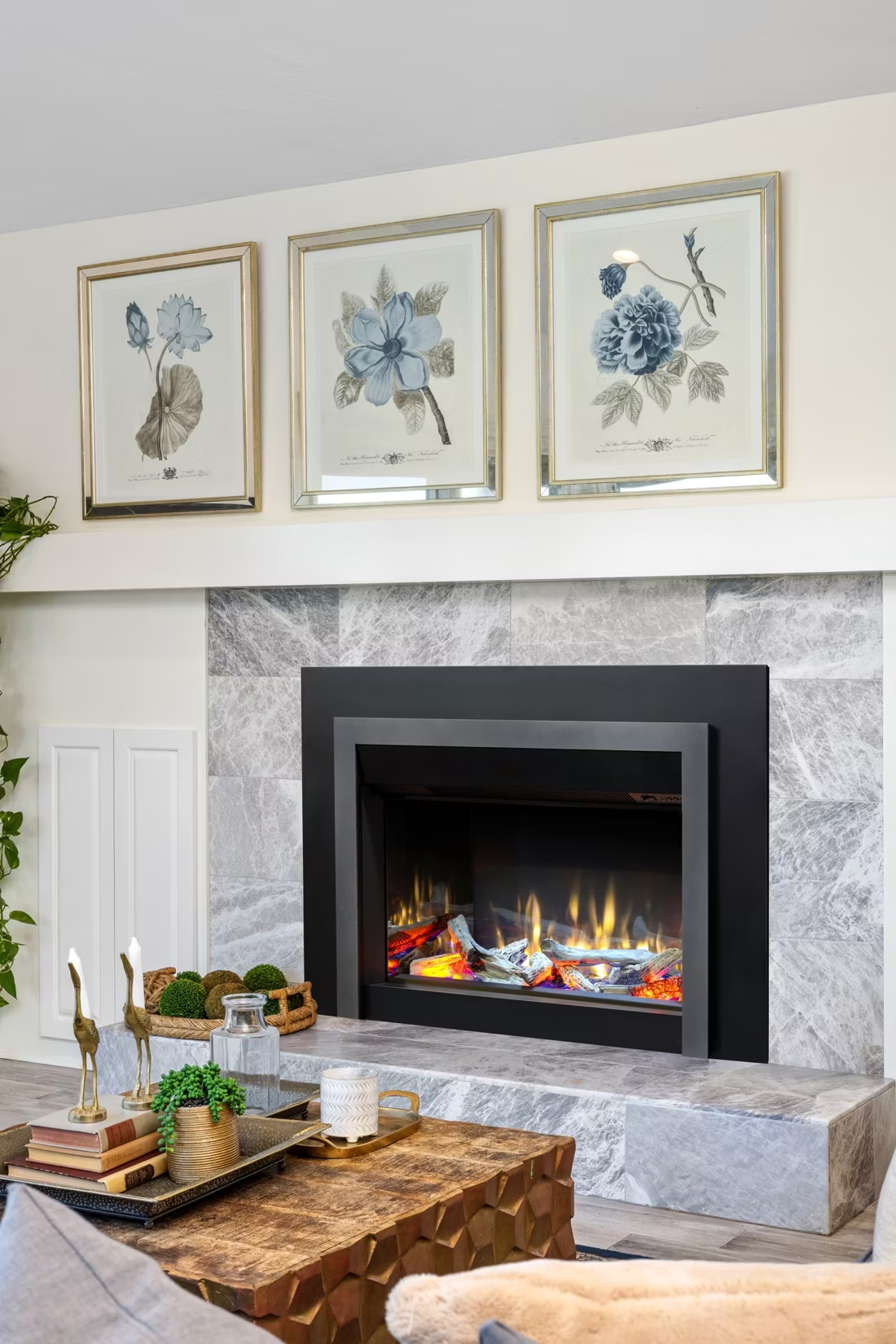
Four cover most of the market: screen-front traditional (mesh front, open feel, fits craftsman homes), traditional door set (the classic look you grew up with), modern linear (wide, low, the statement piece for entertaining), and clean face contemporary (no trim—your tile or stone runs right to the fire's edge). Walk in knowing those four terms and you're ahead of most buyers.
Does an electric fireplace need a vent or chimney?
No—that's its superpower. An electric fireplace needs a wall and an outlet, period. No vent pipe, no gas line, no clearances to design around, which is why it works in bedrooms, offices, apartments, and walls where venting a gas or wood unit would be impractical or impossible. Installation is typically the simplest and least expensive of any fireplace type.
Can I put a TV above my fireplace?
Yes—with an asterisk. Fireplaces are hot and TVs don't like heat. Either put a mantel between them to deflect rising warmth, or choose a fireplace with heat-management technology that creates a cool zone on the wall above—the wall stays around 125 degrees, barely warm, while the room still gets full heat. If you like clean lines and don't want a mantel, heat management is the answer.
Stove and Fireplace Dealers in Regional Municipality of Niagara
Listings include WhyFire partner dealers, dealers we have verified as authorized for the brands we recommend, and established local businesses that carry hearth products. Every listing shows which one it is. The ones marked Preferred run on WhyFire's software, so they can show you real pricing and book your appointment right here. No manufacturer pays for placement. How we verify dealers →
Enviro-Niagara Hearth And Barbeque
Goemans Fireplaces
Recreational Distributors Inc.
All-Ways Warm Stove & Chimney
Electric Service in Regional Municipality of Niagara
An electric fireplace's heater draws about 1,500 watts—pennies per hour at local rates.
Hydro One
Toronto Hydro
Alectra Utilities
Get your Niagara Region electric fireplace Project Guide & Parts List.
Tell us about your home, your wall, and how you plan to use the fireplace, and we will help you find a trusted local Niagara Region dealer and send a free Project Guide & Parts List, the exact unit, wiring notes, and installer recommendation for your electric fireplace project.
Find Your Fireplace →