
Steady heat for Port Stanley's lake winters, without splitting a single log.
Port Stanley sits right on Lake Erie's north shore, where winter lows average -8.5°C and lake-effect wind can make a harbour cottage feel colder than the thermometer says. Enbridge Gas serves the village core, so a direct-vent fireplace lights instantly and keeps running through the shoulder-season storms that roll off the lake. We'll help you find a local dealer who can tell you exactly what's installable on your street and send a free planning packet.
Every Project Starts From One of These Five Situations
A harbour town heat source that starts with a switch, not a woodpile.
At 180 metres elevation on the north shore of Lake Erie, Port Stanley runs a milder winter than most of inland Ontario—climate zone 5A, with an average winter low of -8.5°C rather than the deeper cold that Sudbury or Thunder Bay see most winters. Lake Erie moderates the extremes, but it also throws wind and lake-effect squalls at the harbour that make a fireplace's on-demand heat genuinely useful, not just decorative, through a heating season that runs roughly six months, October into April. Port Stanley's year-round population is small—just over 2,100—but many homes here are older lakefront cottages and beach houses built well before central heating was standard, which is exactly the housing stock where a gas fireplace or insert earns its keep as a primary comfort source in the coldest stretch of the year.
Elgin's hardwood forests supply plenty of sugar maple, red oak, white ash, and yellow birch to homeowners who want to burn wood, and plenty of Port Stanley properties still do. But the village core sits on Enbridge Gas's distribution network, and for a lot of compact harbour lots and older cottages without room to season and store cordwood, gas is the simpler retrofit—a direct-vent unit ties into the existing gas line, needs no chimney sweep, and doesn't require the WETT inspection insurers typically ask for on wood appliances. Any gas fireplace install still needs a permit through the Central Elgin building department and work from a licensed, TSSA-registered gas fitter, but that's a lighter lift than the masonry and clearance work a wood installation demands.
Three steps. No salesperson until you're ready.
Tell us about your project
Your postal code, your situation, and the fuel you're leaning toward—or let the answers point you to one.
See what's actually available
The brands dealers within 100 miles genuinely carry—real options, never a catalog mirage.
Get your dealer & Project Guide
A trusted local dealer, plus the free Project Guide & Parts List that names every component of the job.
Frequently Asked Questions
How much does a gas fireplace installation cost in Port Stanley?
Most Port Stanley gas fireplace installs run $6,000 to $15,000 CAD. An insert dropping into an existing masonry firebox in one of the village's older lakefront cottages, with a straightforward tie-in to the Enbridge Gas line already run to the house, sits toward the low end. A new built-in unit for a renovated harbour-view addition—with fresh gas line work and venting through an exterior wall—lands toward the top. Properties on the rural edges of Central Elgin that sit outside Enbridge's mains and need a propane tank set should budget extra on top of the install itself.
Can I convert an existing wood fireplace to gas in my Port Stanley cottage?
Yes, and it's a common request in the older beach cottages and harbour homes around Port Stanley that were originally built with a wood-burning masonry fireplace. A gas insert typically slides into that existing firebox with a liner run up the current chimney, which avoids new structural work. It also sidesteps the annual WETT inspection insurers usually want for a wood appliance—worth knowing if your cottage insurance renewal is coming up and you'd rather simplify the file.
Does Enbridge Gas actually reach my street in Port Stanley?
Most of the Port Stanley village core, including the streets closest to the harbour and the beach, sits on Enbridge Gas's distribution network. Some properties further out toward the edges of Central Elgin and the surrounding rural parts of Elgin sit past the mains and rely on propane instead. If you're not sure which side of that line your address falls on, a local dealer can check before you commit to a design, since it changes whether you're tying into an existing line or setting a propane tank.
Will a gas fireplace still work if the power goes out?
Most will, which is worth planning for given how often wind off Lake Erie knocks out power along the shoreline during fall and winter storms. Units with intermittent pilot ignition run on AA battery backup that kicks in automatically. Valor fireplaces skip the battery altogether since their pilot's thermocouple generates its own current. If outages are a real concern for your stretch of shoreline, ask your dealer which ignition system is on any model you're considering—it's a meaningful difference here, not a minor spec.
What's the difference between a gas fireplace, insert, and stove for a Port Stanley home?
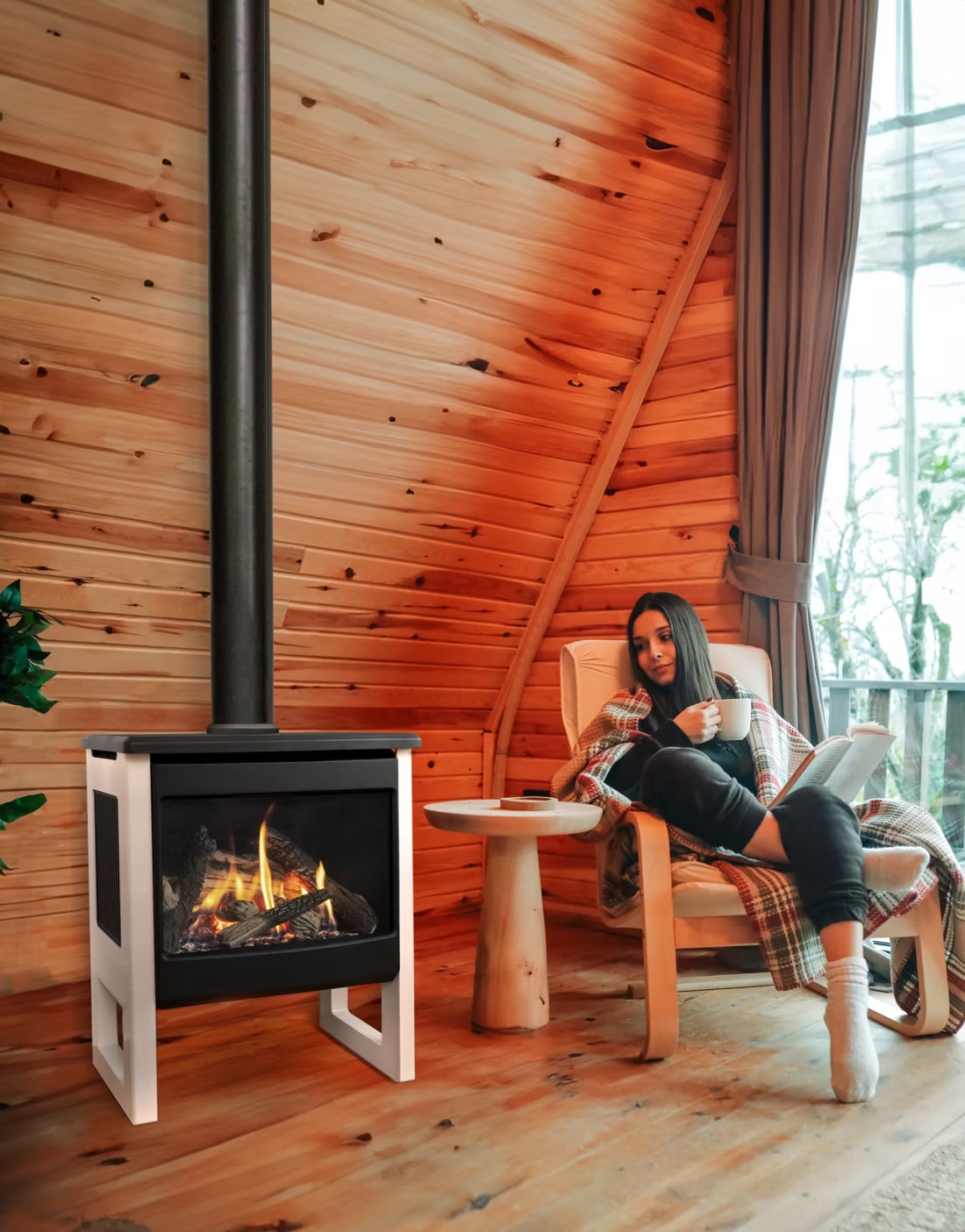
A gas fireplace is a built-in unit framed into a wall, which suits a renovation or a new addition looking out toward the lake. A gas insert fits inside an existing masonry firebox, the common route in the village's older cottages that started out burning sugar maple or red oak. A gas stove is freestanding on a hearth pad, similar footprint to a wood stove but running off the gas line or a propane tank. For most existing Port Stanley homes, an insert is the least disruptive option since the chimney chase is already there.
Do I need a permit to install a gas fireplace in Port Stanley?
Yes. You'll need a building permit through the Central Elgin building department, and the gas connection itself has to be done by a licensed, TSSA-registered gas fitter—that's an Ontario-wide requirement, not a local quirk. Most hearth dealers who work in Port Stanley handle both the permit paperwork and the final inspection as part of the job, which matters if you're managing a cottage renovation from out of town.
Should I choose a vented or vent-free gas fireplace here?
Direct-vent units pull combustion air from outside and exhaust it back outside through sealed venting, and that's what most local dealers install and what code favours across Ontario. Vent-free units burn into the room and come with strict square-footage limits. Given how many Port Stanley homes are smaller cottages with modest room sizes, a direct-vent unit is usually the more workable—and safer—choice regardless of the fuel it's replacing.
How often does a gas fireplace need servicing?
Plan on an annual check, ideally in September before the first real cold snap off the lake rather than mid-winter when technicians are booked solid across Elgin. A service visit covers the burner, pilot assembly, gas connections, and venting, and it's a lighter job than a wood chimney sweep—but skipping it on a unit that runs daily through a Port Stanley winter is how an ignition problem shows up on the worst night to have one.
Gas or wood—which makes more sense for a Port Stanley property?
Wood has real advantages here—Elgin's hardwood forests supply sugar maple, red oak, white ash, and yellow birch, and the Ontario Ministry of Natural Resources issues free cutting permits for up to 10 cubic metres a year in managed forest zones, so fuel cost can be close to nothing if you have somewhere dry to store it. But storage is the catch on Port Stanley's tighter village lots, where a woodshed isn't always practical. Gas wins on convenience and fits especially well in the older cottages and harbour-adjacent homes where Enbridge Gas already reaches the street. A fair number of local homeowners keep a wood-burning appliance at a cottage further out and run gas as the everyday choice in town.
Can a gas fireplace run on a thermostat?
Most modern gas fireplaces can—turn it on and off from the couch with a remote, or set a room temperature and let the fireplace hold the comfort zone for you. If low maintenance matters to your family, this is the feature set that makes gas the convenience pick over wood and pellet.
Why do fireplace quotes vary so much?
Because a fireplace is an iceberg—there's more behind the wall than in front of it. A low quote often covers only the unit; the full scope includes vent pipe, gas line or electrical, framing, and the tile or stone that has to come off and go back on. Make every bidder price the whole job. If a dealer can't speak to the full scope with confidence, that's your signal to keep looking.
What's the difference between an insert and a zero-clearance fireplace?
An insert is a fireplace that slides into a pre-existing wood-burning fireplace—if you don't have one, there's nothing to insert it into. A zero-clearance fireplace is built into a framed wall, which makes it the answer for remodels and new construction. Simple test: existing masonry fireplace means insert; blank or framed wall means zero-clearance.
Can I put a TV above my fireplace?
Yes—with an asterisk. Fireplaces are hot and TVs don't like heat. Either put a mantel between them to deflect rising warmth, or choose a fireplace with heat-management technology that creates a cool zone on the wall above—the wall stays around 125 degrees, barely warm, while the room still gets full heat. If you like clean lines and don't want a mantel, heat management is the answer.
Nearby Dealers
Hearth shops serving Port Stanley and the surrounding area. Every listing shows whether it is a WhyFire partner, a dealer we have verified as authorized for the brands we recommend, or a local business carrying hearth products. No manufacturer pays for placement. How we verify dealers →
We’ve paused dealer listings for this connection today. Enter your zip or postal code above to find dealers near you, or come back tomorrow.
Natural Gas Service in Port Stanley
Confirm service at your address before planning a gas fireplace—a quick call settles it.
Enbridge Gas
Get your free Project Guide & Parts List for a Port Stanley gas fireplace.
Tell us about your home, whether you're on Enbridge Gas or propane, and we'll help you find a local dealer near the harbour and send a free Project Guide & Parts List—sized for your space, with the vent kit and parts specified.
Find Your Fireplace →