
Heat and ambiance for homes without a flue to spare.
Norfolk County runs a lot of century farmhouses, lakeside cottages near Port Dover and Turkey Point, and newer builds in Simcoe and Waterford that never had a chimney to begin with. An electric unit solves that without touching your roofline. We'll help you find a trusted local dealer who can size it right and send a free planning packet.
Every Project Starts From One of These Five Situations
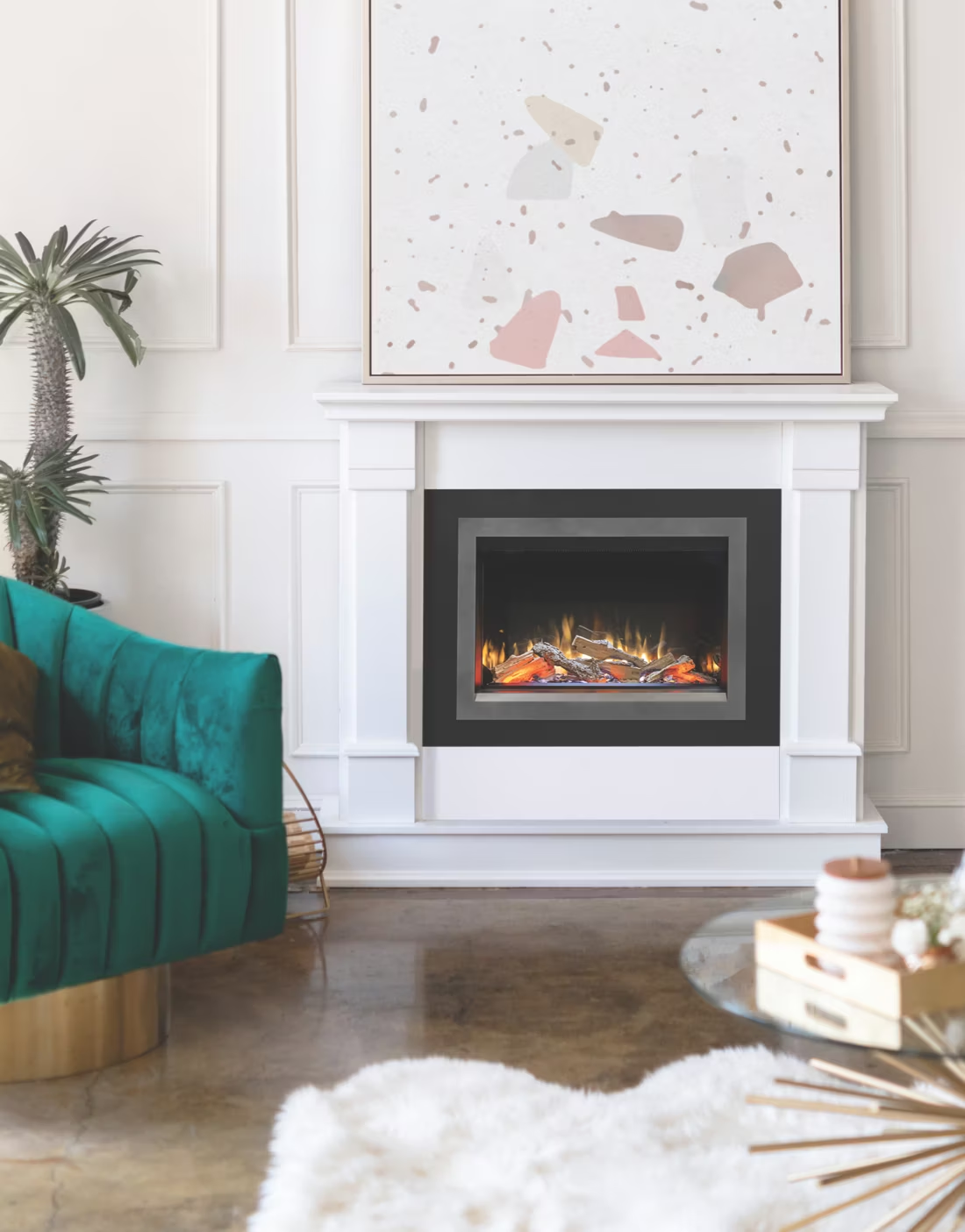
Zero-clearance heat that works in almost any wall.
At 235 metres elevation along the north shore of Lake Erie, Norfolk County sits in climate zone 5A with a winter low averaging around -10.4°C. That's a real heating season, but it's a milder one than Ottawa or Sudbury see, with fewer extended deep-freeze stretches. Plenty of local housing stock, from tobacco-belt farmhouses around Delhi to cottages along Turkey Point and Long Point, was built without a chimney at all, which is exactly where an electric fireplace or insert earns its keep: no venting, no gas line, no masonry work.
Wood still has a strong presence here thanks to the region's dense hardwood supply of sugar maple, red oak, white ash, and yellow birch, and Enbridge Gas covers the town cores of Simcoe, Waterford, and Port Dover. But electric is the practical answer for finished basements, secondary suites, rental units, and any cottage or infill build where running a new flue isn't realistic. With Hydro One serving most of the county and residential rates around $0.128 per kWh, an electric unit is also the cheapest fuel type to install, typically $500-$1,600 versus $6,000 and up for a wood or gas system.
Three steps. No salesperson until you're ready.
Tell us about your project
Your postal code, your situation, and the fuel you're leaning toward—or let the answers point you to one.
See what's actually available
The brands dealers within 100 miles genuinely carry—real options, never a catalog mirage.
Get your dealer & Project Guide
A trusted local dealer, plus the free Project Guide & Parts List that names every component of the job.
Frequently Asked Questions
How much does an electric fireplace installation cost in Norfolk County?
Most installs land between $500 and $1,600. A plug-in insert or wall-mounted unit dropped into an existing opening sits at the low end since it just needs a standard outlet. A hardwired built-in, common in newer Simcoe or Waterford builds where the fireplace is framed into a feature wall, costs more because it needs a dedicated circuit run by a licensed electrician. Either way, there's no venting, no chimney, and no gas line to budget for, which is why electric consistently comes in well under the $6,000-plus starting point for wood or gas systems here.
Will an electric fireplace actually heat a room during a Norfolk County winter?
It'll comfortably heat a single room as supplemental warmth, not the whole house. Most units top out around 5,000 BTU equivalent, which is plenty to take the chill off a finished basement or a farmhouse sitting room when the outdoor temperature drops toward that -10.4°C average low, but it's not meant to replace your furnace or a wood stove on the coldest nights. Most homeowners here run electric for zone heating and ambiance, and keep their existing gas furnace or wood appliance as the primary heat source.
Do I need a permit to install an electric fireplace in Norfolk County?
A plug-in unit generally doesn't require anything from the municipal building department since there's no combustion or venting involved. A hardwired built-in that needs a new circuit is a different story: that electrical work has to be done by a licensed electrician and typically gets an Electrical Safety Authority inspection before it's signed off. Your local dealer can tell you which category your chosen unit falls into before you commit to a wall design.
Electric vs. gas fireplace—which makes more sense in Norfolk County?
If your address is on Enbridge Gas's network in Simcoe, Waterford, or Port Dover, a gas fireplace gives you more heat output and that instant, flame-forward look for around $6,000-$15,000 installed. Electric costs a fraction of that, $500-$1,600, and skips the gas line and venting entirely, but it produces less usable heat and the flame effect, while good, is a projection rather than real combustion. For a lot of rural properties outside the Enbridge footprint, or for a secondary room where running new gas line isn't worth it, electric is simply the more practical option.
What's the best electric fireplace for an older Norfolk County farmhouse with no chimney?
A zero-clearance electric insert or a built-in linear unit is the usual fit. Century farmhouses around Delhi and Waterford were often built with a single wood-burning fireplace or none at all, and retrofitting a masonry chimney just for a decorative feature rarely pencils out. An electric insert can go into an existing wood firebox opening, or a linear unit can be framed into a new feature wall, and neither needs anything more than a nearby outlet or a short electrical run.
How much does it cost to run an electric fireplace day to day?
At Hydro One's residential rate of roughly $0.128 per kWh, a typical 1,500-watt unit running on high costs about $0.19 an hour, or under $5 for an eight-hour evening of use. Most units also run a low-wattage mode for ambiance without the heater engaged, which costs only a few cents an hour, making electric a cheap way to add warmth and glow to a room without moving the needle much on your Hydro One or Alectra Utilities bill.
Does an electric fireplace make sense for a seasonal cottage near Port Dover or Long Point?
It's one of the better options for a cottage that sits empty for stretches during the off-season. There's no wood to stack and season, no chimney to inspect before the summer opens up, and no gas line to worry about freezing or maintaining. You can power it down completely when the property is vacant with zero risk of a pilot light or creosote buildup waiting for you when you return, which matters for owners who only get out to Turkey Point or Long Point every few weekends.
What's the difference between an electric fireplace, insert, and wall-mount unit?
An electric insert is built to slide into an existing masonry or wood-stove opening, which is common in older Norfolk County homes that already have a firebox. A wall-mount unit hangs flush like a large TV and needs no opening at all, popular in newer Simcoe and Waterford builds designed around a feature wall. A freestanding electric stove sits on the floor like a wood stove and can be moved between rooms. All three plug into a standard outlet or a dedicated circuit and need no venting.
Electric vs. wood—why would I choose electric when hardwood is so available here?
Norfolk County does sit in a region with strong sugar maple, red oak, white ash, and yellow birch supply, and the Ontario Ministry of Natural Resources allows up to 10 cubic metres of cutting per household per year at no cost in managed forest zones. Wood wins on raw heat output and works during a power outage, which electric can't do. But wood also means annual WETT inspections for insurance, chimney maintenance, and $6,000-$12,000 to install properly under the CSA B365 code. Electric skips all of that for under $1,600, which is why it's the common choice for a second room, a rental unit, or a cottage where a wood system isn't worth the upkeep.
How much does an electric fireplace cost to run?
With the heater on, a typical unit draws about 1,500 watts—at average electric rates that's roughly 20 cents an hour. Run the flame effect alone and it costs pennies; the flames are LED-driven and use about as much power as a light bulb. There's no pilot light, no fuel delivery, and essentially no maintenance.
What fireplace styles should I know before shopping?
Four cover most of the market: screen-front traditional (mesh front, open feel, fits craftsman homes), traditional door set (the classic look you grew up with), modern linear (wide, low, the statement piece for entertaining), and clean face contemporary (no trim—your tile or stone runs right to the fire's edge). Walk in knowing those four terms and you're ahead of most buyers.
Do electric fireplaces actually produce heat?
Yes—most put out around 4,800–5,000 BTUs from a standard outlet, which comfortably warms a bedroom, office, or den as a comfort-zone heater. What they won't do is carry a whole house the way wood, gas, or pellet can. Think of electric as ambiance-first with honest supplemental heat: flames on with no heat in July, flames plus warmth in January.
Does an electric fireplace need a vent or chimney?
No—that's its superpower. An electric fireplace needs a wall and an outlet, period. No vent pipe, no gas line, no clearances to design around, which is why it works in bedrooms, offices, apartments, and walls where venting a gas or wood unit would be impractical or impossible. Installation is typically the simplest and least expensive of any fireplace type.
Nearby Dealers
Hearth shops serving Norfolk County and the surrounding area. Every listing shows whether it is a WhyFire partner, a dealer we have verified as authorized for the brands we recommend, or a local business carrying hearth products. No manufacturer pays for placement. How we verify dealers →
We’ve paused dealer listings for this connection today. Enter your zip or postal code above to find dealers near you, or come back tomorrow.
Electric Service in Norfolk County
An electric fireplace's heater draws about 1,500 watts—pennies per hour at local rates.
Hydro One
Toronto Hydro
Alectra Utilities
Get your free Project Guide & Parts List for a Norfolk County electric fireplace.
Tell us about your room, your wall, and whether you need a plug-in unit or a hardwired built-in, and we'll help you find a trusted local dealer and send a free Project Guide & Parts List sized to your space, with the electrical requirements spelled out.
Find Your Fireplace →