
Keep Your Family Warm and Safe—No Matter What
New Edinburgh sits along the Rideau River with winter lows averaging -14.4°C and a heating season that runs five months or more. We'll help you find a trusted local dealer who knows the heritage housing stock here and can spec a stove or insert that actually fits it.
Every Project Starts From One of These Five Situations
A heritage streetscape built around solid masonry chimneys.
At 59 metres elevation along the Rideau River, New Edinburgh doesn't get the harshest cold in Ontario, but a zone 6A winter with lows averaging -14.4°C and stretches well below that is a real heating load, closer to what Sudbury or Thunder Bay residents plan around than what most people picture when they think of Ottawa. Many of the homes here date to the 1800s and early 1900s, built when Thomas MacKay laid out the village around his mills, and a good number still have the original brick or stone masonry fireplace as their bones.
Sugar maple, red oak, white ash, and yellow birch are the hardwoods that heat this part of the province, and central and eastern Ontario carry a dense supply of all four. The Ontario Ministry of Natural Resources issues free cutting permits for up to 10 cubic metres, roughly four cords, per household per year in the Managed Forest and Northern Boreal zones, though most New Edinburgh residents are buying seasoned cordwood locally rather than cutting their own given the urban lot sizes. Because the neighbourhood carries heritage status, some renovations here also fall under stricter appliance certification rules than a typical Ottawa suburb, which a dealer used to working in the district will already know how to navigate.
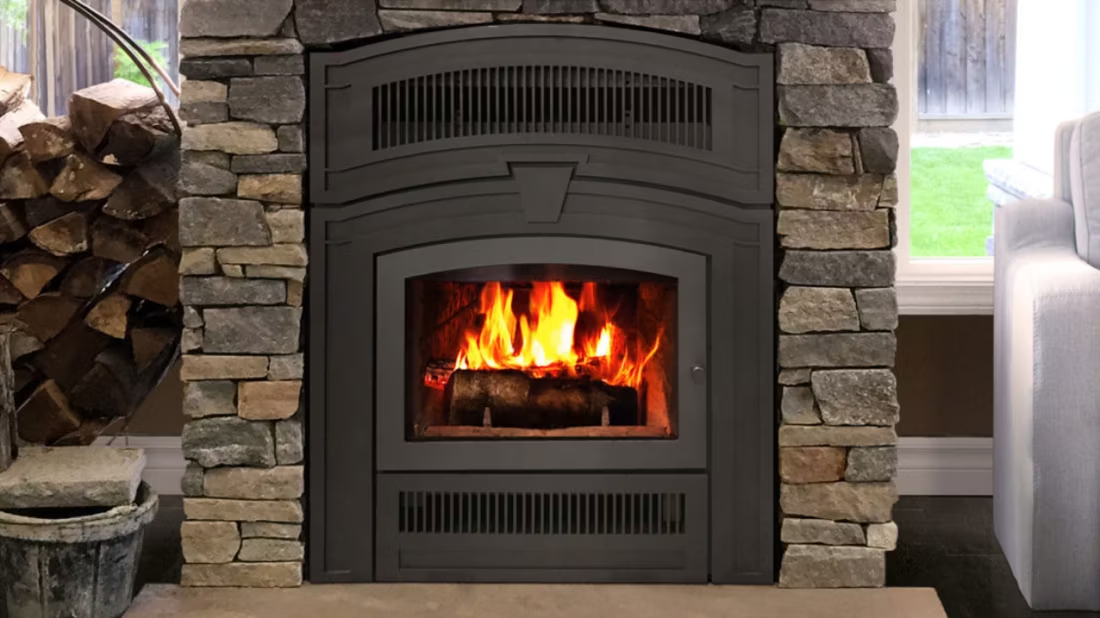
Firewood Cutting Permits Near New Edinburgh
Ontario Ministry Of Natural Resources
Three steps. No salesperson until you're ready.
Tell us about your project
Your postal code, your situation, and the fuel you're leaning toward—or let the answers point you to one.
See what's actually available
The brands dealers within 100 miles genuinely carry—real options, never a catalog mirage.
Get your dealer & Project Guide
A trusted local dealer, plus the free Project Guide & Parts List that names every component of the job.
Frequently Asked Questions
How much does a wood stove or insert installation cost in New Edinburgh?
Most installs run $6,000-$12,000 CAD. An insert dropping into an existing masonry firebox, common in New Edinburgh's older brick and stone homes, tends to land toward the lower end since the chimney structure is already in place. A freestanding stove in a home without a working chimney needs a full Class A chase run through a century-old roofline, which pushes costs toward the top of that range. Your municipal building department permit and inspection are typically folded into the quote either way.
Do I need a permit to install a wood-burning appliance in New Edinburgh?
Yes. New installs go through the municipal building department, and the work has to meet the CSA B365 installation code, which governs clearances, venting, and hearth protection for solid-fuel appliances across Ontario. Most dealers who regularly install in this part of Ottawa handle the permit application and schedule the inspection as part of the job, which matters here since New Edinburgh's older housing stock often means non-standard chimney chases that need a closer look.
Will my home insurance require a WETT inspection?
Almost certainly. A WETT inspection is commonly required by Canadian insurers before they'll cover a home with a wood stove, fireplace, or insert, and it's especially routine in a neighbourhood like New Edinburgh where a lot of properties are pre-1950s and pairing a modern certified appliance with a much older masonry chimney is the norm rather than the exception. Budget for it as a standard part of the project rather than an afterthought, and keep the paperwork on file for your insurer and for resale.
Does New Edinburgh's heritage status affect a wood stove installation?
It can. New Edinburgh is one of Ottawa's designated heritage areas, and any exterior work visible from the street, including a new chimney chase or roof penetration for venting, may need a heritage review in addition to the standard municipal building permit. This isn't a reason to avoid the project, but it is a reason to work with a local dealer who has done installs in the district before and knows which venting configurations clear review without a fight.
What wood species are available near New Edinburgh, and can I cut my own?
Sugar maple, red oak, white ash, and yellow birch are the hardwoods that dominate supply across central and eastern Ontario, and all four season well and burn long, which suits a heating season that regularly drops past -14.4°C. The Ontario Ministry of Natural Resources offers free cutting permits for up to 10 cubic metres, about four cords, per household per year in the Managed Forest and Northern Boreal zones. That said, New Edinburgh itself is dense urban Ottawa, so most residents are buying seasoned cordwood from regional suppliers rather than cutting their own; the permit route is more useful if you've got a cottage or rural property outside the city.
What size wood stove do I need for a New Edinburgh home?
A lot of the housing stock here is two-storey brick or stone construction from the 1800s and early 1900s, with taller ceilings and less insulation than a newer build, which changes the sizing math. With winter lows averaging -14.4°C and colder snaps not unusual, most main living areas do better with a medium to large stove capable of covering 1,500 to 2,500 square feet so it can hold an overnight burn on dense hardwood like sugar maple or red oak without constant reloading. A dealer sizing your stove should walk the actual room, not just go off the square footage on your listing.
How often should my chimney be swept in New Edinburgh?
An annual sweep in September or October, ahead of the first cold snap, is the standard recommendation, and it applies here whether you're burning primarily or supplementally. Hardwoods like sugar maple, red oak, white ash, and yellow birch generally burn cleaner and slower than softwood, but a masonry flue that's been in a New Edinburgh home for a hundred years or more still needs a yearly look, especially since many of these chimneys weren't originally built to modern liner standards.
Wood vs. gas—which makes more sense for a New Edinburgh home?
Enbridge Gas serves this part of Ottawa, and a gas fireplace or insert, typically $6,000-$15,000 CAD installed, gives you instant heat with no wood to split or stack. Wood still holds appeal in a lot of New Edinburgh's heritage homes for the character of an original masonry fireplace and for the fact that it keeps working through a power outage, which the Rideau River corridor has seen its share of during major ice storms. Plenty of households here end up running gas day to day and keeping a certified wood stove or insert as backup and ambiance.
Wood vs. pellet—which is the better fit here?
Wood pairs naturally with the dense hardwood supply across central and eastern Ontario and doesn't need electricity to run, which matters for outage resilience. Pellet stoves, running on regional brands like Lacwood or Energex at roughly $400-$575 CAD a tonne with installs in the $6,000-$10,000 range, burn cleaner and are easier to feed on a set schedule, which appeals to homeowners who want low-maintenance heat without stacking cordwood in a smaller urban yard. Both need to meet the certified-appliance standard that some municipalities in the area now require for new construction, so that isn't a differentiator either way.
Why do fireplace quotes vary so much?
Because a fireplace is an iceberg—there's more behind the wall than in front of it. A low quote often covers only the unit; the full scope includes vent pipe, gas line or electrical, framing, and the tile or stone that has to come off and go back on. Make every bidder price the whole job. If a dealer can't speak to the full scope with confidence, that's your signal to keep looking.
Louvered or clean face—which fireplace front is better?
Louvered fronts have grill work above and below the glass for airflow, move heat a little better with a fan, and suit traditional mantels. Clean face designs drop the louvers entirely so finish work runs to the fire's edge—they fit both modern and traditional rooms. When we did our own home we chose clean face: a big viewing area beat a little extra airflow. It depends on your room, not on a rulebook.
Why is my open fireplace making my house colder?
Open fireplaces suck—literally. As the fire burns, it consumes air your furnace already paid to heat and pulls it out through the chimney, so the house is actually colder after the fire goes out than before you lit it. An insert fixes this: it seals the chimney, puts fixed glass across the front, and turns that hole in your house into a real heat source.
What's the difference between an insert and a zero-clearance fireplace?
An insert is a fireplace that slides into a pre-existing wood-burning fireplace—if you don't have one, there's nothing to insert it into. A zero-clearance fireplace is built into a framed wall, which makes it the answer for remodels and new construction. Simple test: existing masonry fireplace means insert; blank or framed wall means zero-clearance.
Nearby Dealers
Hearth shops serving New Edinburgh and the surrounding area. Every listing shows whether it is a WhyFire partner, a dealer we have verified as authorized for the brands we recommend, or a local business carrying hearth products. No manufacturer pays for placement. How we verify dealers →
Entreprise Proulx
Hubert Heating Limited
Hubert's Fireplaces
Advanced Prefabs Hearth Distribution
Schreiter’s Furniture Store
Romantic Fireplaces & Bar B Que
Fire It Up Fireplaces
Budget Propane Inc.
Touchette Chauffage & Climatisation
Coop Agrodor
Get your free Project Guide & Parts List for a New Edinburgh wood project.
Tell us about your home, including whether you're working with an existing masonry fireplace or starting from scratch, and we'll help you find a trusted local dealer and send a free Project Guide & Parts List with the exact parts, including the vent kit, your project needs.
Find Your Fireplace →