
Find your fireplace across Middlesex, Ontario.
Wood, gas, pellet, and electric fireplace resources for the whole region, from the hardwood bush lots around Strathroy and Parkhill to the natural-gas-served subdivisions closer to London. Pick a fuel and find a local dealer who actually works in your township.
Every Project Starts From One of These Five Situations
Carolinian hardwood, mild winters, and a region already wired for natural gas.
Middlesex sits in climate zone 5A, with average winter lows around -9.2°C and a heating season that typically stretches from October into April—noticeably milder than the deep-freeze winters of Winnipeg or Thunder Bay, but still long enough that most homes here lean on a primary heat source for five or six months. The region's fields and remaining bush lots produce a dense hardwood supply—sugar maple, red oak, white ash, and yellow birch are the species most local households burn, whether that's self-split from a family woodlot near Ailsa Craig or purchased from a firewood dealer serving Lucan or Glencoe. That hardwood mix burns hot and long, which is part of why wood stoves remain a serious secondary or primary heat source across the rural townships even as natural gas service has expanded closer to London.
Because natural gas is broadly available across Middlesex, gas fireplaces and inserts are a mainstream, practical choice here in a way they aren't in many rural regions—most subdivisions in Middlesex Centre, Thames Centre, and Strathroy-Caradoc sit on serviced streets. Wood installs still go through a municipal building department for each local township, and every wood-burning appliance install here should be built around CSA B365, the installation code that governs clearance, venting, and hearth protection; homeowners burning wood should also expect their insurer to ask for a WETT inspection before binding coverage. Crown land cutting permits through the Ontario Ministry of Natural Resources are rarely relevant in Middlesex, since almost all of the region's land is privately held farmland and woodlot—most firewood here comes from private sources, not public land. This hub rolls up hearth retailers, service technicians, and fuel suppliers across the whole region, from Strathroy and Parkhill in the west to Dorchester and Thorndale in the east. Pick your fuel below for local dealers, install costs, and unit recommendations specific to your township.
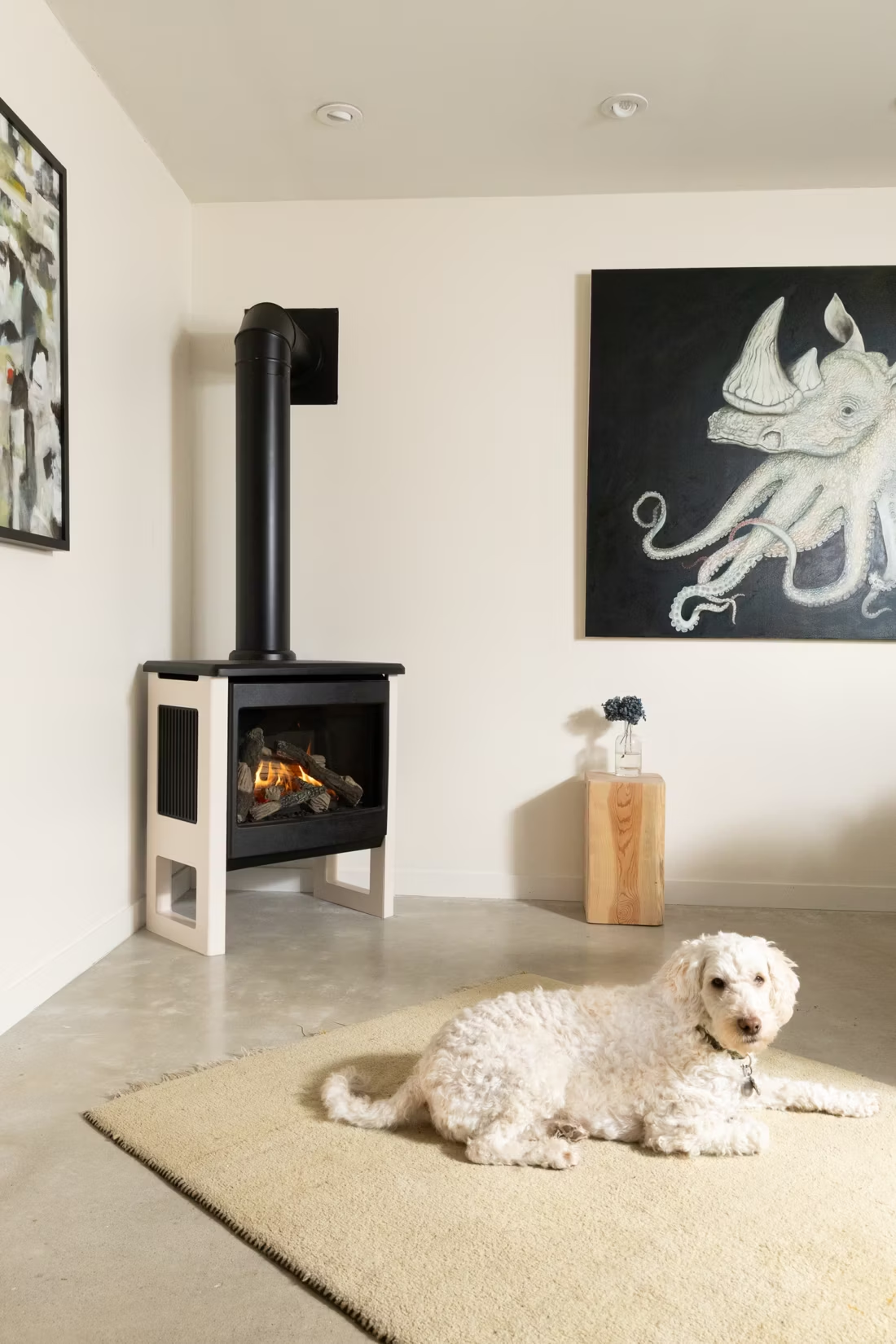
Four fuels. One honest answer for Middlesex.
Three steps. No salesperson until you're ready.
Tell us about your project
Your postal code, your situation, and the fuel you're leaning toward—or let the answers point you to one.
See what's actually available
The brands dealers within 100 miles genuinely carry—real options, never a catalog mirage.
Get your dealer & Project Guide
A trusted local dealer, plus the free Project Guide & Parts List that names every component of the job.
Frequently Asked Questions
Which fireplace fuel actually makes sense in Middlesex?
All four fuels are legitimately used across the region, and the right pick usually comes down to your township and how hands-on you want to be with fuel. Wood is still a strong choice in rural areas around Strathroy, Glencoe, and Parkhill, where sugar maple, red oak, and white ash are readily available from local woodlots and a modern CSA-certified stove will hold a fire comfortably through a -9.2°C overnight low. Gas is genuinely mainstream here since natural gas service reaches most of Middlesex Centre, Thames Centre, and the subdivisions closest to London—it's the low-maintenance option for homeowners who don't want to manage wood or fuel deliveries. Pellet stoves have a real following too, with Lacwood and Energex both distributed regionally, and they suit homeowners who want wood-like heat without splitting or stacking. Electric fireplaces are supplemental almost everywhere in Middlesex—useful for a bedroom, basement, or ambiance in a home already heated by wood or gas, but not built to carry a whole winter on their own.
Do I need a permit to install a wood stove or gas fireplace in Middlesex?
Yes, in almost every case. Permits for wood, gas, pellet, and most electric installs go through your local municipal building department—Middlesex Centre, Strathroy-Caradoc, Lucan Biddulph, and the other local municipalities each issue their own, so the process depends on which township your address falls in. Any wood-burning install also needs to meet CSA B365, the national installation code covering clearances, hearth protection, and venting. Gas installs require a licensed gas fitter for the line and connection. Most hearth retailers we help homeowners find pull the permit and coordinate the inspection as part of the project, so it's rarely something you're chasing down yourself.
What is a WETT inspection, and do I actually need one?
A WETT inspection is a documented check of a wood-burning system—stove, insert, or chimney—against recognized installation standards, done by a certified inspector. In Middlesex it comes up constantly around insurance: most home and property insurers here will ask for a current WETT report before binding or renewing coverage on a house with a wood stove, especially after a resale or a new install. It's also the document you want on hand if you ever burn wood you didn't have professionally installed, since an inspection can confirm clearances and venting meet code even after the fact. Any reputable installer working in the region can either perform the inspection or point you to someone who does.
Is firewood easy to source in Middlesex, and what should I be burning?
Firewood supply is genuinely good here—the region's remaining bush lots and farm woodlots produce a steady supply of sugar maple, red oak, white ash, and yellow birch, all of which are dense hardwoods that burn hot and hold coals well overnight. Most households buy seasoned wood by the cord or bush cord from local farm-based dealers rather than cutting their own, since crown land permits through the Ontario Ministry of Natural Resources are rarely relevant in a region where almost all land is privately held. If you're buying wood, ask how long it's been seasoned—hardwood cut and split less than a year ago will still be too wet to burn cleanly, which matters both for chimney creosote buildup and for meeting certified-appliance emissions expectations that some Middlesex municipalities apply to new construction.
Since natural gas is available here, is a gas fireplace worth it over wood?
It depends on what you want out of the appliance. Natural gas service reaches most of the built-up areas of Middlesex, which makes a gas fireplace or insert a practical, low-maintenance option—no wood to stack, no chimney sweep to schedule annually, and instant on-off heat. Wood still wins on raw heat output and on cost per winter if you have access to your own woodlot or a reliable local supplier, and plenty of Middlesex homeowners keep a wood stove as their primary heater specifically because hardwood here is abundant and comparatively inexpensive. If your street has gas service and you mainly want convenience and ambiance, gas is the easier path; if you want to actually offset a heating bill through a long Ontario winter, wood or pellet tends to deliver more value.
What does a fireplace installation typically cost in Middlesex?
Costs vary by fuel and by how much venting or gas-line work your home needs. Wood stove or insert installs typically run $4,000-$9,000 CAD, with a WETT inspection usually adding a few hundred dollars on top. Gas fireplaces, inserts, and stoves generally run $4,500-$10,000 CAD depending on whether you're extending a gas line or converting an existing hearth. Pellet stove or insert installs tend to land around $4,000-$7,000 CAD. Electric fireplaces are the outlier—the unit itself is often $300-$3,000, plus $300-$1,000 in labour for anything beyond a simple plug-in placement. The region and fuel pages above break these numbers down further with local retailer pricing.
How many BTUs do I need in a fireplace?
Wrong question—and the industry's favorite way to confuse you. More BTUs isn't better if the fireplace cooks you out of the room you spent thousands to enjoy. Think in terms you can verify: how many square feet the unit heats, whether it's primary or backup heat, and whether you want it running overnight. Those three answers size a fireplace correctly every time.
Will we actually use a fireplace once we have one?
In my own home, the room with the fireplace has never been the same—it became the social hub. Game nights, holidays, date nights after the kids are down: the fire is where the house gathers. There's a reason people in this industry joke that we're really in the romance and entertainment business. You won't wonder whether you'll use it; you'll wonder how the room worked before.
What's the best fireplace for power outages?
Wood wins outright—no electricity, no moving parts, just fuel and a match, and a radiant stove keeps heating with the grid down for weeks. Gas is a close second: battery-backup ignition runs the fireplace fine without power (the blower stops, but radiant heat keeps coming). Pellet is the one to check carefully—most models need electricity for the auger and fans, so ask about battery backup.
What does it take to replace an existing fireplace?
Fireplaces are like icebergs—bigger behind the wall than in front of it. Replacement means removing the surrounding tile or stone (the finish material laps onto the fireplace face), pulling the old unit, setting the new one in the same enclosure, and re-finishing the wall. A hearth professional can determine what's behind your wall without demolition during an in-home preview.
Stove and Fireplace Dealers in Middlesex
Listings include WhyFire partner dealers, dealers we have verified as authorized for the brands we recommend, and established local businesses that carry hearth products. Every listing shows which one it is. The ones marked Preferred run on WhyFire's software, so they can show you real pricing and book your appointment right here. No manufacturer pays for placement. How we verify dealers →
Campfire Ninja
Guildwood Lighting And Fireside
Homes Mechanical
Brian Gregory Heating, Cooling & Air Quality Inc
Forest City Mechanical
Zed-Air Heating & Air Conditioning
Patio Palace
My Fireplace
Find a local dealer across Middlesex.
Pick your fuel below and we'll put together a free Project Guide & Parts List—the right unit, the vent kit it needs, and the local dealer we recommend for your project.
Find Your Fireplace →