
Automated heat built for winters that settle near -19.5°C.
Markstay-Warren sits in the Sudbury region at 221 metres elevation, where climate zone 4A winters push lows to -19.5°C for months at a stretch. We'll help you find a local dealer who knows what actually vents and fits in this hardwood country, plus a free planning packet for your project.
Every Project Starts From One of These Five Situations
A hardwood region that still burns clean.
Markstay-Warren is deep in Ontario's hardwood belt, in the Sudbury region, where sugar maple, red oak, white ash, and yellow birch stand thick on both private woodlots and the crown land nearby. Winters here run long—climate zone 4A, with average lows near -19.5°C and a heating season that stretches close to six months—and a lot of homes in the area treat their heating appliance as a genuine workhorse, not a weekend accessory. Some municipalities in this part of Ontario have started requiring certified appliances in new construction, a rule that pellet stoves clear automatically since every unit sold today ships factory-certified and burns far cleaner than an open wood fire.
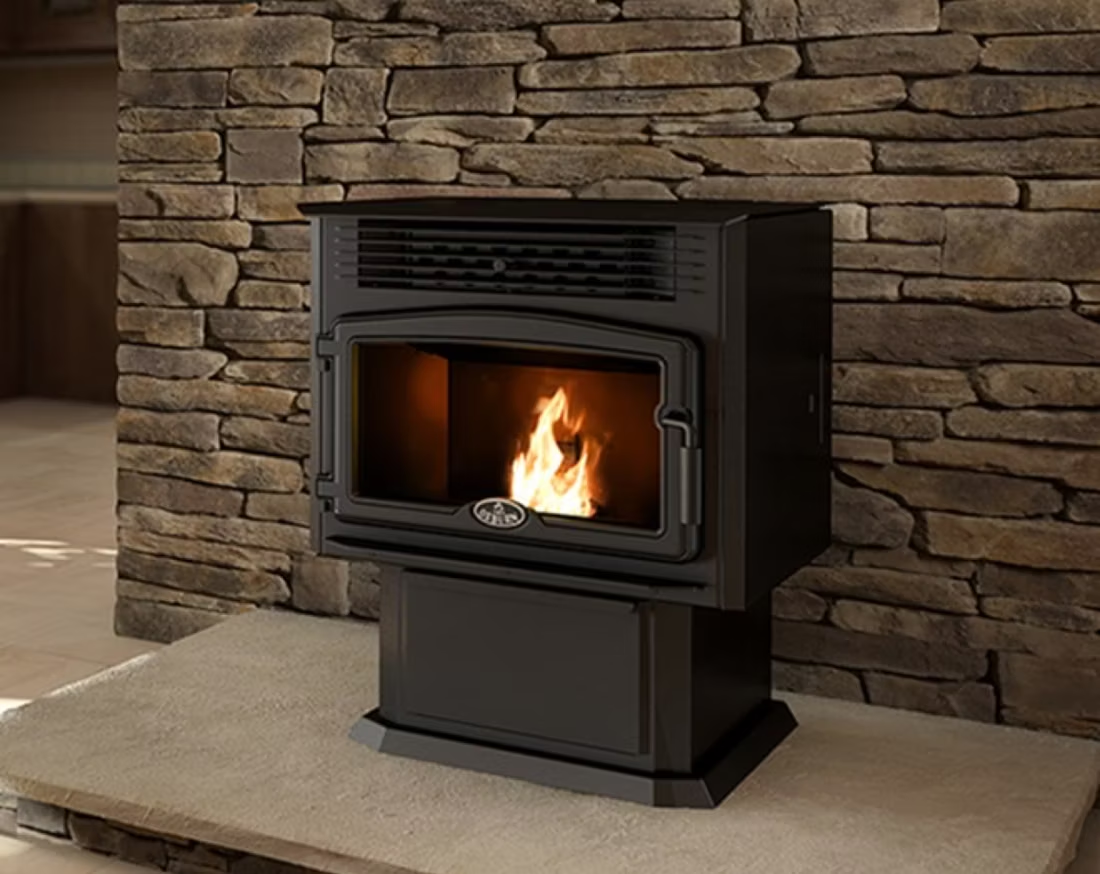
Local dealers carrying pellet stoves in this region typically stock Lacwood and Energex, both milled from Ontario hardwood and running $400 to $575 a ton—a fuel cost that's predictable in a way split cordwood from Ontario Ministry of Natural Resources land, free up to 10 cubic metres per household per year, isn't. Enbridge Gas serves parts of the area too, so gas is a real option for some addresses, but a lot of homeowners here like the pellet route specifically because it doesn't require a gas line and still gives thermostatic, set-it-and-forget-it heat through the coldest stretch of the year.
Three steps. No salesperson until you're ready.
Tell us about your project
Your postal code, your situation, and the fuel you're leaning toward—or let the answers point you to one.
See what's actually available
The brands dealers within 100 miles genuinely carry—real options, never a catalog mirage.
Get your dealer & Project Guide
A trusted local dealer, plus the free Project Guide & Parts List that names every component of the job.
Frequently Asked Questions
How much does a pellet stove installation cost in Markstay-Warren?
Most pellet stove and insert installations here run $6,000 to $10,000 CAD, with the range driven mostly by venting. A freestanding pellet stove using a straightforward horizontal vent through an exterior wall sits toward the lower end, while a pellet insert going into an existing masonry fireplace, or a home needing a longer vertical vent run through a second-storey wall, pushes the cost up. Your municipal building department will need to sign off on the install under the CSA B365 code either way, and most local dealers fold that permit into the quote.
What does it cost to run a pellet stove through a Markstay-Warren winter?
Pellets in this region—mainly Lacwood and Energex, both milled from Ontario hardwood—run $400 to $575 a ton. A home using a pellet stove as a primary heat source through a winter with lows averaging -19.5°C typically burns somewhere around 2 to 3 tons a season, so budgeting roughly $1,000 to $1,700 for fuel is realistic if the stove is doing real work rather than supplemental duty.
Do I need a permit for a pellet stove in Markstay-Warren?
Yes. Installation falls under the municipal building department and needs to meet the CSA B365 installation code. Many insurers in this area also ask for a WETT inspection before they'll cover a solid-fuel appliance, and while WETT was built around wood-burning systems, most inspectors treat pellet units the same way for insurance purposes. A local dealer who installs pellet stoves regularly in the Sudbury region will already know which of your insurer's boxes need checking.
Wood or pellet—which makes more sense for a Markstay-Warren home?
Wood has an obvious cost advantage here: the Ontario Ministry of Natural Resources issues free cutting permits for up to 10 cubic metres, about 4 cords, per household per year on Managed Forest and Northern Boreal land, and sugar maple, red oak, and yellow birch are all abundant locally. But wood means splitting, stacking, and feeding a firebox by hand. Pellet stoves trade that labour for a hopper and an auger—load it every day or two and it runs on a thermostat—at the cost of needing electricity to operate, which wood stoves don't. Some households here keep a wood stove as an outage backup and run pellet day to day for the convenience.
What size pellet stove do I need for this area?
With winter lows averaging -19.5°C and a heating season that runs close to six months, most Markstay-Warren homes need a stove rated for real, sustained output rather than an occasional-use unit. A stove in the 40,000 to 60,000 BTU range comfortably heats an open main floor of 1,200 to 2,000 square feet in a reasonably insulated home; older farmhouses common in this part of the Sudbury region, with less insulation, often size up from there. A dealer will size it against your actual floor plan and ceiling height rather than square footage alone.
Pellet vs. gas—which is the better fit here?
Enbridge Gas serves parts of Markstay-Warren, so gas fireplaces and inserts are genuinely available, typically running $6,000 to $15,000 installed versus $6,000 to $10,000 for pellet. Gas wins on instant, no-fuss heat with no hopper to fill; pellet wins for homeowners who want to avoid extending a gas line or who like paying $400 to $575 a ton for fuel rather than a metered utility bill. Both are considered standard, well-supported options through local dealers in this region, so the decision usually comes down to whether your address already has gas service and how you feel about loading pellets versus flipping a switch.
Does a pellet stove satisfy the certified-appliance rule for new construction here?
Yes. Some municipalities in this part of Ontario now require any new-construction solid-fuel appliance to be a certified, low-emission unit, and every pellet stove sold today is factory-certified as a clean-burning appliance—it clears that bar without any extra work. That's part of why pellet has become a common choice for new builds in the area where an open masonry fireplace would otherwise trigger extra certification questions.
What pellet brands are actually available through local dealers?
Lacwood and Energex are the two brands most dealers in this region stock, and both are milled from Ontario hardwood, which keeps supply steady and shipping short compared to pellets trucked in from further afield. Pricing runs $400 to $575 a ton depending on the season and how early you order—buying in late summer before the fall rush typically lands you toward the lower end.
How much maintenance does a pellet stove need through a Sudbury-region winter?
Plan on cleaning the burn pot and ash pan every few days during heavy use and a full professional service once a year, ideally in late summer before the first cold nights push lows toward -19.5°C and installers get booked solid. That annual visit covers the auger, exhaust vent, and gaskets, and it's the kind of maintenance that keeps a stove running through a full six-month heating season without a mid-January breakdown.
Why do fireplace quotes vary so much?
Because a fireplace is an iceberg—there's more behind the wall than in front of it. A low quote often covers only the unit; the full scope includes vent pipe, gas line or electrical, framing, and the tile or stone that has to come off and go back on. Make every bidder price the whole job. If a dealer can't speak to the full scope with confidence, that's your signal to keep looking.
Is it worth replacing an old fireplace that still sort of works?
Ask three questions: Is it ugly? Is it drafty? Does it actually work? Most old fireplaces fail at least two. Beyond looks, an old unit leaks air around the damper year-round and—if it's gas with a standing pilot—quietly burns a couple hundred dollars a year. A modern replacement seals the wall, heats the room, and changes how the whole space gets used.
Can a pellet stove heat a whole house?
It genuinely can. I burned a pellet stove as my only heat source for years after a furnace died, and it kept the entire house warm. Pellets feed automatically from a hopper, so you get wood-heat economics with thermostat-style control. Two honest caveats: it needs weekly cleaning during the season, and most models need electricity to run—ask about battery backup if outages are a concern.
What does it take to replace an existing fireplace?
Fireplaces are like icebergs—bigger behind the wall than in front of it. Replacement means removing the surrounding tile or stone (the finish material laps onto the fireplace face), pulling the old unit, setting the new one in the same enclosure, and re-finishing the wall. A hearth professional can determine what's behind your wall without demolition during an in-home preview.
Nearby Dealers
Hearth shops serving Markstay-Warren and the surrounding area. Every listing shows whether it is a WhyFire partner, a dealer we have verified as authorized for the brands we recommend, or a local business carrying hearth products. No manufacturer pays for placement. How we verify dealers →
We’ve paused dealer listings for this connection today. Enter your zip or postal code above to find dealers near you, or come back tomorrow.
Pellet Brands Stocked Around Markstay-Warren
Typical price runs $400-$575 per ton—buy early-season for the best rates. Manufacturers will point you to the nearest stocking dealer.
Lacwood
Get your free Project Guide & Parts List for a Markstay-Warren pellet project.
Tell us about your home and we'll help you find a local dealer who knows Lacwood, Energex, and the venting this region's winters demand, then send a free Project Guide & Parts List with the exact vent kit and parts your project needs.
Find Your Fireplace →