
Real warmth for Lowertown's rowhouses, no chimney required.
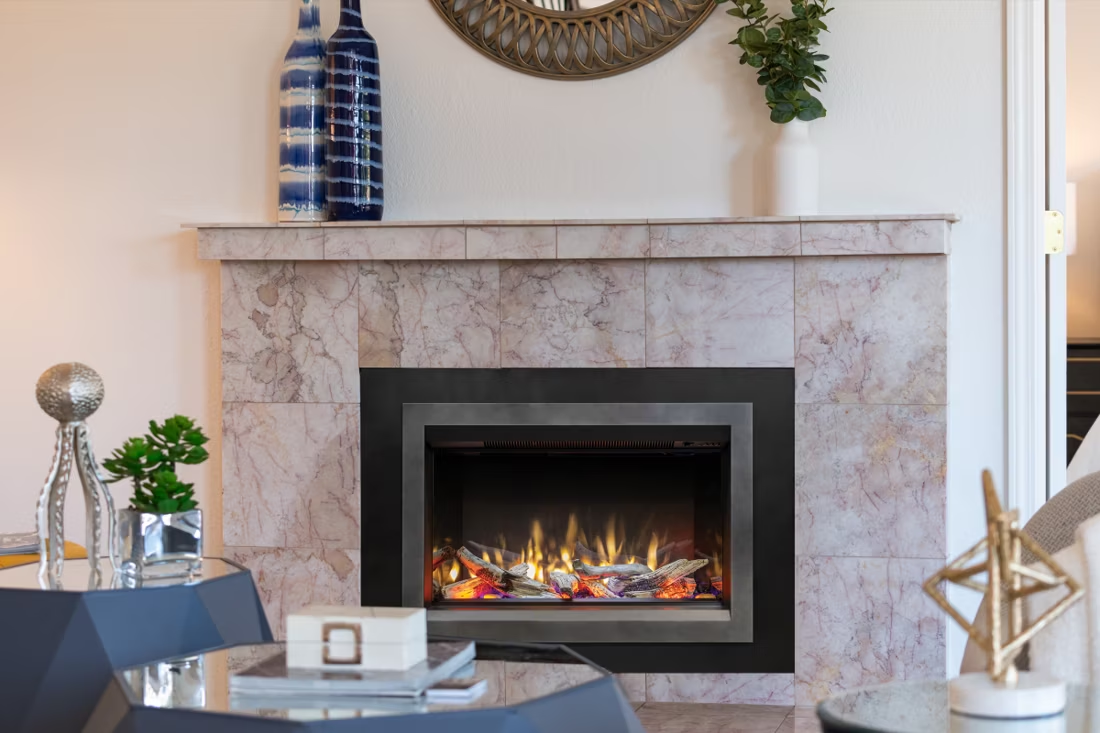
Lowertown's brick rowhouses and low-rise walk-ups predate central heating, and winter lows averaging -14.4°C mean most homes lean on Enbridge Gas as the primary heat source. An electric fireplace or insert adds real supplemental warmth and ambiance without a flue, a chimney, or a heritage review. We'll help you find a local dealer who can tell you what actually fits your wall and your panel.
Every Project Starts From One of These Five Situations
Built for heritage walls that can't take a new flue.
Lowertown is one of Ottawa's oldest neighbourhoods, with brick rowhouses and low-rise walk-ups dating back well over a century, many sitting under heritage designation that limits exterior alterations. Climate zone 6A and a winter low averaging -14.4°C mean these homes need real heat for a long season, but running a new gas line or a WETT-inspected wood chimney through a shared-wall rowhouse or a heritage facade is often impractical or flatly not permitted. Electric fireplaces solve that: no venting core, no exterior penetration, nothing on the facade a heritage committee would need to review.
Most Lowertown homes already run on natural gas through Enbridge Gas for primary heat, so an electric fireplace here is almost always supplemental—a zone-heat unit for a bedroom, a den, or a living room where you want instant warmth without firing up the furnace. At the regional residential rate of roughly $0.128/kWh through utilities like Hydro One and Alectra Utilities, a typical 1,500-watt insert costs pennies per hour to run. Compare that to the wider Ottawa Region, where sugar maple, red oak, white ash, and yellow birch are abundant and wood-cutting permits from the Ontario Ministry of Natural Resources are free up to 10 cubic metres a year—a good option on a rural lot with storage space, but not realistic on Lowertown's narrow urban footprint.
Three steps. No salesperson until you're ready.
Tell us about your project
Your postal code, your situation, and the fuel you're leaning toward—or let the answers point you to one.
See what's actually available
The brands dealers within 100 miles genuinely carry—real options, never a catalog mirage.
Get your dealer & Project Guide
A trusted local dealer, plus the free Project Guide & Parts List that names every component of the job.
Frequently Asked Questions
How much does an electric fireplace installation cost in Lowertown?
Most electric fireplace projects here run $500 to $1,600 CAD. A plug-in insert that drops into an existing mantel or built-in cabinet sits at the low end and often needs no more than a standard outlet. A wall-mounted or built-in unit wired to its own dedicated circuit costs more, especially in Lowertown's older rowhouses where some interior wiring still needs updating before a new circuit can be added safely—that electrical work, not the fireplace itself, is usually what pushes a quote toward the top of the range.
Does Lowertown's heritage designation affect what fireplace I can install?
It can, and it's one of the main reasons electric fireplaces do well here. A new wood chimney or a gas flue penetrating an exterior wall or roofline can trigger a heritage alteration review with the City of Ottawa, which adds time and sometimes design restrictions. An electric fireplace needs no venting and no exterior penetration, so it typically stays out of that review process entirely—you're dealing with a standard electrical permit through the municipal building department at most, not a heritage file.
Should I get electric or gas for my Lowertown rowhouse?
Enbridge Gas serves Lowertown and most homes already use natural gas for primary heat, so a gas fireplace is a real option if you're building new or already have a line nearby—expect $6,000 to $15,000 for a gas install once venting and gas-fitter work are included. Electric is the simpler retrofit for an existing rowhouse: no gas line, no venting, and a much lower $500-$1,600 install cost. Renters and condo owners in particular tend to land on electric since it doesn't require touching shared walls or common infrastructure.
Will an electric fireplace actually heat my Lowertown home through the winter?
Not as a primary heat source, and we wouldn't sell it as one. With winter lows averaging -14.4°C and a long heating season in this climate zone, most electric fireplaces are sized for zone heating—warming the room they're in, not the whole house. A 1,500-watt unit is plenty for a bedroom or den on a cold night, but the furnace running on Enbridge Gas is still doing the heavy lifting for the rest of the home.
Do I need a permit to install an electric fireplace in Lowertown?
A simple plug-in insert usually doesn't need a permit—it just uses an existing outlet. A built-in or wall-mounted unit wired to a new dedicated circuit does need an electrical permit, coordinated through the municipal building department and inspected under Ontario's electrical code. In an older Lowertown rowhouse, that inspection sometimes flags outdated wiring nearby, which is worth knowing before you commit to a specific install date.
What's the best electric fireplace for a Lowertown apartment or condo?
A wall-mounted unit or a slim insert that fits into an existing decorative mantel is the most common fit, since a lot of Lowertown's older buildings still have the original fireplace surround even though the flue was capped or removed decades ago. These units typically run on a standard 120-volt outlet, which makes them workable in a rental or a condo where you can't run new wiring through common walls.
Will my electric fireplace still work during a winter power outage?
No—and that's worth planning around if you're in an older part of Lowertown that sees the occasional ice-storm outage. Electric fireplaces need power to run, same as most modern gas furnaces with electronic ignition. Homeowners who want heat that survives an outage typically look at a wood stove or insert instead, though that usually means finding room for a WETT-inspected chimney, which is a bigger project in a heritage rowhouse than a straightforward electric install.
Are there rebates available for an electric fireplace in Ottawa?
Not typically, and it's worth being upfront about that. Programs through Hydro One and other Ontario utilities generally target heat pumps, insulation, and whole-home efficiency upgrades rather than fireplaces specifically. An electric fireplace's real savings case is its low install cost—usually $500 to $1,600—and the fact that it runs on the same $0.128/kWh residential rate as everything else in the house, with no separate fuel to buy or store.
Why don't more Lowertown homes burn wood, given how much hardwood is around Ottawa Region?
The wood is genuinely there—sugar maple, red oak, white ash, and yellow birch are all common through the wider region, and the Ontario Ministry of Natural Resources issues cutting permits free up to 10 cubic metres a year in the managed forest zones. The limiting factor is Lowertown itself: narrow lots, shared walls, heritage rules on exterior work, and nowhere to season a woodpile make a WETT-inspected wood installation impractical for most addresses here. Electric sidesteps all of that, which is why it's the fuel most Lowertown homeowners land on for supplemental heat.
How much does an electric fireplace cost to run?
With the heater on, a typical unit draws about 1,500 watts—at average electric rates that's roughly 20 cents an hour. Run the flame effect alone and it costs pennies; the flames are LED-driven and use about as much power as a light bulb. There's no pilot light, no fuel delivery, and essentially no maintenance.
What fireplace styles should I know before shopping?
Four cover most of the market: screen-front traditional (mesh front, open feel, fits craftsman homes), traditional door set (the classic look you grew up with), modern linear (wide, low, the statement piece for entertaining), and clean face contemporary (no trim—your tile or stone runs right to the fire's edge). Walk in knowing those four terms and you're ahead of most buyers.
Can I put a TV above my fireplace?
Yes—with an asterisk. Fireplaces are hot and TVs don't like heat. Either put a mantel between them to deflect rising warmth, or choose a fireplace with heat-management technology that creates a cool zone on the wall above—the wall stays around 125 degrees, barely warm, while the room still gets full heat. If you like clean lines and don't want a mantel, heat management is the answer.
Do electric fireplaces actually produce heat?
Yes—most put out around 4,800–5,000 BTUs from a standard outlet, which comfortably warms a bedroom, office, or den as a comfort-zone heater. What they won't do is carry a whole house the way wood, gas, or pellet can. Think of electric as ambiance-first with honest supplemental heat: flames on with no heat in July, flames plus warmth in January.
Nearby Dealers
Hearth shops serving Lowertown and the surrounding area. Every listing shows whether it is a WhyFire partner, a dealer we have verified as authorized for the brands we recommend, or a local business carrying hearth products. No manufacturer pays for placement. How we verify dealers →
Entreprise Proulx
Hubert Heating Limited
Hubert's Fireplaces
Advanced Prefabs Hearth Distribution
Schreiter’s Furniture Store
Romantic Fireplaces & Bar B Que
Fire It Up Fireplaces
Budget Propane Inc.
Touchette Chauffage & Climatisation
Coop Agrodor
Electric Service in Lowertown
An electric fireplace's heater draws about 1,500 watts—pennies per hour at local rates.
Hydro One
Toronto Hydro
Alectra Utilities
Get your free Project Guide & Parts List for a Lowertown electric fireplace.
Tell us about your rowhouse, condo, or walk-up and we'll help you find a local dealer familiar with Lowertown's heritage rules and older wiring, plus send a free Project Guide & Parts List with the exact unit and circuit specs your project needs.
Find Your Fireplace →