
Find your fireplace across Kawartha Lakes.
Wood, gas, pellet, and electric fireplace resources for the whole region—from Lindsay's in-town streets to the cottages ringing Sturgeon Lake and Balsam Lake. Pick a fuel and we'll help you find a local dealer who actually installs it here.
Every Project Starts From One of These Five Situations
Hardwood country, long Ontario winters, and a region built for wood heat and gas alike.
Kawartha Lakes stretches across roughly 3,000 square kilometres of lakes, farmland, and forest between Peterborough and Lake Simcoe, stitched together from a dozen former townships including Fenelon, Verulam, and Eldon. Winters here sit in climate zone 6A, with average lows near -12.7°C—cold enough to rival Ottawa's typical winter chill, though without the extended deep freezes of Sudbury or Thunder Bay further north. The heating season runs from October through April in most years, and the dense hardwood bush that covers much of the region—sugar maple, red oak, white ash, yellow birch—has made wood heat a practical, generational habit rather than a novelty. Plenty of households here still split their own cordwood from a woodlot down the road.
Coverage varies by community. Natural gas service reaches Lindsay and several of the larger built-up areas, which makes a direct-vent gas fireplace a realistic option for those homes. Out toward Bobcaygeon, Fenelon Falls, Coboconk, and the lake-cottage properties beyond municipal water and sewer, propane and wood remain the default, with pellet stoves from regional brands like Lacwood and Energex filling in as a lower-maintenance alternative. Any wood-burning install goes through the local municipal building department and follows the CSA B365 installation code, and most insurers here will ask for a WETT inspection before they'll cover a wood appliance—both are routine steps a good local dealer handles as part of the job, not extra hurdles. This hub rolls up retailers, service technicians, and fuel suppliers across the whole region, from Lindsay to Omemee, Woodville, Kinmount, and every hamlet in between. Pick your fuel below for dealers, costs, and unit recommendations specific to your town.
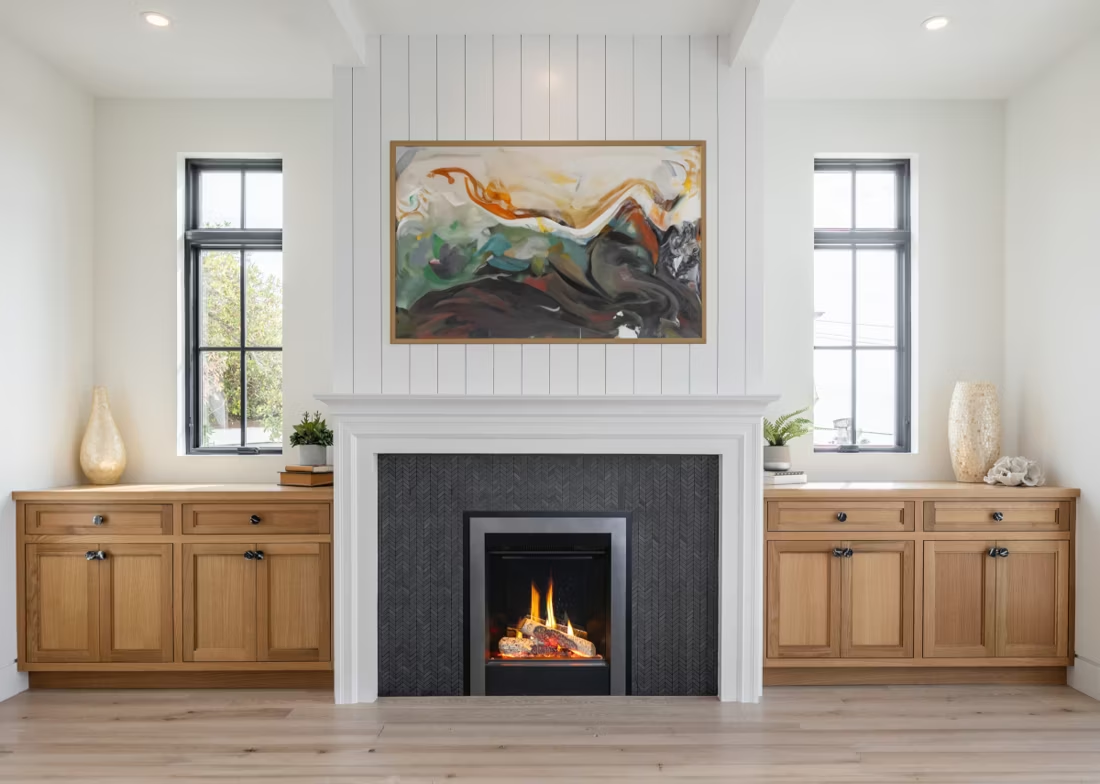
Four fuels. One honest answer for Kawartha Lakes.
Three steps. No salesperson until you're ready.
Tell us about your project
Your postal code, your situation, and the fuel you're leaning toward—or let the answers point you to one.
See what's actually available
The brands dealers within 100 miles genuinely carry—real options, never a catalog mirage.
Get your dealer & Project Guide
A trusted local dealer, plus the free Project Guide & Parts List that names every component of the job.
Frequently Asked Questions
Which fireplace fuel makes the most sense in Kawartha Lakes?
It depends heavily on where in the region your home sits. In and around Lindsay, natural gas service makes a direct-vent gas fireplace or insert the easiest option for most homeowners—low maintenance, no wood handling, and a straightforward permit through the municipal building department. Out toward Bobcaygeon, Fenelon Falls, or the cottage roads ringing Sturgeon and Balsam Lakes, wood remains the practical default given how much sugar maple, red oak, and ash grows on local woodlots, and a good catalytic or non-catalytic stove will hold a fire through a -12.7°C overnight without much trouble. Pellet stoves from Lacwood or Energex are a solid middle ground for anyone who wants wood-like heat without splitting and stacking cordwood. Electric fireplaces show up mostly as supplemental heat—bedrooms, basements, sunrooms—rather than as a home's main source through a full Ontario winter.
Do I need a permit or inspection for a wood stove in Kawartha Lakes?
Yes. New wood stove and insert installations go through your local municipal building department and have to meet the CSA B365 installation code, which governs clearances, venting, and hearth pad requirements. Just as important, most home insurers here will ask for a WETT inspection before they'll cover a wood-burning appliance, whether it's new or already in the house when you buy it—skip this and you can run into a denied claim or a refused policy renewal. Some municipalities within the region also require certified low-emission appliances in new construction, so an older, uncertified stove usually can't just be moved into a newly built home. Most retailers we help homeowners find handle the permit paperwork and can point you to a WETT inspector as part of the install.
Is natural gas available everywhere in Kawartha Lakes?
No, and this is one of the biggest differences from one part of the region to another. Lindsay and some of the surrounding built-up area have natural gas service, so a gas fireplace or insert there is a simple, well-supported project. Once you're out past the built-up core—toward Fenelon Falls, Bobcaygeon, Coboconk, or any of the lake-access cottage roads—natural gas lines typically don't reach, and gas fireplace owners run on propane instead, either from a tank or a larger bulk delivery contract. It's worth confirming your address against the gas utility's service map before you fall in love with a specific gas unit, since propane and natural gas fireplaces aren't always interchangeable without swapping the orifice kit.
What firewood is realistic to source in Kawartha Lakes?
This is genuinely hardwood country. Sugar maple, red oak, white ash, and yellow birch make up most of the bush across central and eastern Ontario, and Kawartha Lakes sits right in the middle of that supply. Many rural properties have their own woodlot, and firewood dealers throughout the region sell seasoned cordwood by the face cord, typically cut from the same species. If you're cutting on Crown land rather than private property, permits go through the Ontario Ministry of Natural Resources rather than the municipality. Whatever species you burn, plan on at least six to twelve months of seasoning time before it's dry enough to burn cleanly in a certified stove—green maple or oak will smoke and creosote a chimney fast.
What does a fireplace installation typically cost in Kawartha Lakes?
Costs shift with fuel type and how much venting or gas-line work is involved. Wood stove or insert installs generally run $4,000-$8,500 CAD, with a WETT inspection and any chimney relining work adding to that if you're retrofitting an older home. Gas fireplaces and inserts run roughly $4,000-$10,000 depending on whether you're on natural gas in Lindsay or need a propane tank set up further out. Pellet stove installs typically land around $4,000-$7,000, and electric fireplace units run from a few hundred dollars for a plug-in insert up to $2,500-$3,500 installed for a larger built-in unit with dedicated wiring. The region and fuel pages above break these down further with local retailer pricing.
Can I find one dealer that carries more than one fuel type?
Most hearth retailers serving Kawartha Lakes carry two or three fuel types rather than specializing in just one, which fits how differently homes here are set up—natural gas in town, propane and wood on the lake roads, pellet as an in-between option almost everywhere. A multi-fuel dealer lets you compare a working wood stove, a gas insert, and a pellet unit side by side and talk through what actually fits your address, your existing chimney or venting, and whether you're inside Lindsay's gas service area or not. We'll help you find the retailer whose lineup and service area genuinely covers your project rather than sending you to whichever showroom is biggest.
How many BTUs do I need in a fireplace?
Wrong question—and the industry's favorite way to confuse you. More BTUs isn't better if the fireplace cooks you out of the room you spent thousands to enjoy. Think in terms you can verify: how many square feet the unit heats, whether it's primary or backup heat, and whether you want it running overnight. Those three answers size a fireplace correctly every time.
Will we actually use a fireplace once we have one?
In my own home, the room with the fireplace has never been the same—it became the social hub. Game nights, holidays, date nights after the kids are down: the fire is where the house gathers. There's a reason people in this industry joke that we're really in the romance and entertainment business. You won't wonder whether you'll use it; you'll wonder how the room worked before.
Why is my open fireplace making my house colder?
Open fireplaces suck—literally. As the fire burns, it consumes air your furnace already paid to heat and pulls it out through the chimney, so the house is actually colder after the fire goes out than before you lit it. An insert fixes this: it seals the chimney, puts fixed glass across the front, and turns that hole in your house into a real heat source.
Wood, gas, pellet, or electric—how do I choose?
Match the fuel to your life, not the other way around. Wood: lowest fuel cost and total power-outage independence, but you're hauling and stacking. Gas: press a button, set a thermostat, no maintenance to speak of. Pellet: wood economics with automatic feeding, in exchange for weekly cleaning and a need for electricity. Electric: plugs in anywhere with honest supplemental heat. Nobody regrets the fuel that fits how they actually live.
Stove and Fireplace Dealers in Kawartha Lakes
Listings include WhyFire partner dealers, dealers we have verified as authorized for the brands we recommend, and established local businesses that carry hearth products. Every listing shows which one it is. The ones marked Preferred run on WhyFire's software, so they can show you real pricing and book your appointment right here. No manufacturer pays for placement. How we verify dealers →
Fires Alive
Fenelon Falls Home Hardware
Hp HVAC Services Inc
Superior Climate Solutions – Gertley
Northern Wood Heat Consultants
The Original Flame
Woodburning Solutions
Find a local Kawartha Lakes dealer.
Pick your fuel below and we'll put together a free Project Guide & Parts List—the right unit, the vent kit it needs, and the local dealer we recommend for your project.
Find Your Fireplace →