
Keep Your Family Warm and Safe—No Matter What
Kanata sits at 93 metres in a climate zone where winter lows average -14.4°C and cold snaps push well past that. We'll help you find a trusted local dealer who knows CSA B365, WETT inspections, and what actually fits your chimney.
Every Project Starts From One of These Five Situations
Wood heat here is about backup power as much as tradition.
Kanata's winters run long by any measure—climate zone 6A, an average low of -14.4°C, and five-plus months where nightly temperatures sit below freezing, with cold snaps that drop well into the -20s. That's not Winnipeg-or-Thunder-Bay territory, but it's serious enough that a lot of homeowners here treat a wood stove or insert less as ambiance and more as insurance. The Ottawa Valley is also no stranger to ice storms and extended winter power outages, and a properly installed wood appliance is one of the few heat sources that keeps working when the grid doesn't.
Central and eastern Ontario carry some of the densest hardwood supply in the province, and sugar maple, red oak, white ash, and yellow birch are the four species most Kanata burners split, stack, and rely on for a hot, long-burning fire. The Ontario Ministry of Natural Resources issues free cutting permits for up to 10 cubic metres a year on Crown land in the Northern Boreal and Managed Forest zones, but that's mostly relevant if you've got a cottage or rural lot north of the city—inside Kanata itself, most households buy seasoned hardwood from local firewood dealers rather than cutting their own. Some municipalities in the region now require certified low-emission appliances in new construction, which is one more reason to work with a dealer who knows the current code rather than picking a used stove off a classifieds listing.
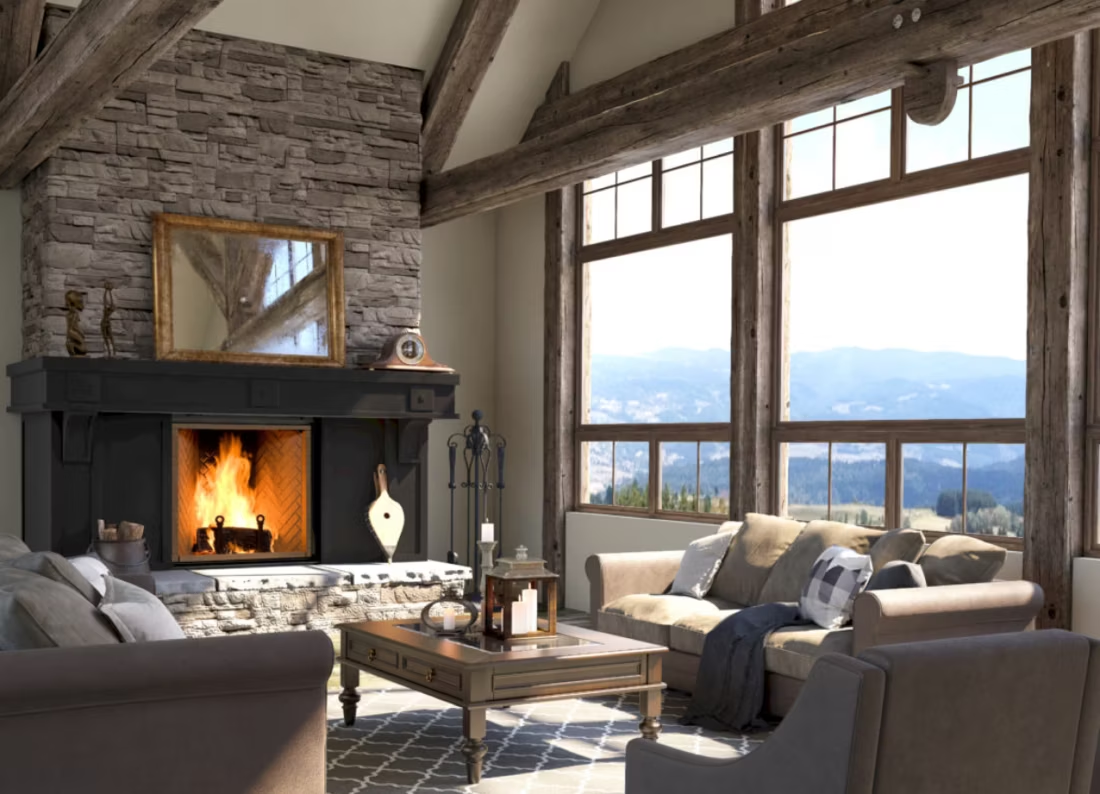
Firewood Cutting Permits Near Kanata
Ontario Ministry Of Natural Resources
Three steps. No salesperson until you're ready.
Tell us about your project
Your postal code, your situation, and the fuel you're leaning toward—or let the answers point you to one.
See what's actually available
The brands dealers within 100 miles genuinely carry—real options, never a catalog mirage.
Get your dealer & Project Guide
A trusted local dealer, plus the free Project Guide & Parts List that names every component of the job.
Frequently Asked Questions
How much does a wood stove or insert installation cost in Kanata?
Most wood installations in Kanata run $6,000 to $12,000 CAD. A stove or insert going into a home that already has a working masonry chimney sits toward the lower end, since the venting structure is already there. Newer Kanata subdivisions—Bridlewood, Kanata Lakes, Morgan's Grant—were built without a fireplace in a lot of houses, so a full freestanding stove with a new Class A chimney run through the roof pushes the project toward the top of that range. Either way, a WETT inspection is typically part of the process before your insurer will sign off on the finished install.
Do I need a permit to install a wood stove in Kanata?
Yes. You'll need a permit through the City of Ottawa's building department, and the installation itself has to meet the CSA B365 installation code, which governs clearances, venting, and hearth protection for solid-fuel appliances. Most established hearth dealers in the region handle that paperwork as part of the quote. On top of the building permit, expect your home insurer to ask for a WETT inspection report before they'll add the wood appliance to your policy—it's become close to standard practice across the Ottawa Region.
What is a WETT inspection and why do I need one in Kanata?
WETT stands for Wood Energy Technology Transfer, and it's the certification most Canadian insurers rely on to confirm a wood stove, insert, or chimney was installed to code. In Kanata, almost every home insurer—whether you're with a national carrier or a regional broker—will ask for a WETT inspection report before covering a new wood appliance, and often before renewing a policy on a home that already has one. A basic inspection typically runs $150-$300 CAD and is worth booking through the same dealer who handled the install, since they'll already have the documentation on file.
What size wood stove do I need for a Kanata home?
With winter lows averaging -14.4°C and routine cold snaps deeper than that, a stove sized only for occasional ambiance tends to disappoint by January. Newer, well-insulated homes in Kanata Lakes or Bridlewood often do fine with a small to mid-size stove rated for 1,000-1,800 square feet, since the building envelope holds heat well. Older homes in the original Kanata core or drafty century homes further out in the Ottawa Region usually need a mid to large stove in the 1,800-2,500 square foot range to hold a steady overnight burn. A local dealer will size it against your actual insulation and ceiling height, not just square footage.
Where does firewood come from for burners in Kanata?
Central and eastern Ontario have some of the province's densest hardwood forest, and sugar maple, red oak, white ash, and yellow birch are the species most local burners count on—maple and oak in particular for their long, hot burn. Very few Kanata households cut their own; the free Ontario Ministry of Natural Resources cutting permits, good for up to 10 cubic metres a year, apply to Crown land in the Northern Boreal and Managed Forest zones well north of the city. Most people here instead buy seasoned cords from local firewood suppliers around the Ottawa Region, and it's worth asking for wood that's been split and dried at least a year, since green hardwood burns dirty and builds creosote fast.
Wood stove or insert—which fits my Kanata house?
If your home already has a working masonry fireplace and chimney—more common in the older parts of Kanata built before the 1990s subdivision boom—an insert is usually the simpler, less expensive route, since it reuses the existing chase. If you're in a newer build in Kanata Lakes, Morgan's Grant, or Bridlewood without a fireplace already roughed in, a freestanding stove with a new Class A chimney is the more typical path, and it lands at the higher end of the $6,000-$12,000 CAD range. A dealer who's worked in both eras of Kanata construction will know which one your specific floor plan supports.
Are there emissions rules for wood stoves in the Ottawa Region?
Some municipalities in the region now require certified low-emission appliances in new construction, and even where it isn't mandated, an EPA or CSA-certified stove is the standard any competent dealer will specify regardless—older uncertified stoves burn less efficiently and put out far more particulate. If you're buying a resale home with an existing wood stove, it's worth having a WETT-certified inspector confirm the unit is certified and still within its safe service life before you rely on it through a Kanata winter.
Will a wood stove keep my house warm if the power goes out in Kanata?
Yes, and that's a big part of why wood heat stays popular here despite Enbridge Gas serving most of Kanata. The Ottawa Valley has a real history of ice storms and multi-day winter outages, and a wood stove is one of the only heat sources in the house that doesn't depend on the grid or a gas furnace's electric ignition and blower. Plenty of Kanata homeowners run gas or a heat pump as their everyday primary heat and keep a wood stove or insert specifically as backup for the next ice event.
How often should my chimney be swept in Kanata?
An annual sweep and inspection before the season starts—ideally in September or October, ahead of the first hard freeze—is the standard recommendation, and it doubles as a good time to confirm your WETT documentation is current for insurance purposes. Households burning wood as a primary heat source through Kanata's full five-plus-month season, especially with less-seasoned white ash or yellow birch, may need a mid-winter check too, since inconsistent moisture content in firewood is one of the fastest ways to build creosote.
Why do fireplace quotes vary so much?
Because a fireplace is an iceberg—there's more behind the wall than in front of it. A low quote often covers only the unit; the full scope includes vent pipe, gas line or electrical, framing, and the tile or stone that has to come off and go back on. Make every bidder price the whole job. If a dealer can't speak to the full scope with confidence, that's your signal to keep looking.
Louvered or clean face—which fireplace front is better?
Louvered fronts have grill work above and below the glass for airflow, move heat a little better with a fan, and suit traditional mantels. Clean face designs drop the louvers entirely so finish work runs to the fire's edge—they fit both modern and traditional rooms. When we did our own home we chose clean face: a big viewing area beat a little extra airflow. It depends on your room, not on a rulebook.
Why won't my new wood stove get going like my old one?
New wood stoves are 70%+ efficient, so far less heat goes up the flue—which also means less draft to get a fire established. The rule: build a genuinely hot fire for about 45 minutes before you choke it down. Skip that and you get smoke in the room, creosote in the chimney, and a fire that never takes off. Most performance complaints trace straight back to this.
Is it worth replacing an old fireplace that still sort of works?
Ask three questions: Is it ugly? Is it drafty? Does it actually work? Most old fireplaces fail at least two. Beyond looks, an old unit leaks air around the damper year-round and—if it's gas with a standing pilot—quietly burns a couple hundred dollars a year. A modern replacement seals the wall, heats the room, and changes how the whole space gets used.
Nearby Dealers
Hearth shops serving Kanata and the surrounding area. Every listing shows whether it is a WhyFire partner, a dealer we have verified as authorized for the brands we recommend, or a local business carrying hearth products. No manufacturer pays for placement. How we verify dealers →
Fire It Up Fireplaces
Schreiter’s Furniture Store
Advanced Prefabs Hearth Distribution
Entreprise Proulx
Northern Comfort Stoves
Top Hat Home Comfort Services
Hubert Heating Limited
Hubert's Fireplaces
Romantic Fireplaces & Bar B Que
Nev's Heating And Cooling Inc
Rb Heating ClimateCare
Get your free Project Guide & Parts List for a Kanata wood heat project.
Tell us about your home and whether you're working with an existing chimney or starting fresh, and we'll help you find a trusted local dealer and send a free Project Guide & Parts List—sized for the Ottawa Region's winters, with the vent kit and parts specified.
Find Your Fireplace →