
Instant zone heat for Hintonburg's century rowhouses, no chimney required.
Hintonburg's narrow lots and century-old worker's cottages don't always have room for a flue. With winter lows averaging -14.4°C and Hydro One billing around $0.128 per kWh, an electric fireplace or insert adds real zone heat and ambiance without touching your gas line or your chimney. We'll help you find a trusted local dealer who knows what fits these tight urban footprints.
Every Project Starts From One of These Five Situations
Heat that skips the chimney altogether.
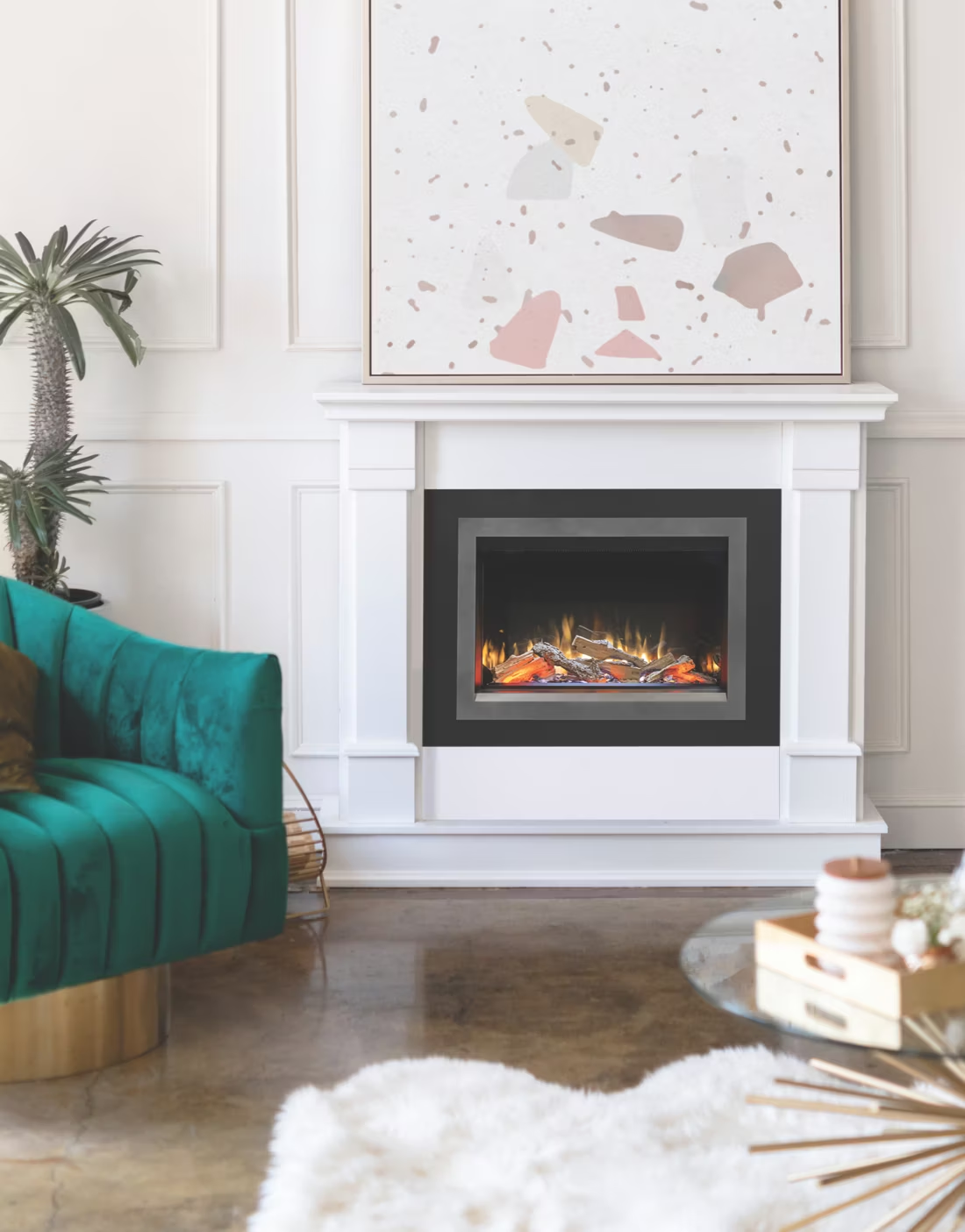
Hintonburg sits in the Ottawa Region at 62 metres elevation, in a climate zone (6A) that delivers a real winter—average lows around -14.4°C, with a cold season closer in length to Fredericton's than to southern Ontario's milder corridor. The neighbourhood's early-1900s worker's cottages and narrow semi-detached rowhouses were mostly built without masonry chimneys, and decades of infill and renovation have left plenty of homes with no practical way to add one. That's exactly where an electric fireplace or insert earns its keep: it mounts into an existing wall, needs no flue and no combustion air, and still throws real supplemental heat into a room on the coldest nights.
Natural gas from Enbridge Gas reaches most of Hintonburg, and a gas furnace or fireplace remains the default for whole-home heat. Electric fits alongside that setup rather than competing with it—homeowners here typically use it to warm a single room, add ambiance to a renovated living space, or heat a converted attic or basement unit where running new gas line or a Class A chimney isn't realistic. At $500 to $1,600 installed, it's also the least expensive project on this list, and Hydro One's residential rate of roughly $0.128 per kWh keeps the running cost predictable.
Three steps. No salesperson until you're ready.
Tell us about your project
Your postal code, your situation, and the fuel you're leaning toward—or let the answers point you to one.
See what's actually available
The brands dealers within 100 miles genuinely carry—real options, never a catalog mirage.
Get your dealer & Project Guide
A trusted local dealer, plus the free Project Guide & Parts List that names every component of the job.
Frequently Asked Questions
How much does it cost to install an electric fireplace in Hintonburg?
Most projects run $500 to $1,600. A plug-in insert or wall-mounted unit that uses an existing outlet sits at the low end—often a same-day swap. A built-in unit that needs a dedicated 20-amp circuit run by a licensed electrician, common in Hintonburg's older worker's cottages where the original wiring wasn't sized for a heater-rated appliance, lands toward the top of that range. Either way, there's no gas line, no chimney, and no WETT inspection to budget for, which is a big part of why electric is the cheapest fuel path in this neighbourhood.
Do I need a permit to install an electric fireplace in Hintonburg?
A basic plug-in unit generally doesn't trigger a permit. If your dealer is wiring in a dedicated circuit or a built-in unit tied directly into your panel, that electrical work needs to meet Electrical Safety Authority requirements and may require sign-off through the municipal building department, especially in older Hintonburg homes where the panel itself may need attention first. There's no CSA B365 wood-appliance code and no WETT inspection involved, since there's no combustion happening in the room.
What size electric fireplace do I need for a Hintonburg home?
Most electric units here are sized for zone heating rather than whole-home heat, since Enbridge Gas furnaces handle the base load in most Hintonburg houses. A unit rated around 5,000 BTU is enough for a bedroom or a small addition; a living room in one of the neighbourhood's semi-detached homes, especially one with the higher ceilings common in the century cottages, does better with a 9,000-10,000 BTU heater built into the unit. With winter lows around -14.4°C, don't expect any electric fireplace to replace your furnace on the coldest night of the year—it's built to supplement, not carry the whole load.
How much does it cost to run an electric fireplace in Hintonburg?
At Hydro One's residential rate of about $0.128 per kWh, a typical 1,500-watt heater setting costs roughly 19 cents an hour to run, and the flame effect alone, with the heater off, costs only a fraction of that. Ontario's time-of-use pricing means running it during off-peak evening hours, which is when most people actually use it for ambiance, keeps the cost even lower. Compare that to firing up a gas fireplace or hauling in sugar maple and red oak for a wood stove, and electric is by far the cheapest fuel to operate day to day, even if the up-front unit cost per BTU is higher.
Electric vs. gas fireplace, which makes more sense for a Hintonburg home?
With Enbridge Gas already serving most of the neighbourhood, gas is the better choice if you want a fireplace that can meaningfully heat a room during a deep cold snap—installs run $6,000 to $15,000 and it'll produce real BTUs. Electric, at $500 to $1,600, is the better choice if you want ambiance and light supplemental heat without running new gas line or losing wall space to venting, which is often the more realistic option in Hintonburg's tighter century homes and converted units. Plenty of homeowners here end up doing both over time: gas for the main living space, electric for a bedroom, basement, or a room where running a gas line just isn't practical.
Can I add an electric fireplace to an older Hintonburg cottage without rewiring the whole house?
Usually, yes, but it's worth having an electrician check your panel and existing circuits first. Many of Hintonburg's early-1900s worker's cottages have been updated over the decades, but some still carry older wiring that wasn't sized for a 1,500-watt heater running for hours at a time. A dedicated circuit for a built-in unit typically solves it without touching the rest of the house's wiring, and it's a routine part of what a local electrician handles alongside the fireplace install.
Is an electric fireplace a good fit for a converted unit or rental property in Hintonburg?
It's often the best fit. Hintonburg has a lot of duplexes, converted attics, and laneway units where there's no chimney and no interest in running gas line for a single tenant space. Electric units need no combustion air, no venting, and no WETT inspection for insurance purposes, which simplifies both the install and the ongoing liability for a landlord. Plug-in models also mean a tenant can take a unit with them, or a landlord can relocate one between units without any construction at all.
How much maintenance does an electric fireplace need?
Very little compared to wood or gas. There's no annual chimney sweep, no gas technician visit, and no CSA B365 compliance check to schedule. Most upkeep is dusting the unit, occasionally replacing an LED module on older models, and making sure the heater fan and vents stay clear of dust—something worth doing once a season given how much dust older Hintonburg homes with forced-air gas heat tend to circulate.
Are there rebates available for installing an electric fireplace in Hintonburg?
Not typically as a stand-alone item—electric fireplaces are usually treated as a room feature rather than a home heating upgrade, so they generally fall outside efficiency rebate programs the way a heat pump or insulation project would. Where you can save is on the operating side: Ontario's time-of-use electricity pricing rewards running the unit during off-peak evening hours, and Hydro One's residential rate of roughly $0.128 per kWh keeps day-to-day cost low regardless. Ask your local dealer about current program eligibility, since utility incentive lists do change year to year.
How much does an electric fireplace cost to run?
With the heater on, a typical unit draws about 1,500 watts—at average electric rates that's roughly 20 cents an hour. Run the flame effect alone and it costs pennies; the flames are LED-driven and use about as much power as a light bulb. There's no pilot light, no fuel delivery, and essentially no maintenance.
What fireplace styles should I know before shopping?
Four cover most of the market: screen-front traditional (mesh front, open feel, fits craftsman homes), traditional door set (the classic look you grew up with), modern linear (wide, low, the statement piece for entertaining), and clean face contemporary (no trim—your tile or stone runs right to the fire's edge). Walk in knowing those four terms and you're ahead of most buyers.
Does an electric fireplace need a vent or chimney?
No—that's its superpower. An electric fireplace needs a wall and an outlet, period. No vent pipe, no gas line, no clearances to design around, which is why it works in bedrooms, offices, apartments, and walls where venting a gas or wood unit would be impractical or impossible. Installation is typically the simplest and least expensive of any fireplace type.
Can I put a TV above my fireplace?
Yes—with an asterisk. Fireplaces are hot and TVs don't like heat. Either put a mantel between them to deflect rising warmth, or choose a fireplace with heat-management technology that creates a cool zone on the wall above—the wall stays around 125 degrees, barely warm, while the room still gets full heat. If you like clean lines and don't want a mantel, heat management is the answer.
Nearby Dealers
Hearth shops serving Hintonburg and the surrounding area. Every listing shows whether it is a WhyFire partner, a dealer we have verified as authorized for the brands we recommend, or a local business carrying hearth products. No manufacturer pays for placement. How we verify dealers →
Advanced Prefabs Hearth Distribution
Schreiter’s Furniture Store
Entreprise Proulx
Hubert Heating Limited
Hubert's Fireplaces
Fire It Up Fireplaces
Romantic Fireplaces & Bar B Que
Budget Propane Inc.
Touchette Chauffage & Climatisation
Electric Service in Hintonburg
An electric fireplace's heater draws about 1,500 watts—pennies per hour at local rates.
Hydro One
Toronto Hydro
Alectra Utilities
Get your free Project Guide & Parts List for a Hintonburg electric fireplace.
Tell us about your home—whether it's a century worker's cottage, a semi-detached rowhouse, or a converted unit—and we'll help you find a trusted local dealer and send a free Project Guide & Parts List with the exact unit and circuit specs your project needs.
Find Your Fireplace →