
Instant heat for Haldimand's five-month heating season.
From Cayuga to Dunnville, Jarvis, and Caledonia, winter lows averaging -10.4°C mean homeowners want heat that works the moment they flip a switch. We'll help you find a trusted local dealer who knows where Enbridge Gas service actually reaches and where propane still makes more sense.
Every Project Starts From One of These Five Situations
Heat you can trust, at the flip of a switch.
Haldimand sits along the north shore of Lake Erie in southern Ontario, a stretch of farmland and small towns running from Dunnville and Cayuga east through Jarvis, Hagersville, and Caledonia. Climate zone 5A gives the region a winter closer to Fredericton, New Brunswick than to anything on the Prairies—damp, lake-effect cold rather than deep Arctic outbreaks—but with winter lows averaging -10.4°C and a heating season that runs a solid five to six months, homes here still need appliances that carry real, daily load, not just weekend ambiance. Wood has deep roots in Haldimand's rural stretches, where sugar maple, red oak, white ash, and yellow birch are common in local woodlots, but for a main living space, gas has become the default: thermostat control, no ash to manage, and heat that starts the instant a storm knocks the temperature down.
Enbridge Gas serves the built-up corridor along Highway 3 and the towns—Cayuga, Dunnville, Jarvis, Hagersville, and Caledonia are generally on the main. Head out onto the concession roads toward Selkirk, Fisherville, or the Lake Erie shoreline, and you'll find more farm properties running on propane delivery instead. Either fuel works fine for a direct-vent gas fireplace or insert, and either way you avoid the WETT inspection that insurers commonly require for wood-burning appliances—a gas install is simpler to insure and, once sized and vented correctly by a local pro, needs far less annual attention than a wood system burning through a Haldimand winter.
Three steps. No salesperson until you're ready.
Tell us about your project
Your postal code, your situation, and the fuel you're leaning toward—or let the answers point you to one.
See what's actually available
The brands dealers within 100 miles genuinely carry—real options, never a catalog mirage.
Get your dealer & Project Guide
A trusted local dealer, plus the free Project Guide & Parts List that names every component of the job.
Frequently Asked Questions
How much does a gas fireplace installation cost in Haldimand?
Installations across Haldimand typically run $6,000 to $15,000 CAD. A direct-vent insert dropped into an existing masonry fireplace in an older Dunnville or Cayuga home, with a gas line already nearby, lands toward the lower end. A new direct-vent fireplace for a remodel or new build, with fresh gas line work and venting, sits in the middle of the range. Rural properties off the main Enbridge corridor—out toward Selkirk or Fisherville, where a new propane tank set and a longer line run are often needed—tend to land higher, and a modest travel charge is common for installers based in Caledonia or Simcoe. A local dealer will confirm the real number after seeing the space and the gas source.
Can I convert my existing wood fireplace to gas?
Yes, and it's one of the more common projects local hearth dealers handle in Haldimand, especially in older Cayuga, Dunnville, and Caledonia homes with original masonry fireplaces. A gas insert slides into the existing firebox and vents through a stainless liner run up your current chimney, so the fireplace keeps its look while gaining real, controllable heat output. Expect roughly $6,000 to $12,000 depending on whether the home already sits on Enbridge's mains or needs a propane setup, and whether new gas line work is required to reach the firebox.
Do I need Enbridge natural gas, or can I run a gas fireplace on propane?
Either works—most gas fireplace models can be configured for one fuel or the other with the correct orifice and regulator. Enbridge Gas covers Cayuga, Dunnville, Jarvis, Hagersville, and Caledonia proper, so a home already using gas for a furnace or water heater can usually add a fireplace to that line without much extra work. Out on the concession roads and farm properties toward the Lake Erie shoreline, where there's no gas main, propane from a regional bulk supplier is the standard fuel, off either an existing tank or a new one your propane company sets and fills.
Will my gas fireplace still work during a power outage?
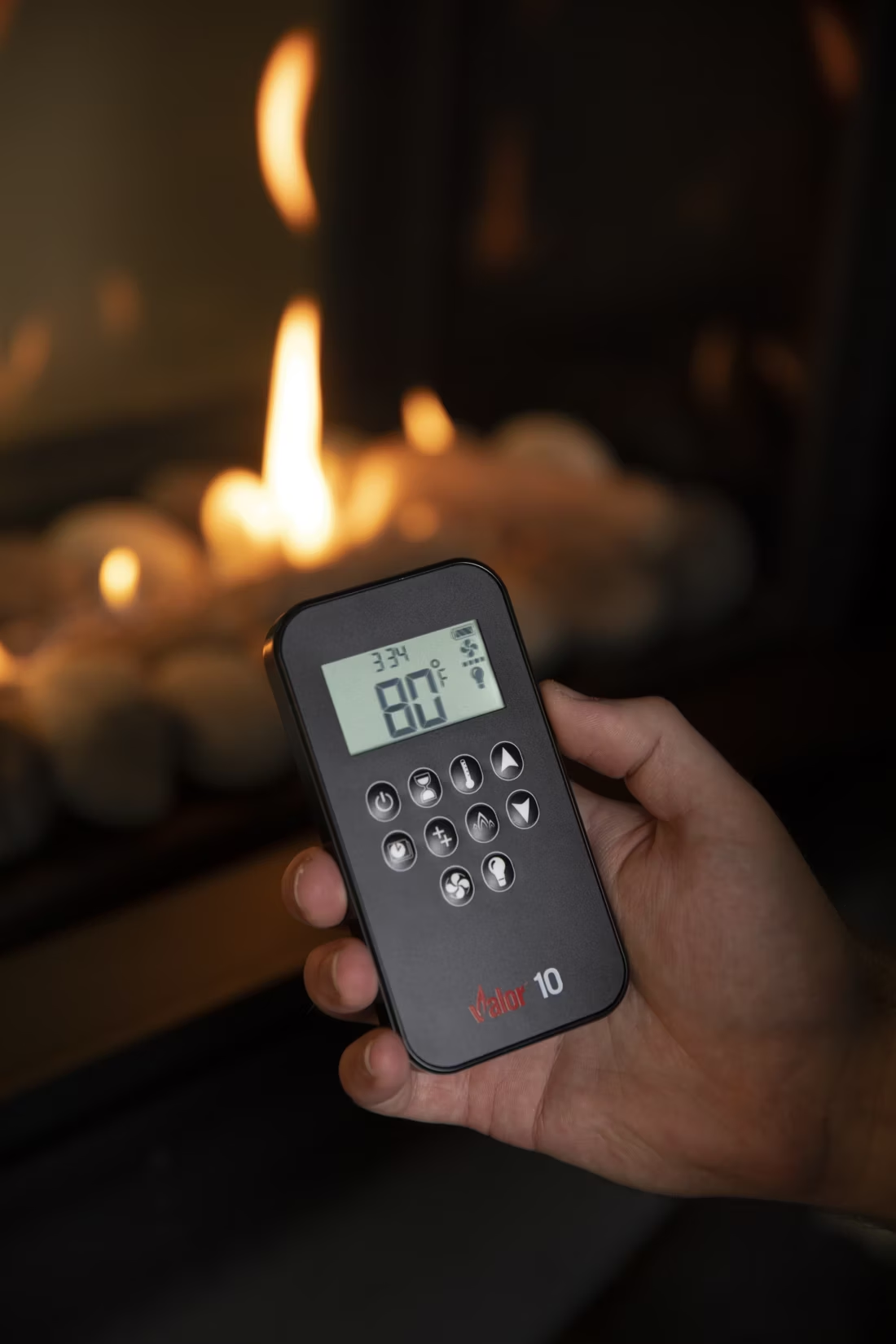
Most modern gas fireplaces are built to handle it. Units with intermittent pilot ignition carry a battery backup that kicks in automatically when the power drops, so the fireplace still lights and runs on demand. Valor fireplaces go a step further, generating their own electricity through the pilot assembly's thermocouple, so there's no battery to remember at all. That matters in Haldimand, where freezing rain and lake-effect ice storms off Erie can knock out power for a day or more in the more rural stretches. Ask your local dealer about the ignition system on any model you're considering, and keep the backup batteries fresh regardless.
What's the difference between a gas fireplace, gas insert, and gas stove?
A gas fireplace is a fully built-in unit framed into a wall—the right call for new construction or a major remodel in a Caledonia subdivision or a Dunnville renovation. A gas insert slides into an existing masonry firebox and uses your existing chimney as the vent path—the common choice for an older Haldimand farmhouse with a wood fireplace it wants to upgrade. A gas stove is a freestanding, cabinet-style unit that runs on gas but sits on the floor like a wood stove, useful in a room with no existing chimney at all. A local dealer can walk your space and tell you which configuration actually fits.
Do I need a permit to install a gas fireplace in Haldimand?
Yes. Haldimand's municipal building department requires a building permit for a new gas fireplace installation, and the gas line itself has to be run and connected by a licensed gas-fitter under Ontario's TSSA rules and the CSA B149.1 gas code. That's separate from CSA B365, which governs solid-fuel wood systems—if you're weighing a wood stove for the same project, expect that code and a WETT inspection to come up instead. Going through a full-service hearth dealer means the gas work, venting, and inspection sign-off get coordinated as one job rather than juggled across separate trades.
Can I install a vent-free gas fireplace in Haldimand?
Not the way you might see advertised south of the border. Canada's gas code, CSA B149.1, restricts unvented gas appliances far more tightly than US rules, and in practice essentially all residential gas fireplace installations across Haldimand are direct-vent or B-vent units, exhausting combustion byproducts outside through a sealed pipe. That's a good thing during a Haldimand winter—direct-vent units heat just as well and don't add anything to indoor air while windows stay closed for months at a time.
How often should my gas fireplace be serviced?
Plan on an annual inspection, ideally before the heating season ramps up in October. A technician checks the burner, pilot assembly, gas connections, and venting, and cleans the glass and interior—a much shorter visit than a wood chimney sweep, but worth doing given how many hours a Haldimand household's fireplace runs across a five- to six-month season. Expect to pay roughly $150 to $250 for a standard annual service call from a local gas appliance technician.
Gas vs. wood—which makes more sense for a Haldimand home?
Wood is genuinely available here—sugar maple, red oak, white ash, and yellow birch all grow in Haldimand's woodlots—but the Ontario Ministry of Natural Resources' free personal-use cutting permits apply mainly to Northern Boreal and Managed Forest Crown land farther north, not to this region's privately held farmland, so most Haldimand wood burners buy split cordwood rather than cut their own. Wood also typically means a WETT inspection for insurance and more hands-on maintenance. Gas offers instant, thermostat-controlled heat with no ash or smoke, at a comparable install cost of $6,000 to $15,000 versus $6,000 to $12,000 for wood. For a primary living space where daily convenience matters most, gas is usually the simpler starting point; many Haldimand households still keep a wood stove elsewhere as backup.
Can a gas fireplace run on a thermostat?
Most modern gas fireplaces can—turn it on and off from the couch with a remote, or set a room temperature and let the fireplace hold the comfort zone for you. If low maintenance matters to your family, this is the feature set that makes gas the convenience pick over wood and pellet.
Why do fireplace quotes vary so much?
Because a fireplace is an iceberg—there's more behind the wall than in front of it. A low quote often covers only the unit; the full scope includes vent pipe, gas line or electrical, framing, and the tile or stone that has to come off and go back on. Make every bidder price the whole job. If a dealer can't speak to the full scope with confidence, that's your signal to keep looking.
What's the difference between radiant and convective fireplace heat?
Most fireplaces are a thin metal box—they heat fine, but you rely on the fan to move the warmth into the room. Radiant models use a thick cast-ceramic firebox, about an inch and a quarter thick, that soaks up the fire's heat and radiates roughly 25–30% more warmth into the room with no fan running. If you watch TV in the same room or want heat in a power outage, radiant is worth asking about.
What does it take to replace an existing fireplace?
Fireplaces are like icebergs—bigger behind the wall than in front of it. Replacement means removing the surrounding tile or stone (the finish material laps onto the fireplace face), pulling the old unit, setting the new one in the same enclosure, and re-finishing the wall. A hearth professional can determine what's behind your wall without demolition during an in-home preview.
Stove and Fireplace Dealers in Haldimand
Listings include WhyFire partner dealers, dealers we have verified as authorized for the brands we recommend, and established local businesses that carry hearth products. Every listing shows which one it is. The ones marked Preferred run on WhyFire's software, so they can show you real pricing and book your appointment right here. No manufacturer pays for placement. How we verify dealers →
Mazza Heating And Air Conditioning
Riverside Heating & Air Conditioning
Natural Gas Service in Haldimand
Confirm service at your address before planning a gas fireplace—a quick call settles it.
Enbridge Gas
Get your free Project Guide & Parts List for a gas fireplace in Haldimand.
Tell us a bit about your home and whether you're on Enbridge Gas or propane, and we'll help you find a trusted local Haldimand dealer and send over a free Project Guide & Parts List—the exact parts, including the vent kit, for your gas fireplace project.
Find Your Fireplace →