
Real flame-look warmth, no chimney required, from Windsor to Leamington.
With winter lows averaging around -7.3°C, the Essex Region has one of the mildest heating seasons in Ontario, but sunrooms, condos, and finished basements still need supplemental heat. We help Windsor-Essex homeowners find a trusted local dealer who knows which electric unit actually fits the space and sends a free plan before you spend a dollar.
Every Project Starts From One of These Five Situations
Ontario's mildest corner still has rooms that run cold.
The Essex Region, home to roughly 383,000 people across Windsor, Essex, Leamington, Kingsville, Tecumseh, Amherstburg, LaSalle, and Lakeshore, sits in climate zone 5A with winter lows that average around -7.3°C. That's noticeably milder than Sudbury or Ottawa, and locals have long called this the sun parlour of Canada, but the flat land between Lake Erie and Lake St. Clair still funnels wind straight through sunrooms, garages, and older farmhouses that were never built with a second heat source in mind. Enbridge Gas serves most of the region's natural gas, and gas remains the default for full-home heating, but electric fireplaces have carved out a real place for supplemental rooms, condo units, and rentals where running a gas line or venting a wood chimney simply isn't practical.
That's the real appeal of electric here: no chimney, no gas line, and no combustion byproducts to vent, which makes it the only realistic option for a downtown Windsor high-rise unit or a Leamington rental where the landlord won't touch the exterior wall. A plug-in unit needs no permit at all. A built-in model wired to a dedicated circuit typically needs sign-off from the Electrical Safety Authority, and if you're opening a wall to frame it in, your local municipal building department gets involved too. Either way, install costs across the Essex Region typically run $500 to $1,600 CAD, a fraction of what a vented gas or wood project costs, which is why so many homeowners here use electric to solve one cold room rather than heat the whole house.
Three steps. No salesperson until you're ready.
Tell us about your project
Your postal code, your situation, and the fuel you're leaning toward—or let the answers point you to one.
See what's actually available
The brands dealers within 100 miles genuinely carry—real options, never a catalog mirage.
Get your dealer & Project Guide
A trusted local dealer, plus the free Project Guide & Parts List that names every component of the job.
Frequently Asked Questions
How much does an electric fireplace installation cost in the Essex Region?
Most projects run $500 to $1,600 CAD. A freestanding or wall-mount plug-in unit sits at the low end since it needs no wiring beyond a standard outlet. A built-in model set into a mantel or wall surround, wired to its own dedicated circuit, lands toward the top of that range once an electrician is involved. Homes in older Windsor neighbourhoods or Amherstburg character homes sometimes add modest cost if the wall needs opening up to run new wire, but there's no venting, chimney work, or gas line to budget for, which keeps this the least expensive fireplace project in the region by a wide margin.
Do I need a permit to install an electric fireplace in the Essex Region?
Usually not for a simple plug-in unit. If you're installing a built-in electric fireplace on its own dedicated circuit, Ontario requires an Electrical Safety Authority permit for that wiring work, and your municipal building department gets involved if you're framing a new opening or altering a load-bearing wall. This is a much lighter process than a wood or gas installation in the Essex Region, which typically needs a full building permit and, for wood appliances, a WETT inspection for insurance purposes. A local dealer who handles electric installs regularly can tell you in a few minutes whether your specific project needs the ESA sign-off.
Why choose electric when natural gas is available almost everywhere in the Essex Region?
Enbridge Gas does serve most of Windsor, Essex, Leamington, and the surrounding towns, and gas remains the standard choice for a primary living-room fireplace. But electric wins in specific situations gas can't touch cost-effectively: a condo unit in downtown Windsor with no chimney access, a rental property in Kingsville where the landlord doesn't want a gas line run, a finished basement with no clearance for venting, or simply a homeowner who wants supplemental heat in a sunroom without the $6,000 to $15,000 CAD a vented gas project typically runs. Electric costs less to install and gives you flame-look ambiance with zero combustion to manage.
Will an electric fireplace actually heat a room during Essex Region winters?
A typical electric fireplace puts out about 5,000 BTU on high, which comfortably supplements one room in a climate where winter lows average around -7.3°C rather than the sharper cold of Sudbury or Thunder Bay. It works well for a sunroom, a home office addition, or a bedroom that runs colder than the rest of the house, but it isn't sized to replace your furnace on the coldest nights of a Lake Erie windstorm. Most Essex Region homeowners run electric as a zone heater paired with central gas or forced-air heat, not as a standalone system.
Can I put an electric fireplace in a condo or rental unit?
Yes, and it's one of the most common reasons homeowners in downtown Windsor and renters across Leamington and Tecumseh go electric in the first place. Because there's no venting, chimney, or gas line required, an electric unit can go into a condo, a basement apartment, or a rental property without touching the building's exterior or shared systems. Most condo boards and landlords in the region have no objection to a plug-in unit, and even a wall-mounted built-in model is a straightforward, reversible project compared to anything requiring venting.
Where's the best spot in my home for an electric fireplace?
In the Essex Region, the most common placements are sunrooms facing Lake Erie or Lake St. Clair that lose heat fast in a January wind, finished basements without an existing chimney, and bedrooms or home offices added onto older Amherstburg or Essex farmhouses after the original heating system was sized. Because electric units don't need a vent path, they can go almost anywhere with an outlet or a dedicated circuit, which gives you far more placement freedom than a wood or gas appliance tied to a chimney location.
How much maintenance does an electric fireplace need?
Very little compared to wood or gas. There's no chimney to sweep, no WETT inspection to schedule, and no annual gas line check. Most upkeep is dusting the heater vents so airflow stays clear and occasionally checking that the flame-effect LED strip is running properly, since those units are rated for tens of thousands of hours before needing replacement. It's a big part of why electric appeals to Essex Region homeowners who want fireplace ambiance without a yearly service call.
What's the difference between an electric fireplace, an electric insert, and a mantel package?
An electric fireplace is typically a wall-mount or built-in unit installed during a renovation, often recessed into a framed wall in a Windsor or Lakeshore home. An electric insert is sized to drop into an existing masonry or wood-fireplace opening, a common project for older Essex Region homes converting an unused wood-burning fireplace into low-maintenance electric heat and ambiance. A mantel package pairs a freestanding or wall-mount electric unit with a surround, giving you a finished look without any construction. A local dealer can walk your specific opening and tell you which configuration actually fits.
Electric vs. wood vs. gas—how do I choose for my Essex Region home?
Wood makes sense if you want the lowest fuel cost and have access to sugar maple, red oak, white ash, or yellow birch, all common species cut in central and eastern Ontario, but it comes with WETT inspection requirements for insurance and a $6,000 to $12,000 CAD installed cost. Gas, run on Enbridge's widely available network here, gives you instant thermostatic heat for $6,000 to $15,000 CAD installed. Electric, at $500 to $1,600 CAD, is the right call when you're solving one cold room, don't want combustion or venting, or you're in a condo or rental where the bigger fuels simply aren't an option. Many Essex Region households run gas as their main heat source and add electric for a sunroom or basement that never quite keeps up.
How much does an electric fireplace cost to run?
With the heater on, a typical unit draws about 1,500 watts—at average electric rates that's roughly 20 cents an hour. Run the flame effect alone and it costs pennies; the flames are LED-driven and use about as much power as a light bulb. There's no pilot light, no fuel delivery, and essentially no maintenance.
What fireplace styles should I know before shopping?
Four cover most of the market: screen-front traditional (mesh front, open feel, fits craftsman homes), traditional door set (the classic look you grew up with), modern linear (wide, low, the statement piece for entertaining), and clean face contemporary (no trim—your tile or stone runs right to the fire's edge). Walk in knowing those four terms and you're ahead of most buyers.
Can I put a TV above my fireplace?
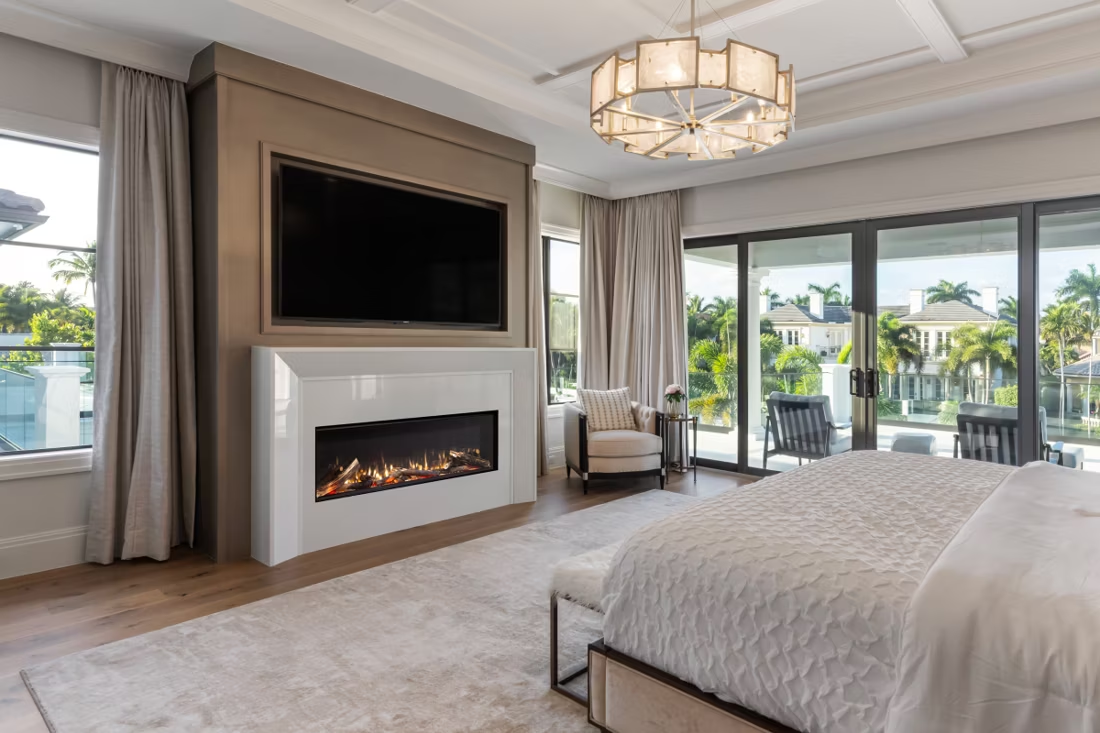
Yes—with an asterisk. Fireplaces are hot and TVs don't like heat. Either put a mantel between them to deflect rising warmth, or choose a fireplace with heat-management technology that creates a cool zone on the wall above—the wall stays around 125 degrees, barely warm, while the room still gets full heat. If you like clean lines and don't want a mantel, heat management is the answer.
Do electric fireplaces actually produce heat?
Yes—most put out around 4,800–5,000 BTUs from a standard outlet, which comfortably warms a bedroom, office, or den as a comfort-zone heater. What they won't do is carry a whole house the way wood, gas, or pellet can. Think of electric as ambiance-first with honest supplemental heat: flames on with no heat in July, flames plus warmth in January.
Stove and Fireplace Dealers in Essex Region
Listings include WhyFire partner dealers, dealers we have verified as authorized for the brands we recommend, and established local businesses that carry hearth products. Every listing shows which one it is. The ones marked Preferred run on WhyFire's software, so they can show you real pricing and book your appointment right here. No manufacturer pays for placement. How we verify dealers →
Scott’s Fireplace
Syles
Marquis Fireplace Ltd.
Allstate By Watsons
Electric Service in Essex Region
An electric fireplace's heater draws about 1,500 watts—pennies per hour at local rates.
Hydro One
Toronto Hydro
Alectra Utilities
Get your free Project Guide & Parts List for an electric fireplace in the Essex Region.
Tell us about your room, whether you need a plug-in or built-in unit, and where in the Essex Region you're located, and we'll help you find a trusted local dealer serving Windsor, Essex, Leamington, and the surrounding towns, plus send a free Project Guide & Parts List with the exact parts and recommended dealer for your project.
Find Your Fireplace →