
Warmth without cutting into Elora's stone heritage homes.
Elora's limestone streetscapes along the Grand River don't always welcome a new flue. With winter lows averaging -11.1°C, an electric insert adds real supplemental heat without touching the chimney. We'll help you find a trusted local dealer who knows what Centre Wellington's heritage rules actually allow.
Every Project Starts From One of These Five Situations
The easiest upgrade for a heritage stone home.
Elora's stone mills and 19th-century storefronts sit inside Centre Wellington's designated heritage conservation district, where cutting a new chimney penetration through an original limestone facade is often restricted or requires a separate heritage permit. Winters here average -11.1°C at the low end, with four or five months of routine sub-zero nights, milder than Sudbury or Thunder Bay but cold enough that a supplemental heat source in the main living space genuinely earns its keep. An electric fireplace slides into an existing firebox opening or a new wall without any venting, which sidesteps the heritage-facade problem entirely.
Wellington is dense hardwood country, sugar maple, red oak, white ash, and yellow birch are all common locally, and plenty of Elora households still burn wood cut under an Ontario Ministry of Natural Resources permit or heat with Enbridge Gas, which serves the town. But electric holds its own for a different reason: renters, secondary suites, basement apartments near the river, and owners of designated heritage buildings all want the ambiance without a WETT inspection, a gas line, or a masonry chimney. With Hydro One billing residential power at roughly $0.128 per kWh and typical installs running $500 to $1,600, it's also the fastest and least disruptive of the four fuel paths to get running before the cold sets in.
Three steps. No salesperson until you're ready.
Tell us about your project
Your postal code, your situation, and the fuel you're leaning toward—or let the answers point you to one.
See what's actually available
The brands dealers within 100 miles genuinely carry—real options, never a catalog mirage.
Get your dealer & Project Guide
A trusted local dealer, plus the free Project Guide & Parts List that names every component of the job.
Frequently Asked Questions
How much does an electric fireplace cost to install in Elora?
Most installs run $500 to $1,600 CAD. A plug-in insert or wall-mount unit that runs on a standard 120V outlet sits at the low end and can often go in the same afternoon. Larger built-ins or multi-sided units that need a dedicated 240V circuit cost more, mainly for the licensed electrician's time pulling wire and an Electrical Safety Authority permit for the new circuit. Either way it's a fraction of the $6,000-$15,000 typical for a gas install through Enbridge Gas or the $6,000-$12,000 for a wood-burning setup with a full Class A chimney.
Can an electric fireplace actually heat a room through an Elora winter?
It can carry a single room, but not the whole house through a -11.1°C stretch. Most inserts top out around 1,500 watts, enough to noticeably warm a living room or bedroom and take the edge off a chilly evening, but they're built as supplemental heat rather than a furnace replacement. In Elora that usually means pairing the fireplace with a gas furnace on the Enbridge Gas network or, in older stone homes without gas service, a wood stove as the primary source, with electric handling ambiance and shoulder-season warmth.
Do I need a permit for an electric fireplace in Elora?
The appliance itself usually doesn't trigger a building permit since there's no venting or gas line involved. If your install needs a new 240V circuit, the electrician pulls an Electrical Safety Authority permit for that wiring, which most installers handle as part of the job. The one Elora-specific wrinkle: if your home sits inside Centre Wellington's heritage conservation district and you're changing an exterior-facing mantel, surround, or opening in an original stone wall, check with the municipal building department first, since heritage-designated exteriors sometimes need separate sign-off even for cosmetic changes.
Electric vs. gas fireplace, which makes more sense for a stone farmhouse in Elora?
Gas gives you a bigger, more fire-like flame and can run through a power outage with the right ignition system, but it needs an Enbridge Gas line and venting through an exterior wall, which many of Elora's heritage stone facades aren't set up for without real construction work, and it runs $6,000-$15,000 installed. Electric skips both problems: no gas line, no penetration through the stone, and it fits into an existing firebox opening for $500-$1,600. For a designated heritage property, electric is usually the path of least resistance.
What type of electric fireplace works best for supplemental heat?
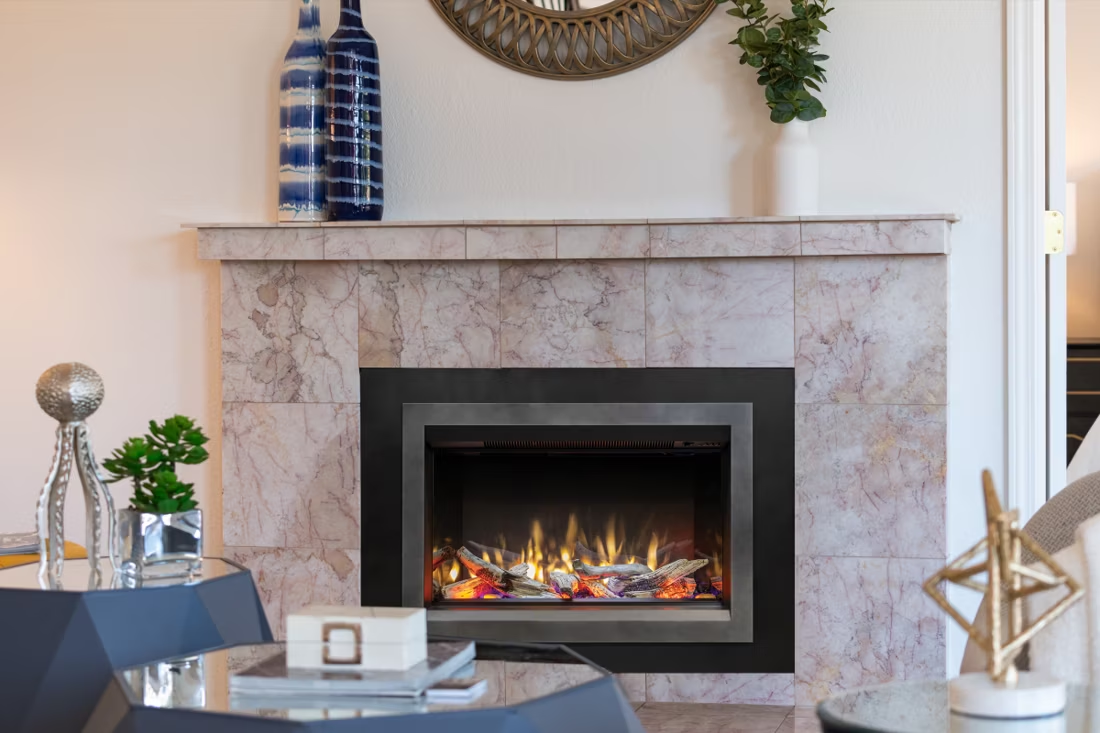
A recessed or built-in insert into an existing firebox opening is the common retrofit in Elora's older stone homes, since it hides the wiring and mimics a traditional fireplace look. For newer builds or basement finishing near the Grand River, a linear wall-mount unit is popular for its wider heat spread and lower profile. A local dealer will match wattage to your actual room size rather than just the opening dimensions, since an undersized unit in a large, poorly insulated stone-walled room won't do much.
What does it cost to run an electric fireplace at Hydro One rates?
At the current Hydro One residential rate of about $0.128 per kWh, a typical 1,500-watt insert running on high costs roughly 19 cents an hour, and most units let you dial the heater down while keeping the flame effect running for pennies. Compare that to a pellet stove burning Lacwood or Energex pellets at $400-$575 a tonne, or a gas fireplace on Enbridge Gas rates, and electric is usually the cheapest fuel to operate per hour, even if it's not doing the heavy lifting on the coldest nights.
Wellington has so much local hardwood, why would anyone go electric instead of wood?
Plenty of Elora households still cut sugar maple, red oak, white ash, or yellow birch under an Ontario Ministry of Natural Resources permit and burn it as primary heat. But electric fills a different need: renters and secondary-suite owners who can't install a chimney, condo and townhouse buyers in Elora's newer subdivisions with no masonry flue, and heritage-designated homeowners who'd rather not touch an original stone facade. It also skips the WETT inspection insurers commonly require on wood appliances and any CSA B365 installation work, which matters if you just want ambiance without taking on a wood-burning system.
Will my electric fireplace still work during a power outage?
No, it needs mains power, and Elora does see outages during winter storms and ice events like most of rural Wellington. If backup heat during an outage matters to you, a wood stove burning local hardwood or a battery-backed gas fireplace is the more resilient choice for a primary heat source, with electric reserved for the rooms and evenings where convenience matters more than storm-proofing.
How long does an electric fireplace installation take in Elora?
A simple plug-in insert into an existing opening can often be done in a single visit. Add a day if a new 240V circuit needs to be run and inspected under the Electrical Safety Authority permit, and add some lead time if your property sits in Centre Wellington's heritage conservation district and the surround or mantel changes the look of a designated stone exterior. A local dealer familiar with Elora's heritage rules can tell you upfront whether your project needs that extra step or not.
How much does an electric fireplace cost to run?
With the heater on, a typical unit draws about 1,500 watts—at average electric rates that's roughly 20 cents an hour. Run the flame effect alone and it costs pennies; the flames are LED-driven and use about as much power as a light bulb. There's no pilot light, no fuel delivery, and essentially no maintenance.
What fireplace styles should I know before shopping?
Four cover most of the market: screen-front traditional (mesh front, open feel, fits craftsman homes), traditional door set (the classic look you grew up with), modern linear (wide, low, the statement piece for entertaining), and clean face contemporary (no trim—your tile or stone runs right to the fire's edge). Walk in knowing those four terms and you're ahead of most buyers.
Do electric fireplaces actually produce heat?
Yes—most put out around 4,800–5,000 BTUs from a standard outlet, which comfortably warms a bedroom, office, or den as a comfort-zone heater. What they won't do is carry a whole house the way wood, gas, or pellet can. Think of electric as ambiance-first with honest supplemental heat: flames on with no heat in July, flames plus warmth in January.
Does an electric fireplace need a vent or chimney?
No—that's its superpower. An electric fireplace needs a wall and an outlet, period. No vent pipe, no gas line, no clearances to design around, which is why it works in bedrooms, offices, apartments, and walls where venting a gas or wood unit would be impractical or impossible. Installation is typically the simplest and least expensive of any fireplace type.
Nearby Dealers
Hearth shops serving Elora and the surrounding area. Every listing shows whether it is a WhyFire partner, a dealer we have verified as authorized for the brands we recommend, or a local business carrying hearth products. No manufacturer pays for placement. How we verify dealers →
We’ve paused dealer listings for this connection today. Enter your zip or postal code above to find dealers near you, or come back tomorrow.
Electric Service in Elora
An electric fireplace's heater draws about 1,500 watts—pennies per hour at local rates.
Hydro One
Toronto Hydro
Alectra Utilities
Get your free Project Guide & Parts List for an Elora electric fireplace.
Tell us about your home, whether it's inside Centre Wellington's heritage district, and what room you're heating, and we'll help you find a trusted local dealer and send a free Project Guide & Parts List with the exact unit, circuit needs, and parts your project calls for.
Find Your Fireplace →