
Find your fireplace across Durham Region.
Wood, gas, pellet, and electric fireplace resources from the Lake Ontario shoreline in Pickering and Ajax to the farmland around Uxbridge and Brock. Pick a fuel and find a local dealer who actually installs it here.
Every Project Starts From One of These Five Situations
Lake-moderated winters near -8.4°C and a region rich in hardwood.
Durham Region stretches along Lake Ontario's north shore through Pickering, Ajax, Whitby, and Oshawa, then inland through Clarington, Uxbridge, Scugog Township, and Brock Township, home to roughly 623,779 residents. Climate zone 5A here brings winter lows averaging -8.4°C, milder than the more continental cold of Ottawa or Peterborough thanks to Lake Ontario's moderating influence along the shoreline—the inland townships toward Uxbridge and Brock feel a few degrees colder on clear nights. It's a sugar maple, red oak, white ash, and yellow birch region—dense hardwood forest cover across central and eastern Ontario means firewood is genuinely local, much of it available through wood lots and land managed by the Ontario Ministry of Natural Resources.
Any wood-burning install goes through the municipal building department for your specific Durham municipality, following the CSA B365 installation code, and most insurers will ask for a WETT inspection before they'll write a policy on a new wood stove or insert—a step most local dealers handle as routine paperwork. Some Durham municipalities also require certified low-emission appliances in new construction, so a fireplace going into a newly built Whitby or Ajax home may face different rules than a swap-out insert in an older Oshawa house. Natural gas service reaches most of the region's urban spine, making gas fireplaces and inserts the mainstream pick in Pickering, Ajax, Whitby, Oshawa, and developed Clarington, while pellet stoves from regional brands like Lacwood and Energex offer wood-adjacent heat without daily loading, and electric fireplaces round out the options for condos and secondary rooms. This hub pulls together retailers, service technicians, and fuel suppliers from the shoreline to Uxbridge and Brock—pick a fuel below for dealer matches, cost detail, and unit recommendations specific to your municipality.
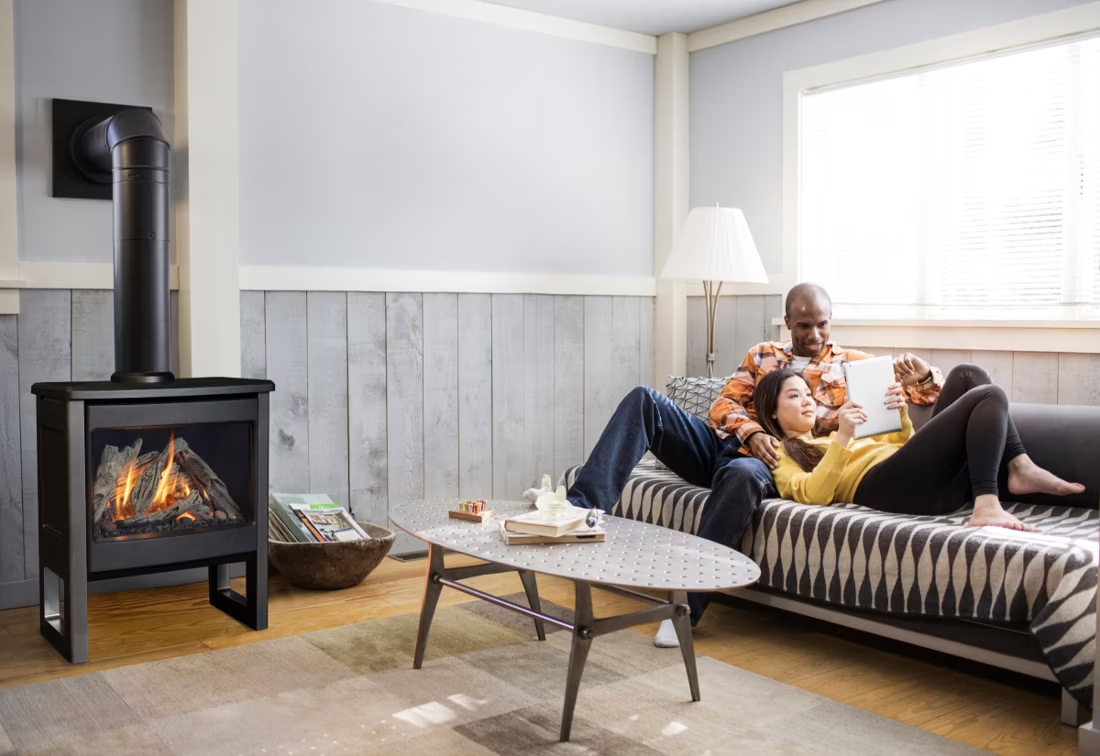
Four fuels. One honest answer for Durham.
Three steps. No salesperson until you're ready.
Tell us about your project
Your postal code, your situation, and the fuel you're leaning toward—or let the answers point you to one.
See what's actually available
The brands dealers within 100 miles genuinely carry—real options, never a catalog mirage.
Get your dealer & Project Guide
A trusted local dealer, plus the free Project Guide & Parts List that names every component of the job.
Frequently Asked Questions
Which fireplace fuel makes the most sense in Durham Region?
All four fuels have a real place here, and the right pick often comes down to which Durham municipality you're in. Natural gas reaches most of the urban spine—Oshawa, Whitby, Ajax, Pickering, and much of Clarington—so a gas fireplace or insert is the low-maintenance default for a lot of homeowners in those communities. Wood remains genuinely practical inland and in the rural townships: sugar maple, red oak, white ash, and yellow birch are all common locally-cut species, and a good stove holds a fire comfortably through the region's typical -8.4°C winter nights. Pellet stoves from regional brands like Lacwood and Energex give you wood-adjacent heat without daily loading or a chimney sweep schedule, which appeals to homeowners in Scugog or Brock who want less hands-on maintenance than a wood stove but don't have gas service. Electric fireplaces work everywhere in the region and are common along the waterfront or as a secondary heat source, but given the heating loads here they're a supplement, not a primary system.
Do I need a permit or WETT inspection to install a wood stove in Durham Region?
Yes to both, in most cases. New wood stove and insert installs go through your municipal building department—Durham's local municipalities each issue their own building permits—and the installation itself must follow the CSA B365 code. Separately, most home insurers require a WETT inspection before they'll insure a new wood-burning appliance, and many ask for a re-inspection when a home sells or a policy renews on an older unit. A handful of Durham municipalities also require certified low-emission appliances in new-construction homes, so if you're building rather than retrofitting, confirm that requirement with your building department before you buy a unit. The local dealers we help homeowners find generally handle both the permit paperwork and coordinating the WETT inspection as part of your project.
Is natural gas available everywhere in Durham Region?
No, coverage is strong but not universal. Gas mains run through Oshawa, Whitby, Ajax, Pickering, and the developed parts of Clarington, which is why gas fireplaces are the mainstream choice in those communities. Once you get into the more rural stretches of Clarington, and into Uxbridge, Scugog, and Brock Townships, plenty of homes are off the gas main entirely and rely on propane, wood, or a mix of both. If you're not sure whether your address is served, that's one of the first things a local dealer checks before recommending a gas unit—running a propane tank or converting to wood or pellet instead is a normal outcome for rural Durham addresses.
Where does firewood come from for Durham Region homes, and are there rules on cutting your own?
Durham sits in one of the denser hardwood pockets of central and eastern Ontario, and sugar maple, red oak, white ash, and yellow birch are the species most local households burn. Most homeowners buy from local firewood dealers rather than cutting their own, but if you want to source wood off public land, cutting permits go through the Ontario Ministry of Natural Resources rather than your municipality. Because the region's hardwood supply is dense and well-established, seasoned or kiln-dried firewood is generally easy to find locally—worth asking your dealer about moisture content specifically, since well-seasoned hardwood burns cleaner and helps keep newer certified stoves compliant in municipalities that regulate new-construction appliances.
What does a fireplace installation typically cost in Durham Region?
Costs depend on the fuel and how much venting or gas-line work your home needs. Wood stove and insert installs, including a WETT inspection, generally run $4,000-$9,000 CAD, with full masonry chimney work pushing higher. Gas fireplaces, inserts, and stoves typically land around $4,000-$10,000, with the wide range mostly explained by whether an existing gas line reaches the install location or a new run is needed. Pellet stove or insert installs usually fall between $4,000-$7,000. Electric fireplaces are the most affordable option at $200-$3,000 for the unit, plus modest labor for anything beyond a plug-in placement. The region and fuel pages above break these figures down further by fuel and by municipality.
When's the best time to book installation or service in Durham Region?
Late summer and early fall, before the first real cold snap. Once overnight temperatures start dropping toward that -8.4°C winter average, chimney sweeps, WETT inspectors, and gas technicians across the region get booked solid, and any wait for parts or a vent kit gets longer right when you need heat most. Booking your annual WETT inspection or gas service call in August or September, rather than waiting for the first frost, is the easiest way to avoid a cold week without a working fireplace. It's also the better window for permit processing through your municipal building department, since those offices tend to see a rush of applications once the weather turns.
How many BTUs do I need in a fireplace?
Wrong question—and the industry's favorite way to confuse you. More BTUs isn't better if the fireplace cooks you out of the room you spent thousands to enjoy. Think in terms you can verify: how many square feet the unit heats, whether it's primary or backup heat, and whether you want it running overnight. Those three answers size a fireplace correctly every time.
Will we actually use a fireplace once we have one?
In my own home, the room with the fireplace has never been the same—it became the social hub. Game nights, holidays, date nights after the kids are down: the fire is where the house gathers. There's a reason people in this industry joke that we're really in the romance and entertainment business. You won't wonder whether you'll use it; you'll wonder how the room worked before.
Does a fireplace add value to my home?
On average, a fireplace adds back to the home about the same amount you spent installing it. Add the monthly savings from heating the rooms you actually use instead of the whole house—often hundreds of dollars a year—and the value case is strong before you even count what a fire does for how your family uses the room.
Can I install a fireplace myself?
If you're putting a fire in your house on purpose, it's best to work with an expert. Unless you're genuinely experienced in framing, gas line, vent pipe, and the national code on clearances to combustibles, have a professional do it—and ideally the same company that sells you the fireplace, so warranty, service, and liability all live under one roof.
Stove and Fireplace Dealers in Durham
Listings include WhyFire partner dealers, dealers we have verified as authorized for the brands we recommend, and established local businesses that carry hearth products. Every listing shows which one it is. The ones marked Preferred run on WhyFire's software, so they can show you real pricing and book your appointment right here. No manufacturer pays for placement. How we verify dealers →
Classic Fireplace & Bbq Store
Classic Fireplace And Bbq Store
Classic Fireplace & Gourmet Grills
Tracey Refrigeration Heating & Air Conditioning
The Fireplace Plus Ltd.
Ashton Heating & Cooling Inc.
Topfire Fireplace & Bbq Inc.
The Comfort Shoppe
Direct Air Systems Ltd
5t5 Fireplaces
Bbq & Fireplace Depot
Imperial Hearth
Flame Sensations Fireplaces
Find a local Durham Region dealer.
Pick your fuel below and we'll put together a free Project Guide & Parts List—the right unit, the vent kit it needs, and the local dealer we recommend for your project.
Find Your Fireplace →