
Find your fireplace in Muskoka.
Wood, gas, pellet, and electric fireplace resources for the whole Muskoka region—from year-round homes in Huntsville and Bracebridge to lakeside cottages on Lake Rosseau and Lake Joseph. Pick a fuel and find a local dealer who actually works in this region.
Every Project Starts From One of These Five Situations
Canadian Shield winters, dense hardwood bush, and a region built for wood heat.
The District Municipality of Muskoka is home to roughly 48,000 year-round residents spread across Canadian Shield lake country—Lake Muskoka, Lake Rosseau, and Lake Joseph anchor a landscape of granite shoreline and hardwood bush that has shaped how this region heats. Winters here sit in climate zone 7A, with average lows near -16.8°C and a heating season nearly as long as what Sudbury or Ottawa sees most years. Sugar maple, red oak, white ash, and yellow birch make up the bulk of the local firewood supply, and that dense hardwood stock—cut from private bush lots and Crown land alike—is a big part of why wood heat is still a mainstream choice here, in year-round homes in Huntsville, Bracebridge, and Gravenhurst as much as in cottages on the Big Three lakes.
Muskoka's building rules reflect its mixed housing stock of year-round homes and seasonal cottages. Wood-burning installations follow the CSA B365 code, and most insurers now require a WETT inspection before they'll cover a wood stove or insert—especially on cottage policies, where a certified installation can be the difference between a claim getting paid and getting denied. Some municipalities within the region also require certified low-emission appliances in new construction, a detail your local dealer will already know how to navigate. Natural gas service reaches parts of Huntsville, Bracebridge, and Gravenhurst, but plenty of cottage properties off that grid run on propane instead. This hub rolls up hearth retailers, service technicians, and fuel suppliers across the whole region—pick your fuel below for local dealers, install costs, and unit recommendations specific to your town or lake.
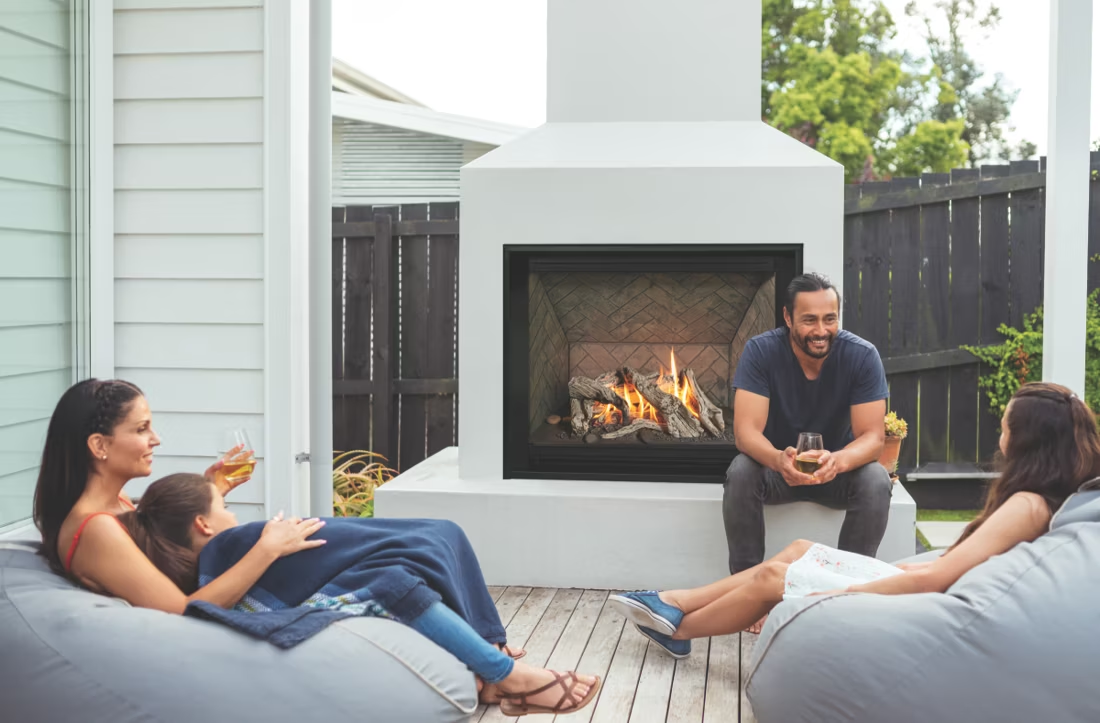
Four fuels. One honest answer for District Municipality of Muskoka.
Wood
69 models available near District Municipality of Muskoka.
Find your wood stove →Gas
111 models available near District Municipality of Muskoka.
Find your gas fireplace →Pellet
See what's available near District Municipality of Muskoka.
Find your pellet stove →Electric
See what's available near District Municipality of Muskoka.
Find your electric fireplace →Three steps. No salesperson until you're ready.
Tell us about your project
Your postal code, your situation, and the fuel you're leaning toward—or let the answers point you to one.
See what's actually available
The brands dealers within 100 miles genuinely carry—real options, never a catalog mirage.
Get your dealer & Project Guide
A trusted local dealer, plus the free Project Guide & Parts List that names every component of the job.
Frequently Asked Questions
Which fireplace fuel makes the most sense for a home or cottage in Muskoka?
All four fuels have a real place here, and which one fits depends on whether you're heating a year-round house or a seasonal cottage. Wood is the backbone fuel across the region—sugar maple, red oak, white ash, and yellow birch are all locally abundant, and a good catalytic or non-catalytic stove burning seasoned hardwood will comfortably carry a home through a -16.8°C overnight low. Gas is the convenience choice where natural gas service reaches, mainly pockets of Huntsville, Bracebridge, and Gravenhurst; cottages further out on the lakes typically run propane instead. Pellet stoves have a solid following too—Lacwood and Energex both distribute regionally—and they're a practical option for owners who want set-and-forget heat without splitting and stacking wood. Electric fireplaces are mostly supplemental here; they're not built to carry a Muskoka winter on their own, but they're a clean, low-maintenance add for a bedroom, bunkie, or a cottage that's only used a few weekends a month.
Do I need a WETT inspection for a wood stove in Muskoka?
Almost certainly, yes, if you want your insurance to actually pay out on a claim. Most insurers writing policies in Muskoka—especially cottage policies, where wood stoves are common as backup or primary heat—require a WETT inspection on any wood-burning appliance before or shortly after it's installed. A WETT-certified technician checks clearances, chimney condition, and that the installation meets the CSA B365 code; without that paperwork, insurers can and do deny wood-related claims. It's a routine step for any local dealer here, not a hurdle—budget for it as part of the project rather than an afterthought, and keep the inspection report with your policy documents.
What permits do I need to install a fireplace or stove in Muskoka?
Installation permits go through your local municipal building department, and because Muskoka is made up of several municipalities—Huntsville, Bracebridge, Gravenhurst, Muskoka Lakes, Lake of Bays, and Georgian Bay Township each run their own—the exact process varies slightly depending on where your property sits. All wood-burning installations need to meet the CSA B365 installation code regardless of municipality, and some of these municipalities require certified low-emission appliances specifically for new construction. Gas installations need a separate gas-line permit and a licensed gas fitter for the hookup. Most hearth retailers we help homeowners find handle this paperwork directly as part of the project, so it's rarely something you're navigating on your own.
What does a fireplace installation typically cost in Muskoka?
Costs vary by fuel and by how much venting or gas-line work the project needs. Wood stove or insert installs typically run $4,500-$9,500 CAD, with a full new masonry chimney pushing that toward $13,000-$16,000 once you factor in CSA B365 clearances and a WETT inspection. Gas fireplaces, inserts, and stoves generally land at $5,000-$11,000 depending on whether you're extending a gas line or converting an existing hearth, and whether the property sits on natural gas or propane. Pellet stove or insert installs usually run $4,500-$8,000. Electric fireplaces are the low end—$200-$3,000 for the unit, plus $400-$1,200 in labour for anything beyond a plug-and-play placement. The fuel pages above break these numbers down further with local retailer pricing.
How do cottage owners in Muskoka handle heat during winter power outages?
This is one of the most common reasons cottage owners in Muskoka add a wood stove even when the property already has electric baseboards or a propane furnace: it keeps working when the power doesn't. Ice storms and heavy snow loads take down lines in parts of the region most winters, and a wood stove burning seasoned maple or oak will hold a cottage through a multi-day outage without any electricity at all. If your cottage is only used seasonally, ask your dealer about sizing the stove to the actual square footage you're heating and about a proper WETT-inspected chimney setup, since insurers pay close attention to backup heat sources on seasonal policies. Pellet stoves, by comparison, need electricity to run their auger and fan, so they're a poor fit as an outage backup even though they're a fine everyday heater.
Where does firewood come from in Muskoka, and is supply reliable?
Supply is genuinely good here, which is part of why wood heat stays mainstream across the region. Much of the local firewood comes from private hardwood bush lots—sugar maple, red oak, white ash, and yellow birch are all common species cut and split locally—and there's also Crown land available for cutting permits through the Ontario Ministry of Natural Resources for property owners who want to source their own. Because it's hardwood rather than the softer species common further north, it burns hotter and longer per cord, which matters when you're trying to hold a fire through a long stretch of sub-zero nights. Most local dealers can point you toward a reliable firewood supplier as part of your project, and it's worth lining up a cord or two before the first cold snap rather than scrambling in December.
How many BTUs do I need in a fireplace?
Wrong question—and the industry's favorite way to confuse you. More BTUs isn't better if the fireplace cooks you out of the room you spent thousands to enjoy. Think in terms you can verify: how many square feet the unit heats, whether it's primary or backup heat, and whether you want it running overnight. Those three answers size a fireplace correctly every time.
Will we actually use a fireplace once we have one?
In my own home, the room with the fireplace has never been the same—it became the social hub. Game nights, holidays, date nights after the kids are down: the fire is where the house gathers. There's a reason people in this industry joke that we're really in the romance and entertainment business. You won't wonder whether you'll use it; you'll wonder how the room worked before.
Should the dealer who sells my fireplace also install it?
Ideally, yes. A fireplace project involves vent pipe, gas line, electrical, and often tile or stone. Hire three or four separate trades and you own the liability and the game of telephone between them. One company selling and installing means one accountable party, start to finish—ask about factory training, on-time completion records, and what happens if an inspection fails.
What's the best fireplace for power outages?
Wood wins outright—no electricity, no moving parts, just fuel and a match, and a radiant stove keeps heating with the grid down for weeks. Gas is a close second: battery-backup ignition runs the fireplace fine without power (the blower stops, but radiant heat keeps coming). Pellet is the one to check carefully—most models need electricity for the auger and fans, so ask about battery backup.
Stove and Fireplace Dealers in District Municipality of Muskoka
Listings include WhyFire partner dealers, dealers we have verified as authorized for the brands we recommend, and established local businesses that carry hearth products. Every listing shows which one it is. The ones marked Preferred run on WhyFire's software, so they can show you real pricing and book your appointment right here. No manufacturer pays for placement. How we verify dealers →
Dean’s Home Hardware
Complete Chimney Service
Home Bldg Centre Gravenhurst – G.r. Henwood Lumber Co. Ltd.
Find a local Muskoka dealer.
Pick your fuel below and we'll put together a free Project Guide & Parts List—the right unit, the vent kit it needs, and the local dealer we recommend for your project.
Find Your Fireplace →