
Instant heat and glow, no chimney required, for Constance Bay's riverfront homes.
At 61 metres along the Ottawa River with winter lows averaging -16.7°C, Constance Bay's mix of converted cottages and newer builds doesn't always have a chimney to work with. An electric unit plugs into what's already there. We'll help you find a trusted local dealer who can size it right and send a free planning packet.
Every Project Starts From One of These Five Situations
The easiest upgrade for a village of converted cottages.
Constance Bay grew up as a beach community on the Ottawa River, and a lot of its housing stock started life as a seasonal cottage before being winterized for year-round living. Many of those homes already run on electric baseboard or forced-air electric heat, with no masonry flue and no interest in adding one. In climate zone 6A, with winter lows averaging -16.7°C and a heating season that stretches from October well into April, that leaves electric as the fastest path to a working fireplace: no chimney to build, no venting to route through a slab or crawlspace foundation close to the water, and no combustion byproducts to manage in a tightly built retrofit.
Hydro One serves most of the rural Ottawa Region including Constance Bay, and at a residential rate around $0.128 per kWh, running a zone-heating electric insert in a living room or bedroom costs a fraction of what wood or gas installs run to put in. Compare the numbers: a typical electric fireplace installs for $500-$1,600, against $6,000-$12,000 for a wood stove with the WETT inspection insurers usually require, or $6,000-$15,000 for a gas unit tied into Enbridge Gas service. Sugar maple, red oak, white ash, and yellow birch are all plentiful in this part of Ontario and plenty of Constance Bay households still burn wood as a backup, but electric is the low-friction choice when you just want reliable heat and ambiance in one room without a construction project.
Three steps. No salesperson until you're ready.
Tell us about your project
Your postal code, your situation, and the fuel you're leaning toward—or let the answers point you to one.
See what's actually available
The brands dealers within 100 miles genuinely carry—real options, never a catalog mirage.
Get your dealer & Project Guide
A trusted local dealer, plus the free Project Guide & Parts List that names every component of the job.
Frequently Asked Questions
How much does an electric fireplace cost to install in Constance Bay?
Most electric fireplace installs here run $500 to $1,600 CAD. A plug-in insert or wall-mount unit that uses an existing standard outlet sits at the low end and can often go in in an afternoon. A built-in linear unit that needs a dedicated 240-volt circuit run from the panel, common in the older cottage-turned-year-round homes around the bay, pushes toward the top of that range once an electrician is involved. Either way it's well under what a wood or gas install runs, since there's no chimney or gas line to build.
Will an electric fireplace actually heat my Constance Bay home?
It will heat the room it's in, but with winter lows averaging -16.7°C and stretches colder than that, it shouldn't be your only heat source for the house. A typical 1,500-watt unit puts out roughly 5,000 BTUs, enough to comfortably carry a living room or bedroom, but Constance Bay's older cottage-stock homes usually still lean on baseboard heat, a forced-air furnace, or a wood stove for the whole structure. Most local homeowners run electric for the room they use most and let the primary system handle the rest of the house.
Do I need a permit for an electric fireplace in Constance Bay?
A simple plug-in unit on an existing circuit generally doesn't need a permit. A built-in model requiring a new dedicated circuit needs the work done by a licensed electrician and inspected by the Electrical Safety Authority, and if the install involves altering a wall or framing, the municipal building department may want a look too. Most local dealers who handle these installs are used to coordinating both steps as part of the project rather than leaving it to the homeowner to sort out.
What does it cost to run an electric fireplace day to day?
At Hydro One's residential rate of roughly $0.128 per kWh, a 1,500-watt unit running on high costs about 19 cents an hour, or a little under $5 for six hours of evening use. Most units let you run the flame effect without the heater engaged, which drops the draw to almost nothing, so a lot of Constance Bay households keep the ambiance going through the shoulder seasons and only switch on the heat function once the -16.7°C nights set in.
Electric vs. wood—which makes more sense for a Constance Bay home?
Wood has real advantages here: sugar maple, red oak, white ash, and yellow birch are all common regional species, and the Ontario Ministry of Natural Resources allows free cutting up to 10 cubic metres per household per year in Northern Boreal and Managed Forest zones. But a wood stove or insert runs $6,000-$12,000 installed, needs a CSA B365-compliant chimney, and typically requires a WETT inspection before an insurer will cover it. Electric skips all of that for $500-$1,600 and suits homes without an existing flue, which describes a lot of the converted cottages around the bay. Many households keep both: wood for outage backup, electric for everyday convenience.
Electric vs. gas—is one better suited to this area?
Enbridge Gas does serve Constance Bay, and a gas fireplace gives you real heat output without hauling wood, but installs run $6,000-$15,000 once you factor in the gas line and venting. Electric costs a fraction of that and installs in a day, though it won't produce the same sustained heat during an extended cold snap or match gas for whole-room warmth. For a secondary bedroom, sunroom, or a converted cottage space where a gas line isn't already close by, electric is usually the more practical call.
What's the best type of electric fireplace for a waterfront or cottage-style home?
Wall-mount and built-in linear units are popular in Constance Bay's waterfront homes because they don't add any load-bearing or venting requirements to a slab or crawlspace foundation, which is common close to the river. For homes with damp basements or seasonal moisture concerns, a plug-in freestanding stove-style unit is a simpler option that avoids cutting into a wall entirely, and it can move with you if the home is ever converted back to seasonal use.
Are there rebates for switching to electric heat in Constance Bay?
Provincial incentive programs periodically offer rebates tied to whole-home electrification and heat pump upgrades rather than fireplaces specifically, so a standalone electric fireplace usually isn't eligible on its own. Where it helps is indirectly: pairing a zone-heating electric fireplace with a heat pump reduces overall reliance on baseboard resistance heat, which is the more expensive way to heat a home at Hydro One's residential rate. A local dealer can tell you what's currently funded before you buy.
What size electric fireplace do I need for my room?
For a typical Constance Bay living room in the 200-300 square foot range, a 1,500-watt unit is usually enough to take the chill off on a -16.7°C evening without overheating the space. Larger open-concept additions common in updated cottage layouts may need a 1,500-watt unit plus a supplementary heat source, since electric fireplaces are built for zone heat rather than whole-space output. Ceiling height and window count matter as much as square footage, so it's worth having a local dealer size it against your actual room rather than going by floor plan alone.
How much does an electric fireplace cost to run?
With the heater on, a typical unit draws about 1,500 watts—at average electric rates that's roughly 20 cents an hour. Run the flame effect alone and it costs pennies; the flames are LED-driven and use about as much power as a light bulb. There's no pilot light, no fuel delivery, and essentially no maintenance.
What fireplace styles should I know before shopping?
Four cover most of the market: screen-front traditional (mesh front, open feel, fits craftsman homes), traditional door set (the classic look you grew up with), modern linear (wide, low, the statement piece for entertaining), and clean face contemporary (no trim—your tile or stone runs right to the fire's edge). Walk in knowing those four terms and you're ahead of most buyers.
Does an electric fireplace need a vent or chimney?
No—that's its superpower. An electric fireplace needs a wall and an outlet, period. No vent pipe, no gas line, no clearances to design around, which is why it works in bedrooms, offices, apartments, and walls where venting a gas or wood unit would be impractical or impossible. Installation is typically the simplest and least expensive of any fireplace type.
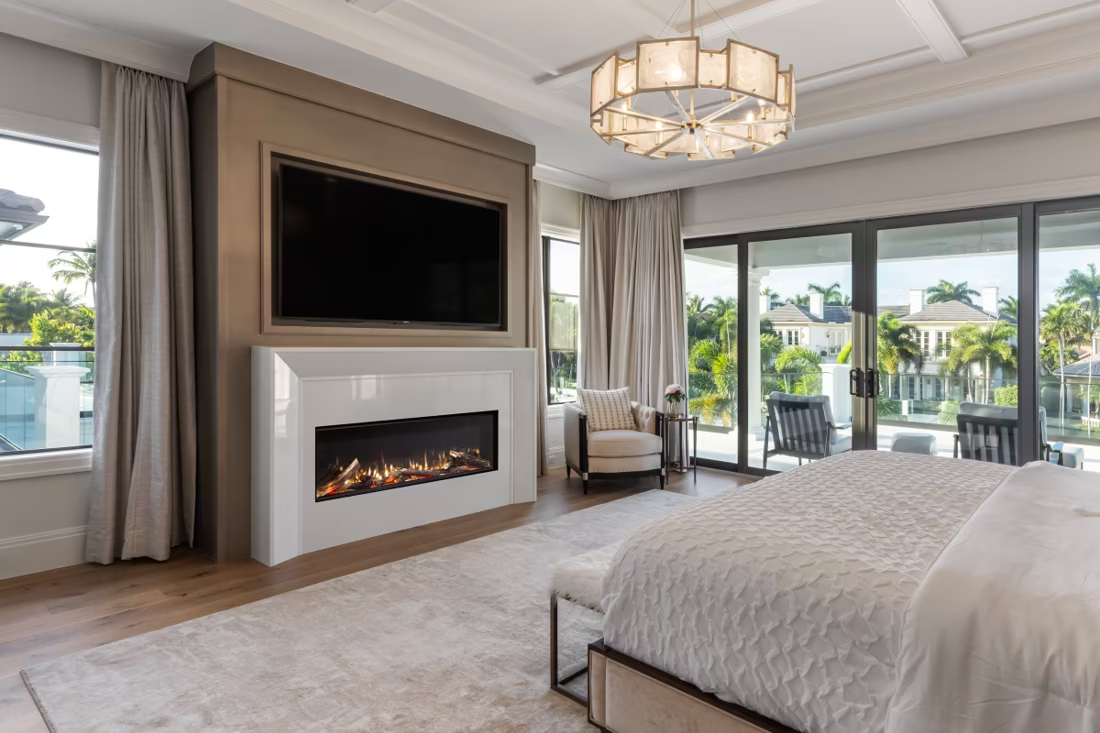
Can I put a TV above my fireplace?
Yes—with an asterisk. Fireplaces are hot and TVs don't like heat. Either put a mantel between them to deflect rising warmth, or choose a fireplace with heat-management technology that creates a cool zone on the wall above—the wall stays around 125 degrees, barely warm, while the room still gets full heat. If you like clean lines and don't want a mantel, heat management is the answer.
Nearby Dealers
Hearth shops serving Constance Bay and the surrounding area. Every listing shows whether it is a WhyFire partner, a dealer we have verified as authorized for the brands we recommend, or a local business carrying hearth products. No manufacturer pays for placement. How we verify dealers →
Nev's Heating And Cooling Inc
Entreprise Proulx
Fire It Up Fireplaces
Advanced Prefabs Hearth Distribution
Schreiter’s Furniture Store
Hubert Heating Limited
Hubert's Fireplaces
Northern Comfort Stoves
Electric Service in Constance Bay
An electric fireplace's heater draws about 1,500 watts—pennies per hour at local rates.
Hydro One
Toronto Hydro
Alectra Utilities
Get your free Project Guide & Parts List for a Constance Bay electric fireplace.
Tell us about your room, your panel, and whether you're on a slab, crawlspace, or basement foundation, and we'll help you find a trusted local dealer and send a free Project Guide & Parts List with the right unit, circuit needs, and wattage specified for your space.
Find Your Fireplace →