
Zero-clearance heat for Callander's coldest nights.
Callander sits on Lake Nipissing at 192 metres elevation, where winter lows average -17.7°C and the season runs long. An electric fireplace won't replace a furnace here, but it adds instant, no-venting warmth to a room without a chimney or a woodpile. We'll help you find a local dealer who can size the right unit and circuit for your home.
Every Project Starts From One of These Five Situations
Electric fills the gap that wood and gas leave behind.
Callander's winters put it in the same territory as Sudbury or Thunder Bay—long, genuinely cold stretches where a serious heat source matters, not a decorative one. That's exactly why most Nipissing region homes lean on wood or gas as the primary system: sugar maple, red oak, white ash, and yellow birch are all abundant locally, and Enbridge Gas reaches much of the built-up area around North Bay and Callander. Electric fireplaces aren't trying to compete with either for whole-home heat. They're the honest answer for a room that needs supplemental warmth and ambiance without the chimney, the gas line, or the WETT inspection that wood and gas installs require.
That's a real practical advantage in a town this size. A plug-in or built-in electric unit skips the CSA B365 code requirements and municipal building permit that apply to wood appliances, and it skips the Enbridge line work a gas install needs. Installed costs typically run $500 to $1,600—a fraction of the $6,000-$12,000 wood or $6,000-$15,000 gas ranges—which makes electric the practical pick for basements, bedrooms, condos near downtown, and cottages along the Lake Nipissing shoreline where running a flue or gas line isn't realistic. Most Callander households running electric fireplaces pair one with a wood stove or gas furnace doing the heavy lifting on the coldest nights.
Three steps. No salesperson until you're ready.
Tell us about your project
Your postal code, your situation, and the fuel you're leaning toward—or let the answers point you to one.
See what's actually available
The brands dealers within 100 miles genuinely carry—real options, never a catalog mirage.
Get your dealer & Project Guide
A trusted local dealer, plus the free Project Guide & Parts List that names every component of the job.
Frequently Asked Questions
How much does an electric fireplace installation cost in Callander?
Most installs land between $500 and $1,600. A plug-in insert or freestanding unit on an existing outlet sits at the low end—it's furniture, essentially, and needs no permit. A built-in wall unit tied to a dedicated 240V circuit costs more once you factor in the electrician's time, and depending on the scope, the municipal building department may want an electrical permit through the Electrical Safety Authority before the wall is closed up. Either way, it's a fraction of what a wood or gas install runs here.
Do I need a permit for an electric fireplace in Callander?
Usually not for a simple plug-in unit—there's no venting, no chimney, and no gas line for the municipal building department to inspect. A built-in model that needs new wiring or a dedicated circuit is a different story: that work should go through a licensed electrician and may require sign-off from the Electrical Safety Authority. It's a much lighter process than the CSA B365 installation code and WETT inspection that wood appliances go through, which is part of why electric is popular for secondary rooms.
Will an electric fireplace actually heat my house through a Callander winter?
Not on its own, and any honest dealer will tell you the same. With winter lows averaging -17.7°C, an electric fireplace pulling roughly 1,500 watts is built for zone heat—warming up a bedroom, a basement rec room, or a den—not for carrying a whole house through a Nipissing region cold snap. Most Callander homes running one still rely on a wood stove burning local sugar maple or red oak, or a gas furnace off the Enbridge Gas line, as the primary heat source.
Electric vs. wood—which makes more sense for my Callander home?
Wood still wins for raw heat output and for keeping you warm if the power goes out, which matters given how exposed the Nipissing region can be to winter storms. The Ontario Ministry of Natural Resources issues free cutting permits for up to 10 cubic metres a year in the Northern Boreal and Managed Forest zones, and hardwood species like sugar maple and yellow birch are genuinely abundant here. Electric wins on convenience and cost: no splitting, no ash, no WETT inspection, and an install that costs a tenth of a wood setup. A lot of homeowners run both—wood or a furnace for the cold, electric for the room that just needs a little extra warmth without the mess.
Electric vs. gas—what's the real tradeoff?
Gas, through Enbridge Gas where service reaches, gives you real heat output and keeps running through most of a Callander winter without any fuel handling, typically for $6,000 to $15,000 installed. Electric costs far less to put in—$500 to $1,600—but delivers less heat and, unlike a battery-backed gas unit, stops working the moment the power goes out, which is worth weighing given the outages that come with Nipissing region ice storms. For a supplemental fireplace in a bedroom or finished basement where you're not trying to heat the whole space, electric is usually the simpler and cheaper call.
What does an electric fireplace cost to run in Callander?
At Hydro One's residential rate of roughly 12.8 cents per kWh, a typical 1,500-watt electric fireplace costs around 19 cents an hour to run on full heat, or a couple of dollars for an evening. That's cheap compared to heating an entire house electrically, which is exactly why electric fireplaces work best as supplemental heat for one room rather than a primary system for a home dealing with a five-month Nipissing region winter.
Where's the best place to install an electric fireplace in a Callander home?
Bedrooms, finished basements, and condo units near downtown Callander are the most common spots, since there's no venting or masonry chimney required. Along the Lake Nipissing shoreline, seasonal cottages and camps also lean on electric units for exactly the same reason—no flue to run, no gas line to extend out to a property that may not have either. It's also a practical add for a den or sunroom addition where retrofitting a wood or gas chimney isn't worth the cost.
Insert, wall-mount, or freestanding—which type should I choose?
A wall-mount unit works well in a bedroom or condo where floor space is tight and you don't want to touch the electrical panel. A built-in insert set into a existing frame or old masonry opening gives a more traditional look and is popular when homeowners are converting an unused wood-burning fireplace they no longer want to maintain. A freestanding unit is the simplest option—plug it in and move it between rooms as needed, which suits a lot of Callander's smaller and seasonal homes.
Are there rebates or efficiency incentives for electric fireplaces in Ontario?
Electric fireplaces themselves aren't usually eligible for the home heating rebates aimed at furnaces and heat pumps, since they're classified as supplemental rather than primary heat. That said, if you're on Hydro One and pairing your fireplace use with off-peak hours, you can trim the running cost further under time-of-use pricing. A local dealer can also point you toward current Ontario energy efficiency programs that may apply if your project includes broader electrical or insulation upgrades alongside the fireplace.
How much does an electric fireplace cost to run?
With the heater on, a typical unit draws about 1,500 watts—at average electric rates that's roughly 20 cents an hour. Run the flame effect alone and it costs pennies; the flames are LED-driven and use about as much power as a light bulb. There's no pilot light, no fuel delivery, and essentially no maintenance.
What fireplace styles should I know before shopping?
Four cover most of the market: screen-front traditional (mesh front, open feel, fits craftsman homes), traditional door set (the classic look you grew up with), modern linear (wide, low, the statement piece for entertaining), and clean face contemporary (no trim—your tile or stone runs right to the fire's edge). Walk in knowing those four terms and you're ahead of most buyers.
Do electric fireplaces actually produce heat?
Yes—most put out around 4,800–5,000 BTUs from a standard outlet, which comfortably warms a bedroom, office, or den as a comfort-zone heater. What they won't do is carry a whole house the way wood, gas, or pellet can. Think of electric as ambiance-first with honest supplemental heat: flames on with no heat in July, flames plus warmth in January.
Does an electric fireplace need a vent or chimney?
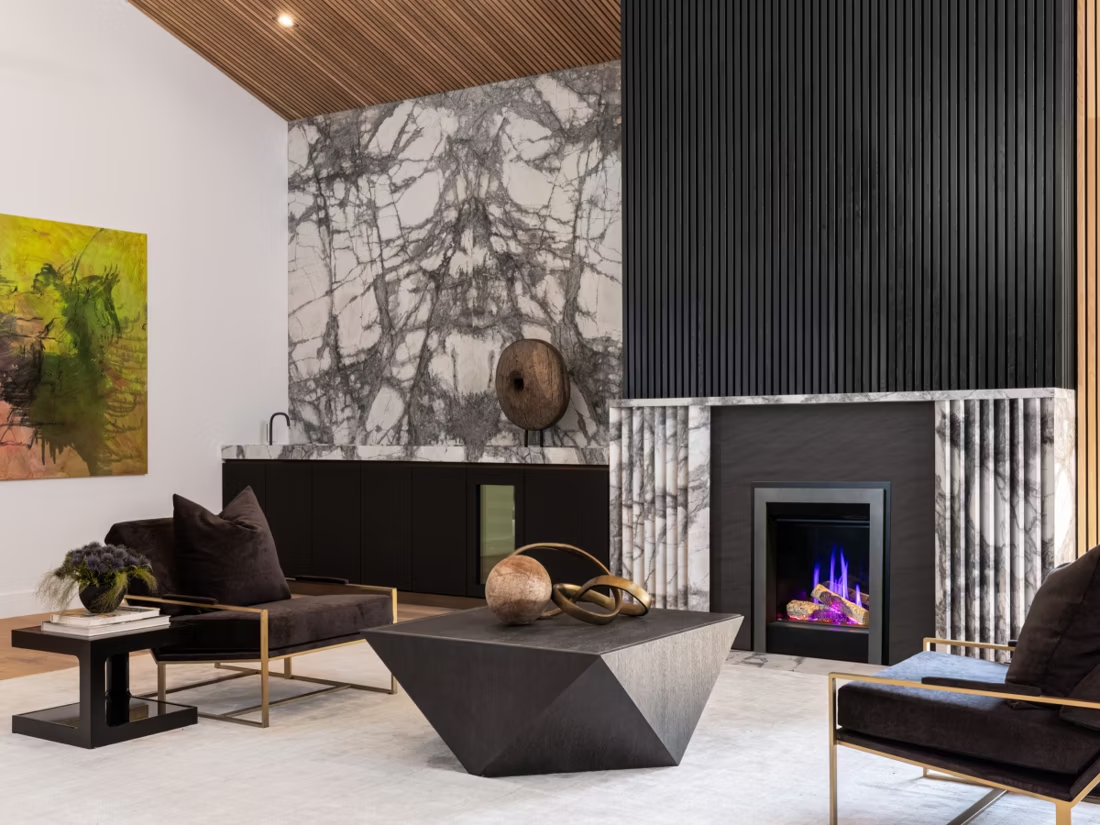
No—that's its superpower. An electric fireplace needs a wall and an outlet, period. No vent pipe, no gas line, no clearances to design around, which is why it works in bedrooms, offices, apartments, and walls where venting a gas or wood unit would be impractical or impossible. Installation is typically the simplest and least expensive of any fireplace type.
Nearby Dealers
Hearth shops serving Callander and the surrounding area. Every listing shows whether it is a WhyFire partner, a dealer we have verified as authorized for the brands we recommend, or a local business carrying hearth products. No manufacturer pays for placement. How we verify dealers →
We’ve paused dealer listings for this connection today. Enter your zip or postal code above to find dealers near you, or come back tomorrow.
Electric Service in Callander
An electric fireplace's heater draws about 1,500 watts—pennies per hour at local rates.
Hydro One
Toronto Hydro
Alectra Utilities
Get your free Project Guide & Parts List for a Callander electric fireplace.
Tell us about your room and your home's primary heat source, and we'll help you find a local dealer and send a free Project Guide & Parts List—sized for the space, with the right circuit and parts specified for your Callander project.
Find Your Fireplace →