
On-demand heat built for Caledon East's long Ontario winters.
Caledon East sits in Peel Region at 291 metres, with winter lows dipping to around -11.6°C and a heating season that stretches from October well into April. We'll help you find a trusted local dealer who knows Enbridge Gas's coverage, the venting rules, and what's actually installable in your home.
Every Project Starts From One of These Five Situations
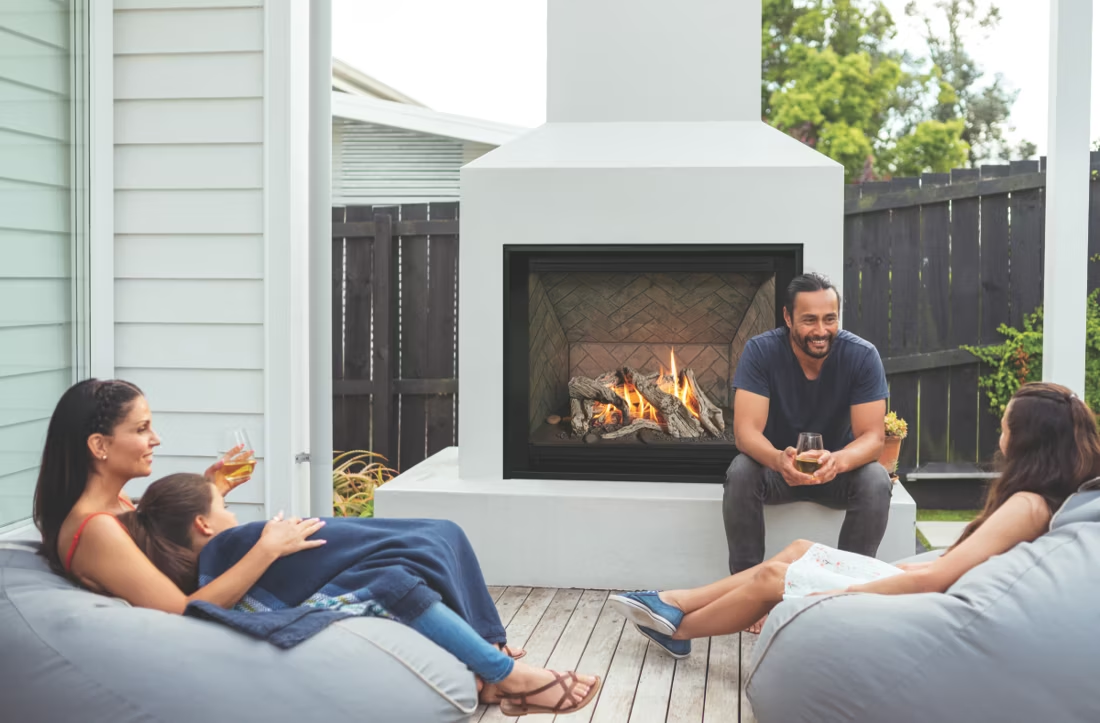
Convenience without the woodpile, right in Peel Region.
Caledon East doesn't get the brutal cold of Sudbury or Thunder Bay, but climate zone 6A here still means a real winter: an average low of -11.6°C, long stretches of sub-zero nights from November through March, and the kind of shoulder-season chill in October and April that has homeowners reaching for heat long before the furnace usually kicks on. Sugar maple, red oak, white ash, and yellow birch grow thick across this part of Peel Region and keep wood heat relevant for plenty of households, but a lot of Caledon East homeowners—especially in newer construction near the town centre—want heat that starts at the push of a button without stacking or splitting anything.
Enbridge Gas serves the built-up core of Caledon East, which makes a direct-vent gas fireplace or insert a straightforward add-on for most in-town properties: no cutting a hole for a chimney, no ash to haul out, and a flame you can turn on during a January cold snap without touching a match. Properties on the rural edges of town, including the larger estate lots and hobby farms scattered through Caledon's countryside, sometimes sit beyond Enbridge's distribution mains and run on propane instead, which any local dealer working here can size a system for just as readily.
Three steps. No salesperson until you're ready.
Tell us about your project
Your postal code, your situation, and the fuel you're leaning toward—or let the answers point you to one.
See what's actually available
The brands dealers within 100 miles genuinely carry—real options, never a catalog mirage.
Get your dealer & Project Guide
A trusted local dealer, plus the free Project Guide & Parts List that names every component of the job.
Frequently Asked Questions
How much does a gas fireplace installation cost in Caledon East?
Expect somewhere between $6,000 and $15,000 CAD, with the swing mostly coming down to whether you're dropping a direct-vent insert into an existing masonry firebox or building out a new gas fireplace from scratch. Older farmhouses and stone homes near the historic core of Caledon East, many with a working chimney already in place, tend to land toward the lower end. Newer builds in the subdivisions off Kennedy Road and Innis Lake Road, where a fresh gas line and full venting run through a wall or roof, usually land closer to the top. A TSSA-licensed gas fitter has to handle the gas connection either way, and that work is typically folded into your installer's quote.
Can I convert my existing wood fireplace to gas?
Yes, and it's a common upgrade in Caledon East's older stone and brick farmhouses, many originally built to burn sugar maple or red oak cut off the property. A gas insert with a stainless liner run through your existing chimney is the usual approach, and it typically comes in on the lower half of the $6,000-$15,000 range since the chimney chase is already built. If your old wood setup needed a WETT inspection to satisfy your insurer, converting to gas removes that requirement going forward, though your insurer will still want proof of a proper CSA B365-compliant installation.
Do I need natural gas service, or should I plan on propane?
It depends on exactly where in Caledon East you are. Enbridge Gas runs mains through the built-up part of town, so most in-town properties can tie in directly. Once you're out toward the larger lots and hobby farms on the edges of Caledon's countryside, you're often past the distribution mains, and propane with a tank on the property is the standard fallback. Either fuel works fine in the same fireplace models—your dealer just configures the orifice and regulator for whichever gas you're running.
Will a gas fireplace still work if the power goes out?
Most will, which is worth knowing given that Peel Region has seen its share of ice-storm outages over the years affecting Alectra Utilities and Hydro One service. Fireplaces with intermittent pilot ignition run their electronics off a AA battery backup that kicks in automatically. Valor units go further and skip the battery altogether—the pilot's thermocouple generates its own current, so the fireplace keeps running through a multi-day outage. Ask your dealer which ignition system is on any model you're considering if outage resilience matters to you.
What's the difference between a gas fireplace, insert, and stove?
A gas fireplace is a built-in unit framed into a wall during new construction or a renovation. A gas insert fits inside an existing masonry firebox, the common route in Caledon East's older stone farmhouses that already have a working chimney. A gas stove is freestanding on its own hearth pad, similar in footprint to a wood stove but running off a gas line or propane tank instead of split sugar maple or red oak. For most existing homes in town, an insert is the least disruptive option since it reuses what's already there.
Do I need a permit to install a gas fireplace in Caledon East?
Yes. You'll pull a building permit through the municipal building department, and the installation has to meet CSA B365 code. The gas hookup specifically needs a TSSA-licensed gas fitter, which is separate from the building permit but usually coordinated by the same installer. Most dealers who work regularly in Caledon East handle both the permit application and the final inspection as part of the job.
Vented vs. vent-free gas fireplaces—what should I know here?
Direct-vent units draw combustion air from outside and exhaust it back outside through sealed venting, and they're the standard recommendation for Caledon East's newer, tighter-built homes where indoor air exchange is already limited by design. Vent-free units are legal in Ontario within room-sizing limits, but they release combustion byproducts and moisture into the living space, which is more noticeable in a well-sealed newer build than in an older, drafty farmhouse. Most local dealers steer homeowners toward direct-vent for daily, all-winter use.
How often does a gas fireplace need servicing?
Plan on an annual check, ideally in September before the heating season really starts rather than mid-winter when technicians are booked solid. A technician checks the burner, pilot assembly, gas connections, and venting, and cleans the glass, usually a $150-$250 CAD visit. Skipping it on a unit that runs daily through Caledon East's five-plus-month heating season is how a pilot or ignition problem shows up on the coldest night of January.
Gas vs. wood—which makes more sense for a Caledon East home?
Caledon East sits in southern Ontario farm country rather than near Crown forest, so most local firewood comes from private woodlots and land-clearing rather than a Ministry of Natural Resources cutting permit; those free permits for Crown land apply mainly to the Northern Boreal and Managed Forest zones well north of here. Given that, plenty of Caledon East households still burn sugar maple, red oak, white ash, or yellow birch sourced locally, and it's genuinely cheap fuel if you have the land and time to season it. Gas wins on convenience and consistency, skips the WETT inspection some insurers require for wood appliances, and doesn't need restocking every fall. A lot of homeowners here choose gas for the main living space and keep a wood option, if they already have one, for backup.
Can a gas fireplace run on a thermostat?
Most modern gas fireplaces can—turn it on and off from the couch with a remote, or set a room temperature and let the fireplace hold the comfort zone for you. If low maintenance matters to your family, this is the feature set that makes gas the convenience pick over wood and pellet.
Why do fireplace quotes vary so much?
Because a fireplace is an iceberg—there's more behind the wall than in front of it. A low quote often covers only the unit; the full scope includes vent pipe, gas line or electrical, framing, and the tile or stone that has to come off and go back on. Make every bidder price the whole job. If a dealer can't speak to the full scope with confidence, that's your signal to keep looking.
What's the difference between an insert and a zero-clearance fireplace?
An insert is a fireplace that slides into a pre-existing wood-burning fireplace—if you don't have one, there's nothing to insert it into. A zero-clearance fireplace is built into a framed wall, which makes it the answer for remodels and new construction. Simple test: existing masonry fireplace means insert; blank or framed wall means zero-clearance.
Can I put a TV above my fireplace?
Yes—with an asterisk. Fireplaces are hot and TVs don't like heat. Either put a mantel between them to deflect rising warmth, or choose a fireplace with heat-management technology that creates a cool zone on the wall above—the wall stays around 125 degrees, barely warm, while the room still gets full heat. If you like clean lines and don't want a mantel, heat management is the answer.
Nearby Dealers
Hearth shops serving Caledon East and the surrounding area. Every listing shows whether it is a WhyFire partner, a dealer we have verified as authorized for the brands we recommend, or a local business carrying hearth products. No manufacturer pays for placement. How we verify dealers →
We’ve paused dealer listings for this connection today. Enter your zip or postal code above to find dealers near you, or come back tomorrow.
Natural Gas Service in Caledon East
Confirm service at your address before planning a gas fireplace—a quick call settles it.
Enbridge Gas
Get your free Project Guide & Parts List for a Caledon East gas fireplace.
Tell us about your home and whether you're on Enbridge Gas or propane, and we'll help you find a trusted local dealer and send a free Project Guide & Parts List with the exact vent kit and parts your project needs.
Find Your Fireplace →