
Keep Your Family Warm and Safe—No Matter What
Alexandria sits in the Stormont-Dundas-Glengarry region of Eastern Ontario, where winter lows average -16.2°C and the cold settles in for months. We'll help you find a trusted local dealer who knows the wood available here and what actually clears WETT inspection.
Every Project Starts From One of These Five Situations
Wood heat here is farm-country practical, not just nostalgic.
Alexandria and the surrounding Stormont-Dundas-Glengarry region sit in climate zone 6A, with an average winter low of -16.2°C and a heating season that stretches from October well into April, similar in length and severity to what Ottawa, just up Highway 417, deals with every year. At 84 metres of elevation on the flat Eastern Ontario plain, there's little to soften the wind coming off the St. Lawrence lowlands, and a long cold season like this is exactly what a wood stove or insert is built for as a primary or backup heat source.
This part of Eastern Ontario is dense hardwood country—sugar maple, red oak, white ash, and yellow birch are the species most local firewood dealers stack and sell, and plenty of North Glengarry Township households still burn wood cut from their own farm woodlots. If you're cutting from Crown land rather than a private lot, the Ontario Ministry of Natural Resources issues permits for the Managed Forest and Northern Boreal zones further north, generally free up to 10 cubic metres (about 4 cords) per household per year—though most SDG landowners are working private acreage, not Crown allocations. Any new installation needs a permit through the North Glengarry Township building department, has to meet the CSA B365 installation code, and—this is the one people skip and regret—a WETT inspection is commonly required before an insurer will cover a wood-burning appliance.
Firewood Cutting Permits Near Alexandria
Ontario Ministry Of Natural Resources
Three steps. No salesperson until you're ready.
Tell us about your project
Your postal code, your situation, and the fuel you're leaning toward—or let the answers point you to one.
See what's actually available
The brands dealers within 100 miles genuinely carry—real options, never a catalog mirage.
Get your dealer & Project Guide
A trusted local dealer, plus the free Project Guide & Parts List that names every component of the job.
Frequently Asked Questions
How much does a wood stove or insert installation cost in Alexandria?
Most installations here run $6,000-$12,000 CAD. Older farmhouses around North Glengarry Township that already have a working masonry chimney tend to land at the low end with a straightforward insert; homes without existing masonry, or new builds where you're running Class A pipe through a roofline from scratch, sit toward the top. Either way, budget for a WETT inspection on top of the install cost, since most home insurers in Eastern Ontario won't cover a wood appliance without one on file.
What kind of firewood burns best in the Alexandria area?
Sugar maple and red oak are the workhorses most local firewood sellers stock, and both split, season, and burn hot and steady—ideal for a long Eastern Ontario winter. White ash is also common and easier to split green, while yellow birch burns fast and bright but doesn't hold a coal bed as long, so it's better mixed in than relied on alone. Whatever species you buy, insist on wood that's been seasoned at least a year; green hardwood is a common cause of chimney creosote buildup and failed WETT inspections.
Do I need a WETT inspection for my wood stove in Alexandria?
Almost certainly, if you want your insurance to actually cover it. WETT (Wood Energy Technology Transfer) inspections aren't a government mandate on their own, but they're routinely required by home insurers across Ontario before they'll write or renew a policy on a house with a wood-burning appliance, and Eastern Ontario insurers are no exception. Combine that with the building permit through North Glengarry Township and CSA B365 compliance on the installation itself, and a reputable local dealer will typically walk you through all three as one process rather than three separate headaches.
What size wood stove do I need for a home in Alexandria?
With winter lows averaging -16.2°C and a heating season that runs a good six months, sizing on the generous side pays off. A smaller stove rated under 1,000 square feet suits a cabin or a supplemental setup in a well-insulated newer build, but the older farmhouses common around North Glengarry Township, many with higher ceilings and less insulation than current code, usually call for a stove in the 1,500 to 2,500 square foot range so it can hold a fire through the night without constant reloading. A local dealer should size it against your actual floor plan and insulation, not just square footage.
Can I cut my own firewood near Alexandria?
It depends on whether you're working private land or Crown land. Most of the Stormont-Dundas-Glengarry region is private agricultural land, so a lot of local burners simply cut from their own or a neighbour's woodlot rather than pulling a government permit. If you do want to cut on Crown land, the Ontario Ministry of Natural Resources issues permits for the Managed Forest and Northern Boreal zones—generally free up to 10 cubic metres, or about 4 cords, per household per year—but those zones sit well north of Glengarry, so it's more of an option if you're already travelling for hunting or cottage season than a local Alexandria errand.
Does it make more sense to install gas instead of wood in Alexandria?
Enbridge Gas serves Alexandria, so a direct-vent gas fireplace or insert is a real option here, typically running $6,000-$15,000 CAD installed. Gas wins on convenience—no splitting, stacking, or chimney sweeping. But wood keeps working through a power outage, which matters on the ice-storm-prone Eastern Ontario grid, and with sugar maple and ash this accessible and often free from a farm woodlot, plenty of SDG households keep a wood stove specifically as backup heat even in homes that run gas day to day.
How often should I have my chimney swept in Alexandria?
Once a year, ideally in September or early October before the first real cold snap arrives, is the standard recommendation, and it matters more here than in a milder climate, since a lot of Eastern Ontario households run their wood stove as a genuine primary or near-primary heat source through a six-month season. Homes burning several cords of maple or oak a winter should also plan a mid-season check, particularly if any of that wood wasn't fully seasoned; creosote builds up faster than most people expect once you're running a stove daily instead of occasionally.
Are there rules about wood stoves in new construction around Alexandria?
Some municipalities in this part of Eastern Ontario require certified low-emission appliances in new builds rather than allowing older or uncertified units, and the North Glengarry Township building department can confirm what applies to your specific project. In practice this isn't a hardship: every EPA/CSA-certified stove or insert sold by a reputable local dealer today already meets or beats those standards, so it mainly rules out installing a decades-old secondhand stove rather than affecting your choice of new equipment.
Wood vs. pellet—which is better for an Alexandria home?
Wood has the edge on raw fuel cost when you've got access to a farm woodlot or a local maple and ash supplier, and it keeps running without electricity—a real consideration given how ice storms can knock out power across the Stormont-Dundas-Glengarry region for days at a time. Pellet stoves, using regional brands like Lacwood or Energex at roughly $400-$575 a tonne, are more hands-off day to day and burn cleaner, but the auger and blower need electricity, so they go dark in the same outage a wood stove would ride through. A lot of households here land on wood for exactly that resilience.
Why do fireplace quotes vary so much?
Because a fireplace is an iceberg—there's more behind the wall than in front of it. A low quote often covers only the unit; the full scope includes vent pipe, gas line or electrical, framing, and the tile or stone that has to come off and go back on. Make every bidder price the whole job. If a dealer can't speak to the full scope with confidence, that's your signal to keep looking.
Louvered or clean face—which fireplace front is better?
Louvered fronts have grill work above and below the glass for airflow, move heat a little better with a fan, and suit traditional mantels. Clean face designs drop the louvers entirely so finish work runs to the fire's edge—they fit both modern and traditional rooms. When we did our own home we chose clean face: a big viewing area beat a little extra airflow. It depends on your room, not on a rulebook.
Why is a fireplace insert so efficient?
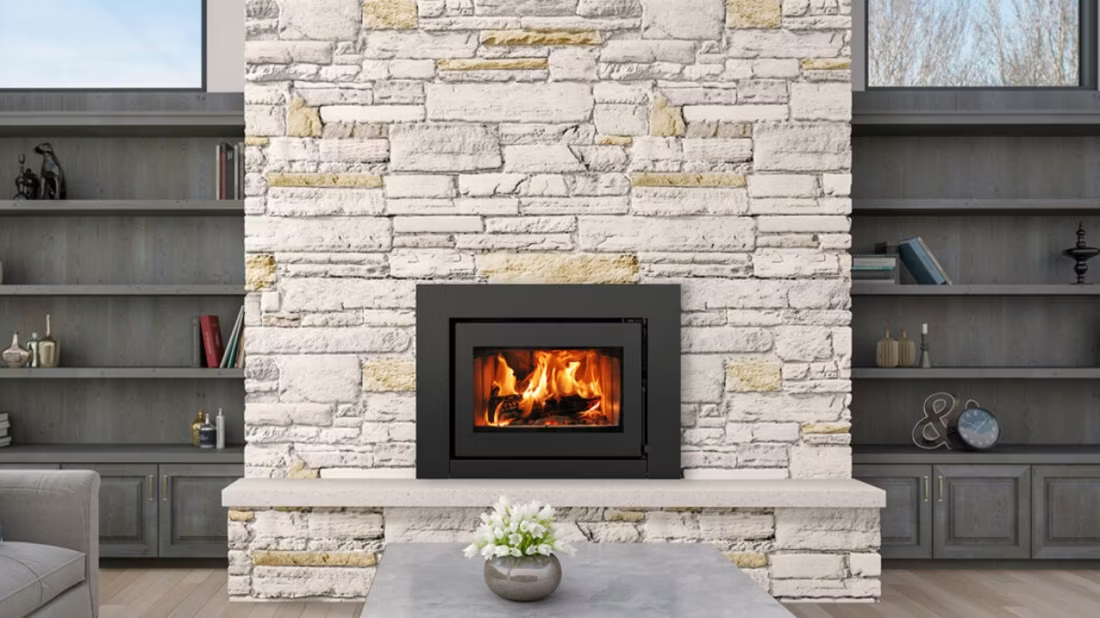
An insert does two things: it seals the chimney completely, so you stop losing air you already paid to heat, and it radiates warmth into the room through the firebox and glass. Most add a heat-exchange fan that pulls cool room air underneath, wraps it around the hot firebox, and pushes it back out warm. Your home is more efficient before you've even lit the first fire.
Why won't my new wood stove get going like my old one?
New wood stoves are 70%+ efficient, so far less heat goes up the flue—which also means less draft to get a fire established. The rule: build a genuinely hot fire for about 45 minutes before you choke it down. Skip that and you get smoke in the room, creosote in the chimney, and a fire that never takes off. Most performance complaints trace straight back to this.
Nearby Dealers
Hearth shops serving Alexandria and the surrounding area. Every listing shows whether it is a WhyFire partner, a dealer we have verified as authorized for the brands we recommend, or a local business carrying hearth products. No manufacturer pays for placement. How we verify dealers →
Entretien Steve Clark Inc
Walker Climate Care
McKay Mechanical Inc
Emard Lumber
Cornwall Concrete Products Ltd
Max Oxygene Pur
The Home Zone
Summerhaven Pool, Spa & Hearth
Rb Heating ClimateCare
Get your Alexandria wood heat project mapped out.
Tell us about your home and we'll help you find a trusted local dealer and send a free Project Guide & Parts List—sized for Eastern Ontario winters, with the vent kit and parts specified, and the WETT and permit steps laid out before you start.
Find Your Fireplace →