
Warm your home the Seminole County way, whatever fuel you choose.
Wood, gas, pellet, and electric fireplace resources for every town in Seminole County—from Seminole and Wewoka out to Konawa, Sasakwa, and Cromwell. Find the right unit and connect with a trusted local hearth retailer.
Every Project Starts From One of These Five Situations
Mixed-humid winters and oak-hickory country in Seminole County, Oklahoma.
Seminole County sits in Oklahoma's climate zone 3A, where winters are shorter and milder than the northern plains—average lows around 26°F and a winter heating season roughly a third as demanding as a place like Bismarck, ND. But mild doesn't mean mild-mannered: this part of the state gets periodic ice storms and hard cold snaps that can knock out power for days, which is part of why wood heat still matters here. The rolling oak-hickory timber that covers much of the county—plus mesquite from the pastureland to the west—has fueled woodstoves and fireplaces on rural properties for generations, often cut and split on the same land the house sits on.
What you'll find on this hub: hearth retailers, service technicians, and fuel suppliers serving every community in the county, from Seminole and county-seat Wewoka out to Konawa, Sasakwa, Cromwell, Bowlegs, and Mission. Pick your fuel below to drill into specifics—local dealers, installation costs, recommended units, and the resources that fit your project. Whether you're heating a farmhouse outside Konawa or a townhome in Seminole proper, this is the starting point.
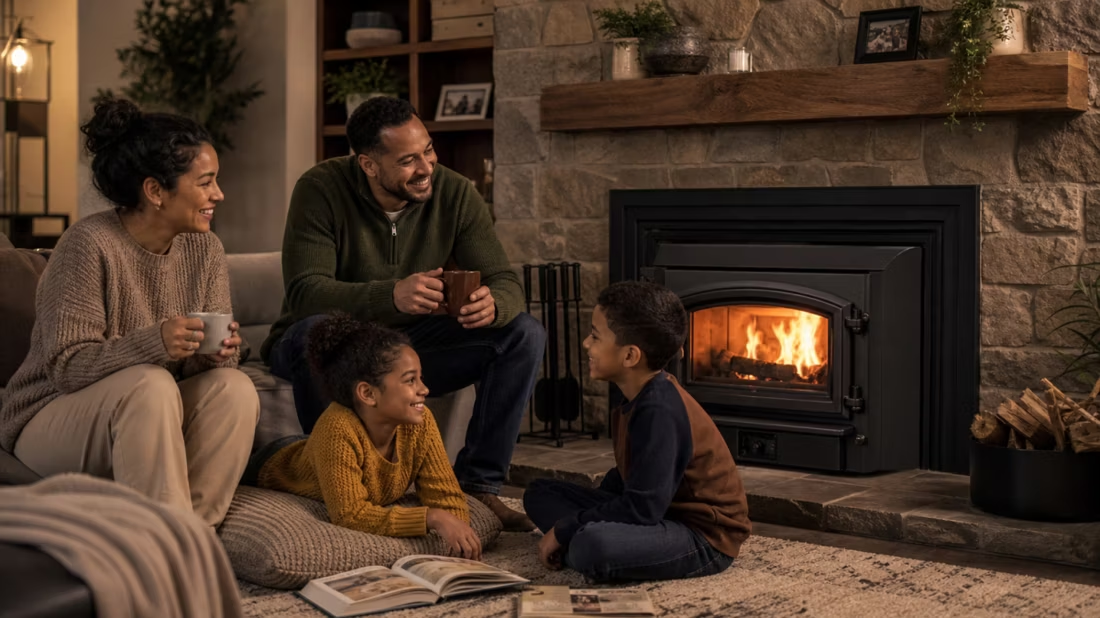
Four fuels. One honest answer for Seminole County.
Three steps. No salesperson until you're ready.
Tell us about your project
Your zip code, your situation, and the fuel you're leaning toward—or let the answers point you to one.
See what's actually available
The brands dealers within 100 miles genuinely carry—real options, never a catalog mirage.
Get your dealer & Project Guide
A trusted local dealer, plus the free Project Guide & Parts List that names every component of the job.
Frequently Asked Questions
Which fuel works best in Seminole County?
It depends on the home and the property. Wood is a strong fit for the rural parts of the county—oak and hickory from the local timber, plus mesquite off the pastureland to the west, are the traditional fuel and stay useful as backup heat during the ice storms that occasionally knock out power here. Gas is the convenience pick for in-town homes in Seminole and Wewoka with natural gas service; rural properties more often run on propane tanks instead. Pellet is a middle-ground option—less labor than splitting wood, with regional supply from brands like Lignetics and Indeck Energy Services keeping it practical to source. Electric is genuinely viable as supplemental or even primary heat in well-insulated homes here, since Seminole County's winter heating needs are a fraction of what colder states deal with. Most households end up mixing fuels—wood or pellet for the coldest stretches, gas or electric for everyday convenience.
Do I need a permit to install a fireplace in Seminole County?
Usually, yes, for anything beyond a plug-and-play electric unit. New wood stoves, wood inserts, gas fireplaces, gas inserts, and pellet stoves typically require a building permit, and gas work also needs a licensed gas-fitter for the line connection. Within the city limits of Seminole, Wewoka, or Konawa, permits go through the local city building department; in unincorporated parts of the county, the Seminole County building office handles it. Wood-burning appliances sold new must meet current EPA 2020 NSPS emissions standards regardless of jurisdiction. Electric fireplaces are generally permit-exempt unless they're hardwired built-ins that require new circuits. Most local hearth retailers pull the permit as part of the installation, so it's rarely something a homeowner has to manage directly.
Are there air quality restrictions on wood burning in Seminole County?
No—Seminole County has no non-attainment designation and no winter wood-smoke advisories like some western counties deal with. The restrictions that do come up locally are outdoor burn bans issued by Oklahoma Forestry Services during dry, high-wildfire-risk stretches, which cover brush and debris burning, not indoor wood stoves or fireplaces. New wood-burning appliances still have to meet EPA 2020 NSPS standards at the point of sale, but that's a national requirement, not a county-specific restriction. In practice, wood heat in Seminole County is largely unregulated compared to areas with inversion or non-attainment concerns.
Can one local hearth retailer handle all four fuel types?
Some do, particularly the larger dealers based in Seminole and Wewoka that serve the whole county—carrying wood, gas, pellet, and electric under one roof so you can compare fuels side by side and see working displays before deciding. Smaller shops and rural suppliers tend to specialize—a firewood or propane supplier, for instance, isn't the same as a hearth retailer who handles installation and permitting. If you're not sure yet which fuel fits your home, a multi-fuel dealer serving the Seminole–Wewoka corridor is generally the easiest place to start comparing trade-offs in person.
How does service work in rural areas of Seminole County?
Most chimney sweeps and gas/pellet technicians serving the county are based out of Seminole or Wewoka and travel out to Konawa, Sasakwa, Cromwell, Bowlegs, and Mission for appointments—expect a modest travel fee for the smaller, more spread-out communities. Fall is the easiest window to book annual service before the first hard cold snap; waiting until an ice storm knocks out power and you need your wood stove working is a much harder call to get scheduled quickly. If your property is off the main roads, it's worth asking a tech directly about their service radius before booking.
What's the typical cost range for fireplace installation across all fuel types in Seminole County?
Costs run lower here than in many parts of the country, reflecting both the regional labor market and Seminole County's milder heating demand. Wood stove or insert installation: roughly $3,500–$7,500 for a typical install, more if new chimney work is needed. Gas fireplace, insert, or stove: roughly $3,500–$8,500, with cost depending heavily on whether a gas line already reaches the install site or needs to be run. Pellet stove or insert: roughly $3,500–$6,500 for most installs. Electric fireplace: $200–$2,500 for the unit itself, plus $300–$1,000 in labor for anything beyond a simple plug-in, such as a built-in or hardwired installation. Exact numbers depend on your home and the dealer—the county + fuel pages above break this down further.
What is an in-home preview and do I need one?
It's a visit where a hearth professional measures your space, confirms the model you picked actually works in your home, and walks the specs—framing, gas line, venting, finish work—before anything is ordered. Some details you just can't know until you see the house. Never make a down payment without one; it's the single most-skipped step that burns buyers.
Can I install a fireplace myself?
If you're putting a fire in your house on purpose, it's best to work with an expert. Unless you're genuinely experienced in framing, gas line, vent pipe, and the national code on clearances to combustibles, have a professional do it—and ideally the same company that sells you the fireplace, so warranty, service, and liability all live under one roof.
Can a fireplace actually lower my heating bill?
Yes—by creating a comfort zone. A furnace heats every square foot of the house just to warm the one room you're in; a gas fireplace on low burns roughly a sixth of the gas a typical furnace does. Set the furnace around 55–60 degrees as a baseline, then heat the rooms your family actually uses. Families who heat this way commonly save $20–$60 a month.
I know I want a fireplace—where do I actually start?
Do two things today: snap a photo of the wall or fireplace you want to transform, and take a tape measure to the space—width, height, depth. Those two artifacts answer most of a hearth professional's first questions. Then settle fuel (wood, gas, pellet, or electric) and set a realistic budget: $3,900–$5,500 covers fireplace, vent, and basic install for most homes.
Find your fireplace fit in Seminole County.
Tell us about your project and we'll match you with a trusted local dealer and send you a free Project Guide & Parts List—the exact parts, vent kit, and recommended installer for your fuel and your home in Seminole County.
Find Your Fireplace →