
Find your fireplace across Pawnee County.
Wood, gas, pellet, and electric fireplace resources for the whole county—from the Cross Timbers oak-hickory woodlands around Pawnee and Cleveland out to the ranchland along the Arkansas and Cimarron rivers. Pick a fuel and get matched with a local dealer who actually installs it here.
Every Project Starts From One of These Five Situations
Cross Timbers woodland, 3,435 heating degree days, and a heating season that's real but mild.
Pawnee County sits in Oklahoma's Cross Timbers belt, a patchwork of post oak and blackjack oak woodland shading into open prairie between the Arkansas and Cimarron rivers. With about 6,584 residents spread across Pawnee (the county seat), Cleveland, Ralston, Terlton, Jennings, Skedee, and Hallett, this is a rural county where a lot of households burn wood cut from their own land or a neighbor's. Average winter lows around 28°F and 3,435 heating degree days put the county in the same moderate heating-load range as Tulsa or Springfield, Missouri—real cold snaps, but nothing like the sustained deep freezes further north. Oak and hickory from the Cross Timbers make up most of what gets burned, with mesquite common on cleared pastureland where it's encroached over the decades.
There's no non-attainment designation or winter inversion problem here, so wood-stove operation isn't restricted the way it is in some Western basins—the burn bans Pawnee County does occasionally issue are aimed at outdoor and agricultural burning during dry, high-wind stretches, not indoor stoves or inserts. That leaves the fuel decision mostly about convenience and budget: wood and pellet stoves (Lignetics and Indeck Energy Services both distribute pellets into this part of the state) suit homes that want backup heat or lower fuel bills, while gas and propane cover whole-house convenience in town and on the ranch alike. This hub rolls up hearth retailers, service techs, and fuel suppliers across the whole county, from Pawnee and Cleveland out to the smaller communities along Highway 64 and Highway 18. Pick your fuel below for local dealers, install costs, and unit recommendations specific to your town.
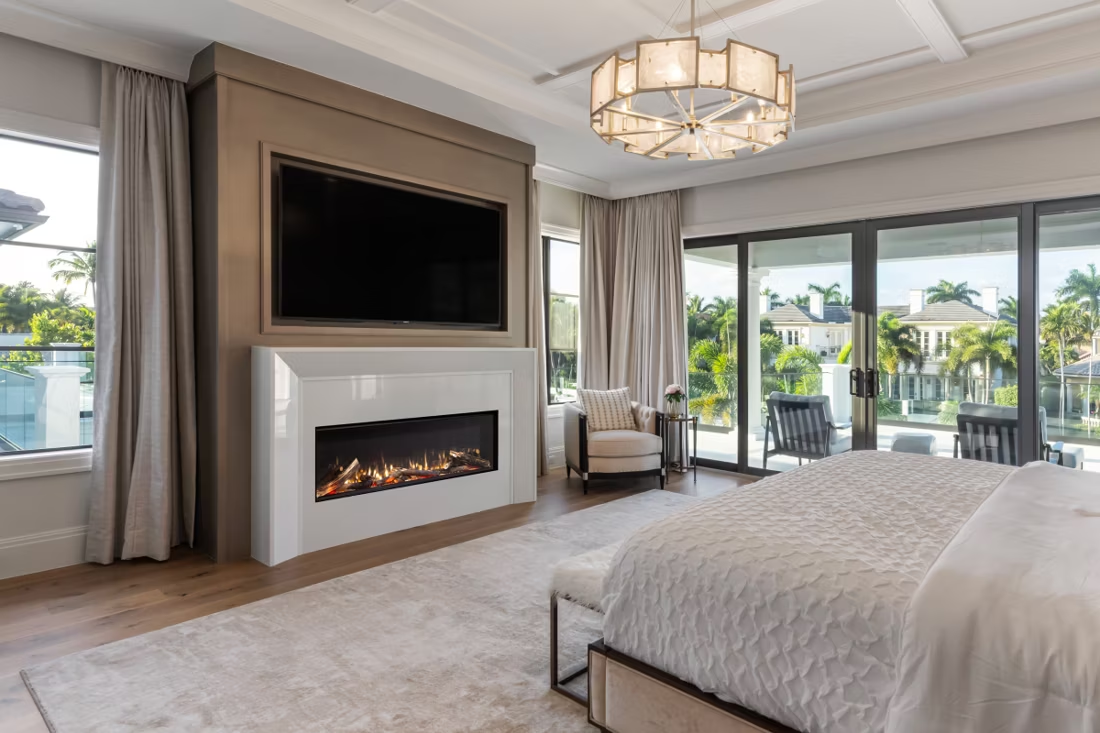
Four fuels. One honest answer for Pawnee County.
Three steps. No salesperson until you're ready.
Tell us about your project
Your zip code, your situation, and the fuel you're leaning toward—or let the answers point you to one.
See what's actually available
The brands dealers within 100 miles genuinely carry—real options, never a catalog mirage.
Get your dealer & Project Guide
A trusted local dealer, plus the free Project Guide & Parts List that names every component of the job.
Frequently Asked Questions
Which fireplace fuel makes the most sense in Pawnee County?
All four fuels work here, and the choice usually comes down to convenience rather than climate necessity—3,435 heating degree days and winter lows averaging 28°F is a real but moderate heating load, closer to Tulsa's than to the northern Plains. Wood is the traditional choice in this part of the Cross Timbers; oak and hickory are the dominant species, often cut from a family's own acreage, and a mid-size stove handles most cold snaps without needing to run around the clock. Gas and propane cover whole-house convenience for homes in town or on the ranch where a wood stove isn't practical day to day. Pellet stoves have a growing following for their easier fuel handling—Lignetics and Indeck Energy Services both distribute into this part of Oklahoma—and they're a good fit for anyone who wants wood-stove ambiance without splitting and stacking cordwood. Electric fireplaces are supplemental almost everywhere in the county; they're not built to be a primary heat source, but they're a low-hassle way to add warmth to a bedroom or den.
Do I need a permit to install a wood stove or fireplace in Pawnee County?
It depends on where in the county your home sits. Pawnee County doesn't enforce a countywide building code in unincorporated areas, so a lot of rural installations move forward without a formal county permit as long as the unit and venting meet manufacturer specs and basic fire-code clearances. Inside the towns—Pawnee, Cleveland, Ralston, and the others—permitting typically runs through that town's own building department, and gas installations always need a licensed gas fitter for the line connection regardless of location. Electric fireplaces usually only need a permit if you're adding a new circuit for a hardwired built-in unit. The retailers we match homeowners with know which of these rules apply to their specific address and usually handle the paperwork as part of the install.
Are there burn restrictions on wood stoves in Pawnee County?
Not for indoor use. Pawnee County has no non-attainment designation and no winter inversion problem, so there's nothing like the curtailment-day system you'll find in some Western basins—a stove can run whenever you need it. The burn bans the county does occasionally issue are tied to drought and high-wind conditions and apply to outdoor burning—brush piles, field burns, trash burning—not to indoor stoves, inserts, or fireplaces. It's still worth choosing an EPA-certified stove for efficiency and lower fuel use, but you won't run into an air-quality restriction that limits when you can burn.
Can I find a retailer that carries more than one fuel type?
Yes, and it's common in a county this size. Most Pawnee County hearth retailers stock at least two fuel types rather than specializing in one, since a lot of local households end up combining wood or pellet as a supplemental or primary heat source with gas or propane for the rest of the house. A multi-fuel dealer lets you see wood, gas, and pellet units side by side and talk through what actually fits your home, your acreage, and your budget—rather than assuming everyone wants the same setup. We match you with the retailer whose lineup and service area fit your specific project.
How does installation and service work if I'm outside Pawnee or Cleveland?
Most hearth retailers and service techs in the county are based in or near Pawnee and Cleveland, the two largest towns, but they regularly travel out to Ralston, Jennings, Terlton, Skedee, and Hallett for installs and service calls. Expect a small trip fee for the more remote ranch addresses, and plan ahead—scheduling a chimney sweep or gas inspection in late summer, before the first real cold front moves through in October or November, is easier than waiting until everyone else is calling in December. If your property is well off the highway, it's worth confirming with your installer how far their crew travels and whether that's built into the quote.
What does a fireplace installation typically cost in Pawnee County?
Costs run similar to the rest of rural Oklahoma, with the fuel type driving most of the variation. Wood stove or insert installs typically run $3,500–$7,500, depending on whether new chimney or venting work is needed. Gas fireplaces, inserts, and stoves generally run $4,000–$9,000, more if a new gas line has to be run out to the hearth. Pellet stove or insert installs usually land around $4,000–$6,500. Electric fireplaces are the least expensive option—$200–$2,500 for the unit, plus $300–$1,000 in labor for anything beyond a simple plug-in placement. The county + fuel pages above break these numbers down further with local retailer pricing.
Does a fireplace add value to my home?
On average, a fireplace adds back to the home about the same amount you spent installing it. Add the monthly savings from heating the rooms you actually use instead of the whole house—often hundreds of dollars a year—and the value case is strong before you even count what a fire does for how your family uses the room.
What is an in-home preview and do I need one?
It's a visit where a hearth professional measures your space, confirms the model you picked actually works in your home, and walks the specs—framing, gas line, venting, finish work—before anything is ordered. Some details you just can't know until you see the house. Never make a down payment without one; it's the single most-skipped step that burns buyers.
Can I install a fireplace myself?
If you're putting a fire in your house on purpose, it's best to work with an expert. Unless you're genuinely experienced in framing, gas line, vent pipe, and the national code on clearances to combustibles, have a professional do it—and ideally the same company that sells you the fireplace, so warranty, service, and liability all live under one roof.
Should the dealer who sells my fireplace also install it?
Ideally, yes. A fireplace project involves vent pipe, gas line, electrical, and often tile or stone. Hire three or four separate trades and you own the liability and the game of telephone between them. One company selling and installing means one accountable party, start to finish—ask about factory training, on-time completion records, and what happens if an inspection fails.
Stove and Fireplace Dealers in Pawnee County
Listings include WhyFire partner dealers, dealers we have verified as authorized for the brands we recommend, and established local businesses that carry hearth products. Every listing shows which one it is. The ones marked Preferred run on WhyFire's software, so they can show you real pricing and book your appointment right here. No manufacturer pays for placement. How we verify dealers →
Camco Home Improvement, Inc.
Rick's House Of Fire
Get matched with a local Pawnee County dealer.
Pick your fuel below and we'll put together a free Project Guide & Parts List—the right unit, the vent kit it needs, and the local dealer we recommend for your project.
Find Your Fireplace →