
Find the right hearth for your Harper County home.
Wood, gas, pellet, and electric fireplace resources for Buffalo, Laverne, May, and the ranch country in between. Find the right unit for your fuel and connect with a trusted local hearth retailer.
Every Project Starts From One of These Five Situations
Panhandle heating on the Oklahoma-Kansas line.
Harper County sits in Oklahoma's northwest panhandle country, a stretch of rolling shortgrass prairie and Cimarron River bottomland with fewer than 2,400 residents spread across roughly 1,040 square miles. Climate zone 3A means winters are moderate compared to the northern plains—nothing like Bismarck ND or Fargo ND—but cold fronts still drop temperatures fast, and wind across the open plains makes heat loss a real concern for older farmhouses and ranch homes. Oak, hickory, and mesquite from the river bottoms and shelterbelts have long supplied local wood stoves, and with no air quality restrictions on the books, wood burning here is straightforward.
What you'll find on this hub: hearth retailers, service technicians, and fuel suppliers covering the whole county—Buffalo as the county seat, Laverne to the west, May, and the scattered ranch properties along the Cimarron. Pick your fuel below to see local dealers, typical installation costs, and recommended units for this climate. Whether you're heating a century-old farmhouse or a newer build outside Buffalo, this is the place to start.
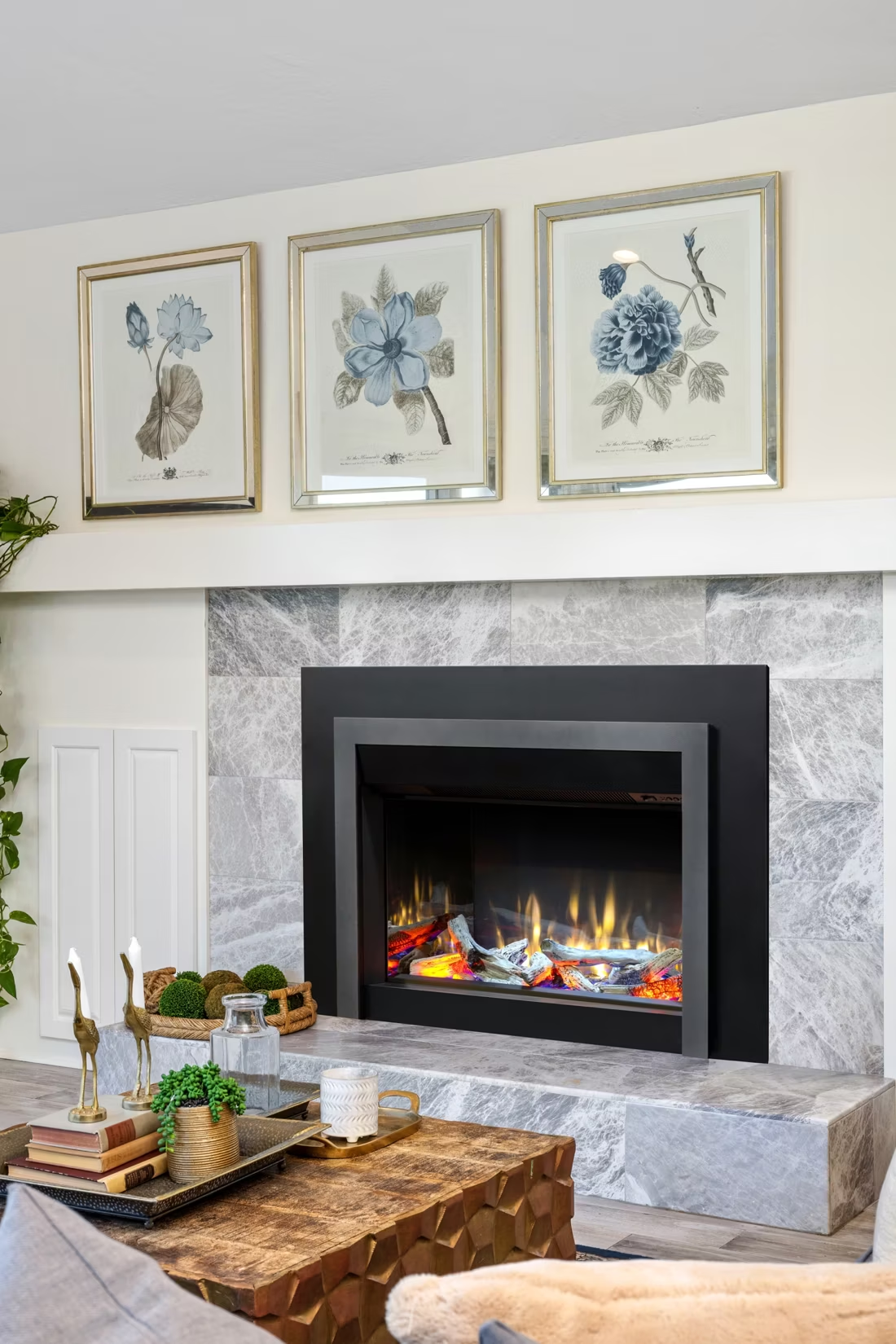
Four fuels. One honest answer for Harper County.
Three steps. No salesperson until you're ready.
Tell us about your project
Your zip code, your situation, and the fuel you're leaning toward—or let the answers point you to one.
See what's actually available
The brands dealers within 100 miles genuinely carry—real options, never a catalog mirage.
Get your dealer & Project Guide
A trusted local dealer, plus the free Project Guide & Parts List that names every component of the job.
Frequently Asked Questions
Which fuel works best in Harper County?
It depends on the home and the household. Wood is a strong fit here—oak, hickory, and mesquite are locally available from river-bottom and shelterbelt harvesting, burn hot and long, and give ranch households a heat source that doesn't depend on the grid during ice storms or line outages. Gas is the convenience option for homes with propane service (most of rural Harper County isn't on natural gas lines), offering instant heat with none of the wood-hauling labor. Pellet stoves are a workable middle ground—brands like Lignetics and Indeck Energy Services are regionally available, though delivery distances mean stocking up in fall makes sense. Electric is mostly supplemental here—fine for a bedroom or sunroom, but not built for the wind-driven cold fronts that sweep across the plains in January. Many Harper County homes lean on wood or propane as primary heat with electric for secondary rooms.
Do I need a permit to install a fireplace in Harper County?
Generally yes for wood, gas, and pellet installations, though Harper County's rural character means enforcement and paperwork are lighter than in a metro county. New wood stoves and inserts should meet current EPA emissions standards, and gas installations require a licensed propane or gas-fitter for the line connection. Electrical work for built-in electric fireplaces may need a permit if it involves new circuits. Because Harper County has no incorporated city with its own large building department outside Buffalo, most permitting runs through the county. Local retailers who install here are familiar with the process and typically handle it as part of the job—worth asking upfront when you get a quote.
Are there air quality restrictions on wood burning in Harper County?
No. Harper County has no designated air quality non-attainment status and no winter burn bans or curtailment periods—the open, windy panhandle terrain doesn't produce the temperature inversions that trap smoke the way basin geography does in places like Klamath Falls, OR. Wood burning here is largely a matter of personal preference and appliance choice rather than regulatory restriction. That said, an EPA-certified stove will still burn cleaner and more efficiently than an old pre-1988 unit, so it's worth factoring into any replacement decision even without a mandate.
Can one local hearth retailer handle all four fuel types?
Given Harper County's population of under 2,400, it's more common to find one or two regional retailers—often based in a larger panhandle town like Woodward—carrying two or three fuel types rather than a dedicated multi-fuel showroom in Buffalo or Laverne itself. Wood and propane/gas coverage tend to be the most consistent; pellet stove selection may be more limited and often requires special order. Electric fireplaces are typically the easiest to source since they don't require venting expertise. If you want to compare fuels side by side, ask a retailer which units they stock versus which they can special-order—for a county this size, special ordering is common and not a red flag.
How does service work in a rural county like Harper?
Most technicians serving Harper County are based outside the county—in Woodward or across the state line near Liberal, KS—and travel in for scheduled work. Expect a trip charge for the drive, and expect to book a few weeks out rather than same-week, especially heading into the fall service rush. For chimney sweeping, an annual fall appointment before the first cold front makes sense given how much oak and hickory get burned locally. For gas units, an annual inspection catches pilot and thermocouple issues before the coldest stretch of winter. Given the distances involved, it's worth asking a technician if they can bundle your service call with a neighbor's to reduce the trip fee.
What's the typical cost range for fireplace installation across all fuel types in Harper County?
Costs run in line with rural plains norms, sometimes with a modest delivery/travel premium built in given the distances installers cover. Wood stove or insert installation: roughly $4,000–$8,500 for a typical job, higher for new chimney construction. Gas fireplace, insert, or stove: roughly $4,000–$9,500, largely dependent on propane line work since most of the county isn't on natural gas. Pellet stove or insert: roughly $4,200–$7,000, with lead time factored in for special-order units. Electric fireplace: $200–$2,800 for the unit itself, plus $300–$1,000 in labor for anything beyond a simple plug-in install. See the county + fuel pages above for more detail tied to local retailer pricing.
What is an in-home preview and do I need one?
It's a visit where a hearth professional measures your space, confirms the model you picked actually works in your home, and walks the specs—framing, gas line, venting, finish work—before anything is ordered. Some details you just can't know until you see the house. Never make a down payment without one; it's the single most-skipped step that burns buyers.
Does a fireplace add value to my home?
On average, a fireplace adds back to the home about the same amount you spent installing it. Add the monthly savings from heating the rooms you actually use instead of the whole house—often hundreds of dollars a year—and the value case is strong before you even count what a fire does for how your family uses the room.
Should the dealer who sells my fireplace also install it?
Ideally, yes. A fireplace project involves vent pipe, gas line, electrical, and often tile or stone. Hire three or four separate trades and you own the liability and the game of telephone between them. One company selling and installing means one accountable party, start to finish—ask about factory training, on-time completion records, and what happens if an inspection fails.
Wood, gas, pellet, or electric—how do I choose?
Match the fuel to your life, not the other way around. Wood: lowest fuel cost and total power-outage independence, but you're hauling and stacking. Gas: press a button, set a thermostat, no maintenance to speak of. Pellet: wood economics with automatic feeding, in exchange for weekly cleaning and a need for electricity. Electric: plugs in anywhere with honest supplemental heat. Nobody regrets the fuel that fits how they actually live.
Stove and Fireplace Dealers in Harper County
Listings include WhyFire partner dealers, dealers we have verified as authorized for the brands we recommend, and established local businesses that carry hearth products. Every listing shows which one it is. The ones marked Preferred run on WhyFire's software, so they can show you real pricing and book your appointment right here. No manufacturer pays for placement. How we verify dealers →
Home Lumber & Supply
Find your fireplace project in Harper County.
Pick your fuel below and we'll match you with a trusted local dealer and send a free Project Guide & Parts List—the plan, parts, and vent kit for your specific home.
Find Your Fireplace →