
Find the Right Hearth for Your Beaver County Home.
Wood, gas, pellet, and electric fireplace options for Beaver, Forgan, Turpin, and every ranch and farmstead across the Oklahoma Panhandle. We'll match you with a real local dealer, not a catalog.
Every Project Starts From One of These Five Situations
Panhandle winters, hardwood heritage, and wide-open plains.
Beaver County sits in the far western reach of the Oklahoma Panhandle, in climate zone 4B with a real winter—moderately cold, similar in heating need to places that see averages in the mid-4,000s on the seasonal cold-degree scale—though nowhere near what places like Bismarck, ND or Fargo, ND see, with average lows near 19°F rather than well below zero. Wind is the bigger factor out here than raw cold: exposed ranch houses and farmsteads along the Beaver River lose heat fast in a 30-mph Panhandle gust, which is part of why wood stoves and well-sealed gas units both have a long history here. Oak and hickory come off river-bottom stands, and mesquite—cleared from pastureland as brush control—burns hot and dense, a fuel source that doubles as land management for a lot of local ranchers.
With a county population under 2,600 spread across roughly 1,800 square miles, this isn't a market with fireplace showrooms on every corner. What you'll find on this hub are the retailers, technicians, and fuel suppliers who actually cover Beaver County—some based in Beaver itself, others traveling in from larger Panhandle towns like Guymon or Woodward. Pick your fuel below for installation costs, recommended units, and dealers who service your specific community, whether that's in town or twenty miles down a section-line road.
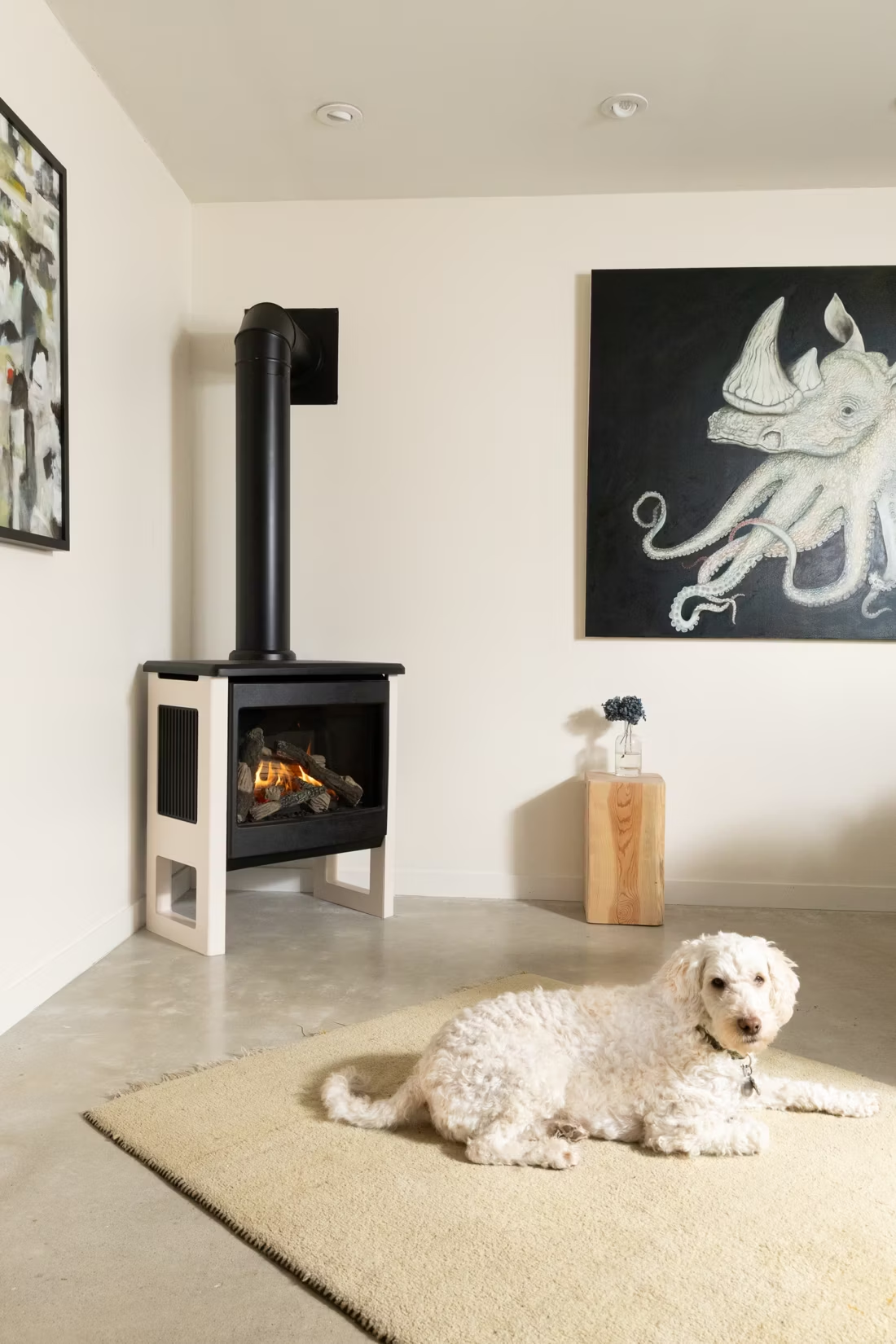
Four fuels. One honest answer for Beaver County.
Three steps. No salesperson until you're ready.
Tell us about your project
Your zip code, your situation, and the fuel you're leaning toward—or let the answers point you to one.
See what's actually available
The brands dealers within 100 miles genuinely carry—real options, never a catalog mirage.
Get your dealer & Project Guide
A trusted local dealer, plus the free Project Guide & Parts List that names every component of the job.
Frequently Asked Questions
Which fuel works best in Beaver County?
It comes down to your property and how remote it is. Wood is the traditional choice for ranch houses out here—oak and hickory from river-bottom stands and mesquite cleared off pastureland are both plentiful and cheap if you're cutting your own, and a wood stove keeps working when a Panhandle windstorm knocks out power. Gas is the convenience pick for homes with propane tanks or natural gas service already run to the property—no wood hauling, instant heat during a cold front. Pellet stoves are a solid middle ground, especially with Lignetics and Indeck Energy Services both distributing into this region, though you'll want to confirm a local supplier keeps stock rather than relying on a single delivery. Electric fireplaces work well as supplemental heat in a bedroom or den but aren't built to be the primary heat source through a winter with 19°F average lows. Most Beaver County households we've matched end up with wood or propane gas as primary heat and something smaller—pellet or electric—for a secondary room.
Do I need a permit to install a fireplace in Beaver County?
In most cases, yes, particularly for anything involving new venting, a chimney, or a gas line—those go through the county building department based in the town of Beaver. If you're inside the city limits of Beaver, Forgan, or Turpin, check with the local town office first, since some municipal permitting runs separately from the county. Gas fireplace or insert installs typically require a licensed gas-fitter for the line connection regardless of which office issues the permit. Electric fireplace installs usually skip the permit process unless you're hardwiring a built-in unit into a new circuit. Most dealers who work this county regularly—including the Guymon- and Woodward-based ones—handle the permit paperwork themselves as part of the install, which is worth asking about up front given the driving distances involved.
Are there air quality restrictions on wood burning in Beaver County?
No. Beaver County has no non-attainment status, no winter inversion pattern, and no burn-ban history like you'd find in a basin or valley community—the flat, wind-exposed Panhandle terrain disperses wood smoke quickly rather than trapping it. That said, EPA 2020 NSPS certification still applies to any new wood stove or insert you install, regardless of local air quality conditions, so a certified unit is still the standard your dealer will spec.
Can one local hearth retailer handle all four fuel types in Beaver County?
Given the county's population of roughly 2,600, there isn't a dedicated multi-fuel showroom sitting inside Beaver County itself—most homeowners here work with retailers based in Guymon or Woodward who carry wood, gas, pellet, and sometimes electric units and make the drive into the county for installs. That's actually an advantage if you're cross-shopping fuels: those larger-market dealers tend to stock working displays of more than one fuel type. If you're near the county line, it's worth checking dealers on both sides—coverage areas often extend well past county borders out here.
How does service work in rural parts of Beaver County?
Almost every service call in Beaver County is a rural call—there's no dense town center generating enough volume to keep a technician local full-time. Expect techs to travel from Guymon, Woodward, or occasionally further, and expect a trip fee worked into rural service calls, especially for one-off appointments outside the fall service season. Scheduling your annual chimney sweep or gas inspection in September or October, before the first hard cold front, gets you on a route the technician is already running rather than a special trip. If you're on wood heat as backup for a gas or pellet primary system, keep it stocked and ready—Panhandle ice storms can take down power lines for days, and a wood stove is often the only heat source that keeps working through it.
What's the typical cost range for fireplace installation across all fuel types in Beaver County?
Wood stove or insert installation runs roughly $4,000–$8,500 for a typical setup, more if new chimney chase construction is involved. Gas fireplace, insert, or stove installs run $4,000–$10,000 depending on whether propane line work or a new gas connection is needed—homes already on propane service tend to land on the lower end. Pellet stove or insert installation typically runs $4,000–$7,000. Electric fireplace units range from $200–$3,000 for the unit itself, plus $400–$1,000 in labor for anything beyond a plug-and-play install. Rural trip charges from Guymon- or Woodward-based dealers can add to any of these depending on how far out your property sits—worth asking about upfront when you get matched with a dealer.
How much should I budget for a fireplace?
For an average home—covering the fireplace, the vent pipe, and basic installation—a budget between $3,900 and $5,500 gives you a lot of options across wood, gas, and pellet. By the time you add finish work, gas line, and electrical, the average complete installation lands between $5,000 and $12,000 all-in. In a remodel or new build, a good rule is to put about 2.5% of the total project cost toward the fireplace.
Wood, gas, pellet, or electric—how do I choose?
Match the fuel to your life, not the other way around. Wood: lowest fuel cost and total power-outage independence, but you're hauling and stacking. Gas: press a button, set a thermostat, no maintenance to speak of. Pellet: wood economics with automatic feeding, in exchange for weekly cleaning and a need for electricity. Electric: plugs in anywhere with honest supplemental heat. Nobody regrets the fuel that fits how they actually live.
What is an in-home preview and do I need one?
It's a visit where a hearth professional measures your space, confirms the model you picked actually works in your home, and walks the specs—framing, gas line, venting, finish work—before anything is ordered. Some details you just can't know until you see the house. Never make a down payment without one; it's the single most-skipped step that burns buyers.
Can I install a fireplace myself?
If you're putting a fire in your house on purpose, it's best to work with an expert. Unless you're genuinely experienced in framing, gas line, vent pipe, and the national code on clearances to combustibles, have a professional do it—and ideally the same company that sells you the fireplace, so warranty, service, and liability all live under one roof.
Stove and Fireplace Dealers in Beaver County
Listings include WhyFire partner dealers, dealers we have verified as authorized for the brands we recommend, and established local businesses that carry hearth products. Every listing shows which one it is. The ones marked Preferred run on WhyFire's software, so they can show you real pricing and book your appointment right here. No manufacturer pays for placement. How we verify dealers →
Builders FirstSource-Garden City, Ks
Premier Homes
Get your Beaver County Project Guide & Parts List.
Tell us your fuel and your town, and we'll match you with a real local dealer covering your part of the Panhandle—plus a free Project Guide & Parts List with the exact vent kit and parts your install needs.
Find Your Fireplace →