
Find the Right Fireplace for Paulding County's Cold Winters.
Wood, gas, pellet, and electric fireplace resources for every town and rural crossroads in Paulding County—from Paulding and Antwerp to Payne, Grover Hill, and Oakwood. Get matched with a trusted local hearth dealer who knows what actually works on flat farm-country lots and older county homes.
Every Project Starts From One of These Five Situations
Flatland farm-country heating in Paulding County, Ohio.
Paulding County sits on the old Great Black Swamp floor in far northwest Ohio—flat corn and soybean ground broken up by scattered woodlots and fencerow trees, the source of most of the oak, hickory, maple, and cherry that ends up split and stacked for winter. Climate zone 5A means real cold: winter lows average around 17°F, with winters comparable to Madison, Wisconsin—and the heating season typically runs from October into April. There's no air quality nonattainment designation here, so wood burning isn't restricted the way it is in some western counties; the concerns in Paulding County are the practical ones—proper clearances, a chimney that draws well against flat-land wind, and a stove sized right for a farmhouse with drafty older windows.
What you'll find on this hub: hearth retailers, service technicians, and fuel suppliers covering every community in the county—the county seat of Paulding, plus Antwerp, Payne, Grover Hill, Oakwood, Cecil, and the smaller unincorporated crossroads in between. Because Paulding County's population is small and spread out, some of the retailers and techs who service local homes are based in nearby regional hubs like Defiance and travel in. Pick your fuel below for local dealers, installation costs, and recommended units—whether you're heating a century farmhouse outside Antwerp or a newer build near Paulding.
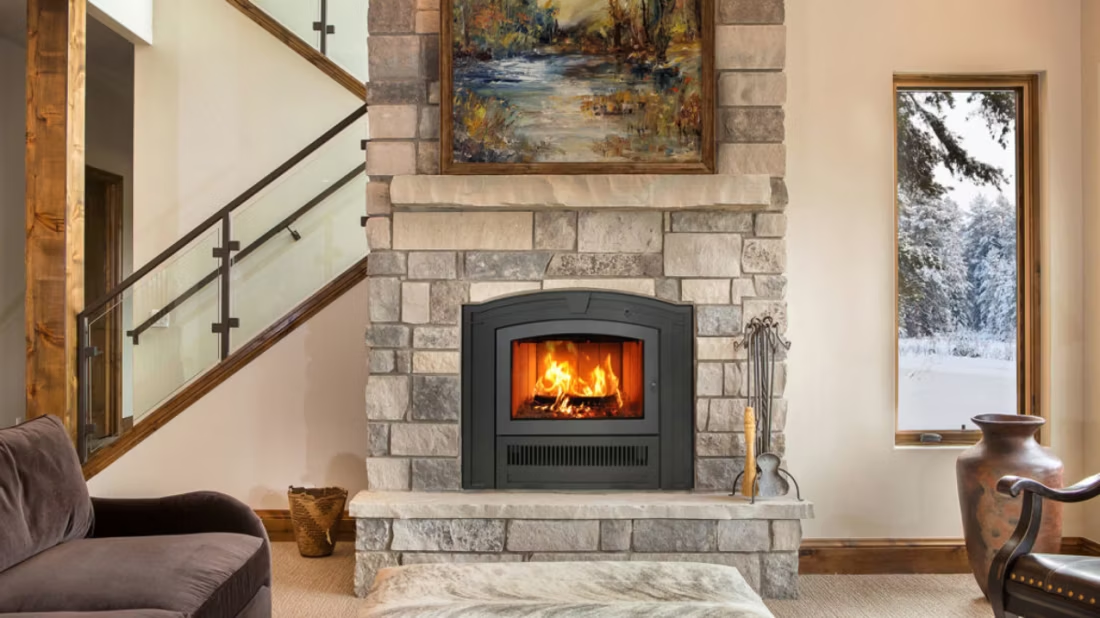
Four fuels. One honest answer for Paulding County.
Three steps. No salesperson until you're ready.
Tell us about your project
Your zip code, your situation, and the fuel you're leaning toward—or let the answers point you to one.
See what's actually available
The brands dealers within 100 miles genuinely carry—real options, never a catalog mirage.
Get your dealer & Project Guide
A trusted local dealer, plus the free Project Guide & Parts List that names every component of the job.
Frequently Asked Questions
Which fuel works best in Paulding County?
It depends on the house and the household. Wood is a natural fit for a farm county like this one—oak, hickory, maple, and cherry from local woodlots burn long and hot, and a lot of Paulding County homes already have a woodlot or a neighbor with one. Gas is the low-effort choice: natural gas reaches homes in Paulding, Antwerp, and the other incorporated towns, while rural households outside those lines typically run propane. Pellet stoves are a solid middle ground—no splitting or hauling, and regional brands like Indeck Energy Services, Lignetics, and Somerset Pellet Fuel are available through area suppliers. Electric fireplaces work well as supplemental heat in a bedroom or den, but with average winter lows around 17°F and winters comparable to Madison, Wisconsin, electric alone won't carry a whole farmhouse through a Paulding County winter. Many households here run wood or pellet as the primary heat source with gas or propane backup.
Do I need a permit to install a fireplace in Paulding County?
Generally, yes. New wood stoves, wood inserts, gas fireplaces, gas inserts, gas stoves, and pellet stoves typically require a building permit through the county building department, and wood-burning appliances need to meet current EPA 2020 NSPS emissions standards. Gas installations also require a separate gas line permit and a licensed installer for the actual gas connection. Electric fireplaces are usually exempt from permitting unless it's a built-in unit that needs new wiring or a dedicated circuit. Most local hearth retailers who serve Paulding County handle the permit paperwork as part of the installation, so it's rarely something homeowners have to manage on their own.
Are there air quality restrictions on wood burning in Paulding County?
No—Paulding County doesn't have any air quality nonattainment designation or winter burn-ban program, unlike some counties out west that deal with inversions or wildfire smoke. There's no voluntary or mandatory curtailment schedule to check before lighting a fire here. That said, new wood stove installations still need to meet EPA 2020 NSPS emissions standards, and basic safety codes—chimney clearances, proper venting, working smoke and CO detectors—still apply regardless of the local air quality picture.
Can one local hearth retailer handle all four fuel types?
Some do, but with a county population under 9,000, Paulding County itself doesn't support a large number of dedicated hearth showrooms—several of the retailers serving local homes are based in nearby Defiance or other regional towns and travel into Paulding, Antwerp, Payne, and Grover Hill for consultations and installs. The multi-fuel dealers among them can show working displays of wood, gas, pellet, and electric units side by side, which is useful if you're still deciding between, say, a wood insert and a pellet stove for a farmhouse retrofit. If a retailer specializes in just one or two fuels, they'll usually say so up front rather than push a product that doesn't fit your home.
How does service work in the rural parts of Paulding County?
Most technicians covering Paulding County are based outside it—in Defiance, Van Wert, or across the state line toward Fort Wayne—and drive in to service homes in Paulding, Antwerp, Payne, Oakwood, and the unincorporated crossroads between them. Expect a modest travel charge on rural calls, and know that pre-season appointments (September and October, before the cold sets in) are far easier to book than an emergency call in January. Given the county's flat, spread-out geography, it's worth scheduling annual chimney sweeping or gas inspection early rather than waiting until the first hard freeze.
What's the typical cost range for fireplace installation across all fuel types in Paulding County?
Costs run in line with rural Midwest averages. Wood stove or insert installation: roughly $4,000–$8,500 for a typical retrofit, more if new chimney work is needed on an older farmhouse. Gas fireplace, insert, or stove: about $4,000–$10,000, with propane conversions and gas line work pushing toward the higher end for homes outside the natural gas service area. Pellet stove or insert: generally $4,000–$7,000 installed. Electric fireplace: $200–$3,000 for the unit itself, plus $400–$1,200 in labor if it's more than a plug-and-play install. Exact numbers depend on the retailer and the specific home—see the county + fuel pages above for cost detail tied to local dealer pricing.
Wood, gas, pellet, or electric—how do I choose?
Match the fuel to your life, not the other way around. Wood: lowest fuel cost and total power-outage independence, but you're hauling and stacking. Gas: press a button, set a thermostat, no maintenance to speak of. Pellet: wood economics with automatic feeding, in exchange for weekly cleaning and a need for electricity. Electric: plugs in anywhere with honest supplemental heat. Nobody regrets the fuel that fits how they actually live.
Can I install a fireplace myself?
If you're putting a fire in your house on purpose, it's best to work with an expert. Unless you're genuinely experienced in framing, gas line, vent pipe, and the national code on clearances to combustibles, have a professional do it—and ideally the same company that sells you the fireplace, so warranty, service, and liability all live under one roof.
Should the dealer who sells my fireplace also install it?
Ideally, yes. A fireplace project involves vent pipe, gas line, electrical, and often tile or stone. Hire three or four separate trades and you own the liability and the game of telephone between them. One company selling and installing means one accountable party, start to finish—ask about factory training, on-time completion records, and what happens if an inspection fails.
What are the biggest mistakes people make buying a fireplace?
Five come up constantly: budgeting for the unit but not the full job (vent, gas line, electrical, finish work); drowning in options instead of starting from style and fuel; buying without an in-home preview; handing installation to a handyman instead of a pro; and giving up out of sheer indecision. Every one is avoidable with a clear plan—step one, step two, step three.
Stove and Fireplace Dealers in Paulding County
Listings include WhyFire partner dealers, dealers we have verified as authorized for the brands we recommend, and established local businesses that carry hearth products. Every listing shows which one it is. The ones marked Preferred run on WhyFire's software, so they can show you real pricing and book your appointment right here. No manufacturer pays for placement. How we verify dealers →
Home Lumber Of New Haven, Inc
Rath Builders Supply Inc.
Granite Ridge
Chimney 1
Brickworks Supply Center
Nob Sales Corporation
Get matched with a Paulding County hearth dealer.
Pick your fuel below and we'll match you with a trusted local dealer, plus send a free Project Guide & Parts List—the parts, the vent kit, and the recommended installer for your specific project in Paulding County.
Find Your Fireplace →