
Every fuel type, every town in Crawford County.
Wood, gas, pellet, and electric fireplace resources for the whole county—from the county seat in Bucyrus out through Galion, Crestline, and the farm townships in between. Pick a fuel and get matched with a local dealer who actually installs it here.
Every Project Starts From One of These Five Situations
Flat farm country, 5,592 heating degree days, and a county full of hardwood.
Crawford County sits in the rolling farmland of north-central Ohio, split between the Sandusky and Olentangy River watersheds. Winter lows average 20°F and the county logs 5,592 heating degree days a year—a long, steady heating season that runs roughly from mid-October through April, not quite as severe as places like Madison, Wisconsin, but demanding enough that most homes here run a primary heat source hard for six months straight. Oak, hickory, maple, and cherry are the wood species most local households burn, a mix that splits cleanly, seasons well in a single summer under cover, and throws enough BTUs per cord to carry a woodstove through a January cold snap.
Crawford County isn't a designated non-attainment area, so there are no winter curtailment days or burn restrictions like some Western basin counties see—but that doesn't mean any stove will do. EPA-certified wood and pellet stoves still burn cleaner and use less wood per degree of heat, which matters over a six-month season. Natural gas lines reach much of Bucyrus and Galion, while homes further out in Crestline, New Washington, and the surrounding townships more often run on propane. Regional pellet brands like Indeck Energy Services, Lignetics, and Somerset Pellet Fuel are all in normal supply here. This hub rolls up hearth retailers, service techs, and fuel suppliers across the whole county—pick your fuel below for local dealers, install costs, and unit recommendations specific to your town.
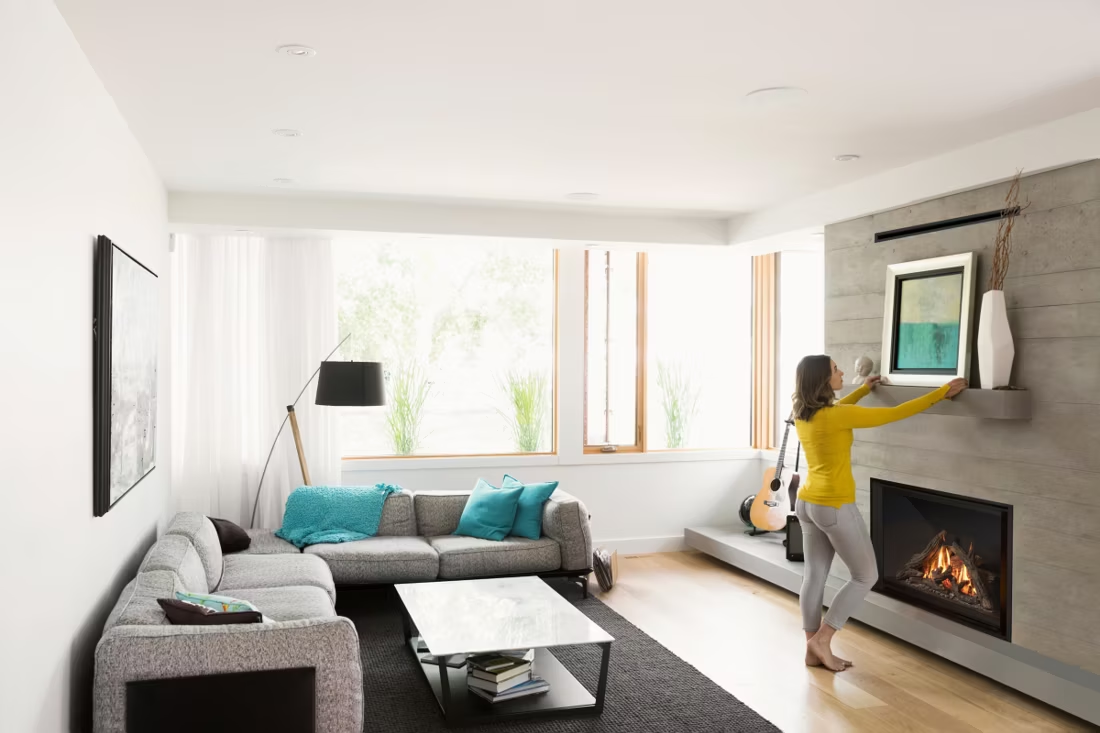
Four fuels. One honest answer for Crawford County.
Three steps. No salesperson until you're ready.
Tell us about your project
Your zip code, your situation, and the fuel you're leaning toward—or let the answers point you to one.
See what's actually available
The brands dealers within 100 miles genuinely carry—real options, never a catalog mirage.
Get your dealer & Project Guide
A trusted local dealer, plus the free Project Guide & Parts List that names every component of the job.
Frequently Asked Questions
Which fireplace fuel makes the most sense in Crawford County?
All four fuels work here, and the right choice usually comes down to what's already running your house. Wood is a strong option given how much oak and hickory grows locally—a modern EPA-certified stove burning seasoned hardwood will hold a fire through an overnight low in the low 20s without much trouble, and firewood is often cheaper here than in counties without the same hardwood supply. Gas is the convenience pick where natural gas lines reach, which covers a good share of Bucyrus and Galion; homes further into the townships typically run propane instead. Pellet stoves have a real presence too—Indeck Energy Services, Lignetics, and Somerset Pellet Fuel are all distributed in the region, so fuel supply isn't a concern. Electric fireplaces are supplemental almost everywhere in the county; with 5,592 heating degree days, they're not built to carry a whole winter on their own, but they're a good fit for a bedroom, finished basement, or a home that's already heated by wood or gas.
Do I need a permit to install a wood stove or gas fireplace in Crawford County?
Generally yes. New wood stove and insert installs need to meet current EPA emissions standards and typically require a permit from your local building department, whether that's the county or your city or township depending on where you live. Gas fireplace and insert installs need a separate gas-line permit and a licensed installer to make the connection, especially if you're extending a line rather than converting an existing hearth. Pellet stove installs follow a similar process to wood but without any local air-quality restrictions to navigate—Crawford County has no non-attainment designation, so there's no curtailment paperwork involved. Electric units are usually the exception; a plug-in model needs no permit, though a hardwired built-in drawing its own circuit typically does. Most hearth retailers we match homeowners with pull these permits directly as part of the install.
Does Crawford County have any burn bans or air-quality restrictions on wood stoves?
No. Crawford County isn't a designated non-attainment area, so there are no winter curtailment days or mandatory burn bans like you'll find in some Western basin counties with inversion problems. That said, an EPA-certified stove is still worth the upgrade over an older uncertified unit—it burns roughly a third less wood for the same heat output over a full 5,592-heating-degree-day season, and it puts out less visible smoke, which matters if your house sits close to a neighbor's property line in town.
Can I find a retailer in Crawford County that carries more than one fuel type?
Yes, and it's common—most hearth retailers serving Bucyrus, Galion, and Crestline carry two or three fuel types rather than specializing in just one. That's useful if you're weighing a wood stove against a pellet stove, or deciding whether to run gas versus propane in a home that's not on a gas line yet. A multi-fuel dealer can walk you through working displays of each option and talk through what actually fits your house, your wood supply, and your budget, rather than pushing whatever single fuel they happen to sell. We match you with the retailer whose lineup and service area actually cover your project.
How does installation and service work for homes outside Bucyrus?
Installation crews and service technicians are concentrated around Bucyrus and Galion but regularly travel out to Crestline, New Washington, North Robinson, and the farm townships between them. Expect a modest trip charge for the farthest addresses, and expect scheduling to fill up fast once cold weather sets in—booking your annual chimney sweep or gas inspection in late summer, before the heating season really starts, is the easiest way to avoid a multi-week wait in November.
What does a fireplace installation typically cost in Crawford County?
Costs depend mainly on fuel type and how much venting or gas-line work is involved. Wood stove or insert installs typically run $4,000–$8,500, more if a new chimney chase is needed for a home without an existing flue. Gas fireplaces, inserts, and stoves generally run $4,000–$10,000, with the gas-line work itself often the biggest cost variable if your home isn't already plumbed for gas. Pellet stove or insert installs usually land around $4,000–$7,000. Electric fireplaces are the outlier—$200–$3,000 for the unit, plus $400–$1,200 in labor for anything beyond a simple plug-in placement. The county + fuel pages above break these numbers down further with local retailer pricing.
Does a fireplace add value to my home?
On average, a fireplace adds back to the home about the same amount you spent installing it. Add the monthly savings from heating the rooms you actually use instead of the whole house—often hundreds of dollars a year—and the value case is strong before you even count what a fire does for how your family uses the room.
What is an in-home preview and do I need one?
It's a visit where a hearth professional measures your space, confirms the model you picked actually works in your home, and walks the specs—framing, gas line, venting, finish work—before anything is ordered. Some details you just can't know until you see the house. Never make a down payment without one; it's the single most-skipped step that burns buyers.
What are the biggest mistakes people make buying a fireplace?
Five come up constantly: budgeting for the unit but not the full job (vent, gas line, electrical, finish work); drowning in options instead of starting from style and fuel; buying without an in-home preview; handing installation to a handyman instead of a pro; and giving up out of sheer indecision. Every one is avoidable with a clear plan—step one, step two, step three.
How much should I budget for a fireplace?
For an average home—covering the fireplace, the vent pipe, and basic installation—a budget between $3,900 and $5,500 gives you a lot of options across wood, gas, and pellet. By the time you add finish work, gas line, and electrical, the average complete installation lands between $5,000 and $12,000 all-in. In a remodel or new build, a good rule is to put about 2.5% of the total project cost toward the fireplace.
Stove and Fireplace Dealers in Crawford County
Listings include WhyFire partner dealers, dealers we have verified as authorized for the brands we recommend, and established local businesses that carry hearth products. Every listing shows which one it is. The ones marked Preferred run on WhyFire's software, so they can show you real pricing and book your appointment right here. No manufacturer pays for placement. How we verify dealers →
Henak Masonry, Ltd
The Wood Stove Shed
Behr Necessities Hearth Shoppe
Carmar Gardens
Fireside Radiant
Get matched with a local Crawford County dealer.
Pick your fuel below and we'll put together a free Project Guide & Parts List—the right unit, the vent kit it needs, and the local dealer we recommend for your project.
Find Your Fireplace →