
Find the right fireplace for your Clermont County home.
Wood, gas, pellet, and electric fireplace resources for every city and township in Clermont County—from Batavia to Milford, Amelia, New Richmond, and Owensville. Find the right unit and connect with a trusted local hearth retailer.
Every Project Starts From One of These Five Situations
Steady four-season heating in Ohio's Appalachian foothills.
Clermont County sits in the rolling foothills east of Cincinnati, where the Ohio River forms the southern border with Kentucky. Winters here are moderate by national standards—average lows around 22°F and a heating season that adds up to well short of the punishing totals you'd see in a place like Madison, WI, but still enough to make a reliable heat source matter from late October through April. The hardwood forests that cover the county's ridges—oak, hickory, maple, and cherry—have supplied firewood to local households for generations, and those same species remain the backbone of wood heat here: dense, high-BTU, slow-burning, and easy to source locally or split from a homeowner's own woodlot.
What you'll find on this hub: hearth retailers, service technicians, and fuel suppliers serving every community in Clermont County—from the county seat in Batavia to Milford and Loveland in the northwest, Amelia and New Richmond along the river, and Owensville and Goshen out toward the eastern townships. Homeowners who cut their own firewood sometimes head south across the river to Daniel Boone National Forest in Kentucky, where public-land cutting permits are available. Pick your fuel below to drill into local dealers, installation costs, and recommended units for your specific project.
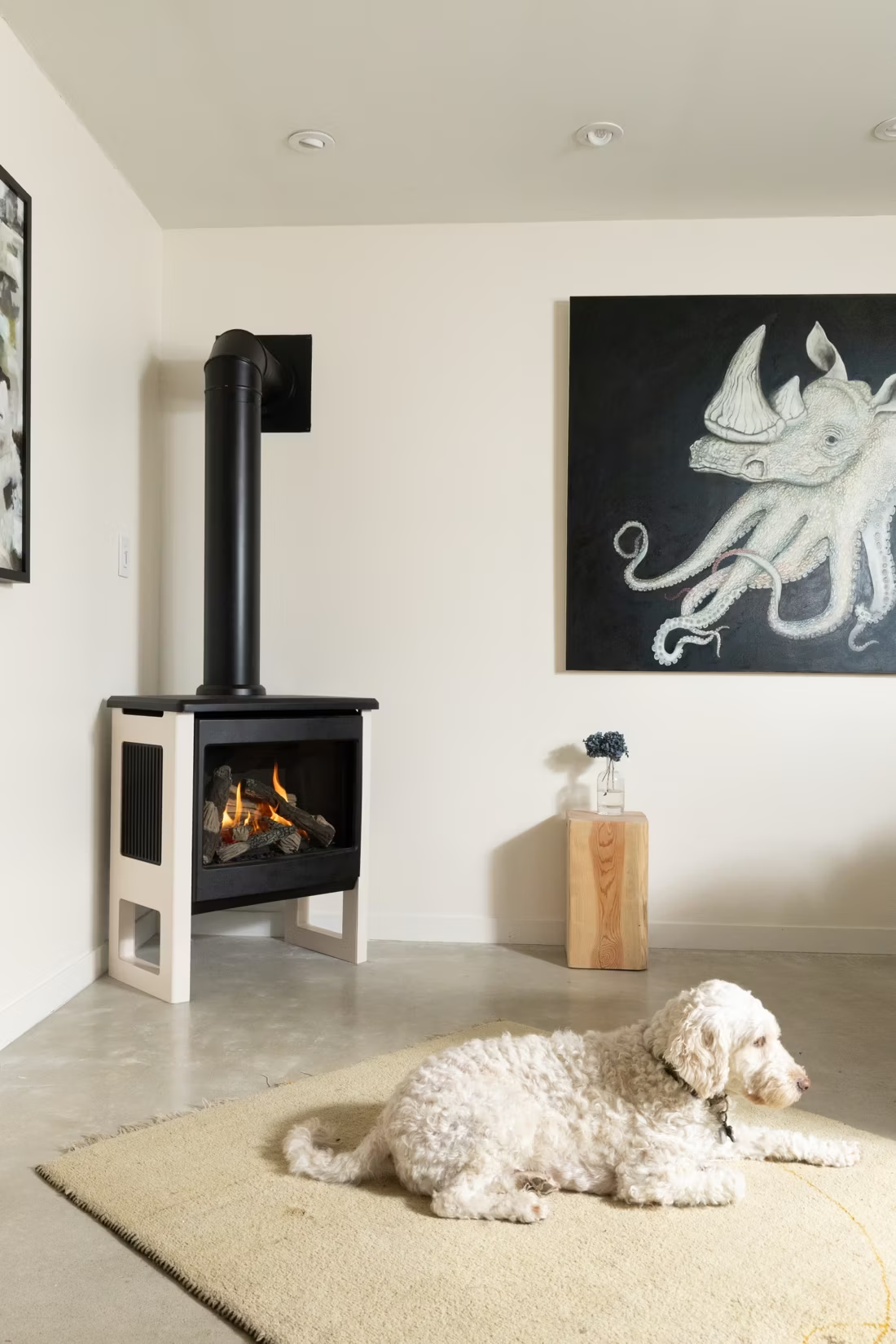
Four fuels. One honest answer for Clermont County.
Three steps. No salesperson until you're ready.
Tell us about your project
Your zip code, your situation, and the fuel you're leaning toward—or let the answers point you to one.
See what's actually available
The brands dealers within 100 miles genuinely carry—real options, never a catalog mirage.
Get your dealer & Project Guide
A trusted local dealer, plus the free Project Guide & Parts List that names every component of the job.
Frequently Asked Questions
Which fuel works best in Clermont County?
It depends on the home and the household. Wood is a strong option here—oak, hickory, maple, and cherry all grow locally and split into dense, long-burning firewood, and a fair number of rural properties in the eastern and southern townships have their own woodlots. Gas is the low-maintenance choice for homes in Milford, Batavia, and the more developed parts of the county with Duke Energy Ohio natural gas service—flip a switch and it's on, no wood handling required. Pellet stoves are a solid middle ground, especially for homeowners who want wood-style ambiance without splitting and stacking; Indeck Energy Services, Lignetics, and Somerset Pellet Fuel all supply pellets to the region. Electric is best treated as supplemental heat—good for a bedroom, sunroom, or finished basement, but not a primary heat source through a 22°F winter night. Many Clermont County homes end up with a primary wood or gas unit and an electric or pellet unit somewhere secondary.
Do I need a permit to install a fireplace in Clermont County?
In most cases, yes. New wood stoves, wood inserts, gas fireplaces, gas inserts, gas stoves, and pellet stoves typically require a building permit through your local township or the Clermont County Building & Zoning Department, depending on where you live. Gas installations also require licensed gas-fitter work and a separate gas line permit if you're tapping into existing service. Wood-burning appliances sold today are EPA-certified as a matter of course, which simplifies the paperwork compared to older uncertified units. Electric fireplaces generally skip the permit process unless it's a built-in unit that requires a new dedicated circuit. Most local hearth retailers pull permits as part of the installation quote, so you're rarely filing paperwork yourself.
Are there air quality restrictions on wood burning in Clermont County?
No—Clermont County doesn't have the winter inversion or non-attainment issues that trigger burn advisories in some western basin communities. There's no local ordinance restricting wood-stove use on a given day. That said, choosing an EPA-certified stove still matters here: certified units burn cleaner, use less firewood for the same heat output, and tend to draw better with local hardwoods like oak and hickory, which burn hot but can smolder and smoke if the stove or flue isn't sized correctly. If you're near Cincinnati's outer suburbs, being a considerate neighbor with well-seasoned wood (moisture below 20%) goes a long way toward keeping smoke to a minimum even without a formal restriction.
Can one local hearth retailer handle all four fuel types?
Many Clermont County hearth retailers carry three or more of the four fuel types, particularly the larger dealers based near Milford and Batavia that serve the whole county. If you're cross-shopping—say, deciding between a pellet stove and a gas insert for a Union Township family room—a multi-fuel dealer can show you working displays of each option and walk through the trade-offs for your specific chimney, floor plan, and budget. Smaller shops closer to the river towns like New Richmond may specialize more narrowly, often focusing on wood and pellet given the rural, woodlot-heavy customer base in that part of the county. The county + fuel pages above break down which retailers carry what.
How does service work in the more rural parts of Clermont County?
Most chimney sweeps and gas techs serving Clermont County are based near Batavia or Milford and travel out to the outer townships—Goshen, Stonelick, Wayne, and the river communities around New Richmond. Expect a modest travel charge for the farthest calls, and expect scheduling to tighten up fast once the weather turns in October and November. Homeowners who cut their own firewood near Daniel Boone National Forest across the river should plan the same way loggers do: season wood at least six months to a year before burning, since freshly cut oak and hickory hold a lot of moisture and won't burn clean or hot enough for a long winter night. Booking annual chimney or gas inspections in late summer, before the rush, is the easiest way to avoid a mid-January wait.
What's the typical cost range for fireplace installation across all fuel types in Clermont County?
Costs vary by fuel and by how much venting or gas line work is involved. Wood stove or insert installation typically runs $3,500-$7,500, more if new chimney or hearth work is needed. Gas fireplace, insert, or stove installation generally runs $3,500-$9,000, with the lower end for straightforward conversions where gas service already reaches the room. Pellet stove or insert installation typically falls in the $3,500-$6,000 range. Electric fireplace costs are the most accessible—$200-$2,500 for the unit itself, plus $300-$1,000 in labor for anything beyond a simple plug-and-play placement. For details tied to specific local retailers, see the county + fuel pages above.
Wood, gas, pellet, or electric—how do I choose?
Match the fuel to your life, not the other way around. Wood: lowest fuel cost and total power-outage independence, but you're hauling and stacking. Gas: press a button, set a thermostat, no maintenance to speak of. Pellet: wood economics with automatic feeding, in exchange for weekly cleaning and a need for electricity. Electric: plugs in anywhere with honest supplemental heat. Nobody regrets the fuel that fits how they actually live.
Does a fireplace add value to my home?
On average, a fireplace adds back to the home about the same amount you spent installing it. Add the monthly savings from heating the rooms you actually use instead of the whole house—often hundreds of dollars a year—and the value case is strong before you even count what a fire does for how your family uses the room.
What is an in-home preview and do I need one?
It's a visit where a hearth professional measures your space, confirms the model you picked actually works in your home, and walks the specs—framing, gas line, venting, finish work—before anything is ordered. Some details you just can't know until you see the house. Never make a down payment without one; it's the single most-skipped step that burns buyers.
How much should I budget for a fireplace?
For an average home—covering the fireplace, the vent pipe, and basic installation—a budget between $3,900 and $5,500 gives you a lot of options across wood, gas, and pellet. By the time you add finish work, gas line, and electrical, the average complete installation lands between $5,000 and $12,000 all-in. In a remodel or new build, a good rule is to put about 2.5% of the total project cost toward the fireplace.
Stove and Fireplace Dealers in Clermont County
Listings include WhyFire partner dealers, dealers we have verified as authorized for the brands we recommend, and established local businesses that carry hearth products. Every listing shows which one it is. The ones marked Preferred run on WhyFire's software, so they can show you real pricing and book your appointment right here. No manufacturer pays for placement. How we verify dealers →
Brick Tec Inc.
Best Cincinnati Chimney
Chimney Care Fireplace & Stove
Charlie's Chimney Sweeps & Masonry
Bethel Feed & Supply Inc.
Bona Decorative Hardware
Watson's Of Cincinnati
Chimney Top Masonry
Reading Rock's Fireside Hearth & Home
Southern Ohio Stove Systems
Ted's Chimney Service
Get matched with a Clermont County hearth dealer.
Pick your fuel below and we'll match you with a trusted local dealer and send you a free Project Guide & Parts List—the exact parts, vent kit, and recommended installer for your Clermont County project.
Find Your Fireplace →