
Find the right heat source for your Auglaize County home.
Wood, gas, pellet, and electric fireplace resources for every city and township in Auglaize County—from Wapakoneta and St. Marys to the small farm towns along the Auglaize and St. Marys Rivers. Find the right unit and connect with a trusted local hearth retailer.
Every Project Starts From One of These Five Situations
Steady winter heating needs across Auglaize County, Ohio.
Auglaize County sits in the flat farm country of west-central Ohio, with a climate that lands solidly in Zone 5A—a solid winter heating season with average winter lows near 19°F. That's a real but manageable heating season, similar in character to what homeowners deal with in Madison, Wisconsin, though without the lake-effect snow. Oak, hickory, maple, and cherry are the wood species locals actually burn, much of it self-split from farm woodlots and fencerows rather than hauled in from a supplier. There are no air quality non-attainment issues here, which means wood burning isn't subject to the curtailment restrictions you'd see in western basin or valley counties—it's simply a matter of picking the right stove or insert for your home.
What you'll find on this hub: hearth retailers, service technicians, and fuel suppliers serving every community in the county—from Wapakoneta and St. Marys down through Minster, New Bremen, Cridersville, and the smaller unincorporated crossroads in between. Pick your fuel below to drill into specifics—local dealers, installation costs, recommended units, and the resources that match your project. Whether you're heating a farmhouse outside St. Marys or a newer build in Wapakoneta, this is the starting point.
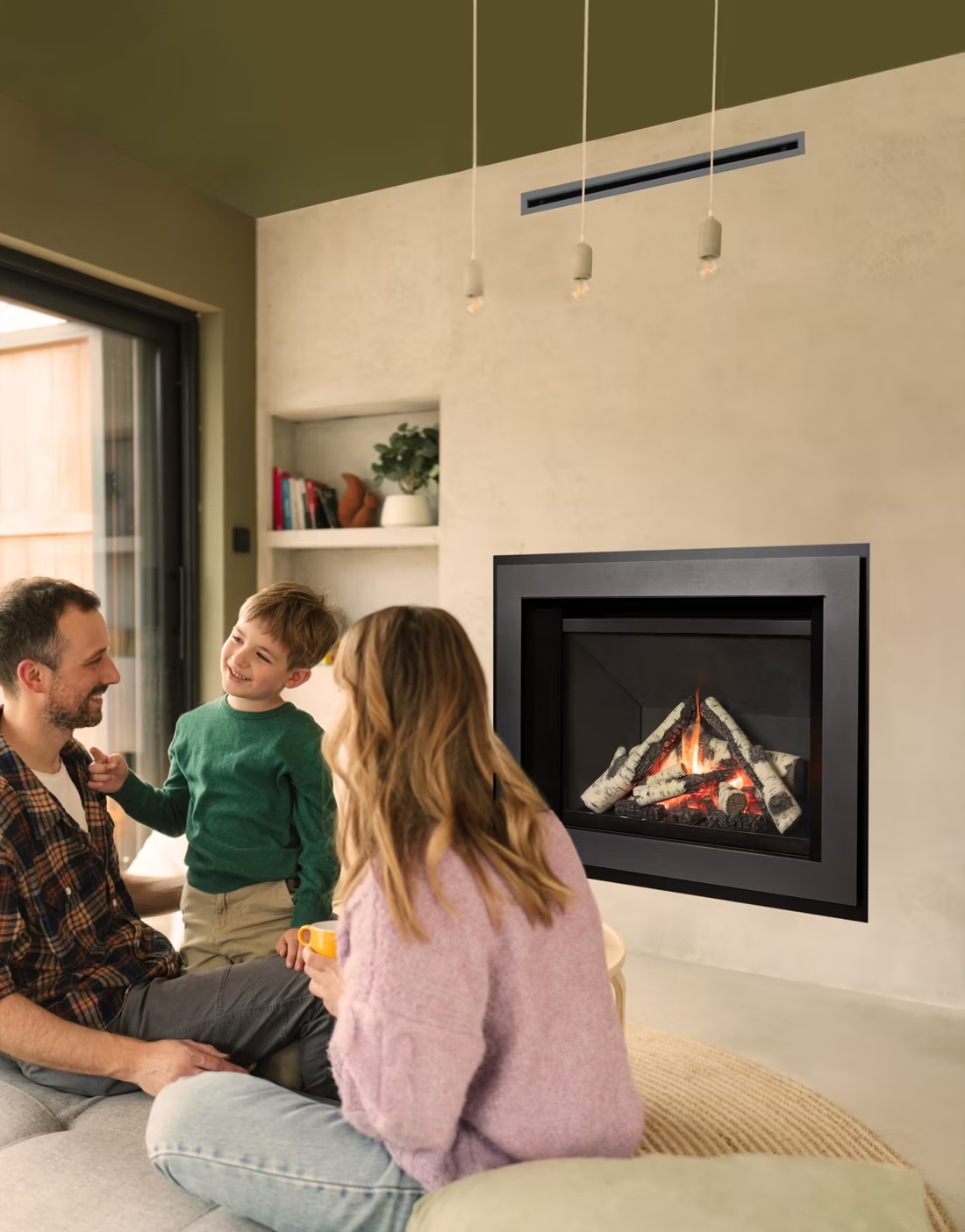
Four fuels. One honest answer for Auglaize County.
Three steps. No salesperson until you're ready.
Tell us about your project
Your zip code, your situation, and the fuel you're leaning toward—or let the answers point you to one.
See what's actually available
The brands dealers within 100 miles genuinely carry—real options, never a catalog mirage.
Get your dealer & Project Guide
A trusted local dealer, plus the free Project Guide & Parts List that names every component of the job.
Frequently Asked Questions
Which fuel works best in Auglaize County?
Most homes here do fine with several options, so it comes down to what you already have and what you want out of it. Wood is common on the rural properties around St. Marys and Minster, where farm woodlots supply oak, hickory, and cherry at low or no cost—a good EPA-certified insert or freestanding stove can carry a farmhouse through single-digit nights. Gas is the convenience pick in town—Wapakoneta and St. Marys both have natural gas service, so a direct-vent gas insert or fireplace gives instant heat with no wood-hauling. Pellet stoves are a solid middle ground, especially with Indeck Energy Services and Lignetics pellets both distributed in the region—less labor than wood, similar cozy heat. Electric fireplaces are mostly supplemental here—good for a bedroom, sunroom, or finished basement, but not built to carry a 5A-zone winter on their own. Many Auglaize County households end up mixing fuels: wood or pellet as the main heat source, gas or electric filling in secondary rooms.
Do I need a permit to install a fireplace in Auglaize County?
In most cases, yes. New wood stoves, wood inserts, gas fireplaces, gas inserts, gas stoves, and pellet stoves typically require a building permit through the local jurisdiction—the City of Wapakoneta, the City of St. Marys, or the county building department for unincorporated townships, depending on where the home sits. Gas installations also need a separate gas line permit and a licensed installer for the actual gas connection. Wood-burning appliances installed new should meet current EPA emissions standards. Electric fireplaces usually skip the permit process unless it's a built-in unit that requires new wiring or a dedicated circuit. Most local hearth retailers in the area handle the permitting paperwork as part of the installation, so it's rarely something the homeowner has to chase down separately.
Are there air quality restrictions on wood burning in Auglaize County?
No—Auglaize County has no air quality non-attainment designation and no winter burn curtailment program, unlike some western basin or mountain-valley counties where inversions trap wood smoke. That said, a well-sized, EPA-certified stove or insert still burns cleaner and more efficiently than an old smoke dragon, which matters for your chimney, your neighbors, and your own indoor air if you're loading wood in an attached garage or mudroom. If you're replacing an older uncertified stove, it's worth asking your local dealer about current EPA-certified models—the efficiency gains alone (often 70%+ compared to 50% or less for older units) usually pay for themselves in reduced firewood use over a few winters.
Can one local hearth retailer handle all four fuel types?
Many retailers serving Auglaize County carry three or four fuel types, since local demand is spread fairly evenly across wood, gas, pellet, and electric rather than concentrated in one. A full-line dealer with working wood, gas, and pellet displays plus a selection of electric units lets you compare side by side before committing—useful if you're not sure yet whether a gas insert or a wood-burning unit makes more sense for a specific room. Smaller specialty shops may lean harder into one or two fuels, particularly wood and pellet given the local farm-woodlot culture. If you're cross-shopping, ask upfront which fuels a retailer actually stocks and installs versus which they can special-order—installation timelines and venting requirements differ meaningfully between a gas direct-vent unit and a wood chimney liner job.
How does service work in the smaller towns and townships around Auglaize County?
Most chimney sweeps, gas technicians, and pellet stove service techs are based out of Wapakoneta or St. Marys and travel out to the smaller communities—Minster, New Bremen, Cridersville, Fryburg, Buckland, and the surrounding townships. Expect a modest trip charge for calls further out from the two main towns, and expect fall (September–November) to book up faster than midwinter, since that's when most households schedule annual chimney sweeps and gas unit inspections ahead of the first hard freeze. If you're on a rural property and relying on wood or pellet as a primary heat source, it's worth scheduling service early and keeping a backup heat plan in mind for the rare ice storm that knocks out power to the townships outside the city limits.
What's the typical cost range for fireplace installation across all fuel types in Auglaize County?
Costs vary by fuel and by how much venting or gas line work is involved. Wood stove or insert installation: roughly $4,000–$8,500 for a typical retrofit into an existing chimney, higher if a full liner replacement or new chimney chase is needed. Gas fireplace, insert, or stove: roughly $4,000–$10,000 depending on whether it's a straightforward conversion with existing gas service or a new gas line run. Pellet stove or insert: roughly $4,000–$7,000 for most installs. Electric fireplace: $200–$3,000 for the unit itself, with $300–$1,000 in labor for anything beyond a simple plug-and-play placement. For more detail tied to actual local retailer pricing, check the county + fuel pages above.
Wood, gas, pellet, or electric—how do I choose?
Match the fuel to your life, not the other way around. Wood: lowest fuel cost and total power-outage independence, but you're hauling and stacking. Gas: press a button, set a thermostat, no maintenance to speak of. Pellet: wood economics with automatic feeding, in exchange for weekly cleaning and a need for electricity. Electric: plugs in anywhere with honest supplemental heat. Nobody regrets the fuel that fits how they actually live.
I know I want a fireplace—where do I actually start?
Do two things today: snap a photo of the wall or fireplace you want to transform, and take a tape measure to the space—width, height, depth. Those two artifacts answer most of a hearth professional's first questions. Then settle fuel (wood, gas, pellet, or electric) and set a realistic budget: $3,900–$5,500 covers fireplace, vent, and basic install for most homes.
Can I install a fireplace myself?
If you're putting a fire in your house on purpose, it's best to work with an expert. Unless you're genuinely experienced in framing, gas line, vent pipe, and the national code on clearances to combustibles, have a professional do it—and ideally the same company that sells you the fireplace, so warranty, service, and liability all live under one roof.
Should the dealer who sells my fireplace also install it?
Ideally, yes. A fireplace project involves vent pipe, gas line, electrical, and often tile or stone. Hire three or four separate trades and you own the liability and the game of telephone between them. One company selling and installing means one accountable party, start to finish—ask about factory training, on-time completion records, and what happens if an inspection fails.
Stove and Fireplace Dealers in Auglaize County
Listings include WhyFire partner dealers, dealers we have verified as authorized for the brands we recommend, and established local businesses that carry hearth products. Every listing shows which one it is. The ones marked Preferred run on WhyFire's software, so they can show you real pricing and book your appointment right here. No manufacturer pays for placement. How we verify dealers →
Sandkuhl Clay Works
Kern's Fireplace & Spa
Get matched with a hearth dealer in Auglaize County.
Tell us about your project and we'll match you with a trusted local dealer and send a free Project Guide & Parts List—the exact parts, including the vent kit, and the dealer we recommend for your Auglaize County home.
Find Your Fireplace →