
Find your fireplace across the Yarmouth Region.
Wood, gas, pellet, and electric options, with help finding a trusted local dealer who knows what actually clears permitting and venting rules from Yarmouth out to Argyle, Wedgeport, and Hebron. You get a free planning packet before you spend a dollar.
Every Project Starts From One of These Five Situations
Mild Atlantic winters, high electricity costs, and a region built on hardwood heat.
The Yarmouth Region sits at the southwestern tip of Nova Scotia, where roughly 6,829 people are spread across Yarmouth town and shore communities like Argyle, Wedgeport, Chegoggin, and Hebron. The Gulf of Maine keeps winters here comparatively mild for Atlantic Canada—an average winter low near -6.9°C and a heating season nowhere near as brutal as inland cities like Fredericton or Québec City see—but the damp coastal air still makes a properly sized, properly vented appliance matter more than the thermometer alone suggests. Sugar maple, yellow birch, red oak, and red spruce are the wood species that show up most in local hearths, and that hardwood-heavy mix is exactly what a stove wants for a long, steady burn through a foggy December night.
Two things shape hearth decisions here more than climate does. First, Nova Scotia carries some of the highest electricity rates in Canada, which is why pairing a wood stove with a heat pump has become the default setup for a lot of households—the heat pump covers shoulder-season efficiency, the wood stove (often burning maple or oak sourced through a local wood lot or a Crown land permit from Nova Scotia Natural Resources) carries the coldest stretches and keeps the house warm if the power goes out during an Atlantic storm. Second, mains natural gas in this province mostly stays within Halifax-area corridors; a gas fireplace in the Yarmouth Region almost always means a propane installation rather than a piped gas line. None of that makes gas, pellet, or electric any less standard a choice here—it just changes what each fuel actually looks like on the ground. This hub rolls up retailers, service technicians, and fuel suppliers across the whole region, plus the wood, gas, pellet, and electric pages with local detail for each.
Four fuels. One honest answer for Yarmouth Region.
Three steps. No salesperson until you're ready.
Tell us about your project
Your postal code, your situation, and the fuel you're leaning toward—or let the answers point you to one.
See what's actually available
The brands dealers within 100 miles genuinely carry—real options, never a catalog mirage.
Get your dealer & Project Guide
A trusted local dealer, plus the free Project Guide & Parts List that names every component of the job.
Frequently Asked Questions
Which fireplace fuel makes the most sense in the Yarmouth Region?
All four fuels are genuinely in use here, and the right pick usually comes down to how your household already heats. Wood remains the backbone for a lot of rural and shore properties—sugar maple, yellow birch, and red oak burn long and hot enough to carry a home through the coldest nights, with red spruce useful for quick shoulder-season fires. Gas here almost always means propane rather than piped natural gas, since Nova Scotia's mains gas network stays close to Halifax; propane fireplaces still give you clean, instant heat without hauling cordwood. Pellet stoves have a solid regional following too, with Shaw Resources and Scotia Atlantic Biomass both distributing into the area. Electric fireplaces are mostly supplemental here—Nova Scotia's electricity rates are among the highest in Canada, so few households rely on electric resistance heat as their primary source, though electric units are a fine ambiance or backup-room choice in a home already carrying heat pump or wood as the main system.
Do I need a permit or a WETT inspection for a wood stove here?
You'll typically need a building permit through your local municipal building department, and any installation has to meet the CSA B365 installation code, which governs clearances, venting, and hearth pad sizing. Separately, most home insurers in this region require a WETT inspection on any wood-burning appliance before they'll issue or renew a policy—this is common enough that it's worth budgeting for even if it isn't strictly a municipal requirement. A local dealer who installs wood appliances regularly will usually coordinate the permit and point you to a WETT-qualified inspector as a normal part of the project rather than something you're left to chase down afterward.
Is natural gas actually available here, or is it propane?
For most of the Yarmouth Region, it's propane. Mains natural gas in Nova Scotia is concentrated in limited Halifax-area corridors, and that pipeline network doesn't extend out to Yarmouth, Argyle, or Wedgeport. A 'gas fireplace' here means a propane appliance with an on-site tank rather than a hookup to a municipal gas line. That's not a downgrade—propane units offer the same instant-on convenience and clean burn as natural gas—but it does mean your dealer needs to size a tank and plan delivery logistics as part of the project, not just run a gas line from the street.
Why do so many homes here pair a wood stove with a heat pump instead of relying on electric heat alone?
Nova Scotia has some of the highest electricity rates in Canada, so running a home on resistance electric heat through a full winter gets expensive fast. Heat pumps handle the shoulder seasons efficiently, but they lose capacity as temperatures drop toward the region's average winter low near -6.9°C, and they stop working entirely in a power outage—not uncommon during an Atlantic storm. A wood stove burning local maple or oak fills both gaps: it carries the coldest stretches cheaply and keeps the house warm when the grid goes down. That's why wood-plus-heat-pump has become the default pairing here, with electric fireplaces filling a smaller, purely supplemental role.
What wood species do local dealers recommend, and where should I source firewood?
Sugar maple and red oak are the dense hardwoods local dealers point to for the longest, hottest overnight burns, yellow birch splits and seasons well as a reliable middle option, and red spruce is handy for quick shoulder-season fires or kindling rather than an all-night load. Most households buy seasoned cordwood from a local wood lot supplier rather than cutting their own, though Nova Scotia Natural Resources does issue Crown land cutting permits if you want to source your own. Whatever the source, wood needs to be seasoned well below 20 percent moisture before it goes in the stove—damp coastal air makes it tempting to burn wood too early, and that's the single biggest cause of poor draft and creosote buildup we see reported in this region.
When should I book a chimney sweep or WETT inspection before winter sets in?
Late summer, before the first real cold snap, is the right window. Insurance renewals often hinge on a current WETT inspection, and service techs in the Yarmouth Region get booked solid once heating season starts in earnest, so waiting until October or November usually means a longer wait for an appointment. It's also worth having a technician check your chimney cap and flashing at the same visit—the salt-laden coastal air here corrodes metal chimney components faster than it does further inland, and catching that early is cheaper than replacing a section mid-winter.
How many BTUs do I need in a fireplace?
Wrong question—and the industry's favorite way to confuse you. More BTUs isn't better if the fireplace cooks you out of the room you spent thousands to enjoy. Think in terms you can verify: how many square feet the unit heats, whether it's primary or backup heat, and whether you want it running overnight. Those three answers size a fireplace correctly every time.
Will we actually use a fireplace once we have one?
In my own home, the room with the fireplace has never been the same—it became the social hub. Game nights, holidays, date nights after the kids are down: the fire is where the house gathers. There's a reason people in this industry joke that we're really in the romance and entertainment business. You won't wonder whether you'll use it; you'll wonder how the room worked before.
Can I put a TV above my fireplace?
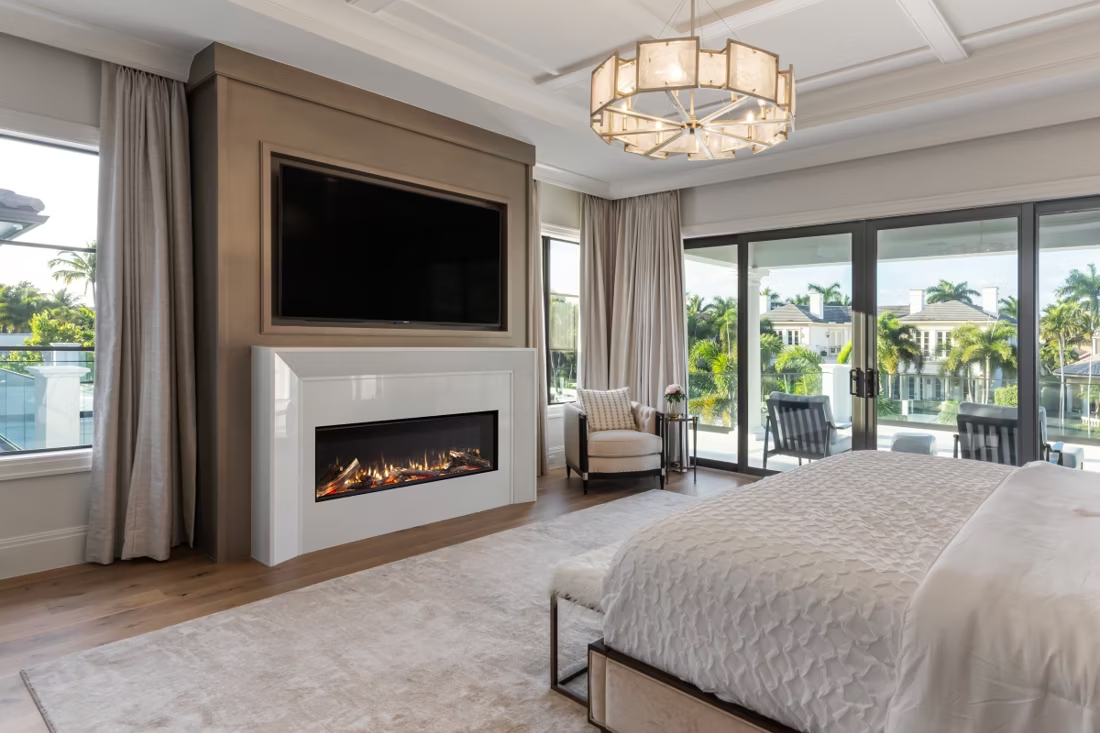
Yes—with an asterisk. Fireplaces are hot and TVs don't like heat. Either put a mantel between them to deflect rising warmth, or choose a fireplace with heat-management technology that creates a cool zone on the wall above—the wall stays around 125 degrees, barely warm, while the room still gets full heat. If you like clean lines and don't want a mantel, heat management is the answer.
What fireplace styles should I know before shopping?
Four cover most of the market: screen-front traditional (mesh front, open feel, fits craftsman homes), traditional door set (the classic look you grew up with), modern linear (wide, low, the statement piece for entertaining), and clean face contemporary (no trim—your tile or stone runs right to the fire's edge). Walk in knowing those four terms and you're ahead of most buyers.
Stove and Fireplace Dealers in Yarmouth Region
Listings include WhyFire partner dealers, dealers we have verified as authorized for the brands we recommend, and established local businesses that carry hearth products. Every listing shows which one it is. The ones marked Preferred run on WhyFire's software, so they can show you real pricing and book your appointment right here. No manufacturer pays for placement. How we verify dealers →
Find a trusted local dealer in the Yarmouth Region.
Pick your fuel below and we'll put together a free Project Guide & Parts List: the right unit for your home, the vent kit or propane setup it needs, and the local dealer we recommend for your project.
Find Your Fireplace →