
Instant heat and ambiance, sized against Nova Scotia's steepest power rates.
Winters in Whitney Pier average -9.6°C at night, and Nova Scotia Power's residential rate is among the highest in the country at 18.3 cents per kWh. We'll help you find a local dealer who can size an electric fireplace or insert as smart supplemental heat, not a bill you'll regret every February.
Every Project Starts From One of These Five Situations
A supplemental heat source, not a whole-home gamble.
Whitney Pier's older housing stock, much of it built when the steel plant and coal docks anchored the neighbourhood, tends to have layouts where one or two rooms need real heat help and the rest gets by on a furnace or heat pump. With winter lows averaging -9.6°C and a solid stretch of real heating season, an electric fireplace or insert is a practical way to warm the room you're actually sitting in, without opening a wall for venting or scheduling a WETT inspection the way a wood project would.
The bigger factor shaping electric's role here is cost: Nova Scotia Power charges around 18.3 cents per kWh, among the steepest residential rates anywhere in Canada, so few households try to heat a whole Cape Breton home on electric resistance alone. Instead, electric fireplaces get paired with a heat pump for background heat or with a wood stove burning local sugar maple, yellow birch, or red oak for the bulk of the season, with the electric unit handling ambiance and quick, zoned warmth in the living room. At $500 to $1,600 installed, it's also the cheapest fuel path to add to a home that already has its main heating sorted.
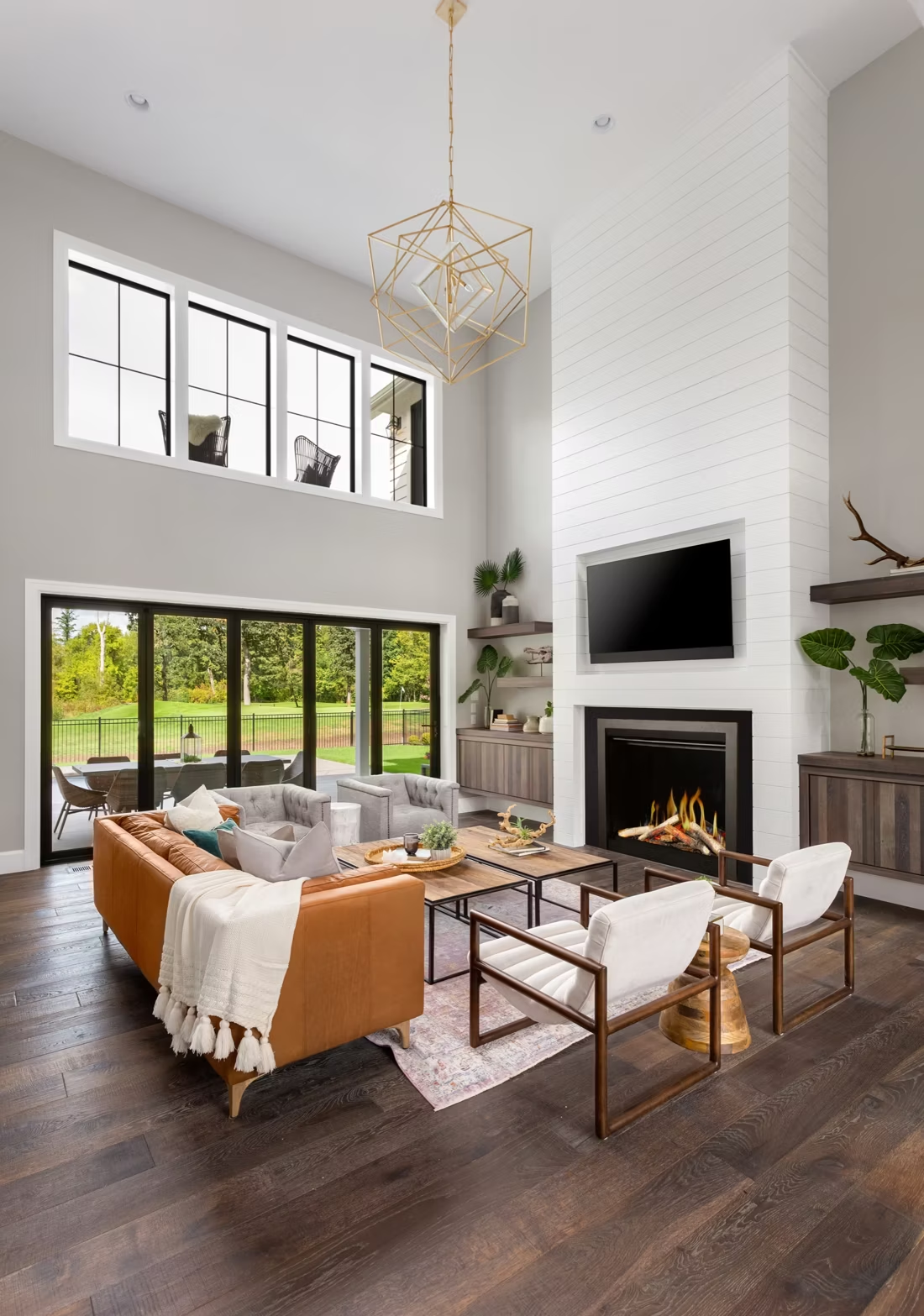
Three steps. No salesperson until you're ready.
Tell us about your project
Your postal code, your situation, and the fuel you're leaning toward—or let the answers point you to one.
See what's actually available
The brands dealers within 100 miles genuinely carry—real options, never a catalog mirage.
Get your dealer & Project Guide
A trusted local dealer, plus the free Project Guide & Parts List that names every component of the job.
Frequently Asked Questions
How much does an electric fireplace installation cost in Whitney Pier?
Electric fireplaces run $500 to $1,600 installed, by far the least expensive of the four fuel paths we help homeowners find in Cape Breton. A plug-in unit that drops into an existing masonry firebox or slides into a wall opening sits at the low end, no electrician needed beyond a standard outlet. A built-in linear unit set into a new wall, or one wired to its own dedicated circuit, runs toward the top of that range once a licensed electrician is on the job. Either way, there's no chimney, no venting, and no WETT inspection to schedule, which is a real time and cost saver compared to a wood or gas project in the same house.
What will it cost to run an electric fireplace with Nova Scotia Power rates?
Nova Scotia Power's residential rate sits around 18.3 cents per kWh, among the highest in the country, so most Whitney Pier households treat an electric fireplace as a zone heater for one room rather than a way to heat the whole house. A typical 1,500-watt insert running a few hours an evening costs a few dollars a day, not the kind of expense that competes with a furnace bill, and that's really the point: it supplements a heat pump or a wood stove instead of replacing either.
Does an electric fireplace make sense alongside a heat pump?
It's one of the most common pairings we see in Cape Breton. A ducted or ductless heat pump handles the steady background load through Whitney Pier's winter, when lows average -9.6°C, while an electric fireplace or insert adds instant, visible heat to the living room on the coldest evenings without another appliance to maintain. Given how high Nova Scotia Power's rates run, homeowners here are careful about which rooms actually need supplemental heat, and an electric unit lets you zone that decision room by room.
Why would I choose electric over wood, given how much wood heats homes around here?
Plenty of Whitney Pier homes still burn sugar maple, yellow birch, or red oak sourced from private woodlots around Cape Breton, and wood remains the backbone of home heating for many households precisely because Nova Scotia Power's rates are so high. Electric fireplaces aren't trying to replace that, they're the low-maintenance option for a den, bedroom, or basement where running a flue isn't practical, or for older row houses in the Pier where adding a chimney isn't in the budget. A lot of houses here end up with both: wood or a wood insert for the main heating load, electric for a secondary room.
Do I need a permit to install an electric fireplace in Whitney Pier?
Usually not for a plug-in unit. If you're having a built-in installed on its own circuit, an electrician pulls the wiring permit through the municipal building department as part of the job, similar to adding any other hardwired appliance. That's a lighter process than a wood or gas install, which needs a full building permit and, for wood, a WETT inspection to satisfy most insurers under the CSA B365 code.
What's the difference between an electric insert, a built-in, and a freestanding unit?
An electric insert is sized to slide into an existing masonry firebox, which is common in Whitney Pier's older housing stock built for coal or wood heat originally. A built-in or linear unit gets framed into a new wall, popular in renovations. A freestanding electric stove or mantel unit just needs a nearby outlet and can move with you if you're renting. All three plug into standard household power and none require venting, which is the main reason they run so far below the $6,000-plus install costs typical of wood or gas.
Will an electric fireplace still work during a power outage?
No, and that's worth planning around here. Cape Breton has seen extended multi-day outages during major storms, including the widespread damage Hurricane Fiona caused across the island in 2022, and an electric fireplace goes dark right along with everything else on the grid. It's why many Whitney Pier households that rely on electric for daily ambiance and zone heat still keep a wood stove or insert as a backup heat source that works with no power at all.
Is natural gas or electric the better fit for a Whitney Pier home?
Eastward Energy does serve parts of Cape Breton including the Sydney area, so gas is a real option here in a way it isn't across most of the province, where mains gas mostly runs through limited Halifax-area corridors. A gas fireplace or insert typically runs $6,000 to $15,000 CAD installed and gives you real supplemental heat output plus battery backup during an outage on some models. Electric wins on upfront cost and simplicity if you mainly want ambiance and light zone heat in one room; gas is the better call if you want a unit that can meaningfully offset your heating bill or keep running when the power drops.
What size or wattage electric fireplace do I need for a Pier living room?
Most electric inserts and built-ins top out around 1,500 watts, a fixed ceiling across the industry regardless of price point, and that's enough supplemental heat for a single room in the 300 to 400 square foot range in a typical Whitney Pier bungalow or row house. Given winter lows that average -9.6°C, don't expect it to carry a whole floor plan; it's sized to take the edge off one room while your heat pump or furnace handles the rest of the house. A local dealer will confirm sizing against your room's insulation and layout rather than wattage alone.
How much does an electric fireplace cost to run?
With the heater on, a typical unit draws about 1,500 watts—at average electric rates that's roughly 20 cents an hour. Run the flame effect alone and it costs pennies; the flames are LED-driven and use about as much power as a light bulb. There's no pilot light, no fuel delivery, and essentially no maintenance.
What fireplace styles should I know before shopping?
Four cover most of the market: screen-front traditional (mesh front, open feel, fits craftsman homes), traditional door set (the classic look you grew up with), modern linear (wide, low, the statement piece for entertaining), and clean face contemporary (no trim—your tile or stone runs right to the fire's edge). Walk in knowing those four terms and you're ahead of most buyers.
Can I put a TV above my fireplace?
Yes—with an asterisk. Fireplaces are hot and TVs don't like heat. Either put a mantel between them to deflect rising warmth, or choose a fireplace with heat-management technology that creates a cool zone on the wall above—the wall stays around 125 degrees, barely warm, while the room still gets full heat. If you like clean lines and don't want a mantel, heat management is the answer.
Do electric fireplaces actually produce heat?
Yes—most put out around 4,800–5,000 BTUs from a standard outlet, which comfortably warms a bedroom, office, or den as a comfort-zone heater. What they won't do is carry a whole house the way wood, gas, or pellet can. Think of electric as ambiance-first with honest supplemental heat: flames on with no heat in July, flames plus warmth in January.
Nearby Dealers
Hearth shops serving Whitney Pier and the surrounding area. Every listing shows whether it is a WhyFire partner, a dealer we have verified as authorized for the brands we recommend, or a local business carrying hearth products. No manufacturer pays for placement. How we verify dealers →
Electric Service in Whitney Pier
An electric fireplace's heater draws about 1,500 watts—pennies per hour at local rates.
Nova Scotia Power
Get your free Project Guide & Parts List for a Whitney Pier electric fireplace.
Tell us about your room and your current heat source, and we'll help you find a local dealer who can spec the right insert or built-in, along with a free Project Guide & Parts List covering the unit, mounting, and wiring your project needs.
Find Your Fireplace →