
Gas heat in a Nova Scotia town where the pipeline actually runs.
Westville sits in Pictou Region where winter lows average -10.9°C across a long, damp heating season. Eastward Energy's line reaches this corridor of Pictou Region—a rarity across a province where most homes never see mains gas. We'll help you find a local dealer who knows the gas-fitter side and the venting, not just the showroom floor.
Every Project Starts From One of These Five Situations
On one of Nova Scotia's few real gas corridors.
Westville is a small Pictou Region town of about 3,600 people, sitting at 72 metres elevation with average winter lows near -10.9°C. The cold season here runs long—five or six months of grey, damp chill—though it's milder night-to-night than the deep continental cold you'd find in Thunder Bay or Winnipeg. Sugar maple, yellow birch, red oak, and red spruce are the species that have heated homes in this corner of Nova Scotia for generations, and plenty of Westville households still burn wood, often alongside a heat pump, because Nova Scotia Power's residential rate—among the highest in the country at roughly 18.3 cents per kilowatt-hour—makes straight electric baseboard heat expensive to run through a full winter.
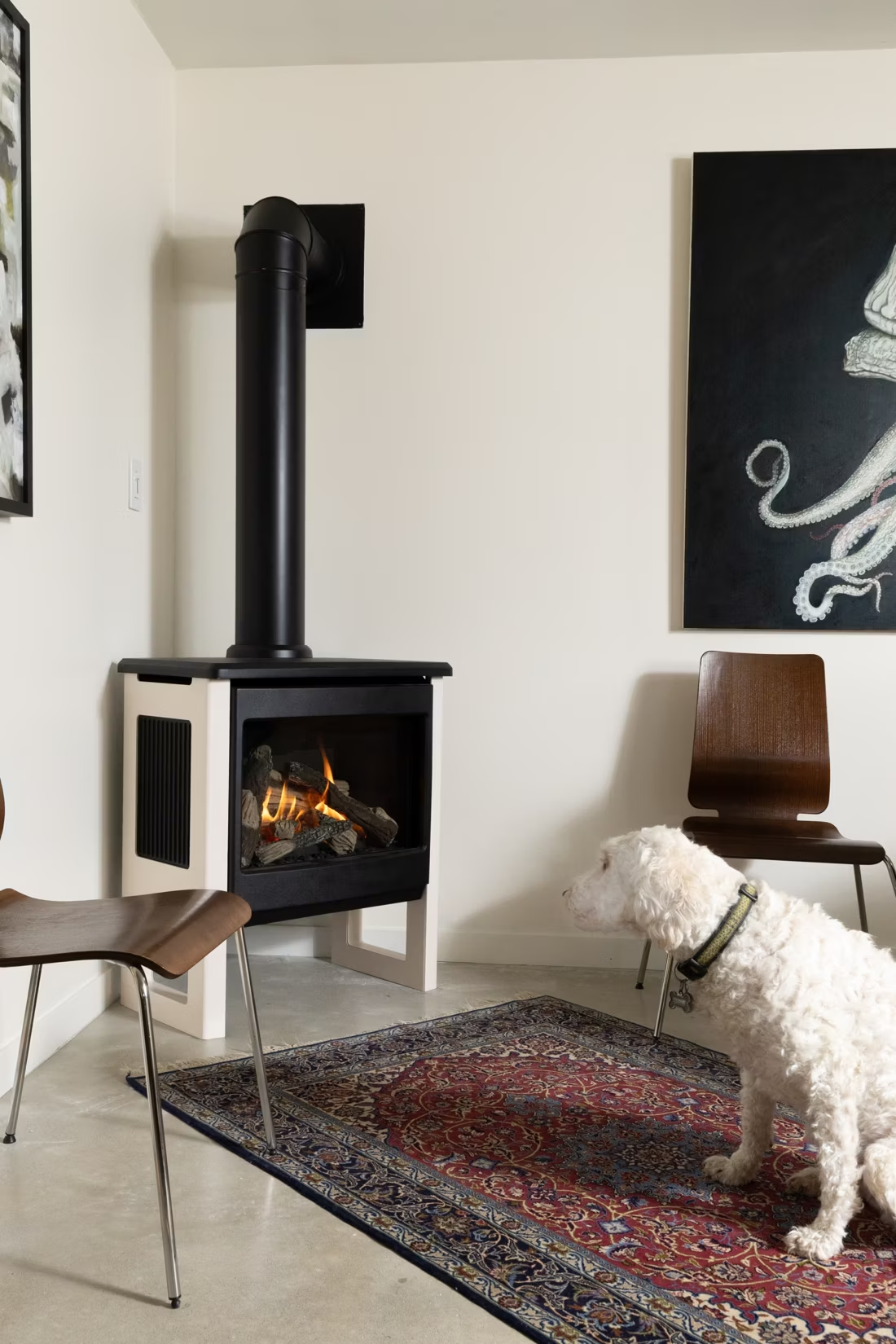
Where Westville stands apart from most of the province is mains gas. Eastward Energy runs a distribution line through the New Glasgow-Stellarton-Westville industrial corridor, which puts a real share of this town within reach of natural gas—something most of Nova Scotia outside metro Halifax simply doesn't have. For homes on that line, a direct-vent gas fireplace or insert means heat on demand without splitting wood or hauling pellet bags, and without leaning on an already-expensive electrical panel. Homes just off the served streets typically run on propane instead, and a good local dealer will know which side of that line your address falls on before you buy anything.
Three steps. No salesperson until you're ready.
Tell us about your project
Your postal code, your situation, and the fuel you're leaning toward—or let the answers point you to one.
See what's actually available
The brands dealers within 100 miles genuinely carry—real options, never a catalog mirage.
Get your dealer & Project Guide
A trusted local dealer, plus the free Project Guide & Parts List that names every component of the job.
Frequently Asked Questions
How much does a gas fireplace installation cost in Westville?
Plan on roughly $6,000 to $15,000 CAD installed. An insert that drops into an existing masonry firebox—common in Westville's older homes near the downtown core that were originally built around a wood fireplace burning local sugar maple or yellow birch—sits toward the lower end once a gas line is nearby. A new built-in unit for an addition or renovation, especially one that needs a fresh gas line run from Eastward Energy's main or a propane tank set for homes off the corridor, pushes toward the top of that range.
Is my house actually on Eastward Energy's gas line, or do I need propane?
It depends on your street. Eastward Energy's distribution runs through the New Glasgow-Stellarton-Westville industrial corridor, which is one of the few stretches of Nova Scotia outside the Halifax area with mains gas at all—most of the province simply doesn't have it. If your address sits off that run, propane is the standard fallback, and most gas fireplace models a local dealer carries can be set up for either fuel. Worth checking before you shop, since it changes your ongoing fuel cost and whether you need a tank installed.
Do I need a permit to install a gas fireplace in Westville?
Yes. Applications go through the municipal building department, and the work has to meet the CSA B365 installation code, with the gas connection itself done by a licensed gas fitter. Most dealers who handle gas appliance projects in the Pictou Region take care of the permit paperwork and schedule the final inspection as part of the job, so you're not coordinating the building department and the gas fitter separately.
Will a gas fireplace keep working if the power goes out?
Many will, and it matters here—nor'easters and winter storms off the Northumberland Strait knock out Nova Scotia Power service in Pictou Region most winters. Units with intermittent pilot ignition run their electronics off AA battery backup, so the fireplace lights even with the grid down. Valor models go a step further, generating their own current off the pilot's thermocouple with no battery at all. Ask your dealer which ignition system is in any unit you're considering—for a town where storm outages aren't rare, it's a real factor.
What's the difference between a gas fireplace, insert, and stove for my home?
A gas fireplace is a built-in unit framed into a wall, typical for a renovation or an addition. A gas insert fits inside an existing masonry firebox, which is the common route in Westville's older housing stock that started out burning red oak or red spruce in an open wood fireplace. A gas stove is freestanding on a hearth pad, similar footprint to a wood stove but running off Eastward Energy's line or a propane tank instead of split cordwood. For most existing Westville homes with a chimney already in place, an insert is the least disruptive of the three.
Vented or vent-free—which is right for a Pictou Region home?
Direct-vent units draw combustion air from outside and exhaust it back outside through sealed venting, and that's what most dealers in this area recommend by default—it's code-compliant everywhere and doesn't add moisture or combustion byproducts to indoor air. Vent-free units are legal in Nova Scotia under strict room-sizing rules but see less use here; with a heating season that runs five to six months and homes closed up tight against the damp cold, most Westville homeowners prefer not to add the indoor humidity a vent-free unit produces.
How often does a gas fireplace need servicing in Westville?
An annual check, ideally in late summer or early fall before the first cold snap rather than mid-winter when local technicians are booked solid. The visit covers the burner, pilot assembly, gas connections, and venting, and typically runs $150 to $250 CAD. Skipping it on a unit running daily through a long Pictou Region winter is how a pilot or ignition fault turns up on the coldest night rather than during a scheduled visit.
Gas vs. wood vs. pellet—what makes sense for a Westville home?
Wood—sugar maple, yellow birch, red oak, or red spruce, either cut from a private woodlot or bought from a local supplier since there's no standing public cutting permit program here—still wins on running cost and keeps producing heat through a power outage. Pellet stoves using regional brands like Shaw Resources or Scotia Atlantic Biomass run $400 to $575 CAD a ton and are cleaner and easier to load, but need electricity for the auger. Gas, where Eastward Energy's line reaches, wins on convenience: it lights instantly and doesn't need a woodpile, a hopper, or trips to a supplier. A lot of Westville households end up pairing wood or a heat pump for the bulk of the season with gas or electric for quick, no-fuss heat on ordinary evenings, since Nova Scotia Power's rate makes running electric resistance heat alone the most expensive option.
Does my insurance require a WETT inspection for a gas fireplace?
No—WETT inspections apply to wood-burning appliances, not gas. For a gas fireplace or insert, insurers typically want proof that the install followed CSA B365 and that the municipal building department signed off on the permit and final inspection. Keep that paperwork with your policy documents; if you ever add a wood stove alongside the gas unit, that's when a WETT inspection becomes standard for coverage.
Can a gas fireplace run on a thermostat?
Most modern gas fireplaces can—turn it on and off from the couch with a remote, or set a room temperature and let the fireplace hold the comfort zone for you. If low maintenance matters to your family, this is the feature set that makes gas the convenience pick over wood and pellet.
Why do fireplace quotes vary so much?
Because a fireplace is an iceberg—there's more behind the wall than in front of it. A low quote often covers only the unit; the full scope includes vent pipe, gas line or electrical, framing, and the tile or stone that has to come off and go back on. Make every bidder price the whole job. If a dealer can't speak to the full scope with confidence, that's your signal to keep looking.
Can I put a TV above my fireplace?
Yes—with an asterisk. Fireplaces are hot and TVs don't like heat. Either put a mantel between them to deflect rising warmth, or choose a fireplace with heat-management technology that creates a cool zone on the wall above—the wall stays around 125 degrees, barely warm, while the room still gets full heat. If you like clean lines and don't want a mantel, heat management is the answer.
Why is a fireplace insert so efficient?
An insert does two things: it seals the chimney completely, so you stop losing air you already paid to heat, and it radiates warmth into the room through the firebox and glass. Most add a heat-exchange fan that pulls cool room air underneath, wraps it around the hot firebox, and pushes it back out warm. Your home is more efficient before you've even lit the first fire.
Nearby Dealers
Hearth shops serving Westville and the surrounding area. Every listing shows whether it is a WhyFire partner, a dealer we have verified as authorized for the brands we recommend, or a local business carrying hearth products. No manufacturer pays for placement. How we verify dealers →
Vintage Stove & Fireplace
Natural Gas Service in Westville
Confirm service at your address before planning a gas fireplace—a quick call settles it.
Eastward Energy
Get your free Project Guide & Parts List for a Westville gas fireplace.
Tell us whether your address sits on Eastward Energy's line or needs propane, and we'll help you find a local dealer in the Pictou Region who can help with your project—plus a free Project Guide & Parts List with the exact vent kit and parts your install needs.
Find Your Fireplace →