
Steady heat that outruns Nova Scotia's electricity rates.
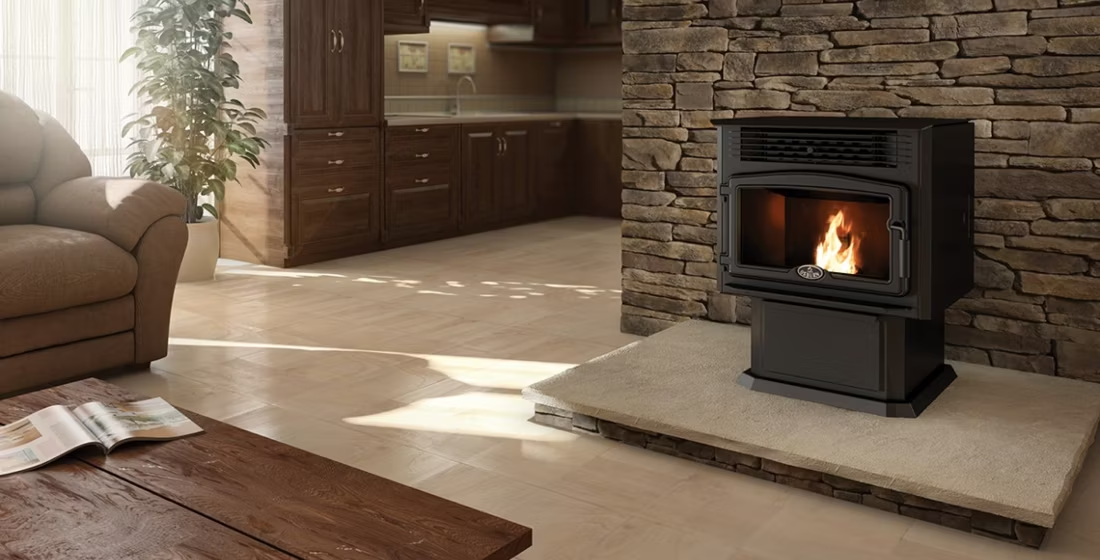
Trenton sits in the Pictou Region where winter lows average -10.9°C and Nova Scotia Power charges some of the highest residential electricity rates in the country. A pellet stove or insert gives you a thermostat-controlled backup that doesn't run up the power bill the way electric resistance heat does. We'll help you find a trusted local dealer who knows what's actually installable in your home.
Every Project Starts From One of These Five Situations
A hedge against Canada's priciest power.
At 18.3 cents per kilowatt-hour, Nova Scotia Power's residential rate is among the highest in the country, and it shapes how homes in Trenton actually heat. In climate zone 6A, with winter lows averaging -10.9°C and a heating season that runs from October well into April, all-electric heat gets expensive to lean on through the coldest stretches. That's why so many households here pair a heat pump for shoulder-season efficiency with a pellet stove or insert for the deep-winter nights when a heat pump's output drops off and the electric bill would otherwise climb.
Pellet supply is a local strength. Shaw Resources and Scotia Atlantic Biomass both mill pellets from Nova Scotia forest residue—the same sugar maple, yellow birch, red oak, and red spruce that fill woodlots across the Pictou Region—and typical bagged pellets run $400-$575 CAD a ton. Unlike firewood, there's no cutting permit to sort out through Crown Lands; you're buying a manufactured fuel by the pallet or ton from a supplier or hardware store. The installation side still has real rules, though: CSA B365 governs how the appliance and venting go in, and most insurers ask for a WETT inspection on any solid-fuel appliance before they'll write a policy.
Three steps. No salesperson until you're ready.
Tell us about your project
Your postal code, your situation, and the fuel you're leaning toward—or let the answers point you to one.
See what's actually available
The brands dealers within 100 miles genuinely carry—real options, never a catalog mirage.
Get your dealer & Project Guide
A trusted local dealer, plus the free Project Guide & Parts List that names every component of the job.
Frequently Asked Questions
How much does a pellet stove or insert cost to install in Trenton?
Most pellet installations here run $6,000 to $10,000 CAD. An insert going into an existing masonry firebox with a straightforward liner run sits toward the low end; a freestanding stove in a home with no existing chimney, needing new wall or roof venting, lands higher. Electrical work for the auger and blower is usually minor since most Trenton homes already have a nearby outlet, but your municipal building department permit and a WETT inspection for insurance purposes are both worth budgeting into the timeline, not just the invoice.
Where do pellets for a Trenton home actually come from?
Two Nova Scotia mills supply most of what local dealers stock: Shaw Resources and Scotia Atlantic Biomass, both milling pellets from regional sawmill residue rather than trucking fuel in from out of province. Expect to pay roughly $400 to $575 CAD a ton depending on the season and whether you buy early or wait until cold weather drives demand up. Buying a season's supply—usually 2 to 3 tons for a Trenton-sized home—in late summer is the standard way locals avoid the price bump that hits every October.
Why are so many homes in Trenton adding a pellet stove instead of just using electric heat?
Nova Scotia Power's residential rate, at 18.3 cents per kilowatt-hour, is one of the highest in Canada, and running an all-electric home through a Pictou Region winter with lows averaging -10.9°C gets expensive fast. A pellet stove burns roughly $400-$575 CAD worth of pellets a ton, and one ton typically covers several weeks of steady heat in the coldest months—a meaningful offset against an electric bill, especially when it's covering the main living space where the household actually spends its evenings.
Do I need a permit or inspection to install a pellet appliance in Trenton?
Yes. Installation falls under CSA B365, and you'll need a permit through the municipal building department before work starts. Most insurers also require a WETT inspection on solid-fuel appliances, including pellet stoves, before they'll add one to your homeowner's policy or honor a claim involving it. A local dealer who installs pellet appliances regularly in the Pictou Region will typically handle the permit application and can point you to a WETT-certified inspector for the sign-off.
What size pellet stove do I need for a Trenton home?
With winter lows averaging -10.9°C and a heating season that stretches from October into April, most Trenton living areas do well with a mid-size pellet stove rated for 1,200 to 2,000 square feet, especially if it's supplementing a heat pump rather than carrying the whole house alone. Older homes near the Trenton waterfront and East River with less insulation sometimes need the larger end of that range; newer, tighter-built homes further up the Pictou Region can often get by with a smaller unit.
Is natural gas an option instead of pellet in Trenton?
It is—Eastward Energy serves the area—but pellet remains the more common choice for homeowners looking for a wood-adjacent heat source with local fuel supply and lower ongoing cost than running gas or electric resistance heat through a full Nova Scotia winter. Gas fireplaces offer instant on-demand flame and no fuel storage, which some homeowners prefer, but pellet appliances give you a thermostat-controlled burn using fuel milled right here in the province rather than piped or trucked in.
How much maintenance does a pellet stove need in Trenton's climate?
Plan on emptying the ash pan every few days during steady winter burning and a full cleaning of the burn pot, auger, and exhaust venting at least once a season—typically in early fall before the first cold snap. Homes running the stove daily from October through April, which is standard here, should also have the venting professionally inspected annually; a five- to six-month burning season puts more hours on the appliance than an occasional-use setup would.
What happens to my pellet stove during a power outage?
It stops, since the auger and blower both run on electricity—worth knowing given how often coastal storms knock out power across the Pictou Region in winter. Some models accept a battery backup or small generator to keep the auger feeding pellets during an outage, which is worth asking your dealer about if you're relying on the stove as a primary heat source. Households most worried about extended outages sometimes keep a wood stove or fireplace as a no-power backup alongside the pellet appliance.
What pellet stove brands are actually available through local dealers near Trenton?
Dealers serving the Pictou Region typically carry a handful of established pellet stove and insert manufacturers rather than the full range you'd find in a national catalog, since only a few brands have reliable parts and service support this far from a major distribution hub. We don't push any one manufacturer—our job is helping you find a trusted local dealer who knows which brands they can actually service and get parts for quickly, which matters more here than which name is on the door once winter sets in.
Why do fireplace quotes vary so much?
Because a fireplace is an iceberg—there's more behind the wall than in front of it. A low quote often covers only the unit; the full scope includes vent pipe, gas line or electrical, framing, and the tile or stone that has to come off and go back on. Make every bidder price the whole job. If a dealer can't speak to the full scope with confidence, that's your signal to keep looking.
Is it worth replacing an old fireplace that still sort of works?
Ask three questions: Is it ugly? Is it drafty? Does it actually work? Most old fireplaces fail at least two. Beyond looks, an old unit leaks air around the damper year-round and—if it's gas with a standing pilot—quietly burns a couple hundred dollars a year. A modern replacement seals the wall, heats the room, and changes how the whole space gets used.
What do I measure to size a fireplace insert?
Four numbers tell you what fits: the front width, the front height, the back width, and the overall depth of your existing fireplace opening. Grab a tape measure, jot those down, and snap a photo of the wall—those two things do more to move your project forward than anything else you can do today.
Are pellet stoves loud?
They make some noise—there are two fans running plus an auger motor that turns as it feeds pellets. But there's a real range: premium models are engineered quiet, and the best offer a whisper-quiet mode you can comfortably watch TV next to. If noise matters in your room, ask to hear a stove running before you buy—it's a five-minute test that saves years of annoyance.
Nearby Dealers
Hearth shops serving Trenton and the surrounding area. Every listing shows whether it is a WhyFire partner, a dealer we have verified as authorized for the brands we recommend, or a local business carrying hearth products. No manufacturer pays for placement. How we verify dealers →
Vintage Stove & Fireplace
Pellet Brands Stocked Around Trenton
Typical price runs $400-$575 per ton—buy early-season for the best rates. Manufacturers will point you to the nearest stocking dealer.
Shaw Resources
Scotia Atlantic Biomass
Get your free Project Guide & Parts List for a Trenton pellet project.
Tell us about your home and whether you're leaning pellet, gas through Eastward Energy, or electric, and we'll help you find a trusted local dealer in the Pictou Region and send a free Project Guide & Parts List with the exact vent kit and parts your project needs.
Find Your Fireplace →