
Reliable gas heat for Shelburne Region homes, propane tank and all.
Heritage Gas mains lines stop well short of the South Shore, so gas fireplaces here almost always run on propane rather than a pipeline connection. We help Shelburne Region homeowners find a local dealer who sets up the tank, the line, and the venting correctly the first time.
Every Project Starts From One of These Five Situations
A South Shore reality: propane, not a pipeline.
Shelburne Region sits on Nova Scotia's South Shore, a scatter of small communities—Shelburne, Lockeport, Barrington—built around fishing harbours and a population under 5,200. The climate here is milder than inland Canada; at zone 5A with winter lows averaging around -6.9°C, it's a damp Atlantic cold closer to coastal Vancouver Island than to the prairie freeze of Regina or Winnipeg, but the wind off the water still makes a poorly heated house feel far colder than the thermometer suggests. The heating season runs a solid five months, and homeowners here want appliances that hold steady heat through wet, windy nights without babysitting a fire.
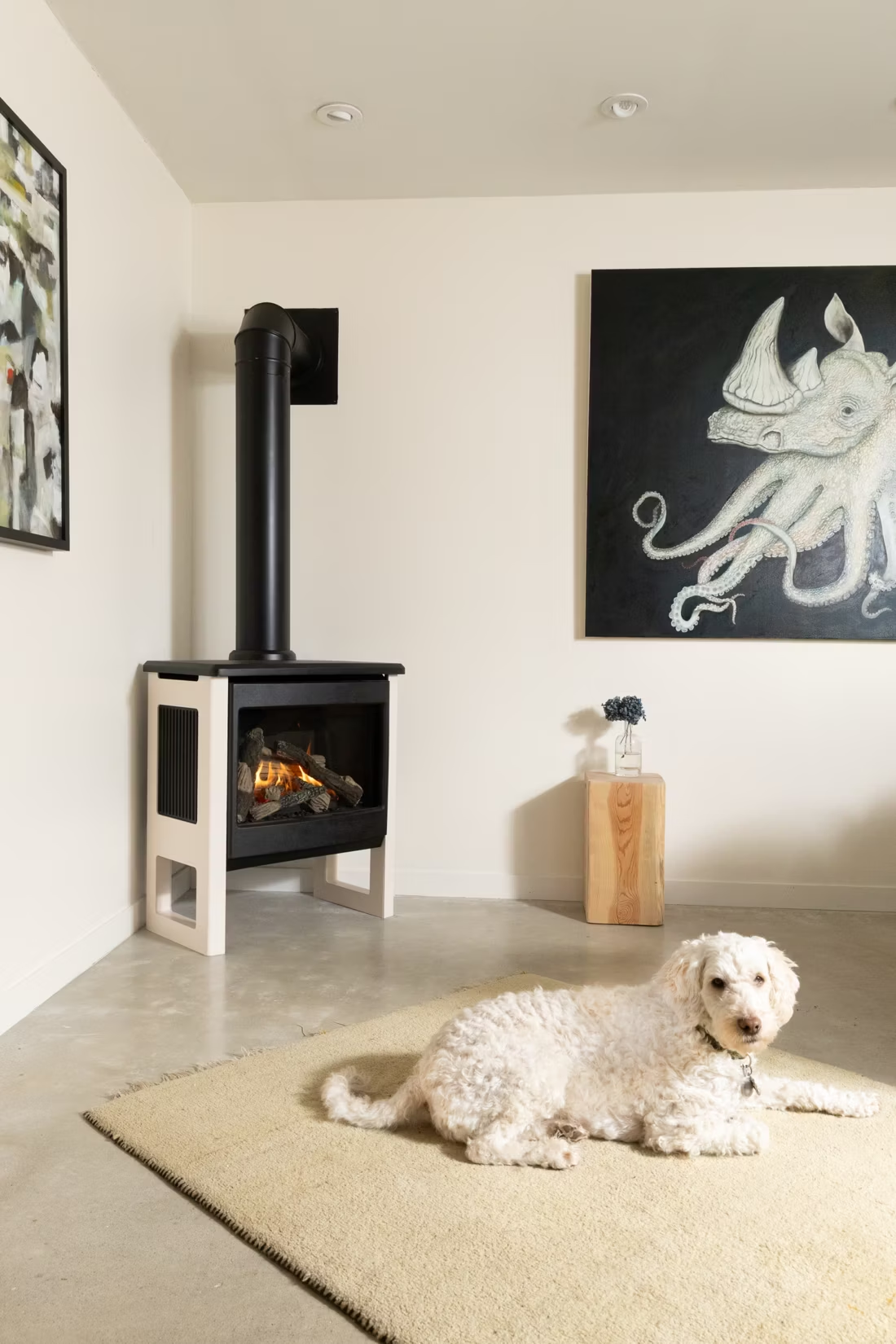
Nova Scotia also has some of the highest electricity rates in the country, which is why so many South Shore households already pair a wood stove with a heat pump rather than lean on electric baseboard alone. Gas fits into that picture too, but almost entirely through propane: Heritage Gas, the province's natural gas utility, runs its mains network through Halifax-area corridors and hasn't extended service this far down the coast. A propane-fed direct-vent fireplace or insert still delivers the same instant, thermostat-controlled heat as a mains gas unit—it just needs a tank, a regulator, and a supplier who can keep it filled. Installed systems in Shelburne Region typically run $6,000 to $15,000 CAD, depending on whether you're converting an existing masonry fireplace or building a new gas line and venting path from scratch.
Three steps. No salesperson until you're ready.
Tell us about your project
Your postal code, your situation, and the fuel you're leaning toward—or let the answers point you to one.
See what's actually available
The brands dealers within 100 miles genuinely carry—real options, never a catalog mirage.
Get your dealer & Project Guide
A trusted local dealer, plus the free Project Guide & Parts List that names every component of the job.
Frequently Asked Questions
How much does a gas fireplace installation cost in Shelburne Region?
Most installations run $6,000 to $15,000 CAD. The lower end covers a direct-vent propane insert dropped into an existing masonry firebox with a tank already on the property. The upper end applies to new construction or a remodel that needs a new propane tank set, a buried or above-ground line run, and fresh venting through the roof or an exterior wall. Homes in Lockeport, Barrington, or other outlying parts of the region may see a modest travel charge added by installers based closer to Shelburne town or Bridgewater.
Is this natural gas or propane, and does it matter?
In Shelburne Region, it's almost always propane. Heritage Gas, the only natural gas distributor in Nova Scotia, has built its mains network through Halifax-area corridors and hasn't run pipe out to the South Shore. Most gas fireplace models are built to run on either fuel with the correct orifice and regulator, so the appliance itself isn't the limiting factor—your supply is. A local dealer will spec the unit for propane from the start and coordinate with a regional propane supplier for the tank and delivery schedule.
Can I convert my existing wood fireplace to gas?
Yes, and it's a common project in older Shelburne Region homes with an original masonry fireplace. A propane insert goes into the existing firebox and vents through a stainless liner run up your current chimney, so the fireplace opening stays the same while you gain real, controllable heat. Expect around $6,000 to $9,500 on the lower end of the regional range, plus the cost of setting a new propane tank if the property doesn't already have one.
Do I need a permit to install a gas fireplace in Shelburne Region?
Yes. Your municipal building department handles the building permit, and the installation itself falls under the CSA B365 code that governs solid-fuel and gas hearth appliances in Canada. The propane line work has to be done by a certified gas fitter, which is one reason to go through a full-service hearth dealer rather than a general contractor—they coordinate the gas fitter, the venting, and the inspection sign-off as one job. This is different from wood appliances, which typically also need a WETT inspection for insurance; gas installations don't carry that same requirement.
Will my gas fireplace still work if the power goes out?
Most will, which matters on the South Shore where nor'easters and the tail end of Atlantic hurricanes can knock out power for a day or more. Units with intermittent pilot ignition carry a battery backup that takes over automatically when the grid drops, so the fireplace still lights and runs on demand. Valor fireplaces go further—their pilot assembly generates its own electricity through the thermocouple, so there's no battery to remember. Ask your dealer about the ignition system on any model you're considering, especially if backup heat during a storm is part of why you're adding gas.
Vented or vent-free—which makes more sense here?
Direct-vent (vented) gas fireplaces pull combustion air from outside and exhaust it back outside through a sealed pipe, which is the standard most local dealers install in Shelburne Region. Vent-free units are legal in Nova Scotia but come with strict room-sizing rules and an oxygen depletion sensor, and they release combustion byproducts into the living space—something to weigh carefully in a smaller, well-sealed South Shore home. For a primary heat source or a room you use daily, direct-vent is almost always the better call.
What size gas fireplace do I need for a South Shore home?
Sizing depends on square footage and how airtight the house is, not just the region's average winter low. A lot of Shelburne Region housing stock is older wood-frame construction with real air infiltration, so a fireplace sized purely off a generic BTU chart can run short on the coldest, windiest nights when the ocean air really cuts through. A local dealer sizes the unit during an in-home visit, accounting for ceiling height, window area, and whether the fireplace is meant to be a supplemental heat source or carry a room on its own.
Gas vs. wood—which is the better fit here?
Wood has deep roots in Shelburne Region: sugar maple, yellow birch, red oak, and red spruce are all common on local woodlots, and there's no standing public cutting permit program through Nova Scotia Natural Resources—most households buy from a private supplier or cut their own. Wood also works with no electricity at all, which matters through a storm outage. Gas, run on propane here, gives you instant, thermostat-controlled heat with far less daily tending, and a battery-backed unit will still fire during a power outage. Given the province's high electricity rates, plenty of local homes end up running a wood stove or heat pump for baseline heat and a gas fireplace in the main living area for daily convenience.
How often does a gas fireplace need to be serviced?
Plan on an annual inspection, ideally before the wet, windy stretch of the heating season sets in around late fall. A technician checks the burner, pilot assembly, propane connections, and venting, and cleans the glass—a quick visit compared to a wood chimney sweep, but worth keeping on schedule for a unit that may be running daily through a South Shore winter. Expect to pay roughly $150 to $250 CAD for a standard annual service call from a local propane appliance technician.
Can a gas fireplace run on a thermostat?
Most modern gas fireplaces can—turn it on and off from the couch with a remote, or set a room temperature and let the fireplace hold the comfort zone for you. If low maintenance matters to your family, this is the feature set that makes gas the convenience pick over wood and pellet.
Why do fireplace quotes vary so much?
Because a fireplace is an iceberg—there's more behind the wall than in front of it. A low quote often covers only the unit; the full scope includes vent pipe, gas line or electrical, framing, and the tile or stone that has to come off and go back on. Make every bidder price the whole job. If a dealer can't speak to the full scope with confidence, that's your signal to keep looking.
Is my gas fireplace wasting gas?
If it was installed more than 15 years ago, probably. Older gas fireplaces keep a standing pilot light burning all the time, and that little flame can cost a couple hundred dollars a year. Newer models use pilot-on-demand ignition—the pilot lights only when you use the fireplace and goes out when you turn it off.
What's the difference between an insert and a zero-clearance fireplace?
An insert is a fireplace that slides into a pre-existing wood-burning fireplace—if you don't have one, there's nothing to insert it into. A zero-clearance fireplace is built into a framed wall, which makes it the answer for remodels and new construction. Simple test: existing masonry fireplace means insert; blank or framed wall means zero-clearance.
Stove and Fireplace Dealers in Shelburne Region
Listings include WhyFire partner dealers, dealers we have verified as authorized for the brands we recommend, and established local businesses that carry hearth products. Every listing shows which one it is. The ones marked Preferred run on WhyFire's software, so they can show you real pricing and book your appointment right here. No manufacturer pays for placement. How we verify dealers →
Natural Gas Service in Shelburne Region
Confirm service at your address before planning a gas fireplace—a quick call settles it.
Eastward Energy
Get your free Project Guide & Parts List for a propane gas fireplace in Shelburne Region.
Tell us about your home and how you plan to use the fireplace, and we'll help you find a trusted local Shelburne Region dealer and send a free Project Guide & Parts List—the exact parts, including the vent kit and propane setup, for your gas project.
Find Your Fireplace →