
Find your fireplace in Hants Region.
Wood, gas, pellet, and electric fireplace resources for the whole region—from the Fundy shore at Walton and Noel through Windsor and Hantsport to the Halifax commuter towns around Mount Uniacke and Elmsdale. Pick a fuel and find a local dealer who actually installs it here.
Every Project Starts From One of These Five Situations
Sugar maple woodlots, Fundy tides, and some of Canada's priciest electricity.
Hants Region stretches from the Bay of Fundy shoreline at Walton and Noel down through Windsor and Hantsport to the rural crossroads and growing commuter communities around Mount Uniacke and Elmsdale, home to roughly 16,177 people spread across small towns and farm country rather than one dense center. Winter lows average around -10.4°C here—milder than inland cold spots like Fredericton or Québec City, but still enough to demand a real heating season that runs five or six months a year. Sugar maple, yellow birch, red oak, and red spruce are the cordwood species most local households burn, much of it cut from private woodlots or Crown land under permits from Nova Scotia Natural Resources.
What shapes hearth decisions across Hants Region more than climate alone is the cost of electricity: Nova Scotia Power rates are among the highest in the country, which is why pairing a wood stove with a heat pump has become the default setup for a lot of homeowners here—burn wood on the coldest nights, run the heat pump the rest of the shoulder season. Natural gas service is real but limited to Halifax-area corridors, so homes closer to Mount Uniacke and the Halifax commuter belt may have access while communities farther out toward Walton or Windsor typically rely on propane, wood, or pellet instead. Any wood appliance installed here should meet CSA B365 code, and most insurers require a WETT inspection before they'll cover it—your municipal building department handles the permit either way. This hub rolls up hearth retailers, service techs, and fuel suppliers across the whole region. Pick your fuel below for local dealers, install costs, and recommendations specific to your town.
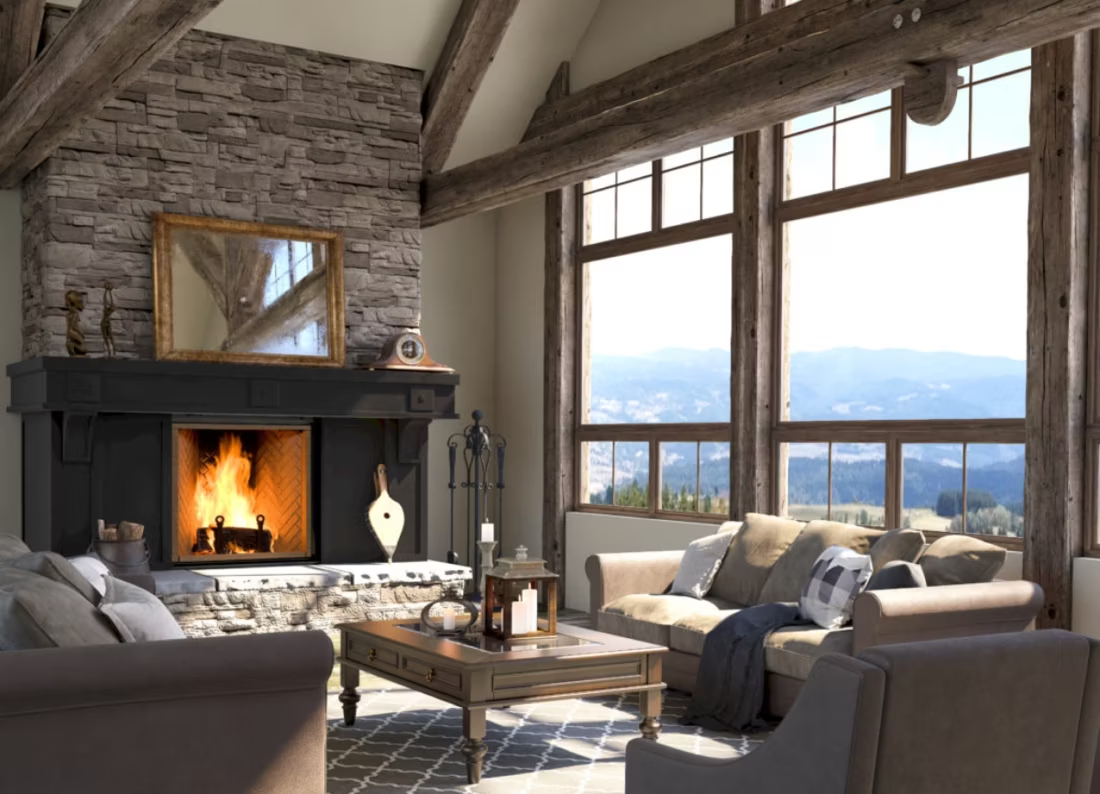
Four fuels. One honest answer for Hants.
Three steps. No salesperson until you're ready.
Tell us about your project
Your postal code, your situation, and the fuel you're leaning toward—or let the answers point you to one.
See what's actually available
The brands dealers within 100 miles genuinely carry—real options, never a catalog mirage.
Get your dealer & Project Guide
A trusted local dealer, plus the free Project Guide & Parts List that names every component of the job.
Frequently Asked Questions
Which fireplace fuel makes the most sense in Hants Region?
All four fuels have a real place here, but which one fits depends on where you are in the region and how your home is already heated. Wood remains the backbone fuel in rural areas—Crown land permits and private woodlots keep sugar maple, yellow birch, and red oak affordable, and a good catalytic or non-catalytic stove will hold a fire through a -10.4°C overnight without trouble. Given how high Nova Scotia Power's electricity rates run, pairing a wood stove with a heat pump has become the default setup for a lot of homeowners: wood for the coldest stretches, heat pump for shoulder-season comfort. Gas is genuinely available but patchy—service reaches limited Halifax-area corridors, so it's worth checking your street before planning a gas fireplace, especially if you're farther out toward Walton or Windsor. Pellet stoves fill the gap nicely for homeowners who want wood-like heat without cutting and stacking cordwood, and regional brands like Shaw Resources and Scotia Atlantic Biomass keep supply local. Electric fireplaces are supplemental almost everywhere—useful for a bedroom or basement, but not sized to carry a home through the full heating season on their own.
Do I need a permit and inspection for a wood stove in Hants Region?
Yes. New wood stove and insert installations go through your municipal building department, and the installation itself needs to meet CSA B365 code—this covers clearances, venting, and hearth protection. On top of the building permit, most home insurers in Nova Scotia require a WETT inspection before they'll cover a wood-burning appliance, and many ask for a renewed inspection every few years or whenever you sell the home. It's a routine step, not a hurdle: most hearth retailers we help homeowners find can point you to a certified WETT inspector as part of the install, and gas installations need a licensed gas fitter for the connection regardless of which corridor you're in.
Why do so many homes here pair a wood stove with a heat pump instead of just using electric heat?
Nova Scotia has some of the highest electricity rates in the country, so running a home on electric baseboard heat alone through a five- or six-month heating season gets expensive fast. Pairing a wood stove with a heat pump lets you burn cordwood—often cut from your own woodlot or a neighbour's under a Crown land permit—on the coldest nights when a heat pump's efficiency drops, then switch to the heat pump for the milder stretches on either side of winter. It's a genuinely common setup across Hants Region rather than a niche choice, and it's one reason wood heat has stayed mainstream here even as heat pump adoption has grown quickly.
Is natural gas actually available for a gas fireplace in Hants Region?
It depends on exactly where you live. Natural gas service in Nova Scotia is limited to specific Halifax-area corridors, and that coverage extends into parts of Hants Region closer to the Halifax commuter belt around Mount Uniacke and Elmsdale, but it does not reach most of the region, including Windsor, Hantsport, and the Fundy shore communities toward Walton. If mains gas isn't on your street, a gas fireplace is still an option running on propane instead—the appliance and venting are largely the same, just with a propane tank and delivery service in place of a gas line. Checking availability before you fall in love with a specific gas unit is the single most useful first step, and it's something a local dealer can confirm quickly.
Where does firewood come from for households in Hants Region?
Most cordwood here comes from private woodlots—many rural properties in the region have enough forested acreage to supply their own heat—supplemented by local firewood dealers and, for some households, cutting permits issued through Nova Scotia Natural Resources for Crown land. Sugar maple and yellow birch are the preferred species for long, hot burns, red oak splits well and seasons reliably, and red spruce is common as a supplemental or kindling wood. Whatever species you're burning, giving it a full season or more to season properly matters more for heat output and chimney safety than which species you choose.
What does a fireplace or stove installation typically cost in Hants Region?
Costs vary by fuel and by how much venting or gas-line work is involved. Wood stove or insert installs, including a WETT inspection, typically run $4,500-$9,000 CAD, with full new chimney construction pushing higher. Gas fireplaces, inserts, and stoves generally run $5,000-$10,000, and that number can shift depending on whether you're on a natural gas corridor or running propane with a tank installation. Pellet stove or insert installs usually land around $4,500-$7,500. Electric fireplaces are the outlier—$200-$3,000 for the unit itself, plus $400-$1,200 in labour for anything beyond a simple plug-and-play placement. The region and fuel pages above break these numbers down further with local retailer pricing.
How many BTUs do I need in a fireplace?
Wrong question—and the industry's favorite way to confuse you. More BTUs isn't better if the fireplace cooks you out of the room you spent thousands to enjoy. Think in terms you can verify: how many square feet the unit heats, whether it's primary or backup heat, and whether you want it running overnight. Those three answers size a fireplace correctly every time.
Will we actually use a fireplace once we have one?
In my own home, the room with the fireplace has never been the same—it became the social hub. Game nights, holidays, date nights after the kids are down: the fire is where the house gathers. There's a reason people in this industry joke that we're really in the romance and entertainment business. You won't wonder whether you'll use it; you'll wonder how the room worked before.
How much should I budget for a fireplace?
For an average home—covering the fireplace, the vent pipe, and basic installation—a budget between $3,900 and $5,500 gives you a lot of options across wood, gas, and pellet. By the time you add finish work, gas line, and electrical, the average complete installation lands between $5,000 and $12,000 all-in. In a remodel or new build, a good rule is to put about 2.5% of the total project cost toward the fireplace.
Can a fireplace actually lower my heating bill?
Yes—by creating a comfort zone. A furnace heats every square foot of the house just to warm the one room you're in; a gas fireplace on low burns roughly a sixth of the gas a typical furnace does. Set the furnace around 55–60 degrees as a baseline, then heat the rooms your family actually uses. Families who heat this way commonly save $20–$60 a month.
Stove and Fireplace Dealers in Hants
Listings include WhyFire partner dealers, dealers we have verified as authorized for the brands we recommend, and established local businesses that carry hearth products. Every listing shows which one it is. The ones marked Preferred run on WhyFire's software, so they can show you real pricing and book your appointment right here. No manufacturer pays for placement. How we verify dealers →
Ultimate Home Comfort
Find a local Hants Region dealer.
Pick your fuel below and we'll put together a free Project Guide & Parts List—the right unit, the vent kit it needs, and the local dealer we recommend for your project.
Find Your Fireplace →