
Automated heat for a coastline that pays Canada's highest power rates.
Cow Bay sits on the Atlantic coast within Halifax Regional Municipality, where winter lows average -9°C and Nova Scotia Power's residential rate of roughly 18.3 cents per kWh is among the highest in the country. A pellet stove or insert gives you steady, thermostat-controlled heat without splitting cordwood. We'll help you find a trusted local dealer who knows what's actually installable on your street.
Every Project Starts From One of These Five Situations
The automated middle ground between cordwood and Nova Scotia Power.
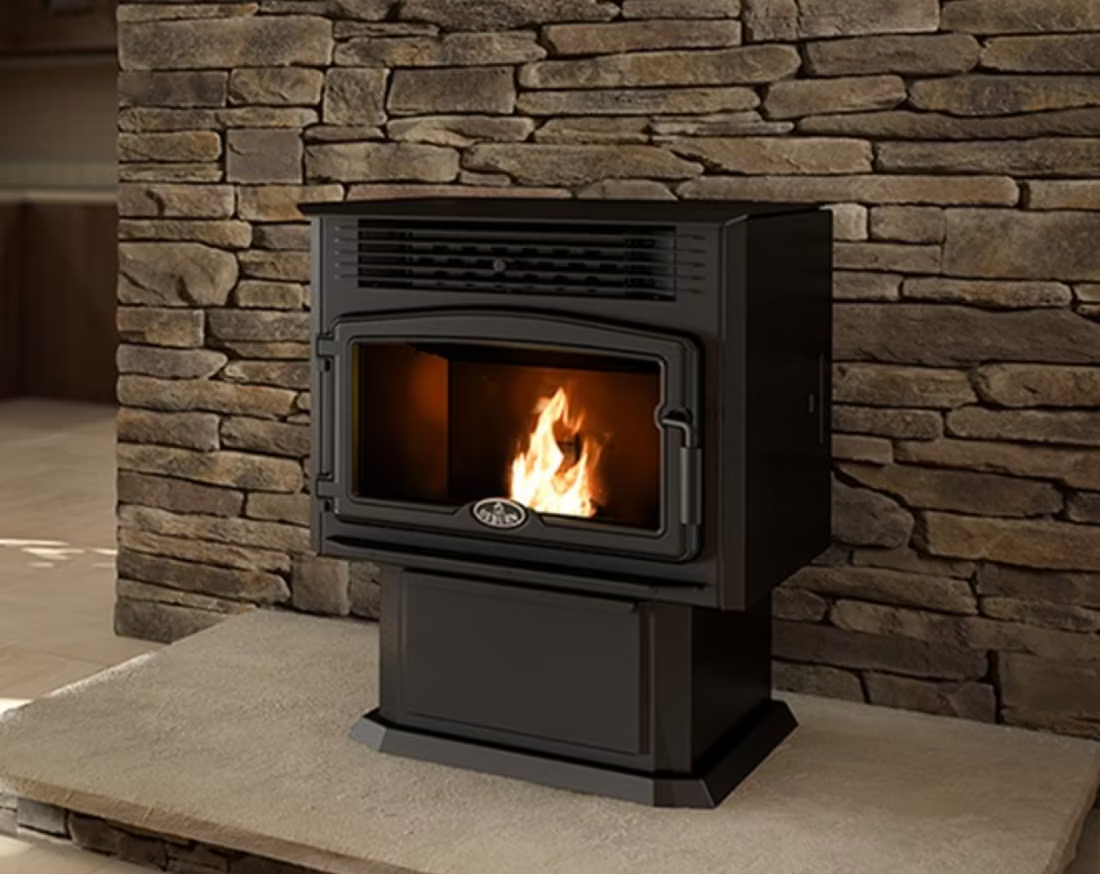
Cow Bay's winters are milder than inland Nova Scotia thanks to the Atlantic—average lows sit around -9°C rather than the deeper cold of Thunder Bay or Québec City—but the season still runs a solid four to five months, and Nova Scotia Power's residential rate of about 18.3 cents per kWh makes electric-only heat expensive to run flat out. Sugar maple, yellow birch, red oak, and red spruce all grow on woodlots across Halifax Regional Municipality, and plenty of households still burn cordwood, but not everyone has the space, time, or truck to season and stack it. A pellet stove or insert gives you comparable heat output with a hopper you fill every day or two instead of a woodpile you build every fall.
Eastward Energy runs natural gas into parts of Halifax Regional Municipality, but the mains network reaches limited corridors and Cow Bay sits outside most of them, so pellet fills a real gap between cordwood and a gas line that may not exist on your street. Local suppliers Shaw Resources and Scotia Atlantic Biomass keep bagged pellets in the $400 to $575 per tonne range, and a typical pellet stove or insert installation runs $6,000 to $10,000. Every install still needs a permit through the municipal building department and follows the CSA B365 installation code, and most insurers ask for a WETT inspection on a solid-fuel appliance even when it burns pellets rather than logs.
Three steps. No salesperson until you're ready.
Tell us about your project
Your postal code, your situation, and the fuel you're leaning toward—or let the answers point you to one.
See what's actually available
The brands dealers within 100 miles genuinely carry—real options, never a catalog mirage.
Get your dealer & Project Guide
A trusted local dealer, plus the free Project Guide & Parts List that names every component of the job.
Frequently Asked Questions
How much does a pellet stove installation cost in Cow Bay?
Expect $6,000 to $10,000 CAD for most pellet stove or insert installations here. An insert dropping into an existing masonry fireplace—common in the older saltbox and cape-style homes around Cow Bay Road and the shore—tends to land toward the lower end since the chimney chase is already in place. A freestanding stove in a home without an existing fireplace needs new wall or roof penetration for the vent, which pushes the project toward the top of that range. Either way, the municipal building department requires a permit and most local dealers fold that into the quote.
Will a pellet stove still work if a Nor'easter knocks out power?
Not without help. Pellet stoves rely on an electric auger and blower to feed fuel and move heat, so a coastal outage—and Cow Bay sees its share during winter Nor'easters and the tail end of hurricanes—shuts the stove down along with everything else on the grid. A battery backup or small generator keeps most units running through a multi-day outage. If outage resilience matters more than automation to you, a wood stove burning local sugar maple or yellow birch needs no power at all, which is why some households here keep one appliance of each rather than choosing just one.
Where do I buy pellets near Cow Bay, and what do they cost?
Shaw Resources and Scotia Atlantic Biomass are the two regional brands most Halifax-area dealers stock, typically running $400 to $575 per tonne depending on the season and whether you buy early or scramble mid-winter. Buying a season's supply in September or October, before demand and prices climb, is standard practice here. You'll want dry, covered storage—a garage or shed works, but bags left exposed to salt air and coastal damp for months can pull in moisture and clog an auger.
Do I need a permit or inspection to install a pellet stove in Cow Bay?
Yes. New installations go through the municipal building department and must meet the CSA B365 installation code. Pellet appliances are generally cleaner-burning and less regulated on the fire-risk side than open wood-burning, but most insurers in Halifax Regional Municipality still ask for a WETT inspection on any solid-fuel appliance before they'll adjust your policy, pellet included. A local dealer familiar with the process typically handles the paperwork and arranges the inspection as part of the job.
What size pellet stove do I need for a Cow Bay home?
With winter lows averaging -9°C and the Atlantic tempering the coldest snaps, most Cow Bay homes do well with a small to mid-size pellet stove rated for 1,000 to 1,800 square feet as a primary or near-primary heat source. Older, less-insulated homes closer to the shoreline, where wind exposure is higher, often benefit from sizing up slightly rather than running a small unit at full output around the clock. A dealer will size against your actual floor plan and insulation rather than square footage alone.
Is natural gas an option instead of pellet in Cow Bay?
Only in theory for most addresses here. Eastward Energy does serve parts of Halifax Regional Municipality, but the distribution network covers limited corridors closer to the urban core, and Cow Bay sits outside most of that footprint. Propane is the workaround for homeowners set on a gas-burning appliance, but it doesn't solve the supply-line problem the way pellet does—pellet fuel arrives by truck or you pick it up yourself, no buried line required.
Does a pellet stove make sense alongside a heat pump?
It's a common pairing here, partly because Nova Scotia Power's rate of roughly 18.3 cents per kWh makes running a heat pump flat out through the coldest weeks pricier than most homeowners want. A heat pump handles the shoulder seasons and mild days efficiently, and a pellet stove picks up the slack during the coldest stretches or simply adds a lower-cost heat source to the main living area, letting the heat pump work less hard. It's a more automated version of the wood-and-heat-pump pairing plenty of Halifax-area households already run.
How much maintenance does a pellet stove need?
Plan on emptying and vacuuming the burn pot and ash drawer every few days during regular use, plus a full annual cleaning of the hopper, auger, and venting before the season starts—typically in September ahead of the first real cold snap. A WETT-trained technician or your installing dealer can handle the annual service, which usually runs less involved than a wood chimney sweep but shouldn't be skipped on a unit running daily through a four-to-five-month Cow Bay heating season.
Which pellet stove brands are available through Cow Bay dealers?
Most Halifax-area hearth dealers carry a handful of manufacturer-authorized pellet stove and insert lines alongside the regional fuel brands Shaw Resources and Scotia Atlantic Biomass. Exact brand availability varies by dealer and changes with supply, which is part of why we help homeowners find a specific trusted local dealer rather than pointing you at a catalog—they'll tell you what's actually in stock and installable on your street right now.
Why do fireplace quotes vary so much?
Because a fireplace is an iceberg—there's more behind the wall than in front of it. A low quote often covers only the unit; the full scope includes vent pipe, gas line or electrical, framing, and the tile or stone that has to come off and go back on. Make every bidder price the whole job. If a dealer can't speak to the full scope with confidence, that's your signal to keep looking.
Is it worth replacing an old fireplace that still sort of works?
Ask three questions: Is it ugly? Is it drafty? Does it actually work? Most old fireplaces fail at least two. Beyond looks, an old unit leaks air around the damper year-round and—if it's gas with a standing pilot—quietly burns a couple hundred dollars a year. A modern replacement seals the wall, heats the room, and changes how the whole space gets used.
How often does a pellet stove need cleaning?
A clean pellet stove is a happy pellet stove. Plan on cleaning the burn pot about once a week when you're burning regularly—ash and clinkers gum up the air holes just like a pellet barbecue. Most pellet stove problems trace back to skipped cleaning that nobody explained up front. Some designs make it easy with a trapdoor burn pot: pull a lever and the gunk drops into the ash pan.
Why is a fireplace insert so efficient?
An insert does two things: it seals the chimney completely, so you stop losing air you already paid to heat, and it radiates warmth into the room through the firebox and glass. Most add a heat-exchange fan that pulls cool room air underneath, wraps it around the hot firebox, and pushes it back out warm. Your home is more efficient before you've even lit the first fire.
Nearby Dealers
Hearth shops serving Cow Bay and the surrounding area. Every listing shows whether it is a WhyFire partner, a dealer we have verified as authorized for the brands we recommend, or a local business carrying hearth products. No manufacturer pays for placement. How we verify dealers →
Ultimate Home Comfort
Pellet Brands Stocked Around Cow Bay
Typical price runs $400-$575 per ton—buy early-season for the best rates. Manufacturers will point you to the nearest stocking dealer.
Shaw Resources
Scotia Atlantic Biomass
Get your free Project Guide & Parts List for a Cow Bay pellet install.
Tell us about your home and whether you're leaning toward a stove or an insert, and we'll help you find a trusted local dealer and send a free Project Guide & Parts List with the vent kit and parts your Cow Bay project needs.
Find Your Fireplace →