
Keep Your Family Warm and Safe—No Matter What
Bridgewater sits on the LaHave River in Lunenburg Region, where winter lows average -10.4°C and Nova Scotia Power bills run higher than almost anywhere else in the country. Find the right stove or insert, and we'll help you find a trusted local dealer who knows the WETT paperwork your insurer will ask for.
Every Project Starts From One of These Five Situations
Wood heat that makes the electric bill bearable.
Bridgewater's winters aren't the deep freezes you'd get in Winnipeg or Thunder Bay, but the damp Atlantic air makes -10.4°C feel sharper, and the heating season stretches from November well into April. Climate zone 6A homes here need a real secondary or primary heat source, not a mantel decoration, and a lot of South Shore households have figured out that a wood stove paired with a heat pump beats running electric baseboards through a whole Nova Scotia winter.
Sugar maple, yellow birch, red oak, and red spruce come off woodlots throughout Lunenburg Region, and since there's no standing public cutting permit program the way there is on Crown Land in some provinces, most Bridgewater households buy from private suppliers or cut their own lot rather than pulling a permit from Nova Scotia Natural Resources. The real local wrinkle is insurance: with Nova Scotia Power charging some of the highest residential rates in Canada at roughly 18.3 cents per kWh, wood stoves stay in steady demand for cutting bills and riding out storm outages, but insurers here routinely require a WETT inspection and CSA B365-compliant installation before they'll write or renew a policy on the appliance.
Firewood Cutting Permits Near Bridgewater
Nova Scotia Natural Resources (Crown Lands)
Three steps. No salesperson until you're ready.
Tell us about your project
Your postal code, your situation, and the fuel you're leaning toward—or let the answers point you to one.
See what's actually available
The brands dealers within 100 miles genuinely carry—real options, never a catalog mirage.
Get your dealer & Project Guide
A trusted local dealer, plus the free Project Guide & Parts List that names every component of the job.
Frequently Asked Questions
How much does a wood stove installation cost in Bridgewater?
Most installs in Bridgewater run $6,000 to $12,000 CAD. Older homes downtown near King Street or along the LaHave River often still have a working masonry flue from decades of coal-and-wood heating, so dropping in an insert lands toward the lower end. Newer construction out toward the Highway 103 corridor usually needs a full Class A chimney built from the roofline down, which pushes the job toward the top of that range once the hearth pad, clearances, and permit are factored in.
What size wood stove do I need for a Bridgewater home?
With winter lows averaging -10.4°C and a damp maritime cold that cuts deeper than the number suggests, a small stove rated under 1,000 square feet works fine for a supplemental setup in a cottage or camp, but most main living areas in Bridgewater's older housing stock do better with a medium stove in the 1,500 to 2,000 square foot range. Dense hardwoods like sugar maple and red oak hold coals well overnight, so a properly sized firebox paired with those species can carry a house through a cold snap without constant reloading.
Do I need a permit to install a wood stove in Bridgewater?
Yes. New installations go through the municipal building department, and the installation itself has to meet the CSA B365 code that governs wood-burning appliance clearances and venting across Canada. Just as important locally: most home insurers in Nova Scotia won't cover a wood stove without a WETT inspection on file, so it's worth booking that at the same time as your install rather than treating it as a separate step later.
What's the difference between a wood stove and a wood insert for my house?
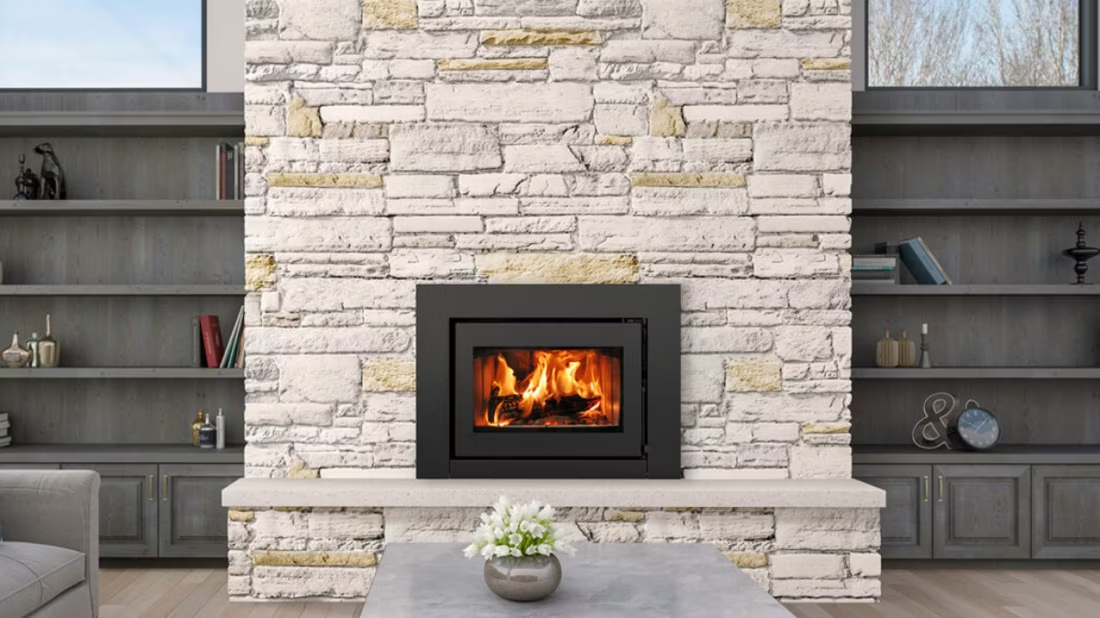
A freestanding stove sits on a hearth pad and vents through new Class A pipe, which suits newer homes around Bridgewater that never had a masonry fireplace to begin with. An insert slides into an existing masonry firebox and reuses the chimney you already have, which is the more common retrofit in older homes closer to downtown that were built with an open fireplace decades ago. Inserts also tend to land toward the lower end of the $6,000-$12,000 range since the chimney structure is already in place.
Where do I buy or cut firewood near Bridgewater?
Nova Scotia doesn't run a standing public cutting permit program the way some provinces do through Crown Land, so most Bridgewater households either buy from private woodlot owners scattered through Lunenburg Region or cut their own lot if they own one. Sugar maple and red oak are the two species locals prize most for overnight burns, yellow birch splits and seasons relatively fast if you're behind on your stack, and red spruce is fine for kindling and shoulder-season fires but burns too fast to rely on through a January cold snap.
What's the best wood stove for Bridgewater winters?
Bridgewater's cold, while real, is milder than what a stove needs to survive in Fredericton or Québec City, so most homes here don't need the longest-burning catalytic units on the market, though Blaze King's 20-plus-hour hold time is popular with anyone running wood as a primary heat source. Canadian-built stoves from Drolet, Osburn, and Pacific Energy are all common choices through Atlantic Canada dealers and hold up well to the humid, salt-air conditions off the South Shore. Whatever you choose, confirm it's CSA-certified so it clears both your building permit and your insurer's WETT inspection.
How often should my chimney be swept in Bridgewater?
An annual sweep and inspection before the season starts, ideally in October ahead of the first real cold snap, is the standard recommendation, and it matters more in Bridgewater's damp maritime climate than it might inland, since humidity can slow seasoning and lead to creosote buildup faster if you're burning red spruce or unseasoned wood. Households running wood as a primary heat source through the full six-month season often benefit from a mid-winter check too, and most insurers expect that annual sweep documented alongside your WETT inspection anyway.
Does a wood stove make sense if I already have a heat pump?
It's one of the most common setups in Bridgewater, not a redundancy. Nova Scotia Power's residential rate, among the highest in the country at roughly 18.3 cents per kWh, makes running a heat pump through the coldest snaps expensive, and heat pump output drops off as temperatures fall toward -10°C anyway. A lot of local households run the heat pump for shoulder-season efficiency and everyday comfort, then switch to the wood stove during deep cold or when a Nor'easter knocks out power, which a heat pump obviously can't do on its own.
Wood stove vs. pellet stove—which makes more sense in Bridgewater?
Wood keeps working when the power goes out, which matters through the ice storms and Nor'easters that periodically knock out electricity across Lunenburg Region, and it pairs with wood you can source privately rather than buying by the ton. Pellet stoves using regional brands like Shaw Resources or Scotia Atlantic Biomass, running roughly $400-$575 a ton, burn cleaner and load more conveniently, but the auger and blower need electricity, so they're out of commission during exactly the storms when you'd want backup heat most. Many Bridgewater households land on a wood stove for that outage resilience and consider pellet mainly for homes without woodlot access.
Why do fireplace quotes vary so much?
Because a fireplace is an iceberg—there's more behind the wall than in front of it. A low quote often covers only the unit; the full scope includes vent pipe, gas line or electrical, framing, and the tile or stone that has to come off and go back on. Make every bidder price the whole job. If a dealer can't speak to the full scope with confidence, that's your signal to keep looking.
Louvered or clean face—which fireplace front is better?
Louvered fronts have grill work above and below the glass for airflow, move heat a little better with a fan, and suit traditional mantels. Clean face designs drop the louvers entirely so finish work runs to the fire's edge—they fit both modern and traditional rooms. When we did our own home we chose clean face: a big viewing area beat a little extra airflow. It depends on your room, not on a rulebook.
What's the difference between an insert and a zero-clearance fireplace?
An insert is a fireplace that slides into a pre-existing wood-burning fireplace—if you don't have one, there's nothing to insert it into. A zero-clearance fireplace is built into a framed wall, which makes it the answer for remodels and new construction. Simple test: existing masonry fireplace means insert; blank or framed wall means zero-clearance.
Why is a fireplace insert so efficient?
An insert does two things: it seals the chimney completely, so you stop losing air you already paid to heat, and it radiates warmth into the room through the firebox and glass. Most add a heat-exchange fan that pulls cool room air underneath, wraps it around the hot firebox, and pushes it back out warm. Your home is more efficient before you've even lit the first fire.
Nearby Dealers
Hearth shops serving Bridgewater and the surrounding area. Every listing shows whether it is a WhyFire partner, a dealer we have verified as authorized for the brands we recommend, or a local business carrying hearth products. No manufacturer pays for placement. How we verify dealers →
Get your free Project Guide & Parts List for a Bridgewater wood heat project.
Tell us about your home and we'll help you find a local dealer familiar with CSA B365 installs and WETT inspections in Lunenburg Region, plus send a free Project Guide & Parts List with the vent kit and parts your project needs.
Find Your Fireplace →