
Warm the room you're in, not the whole house.
Nova Scotia Power rates are among the highest in the country, so most households across the Antigonish Region pair a heat pump for whole-home heat with a wood stove or an electric fireplace for the room where they actually spend their evenings. We'll help you find a trusted local dealer who can size the right unit for your space and send a free planning packet before you spend a dollar.
Every Project Starts From One of These Five Situations
A smaller bill for the room you use, not the whole farmhouse.
The Antigonish Region centers on the town of Antigonish, home to about 5,000 people and to St. Francis Xavier University, then spreads out into farm and woodlot country toward Heatherton, Maryvale, and Lochaber, and along the coast at Cape George and Arisaig. Winters here average lows near minus 11.4°C, a season milder and damper than Winnipeg or Sudbury but closer to what Fredericton sees across the Bay of Fundy. Plenty of rural properties still lean on wood cut from private woodlots, sugar maple, yellow birch, red oak, and red spruce are the usual species, since there is no standing public cutting permit program locally and most households buy from a private supplier or cut their own. Mains natural gas mostly tracks a handful of corridors near Halifax, well outside this region, so electric and wood carry most of the load here.
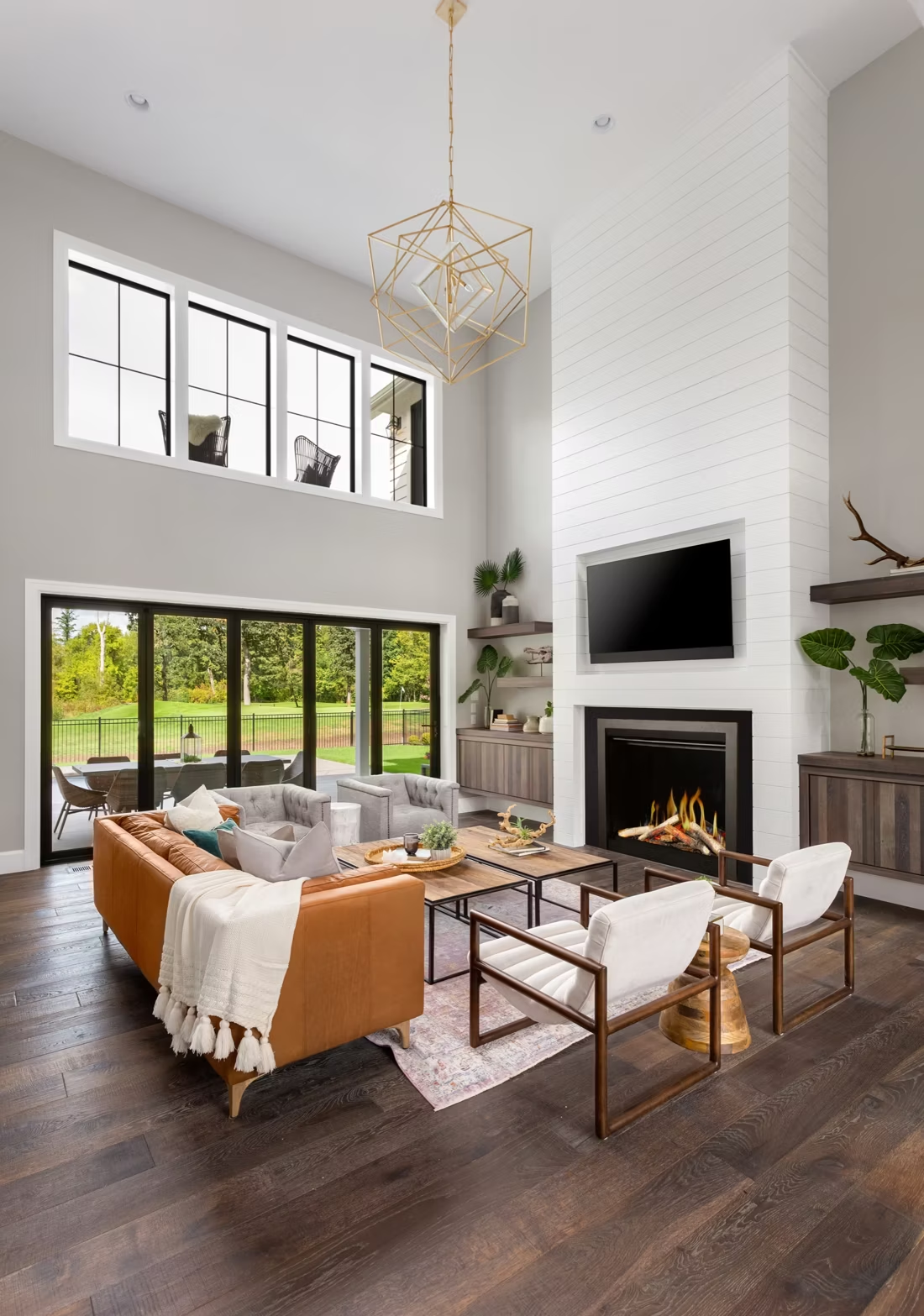
An electric fireplace or insert skips the chimney, the WETT inspection, and the CSA B365 paperwork that come with a wood appliance, and the install itself typically runs $500 to $1,600 CAD, whether that's a plug-in unit dropped into an old masonry firebox or a built-in model wired to its own circuit by a licensed electrician. Because Nova Scotia Power's rates make running any electric appliance around the clock expensive, most local dealers frame these units as zone heat and ambiance for a den, bedroom, or sunroom, not a replacement for the heat pump or wood stove carrying the rest of the house through a long Maritime winter.
Three steps. No salesperson until you're ready.
Tell us about your project
Your postal code, your situation, and the fuel you're leaning toward—or let the answers point you to one.
See what's actually available
The brands dealers within 100 miles genuinely carry—real options, never a catalog mirage.
Get your dealer & Project Guide
A trusted local dealer, plus the free Project Guide & Parts List that names every component of the job.
Frequently Asked Questions
How much does an electric fireplace installation cost in the Antigonish Region?
Most jobs land between $500 and $1,600 CAD. A portable or mantel-style unit that plugs into a standard outlet sits at the low end, since there's no wiring work at all. A built-in insert or a wall-mounted unit tied to its own dedicated circuit costs more, mainly for the electrician's time running new wire and, in some of the region's older farmhouses, confirming the panel has room for another circuit. Retrofitting an existing masonry firebox into an electric insert is usually a same-day job once the electrical work is sorted.
Do I need a permit for an electric fireplace here?
A plug-in unit generally doesn't need one. A hardwired insert or built-in fireplace on a new dedicated circuit usually does, since that's electrical work pulled through the municipal building department and completed by a licensed electrician. Either way, you're skipping the CSA B365 installation code and the WETT inspection that apply to wood-burning appliances, which is one of the reasons electric is an easy add for a room that doesn't already have a chimney.
Will an electric fireplace actually keep me warm when it's minus 11°C outside?
It will keep a single room comfortable, not the whole house. Most units top out around 1,500 watts, enough for a bedroom, den, or sunroom in the 12-by-14-foot range. On a night when the average winter low sits near minus 11.4°C, that's a real, useful amount of heat for the room you're sitting in, but it isn't a substitute for a heat pump or a backup wood stove carrying the rest of an Antigonish Region farmhouse through January.
Should I get an electric fireplace or a wood stove instead?
A lot of households here end up with both. Wood, usually sugar maple, yellow birch, red oak, or red spruce cut from a private woodlot since there's no standing public cutting permit program locally, costs less to run once you've got a supply, but a wood stove install runs $6,000 to $12,000 and comes with WETT inspections and chimney maintenance. An electric fireplace installs for $500 to $1,600, needs no chimney at all, and is the easier upgrade for a room that just needs a heat source and some ambiance, with the woodstove or heat pump doing the heavy lifting elsewhere in the house.
What about a gas fireplace instead of electric?
Mains natural gas mostly follows corridors close to Halifax, well over a hundred kilometres from Antigonish, so a gas fireplace here usually means propane rather than a gas line to the street. That adds a tank and a supply contract to the project, which pushes gas installs to $6,000-$15,000 versus $500-$1,600 for electric. If the appeal is flame with minimal fuss and no chimney, electric gets you there for a fraction of the cost and skips the propane logistics entirely.
Is it expensive to run an electric fireplace given Nova Scotia's power rates?
Running one as your only heat source, all day, would add up fast, since Nova Scotia Power's rates are among the highest in the country. Most people here use theirs the way it's meant to be used, an hour or two in the evening in the room they're actually in, with a heat pump handling the base heating load more efficiently across the rest of the house. Treated that way, the electricity cost is modest, and you get the ambiance without a January bill that makes you wince.
Can I put an electric insert into my old wood fireplace?
Yes, and it's one of the more common projects local dealers see, especially in the older farmhouses scattered through Heatherton, Maryvale, and Lochaber where the original masonry firebox hasn't burned wood in years. An electric insert drops into that opening with no chimney liner, no venting, and none of the WETT inspection paperwork a live wood insert would trigger for insurance. Most of these jobs just need a nearby outlet or a short circuit run.
What should I look for in an electric fireplace for this climate?
Get a unit where the flame effect and the heater run independently, so you can enjoy the flame with the heat off on a mild October evening, then run both once the region's colder stretches set in around December and January. Look for a thermostat rather than a fixed-wattage heater, since that lets you dial in exactly how much of that 1,500 watts you actually need. Dimplex and Napoleon units are common with dealers in this part of Nova Scotia and hold up well over years of daily use.
How much maintenance does an electric fireplace need?
Very little compared to a wood appliance. There's no annual WETT inspection and no chimney to sweep, just occasional dusting around the heater vents, a check that the fan isn't clogged, and an LED replacement every several years on most models. If you ever notice a tripped breaker or warm outlet, especially in one of the region's older homes with an aging electrical panel, have a licensed electrician take a look before you keep using it.
How much does an electric fireplace cost to run?
With the heater on, a typical unit draws about 1,500 watts—at average electric rates that's roughly 20 cents an hour. Run the flame effect alone and it costs pennies; the flames are LED-driven and use about as much power as a light bulb. There's no pilot light, no fuel delivery, and essentially no maintenance.
What fireplace styles should I know before shopping?
Four cover most of the market: screen-front traditional (mesh front, open feel, fits craftsman homes), traditional door set (the classic look you grew up with), modern linear (wide, low, the statement piece for entertaining), and clean face contemporary (no trim—your tile or stone runs right to the fire's edge). Walk in knowing those four terms and you're ahead of most buyers.
Can I put a TV above my fireplace?
Yes—with an asterisk. Fireplaces are hot and TVs don't like heat. Either put a mantel between them to deflect rising warmth, or choose a fireplace with heat-management technology that creates a cool zone on the wall above—the wall stays around 125 degrees, barely warm, while the room still gets full heat. If you like clean lines and don't want a mantel, heat management is the answer.
Do electric fireplaces actually produce heat?
Yes—most put out around 4,800–5,000 BTUs from a standard outlet, which comfortably warms a bedroom, office, or den as a comfort-zone heater. What they won't do is carry a whole house the way wood, gas, or pellet can. Think of electric as ambiance-first with honest supplemental heat: flames on with no heat in July, flames plus warmth in January.
Stove and Fireplace Dealers in Antigonish Region
Listings include WhyFire partner dealers, dealers we have verified as authorized for the brands we recommend, and established local businesses that carry hearth products. Every listing shows which one it is. The ones marked Preferred run on WhyFire's software, so they can show you real pricing and book your appointment right here. No manufacturer pays for placement. How we verify dealers →
Electric Service in Antigonish Region
An electric fireplace's heater draws about 1,500 watts—pennies per hour at local rates.
Nova Scotia Power
Get your free Project Guide & Parts List for an electric fireplace in the Antigonish Region.
Tell us about your home, whether you're retrofitting an old firebox or starting from scratch, and we'll help you find a trusted local dealer and send a free Project Guide & Parts List, the exact parts and your recommended local dealer for the project, no big-box guesswork.
Find Your Fireplace →